🍽️
Prep time15 mins
Cook time45 mins
Ingredients11
dessert
Olive Oil Lemon Cake (One Bowl)
Published: Jan 15, 2025
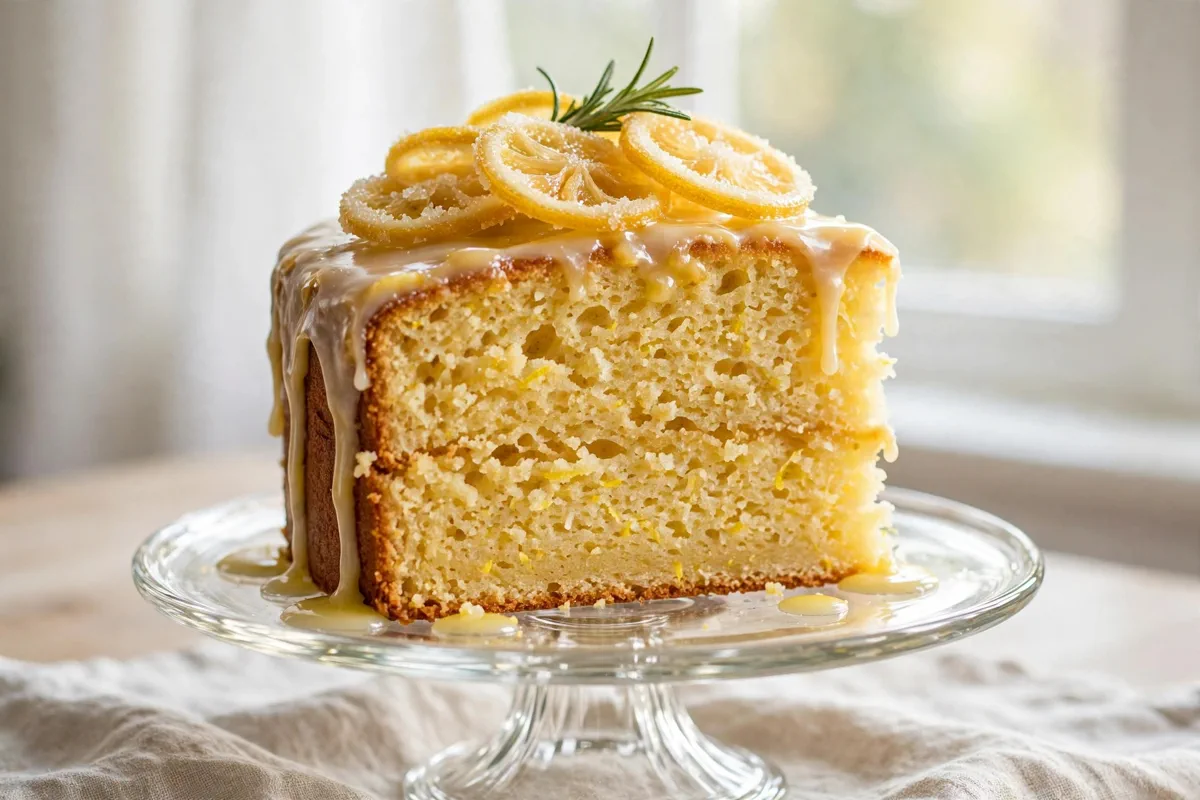
A one-bowl olive oil lemon cake with a tender golden crumb and crackly lemon glaze — stays moist for 3 days with no butter.
A one-bowl olive oil lemon cake with a tender golden crumb and crackly lemon glaze — stays moist for 3 days with no butter.
If you are looking for an ultra-satisfying, restaurant-quality meal that comes together with minimal effort, this Olive Oil Lemon Cake (One Bowl) is about to become your new favorite. Everything is cooked to juicy, golden perfection with wholesome ingredients and incredible depth of flavor.
One simple tip!
Rub the lemon zest into the sugar with your fingertips for a full minute, until the sugar looks like damp sand and smells strongly of lemon. This releases the lemon oils so the flavor runs through the whole cake instead of living only in the glaze.
Step-by-Step Photos
Why You’ll Love This Recipe
Quick & EffortlessReady in just 80 minutes total with straightforward, foolproof prep.
Packed with Deep FlavorCarefully balanced with Extra-virgin olive oil, Granulated sugar, Large eggs for maximum satisfaction.
Family & Crowd FriendlyMakes 10 generous servings that can be effortlessly doubled or scaled using our smart scaler.
Made From ScratchReal ingredients and straightforward home cooking, with no shortcuts on flavor.
Ingredients Notes & Variations
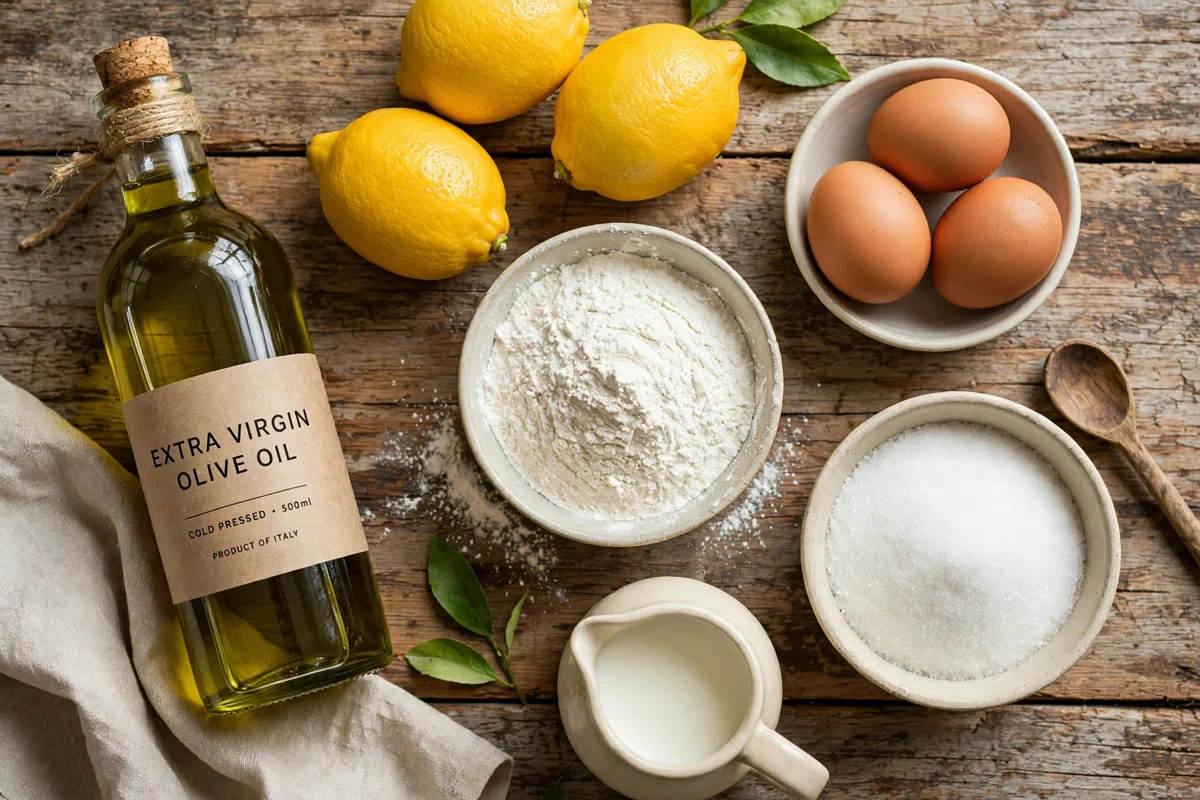
Here is an overview of what you will need for this recipe. Be sure to scroll down to the printable recipe card below for exact scaled measurements!
Extra-virgin olive oil
180 mlmild and fruity, not the peppery finishing kind
Granulated sugar
200 gLarge eggs
3 pieceroom temperature
Lemon zest
2 tbspfrom 2 large lemons
Fresh lemon juice
90 ml60 ml for the batter, 30 ml for the glaze; from 2 large lemons
All-purpose flour
190 gabout 1 1/2 cups, spooned and leveled
Baking powder
1.5 tspBaking soda
0.5 tspFine sea salt
0.5 tspWhole milk
120 mlroom temperature
Powdered sugar
120 gsifted, for the glaze
How to Make (Step-by-Step Overview)
Here is a quick summary of the preparation process. Detailed cooking temperatures and step timers are included in the recipe card below.
1
Heat the oven to 350°F (175°C). Grease a 9-inch round cake pan and line the bottom with parchment paper.
2
Put the granulated sugar in a large mixing bowl. Add the lemon zest and rub it into the sugar with your fingertips for about a minute, until the sugar looks like damp sand and smells strongly of lemon.
3
Pour in the olive oil and whisk for about 30 seconds, until the mixture looks like thick wet sand.
4
Add the eggs one at a time, whisking well after each addition until the batter turns smooth, pale, and slightly thick.
5
Whisk in the milk and 60 ml of the lemon juice (save the rest for the glaze). The batter may look a little uneven at this point — that is normal.
6
Sprinkle the flour, baking powder, baking soda, and salt evenly over the batter. Fold with a spatula just until no dry streaks remain, then stop. A few small lumps are fine.
7
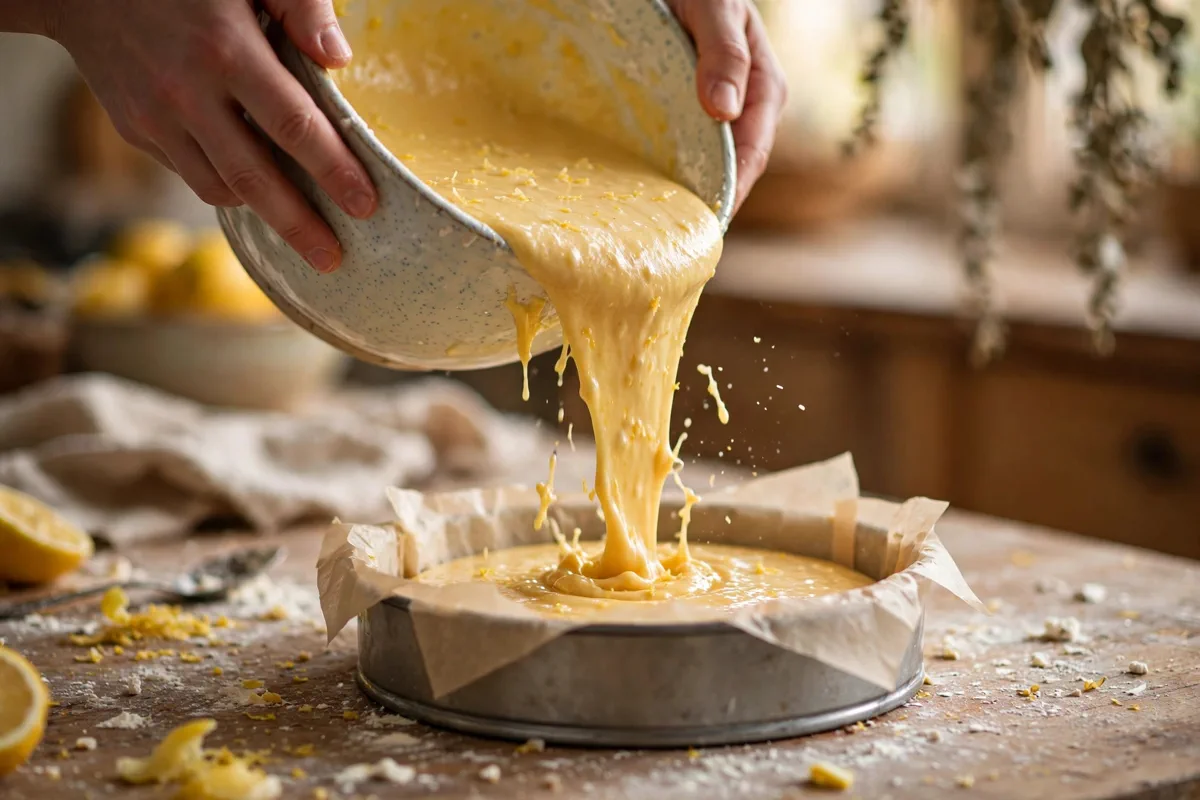
Pour the batter into the prepared pan and smooth the top. Bake 40 to 45 minutes, until the top is deep golden and a toothpick poked in the center comes out with moist crumbs but no wet batter.
8
Cool the cake in the pan on a wire rack for 10 minutes. Run a thin knife around the edge, turn the cake out onto the rack, and peel off the parchment.
9
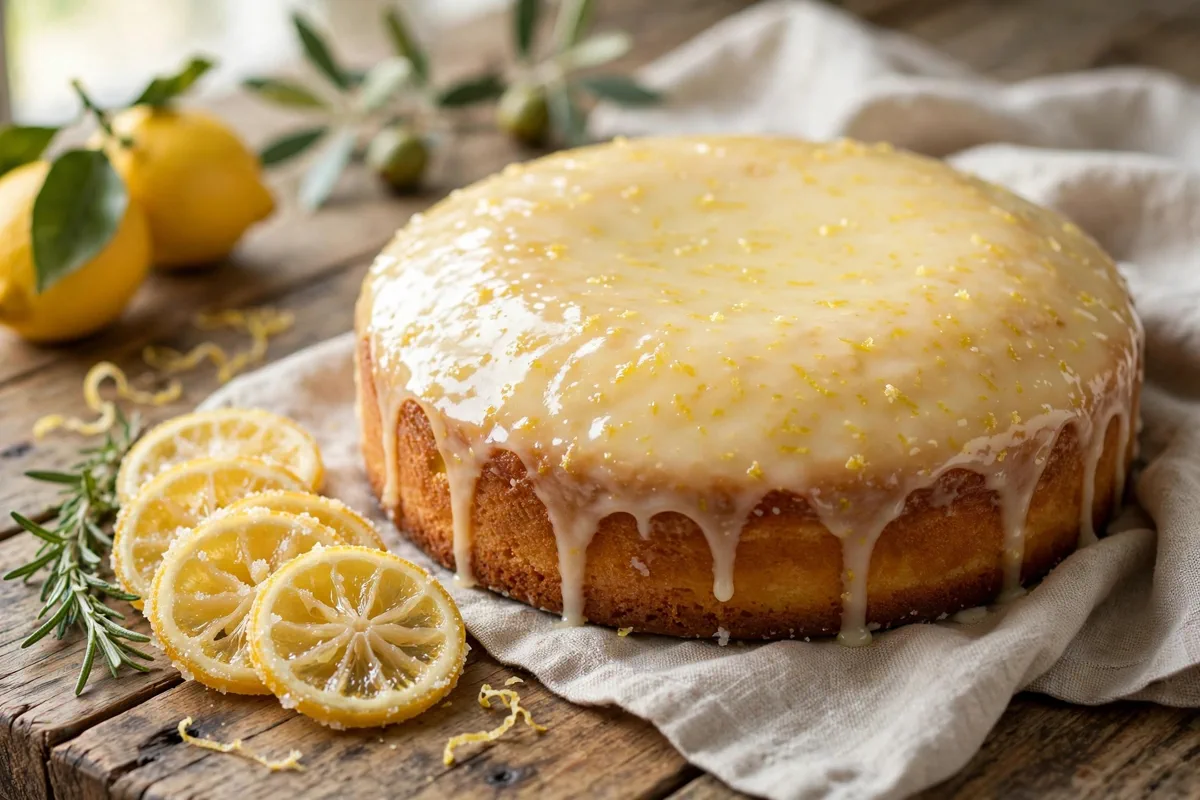
Whisk the powdered sugar with the remaining 30 ml of lemon juice until smooth and thick but pourable. Spoon it over the barely-warm cake so it drips down the sides. Let the glaze set for 20 minutes before slicing.
Our Pro Tips for Success
- •Rub the lemon zest into the sugar with your fingertips for a full minute, until the sugar looks like damp sand and smells strongly of lemon. This releases the lemon oils so the flavor runs through the whole cake instead of living only in the glaze.
- •Use a mild, fruity extra-virgin olive oil, not the grassy peppery kind you save for finishing salads. A strong oil will make the cake taste savory.
- •Bring the eggs and milk to room temperature first. Cold eggs can make the oil seize into little beads and the batter looks curdled — it still bakes fine, but room-temp ingredients mix into a smoother batter.
- •Start checking at 40 minutes. The cake is done when the top is deep golden and a toothpick in the center comes out with moist crumbs but no wet batter. It finishes setting as it cools, so pulling it a touch early is better than a minute too late.
- •Glaze the cake while it is barely warm, not hot. On a hot cake the glaze melts and disappears; on a cool cake it sits thick. Barely warm gives you a thin soaked-in layer at the edges and a crackly top.
Storage & Make-Ahead Instructions
Refrigerator:Store leftovers in an airtight container for up to 3 to 4 days.
Freezer:Freeze in freezer-safe containers or bags for up to 2 months. Thaw overnight in the fridge.
Reheating:Reheat gently in a 350°F oven or covered skillet with a splash of broth until heated through.
Interactive Kitchen Assistant Live Smart Scaler
Our Recipe Precision Calculators
Calculate exact roasting times, internal temperatures, brining ratios, and safe thaw windows.
2.5 lbs (1.13 kg)
Recommended Timing & Thermals
Est. Cook Time45 mins
Rest Period7 mins
Pull From Heat160°F (71°C)
Final Carryover165°F (74°C)
Insert meat thermometer into thickest center without touching bone for 100% juicy safety.
Olive oil lemon cake is a tender single-layer cake where extra-virgin olive oil takes the place of butter. The oil gives it a golden, open crumb and a clean, bright lemon flavor, and the cake stays soft for days without any special storage tricks. This version comes together in one bowl with a whisk — no mixer, no creaming, no separate bowls of dry and wet ingredients.
The idea comes from the olive-growing regions of Italy, especially Liguria and Tuscany, where cooks have baked with olive oil for centuries because it was the fat they had. Citrus and olive oil are an old pairing there — lemon groves and olive trees grow side by side. What makes the combination work in a cake is simple: liquid oil coats the flour's proteins more evenly than solid butter, which limits gluten and keeps the crumb soft at room temperature long after a butter cake would start to dry out.
Why olive oil beats butter in this cake
Butter cakes go stale because butter firms up as it cools. Olive oil stays liquid at room temperature, so an olive oil cake keeps its tender bite on day two and day three. That is the whole reason this cake exists — it is the cake you bake on Sunday and still enjoy on Wednesday.
Oil also lets the lemon come forward. Butter has its own rich flavor that competes with citrus. Olive oil is quieter in the background, so the lemon zest and juice taste brighter. The trade-off is real, though: you lose the buttery flavor some people expect in a lemon cake. If butter flavor is what you are after, this is the wrong recipe. If you want lemon first and a crumb that refuses to dry out, this is the right one.
Choosing the right bottle
Not every olive oil belongs in a cake. The peppery, grassy extra-virgin you drizzle over soup will make this cake taste like salad dressing. You want a mild, fruity bottle — the kind that tastes buttery and a little sweet on its own. Supermarket extra-virgin labeled "mild" or "delicate" is exactly right.
If the only extra-virgin you own is the strong kind, use a light or refined olive oil instead. You will lose the fruity note but the texture will be perfect and the lemon will still shine. What you should not do is grab the cheapest bulk oil that smells stale — old oil is the one thing that can genuinely ruin this cake, because there is no butter or spice to hide behind.
The 60-second zest trick
The most important minute in this recipe happens before any liquid goes in. Rubbing the lemon zest into the sugar with your fingertips breaks the tiny oil sacs in the zest and works those fragrant oils straight into the sugar crystals. The sugar turns damp and pale yellow, and your kitchen smells like a lemon grove.
Skip this step and zest the lemons straight into the batter, and the lemon flavor ends up patchy — bright in the glaze, faint in the crumb. The rubbing takes almost no effort and it is the difference between a cake that tastes lemony everywhere and one that tastes lemony on top. Use a microplane or the fine side of a box grater, and take only the yellow skin. The white pith underneath is bitter and there is no way to fix it once it is in the batter.
One bowl, one whisk
The method is deliberately plain. Sugar and zest get rubbed together, oil goes in and gets whisked into something like wet sand, then the eggs go in one at a time. Adding them one at a time matters — each egg needs to fully blend in before the next one arrives, and that is what builds the smooth, thick batter that holds its rise.
A few practical notes worth knowing before you start:
- Room-temperature eggs and milk mix into oil cleanly. Cold eggs can make the batter look curdled as the oil seizes into tiny beads. It still bakes fine, but the texture is better when everything starts at room temp.
- When the dry ingredients go in, switch from the whisk to a spatula and fold. A whisk at this stage works the flour too hard and you get a tough, tunnel-filled crumb instead of an open golden one.
- Stop folding the moment the last dry streak disappears. A few small lumps will bake out on their own.
The batter is thinner than a butter-cake batter. Do not be tempted to add more flour — it bakes up exactly right.
The crackly lemon glaze
The glaze is just powdered sugar and lemon juice, and it does two jobs. It adds a sharp lemon hit on top of the mellow crumb, and as it sets it forms a thin crackly shell that looks beautiful and keeps the top from drying.
Timing matters more than the ratio. Glaze the cake while it is barely warm — cool enough to touch comfortably, warm enough that you can still feel heat when you hold your hand near it. On a hot cake the glaze melts and vanishes into the crumb. On a fully cool cake it sits on top in a thick opaque layer. Barely warm gives you both: a little soaking in at the edges and a set, crackly top. If the glaze looks too thick to pour, whisk in lemon juice half a teaspoon at a time. Too thin, add more sifted powdered sugar a spoonful at a time.
Where this cake goes wrong
Three mistakes show up again and again with this cake, and all three are easy to avoid:
- A sunken middle. This is underbaking, overmixing, or a pan that is too small. The center of an underbaked cake collapses as it cools. Use a full 9-inch pan, fold the flour in gently, and bake until a toothpick shows moist crumbs — not wet batter, but crumbs.
- Dry edges, raw center. This happens when the oven runs hot or the pan is dark. Dark pans brown the edges fast while the middle lags behind. If your pan is dark, drop the temperature to 325°F and give it a few extra minutes.
- A bitter or savory aftertaste. That is the oil, not the lemon. A peppery finishing oil or a stale bottle will announce itself in the finished cake. Taste your oil first — if you would not enjoy it on bread, do not bake with it.
One more small thing: measure the flour by spooning it into the cup and leveling it off, or better yet use the gram weight. Scooping straight from the bag packs in up to 30% extra flour, and that is enough to turn this tender cake dense.
Keeping it fresh for days
This is where the olive oil earns its keep. Wrapped in plastic or stored in an airtight container at room temperature, the cake stays moist for three days, and many people find it tastes better on day two once the lemon flavor settles into the crumb. Do not refrigerate plain slices — the cold firms up the olive oil and the crumb turns dense and waxy. The fridge is only for cakes with perishable fillings, which this is not.
To freeze, skip the glaze, wrap the cooled cake tightly in two layers of plastic, and freeze up to two months. Thaw at room temperature for about two hours, then glaze it fresh. The glaze takes five minutes and the cake tastes like it was baked that morning.
How to serve it
This cake needs nothing, which is part of its charm. A slice on its own with coffee or tea is the classic move. If you want to dress it up, a spoonful of lightly sweetened whipped cream or a few fresh raspberries on the side works well — the berries' tartness plays nicely against the mellow crumb. In summer, serve it slightly chilled (30 minutes in the fridge, not longer) with a glass of cold milk or iced tea. It also makes a good base for strawberry shortcake-style desserts: split a thick slice, add macerated strawberries, and you have a dinner-party dessert from a Tuesday-night cake.
Frequently Asked Questions
Yes, but pick a mild one. Extra-virgin is traditional and adds a fruity note, while a light or refined olive oil gives a cleaner, more neutral lemon flavor. Avoid the peppery, grassy finishing oils — their flavor takes over the cake.
Almost always one of three things: it was underbaked, the batter was overmixed, or the pan was too small. An underbaked center collapses as it cools, overmixing develops gluten that rises then falls, and a deep small pan leaves the middle raw while the edges set. Use a 9-inch pan, fold just until the flour disappears, and bake until a toothpick shows moist crumbs.
Easy Chicken Recipes • Official Card
Olive Oil Lemon Cake (One Bowl)
☆☆☆☆☆0.0 (0 reviews)•Recipe by Cooking With Guru Editorial Team•Updated: Jan 15, 2025
A one-bowl olive oil lemon cake with a tender golden crumb and crackly lemon glaze — stays moist for 3 days with no butter.
Prep Time15 mins
Cook Time45 mins
Total Time80 mins
Adjust Servings:
10
Ingredients
Click to check off180 ml Extra-virgin olive oil(mild and fruity, not the peppery finishing kind)
200 g Granulated sugar
3 piece Large eggs(room temperature)
2 tbsps Lemon zest(from 2 large lemons)
90 ml Fresh lemon juice(60 ml for the batter, 30 ml for the glaze; from 2 large lemons)
190 g All-purpose flour(about 1 1/2 cups, spooned and leveled)
1 1/2 tsps Baking powder
1/2 tsp Baking soda
1/2 tsp Fine sea salt
120 ml Whole milk(room temperature)
120 g Powdered sugar(sifted, for the glaze)
Instructions
Step-by-StepHeat the oven to 350°F (175°C). Grease a 9-inch round cake pan and line the bottom with parchment paper.
Put the granulated sugar in a large mixing bowl. Add the lemon zest and rub it into the sugar with your fingertips for about a minute, until the sugar looks like damp sand and smells strongly of lemon.
Pour in the olive oil and whisk for about 30 seconds, until the mixture looks like thick wet sand.
Add the eggs one at a time, whisking well after each addition until the batter turns smooth, pale, and slightly thick.
Whisk in the milk and 60 ml of the lemon juice (save the rest for the glaze). The batter may look a little uneven at this point — that is normal.
Sprinkle the flour, baking powder, baking soda, and salt evenly over the batter. Fold with a spatula just until no dry streaks remain, then stop. A few small lumps are fine.
Pour the batter into the prepared pan and smooth the top. Bake 40 to 45 minutes, until the top is deep golden and a toothpick poked in the center comes out with moist crumbs but no wet batter.
Cool the cake in the pan on a wire rack for 10 minutes. Run a thin knife around the edge, turn the cake out onto the rack, and peel off the parchment.
Whisk the powdered sugar with the remaining 30 ml of lemon juice until smooth and thick but pourable. Spoon it over the barely-warm cake so it drips down the sides. Let the glaze set for 20 minutes before slicing.
CWG
Recipe Source
The Cooking With Guru Team
Our recipes are developed and checked by the Cooking With Guru team. Nutrition figures are estimates calculated from USDA data, and yields scale with the built-in portion tools so the recipe fits your kitchen.
More dessert recipes to try!
🍽️
Turkish Menemen: One-Pan Eggs in Spicy Tomato Sauce
🍽️
High-Protein Cottage Cheese Egg Bake with Spinach
🍽️
Easy Chicken Congee Recipe with Crispy Garlic and Chili Oil
Comments & Questions (0)
Join the conversationNo comments yet!
Be the first to leave a comment or ask a question about Olive Oil Lemon Cake (One Bowl).


