🍽️
Prep time5 mins
Cook time10 mins
Ingredients11
snack
Warm Marinated Olives with Citrus and Fennel
Published: Jan 15, 2025
Warm marinated olives with citrus peel, fennel seed and rosemary in olive oil. A 15-minute appetizer that makes store olives taste like something else.
Warm marinated olives with citrus peel, fennel seed and rosemary in olive oil. A 15-minute appetizer that makes store olives taste like something else.
If you are looking for an ultra-satisfying, restaurant-quality meal that comes together with minimal effort, this Warm Marinated Olives with Citrus and Fennel is about to become your new favorite. Everything is cooked to juicy, golden perfection with wholesome ingredients and incredible depth of flavor.
One simple tip!
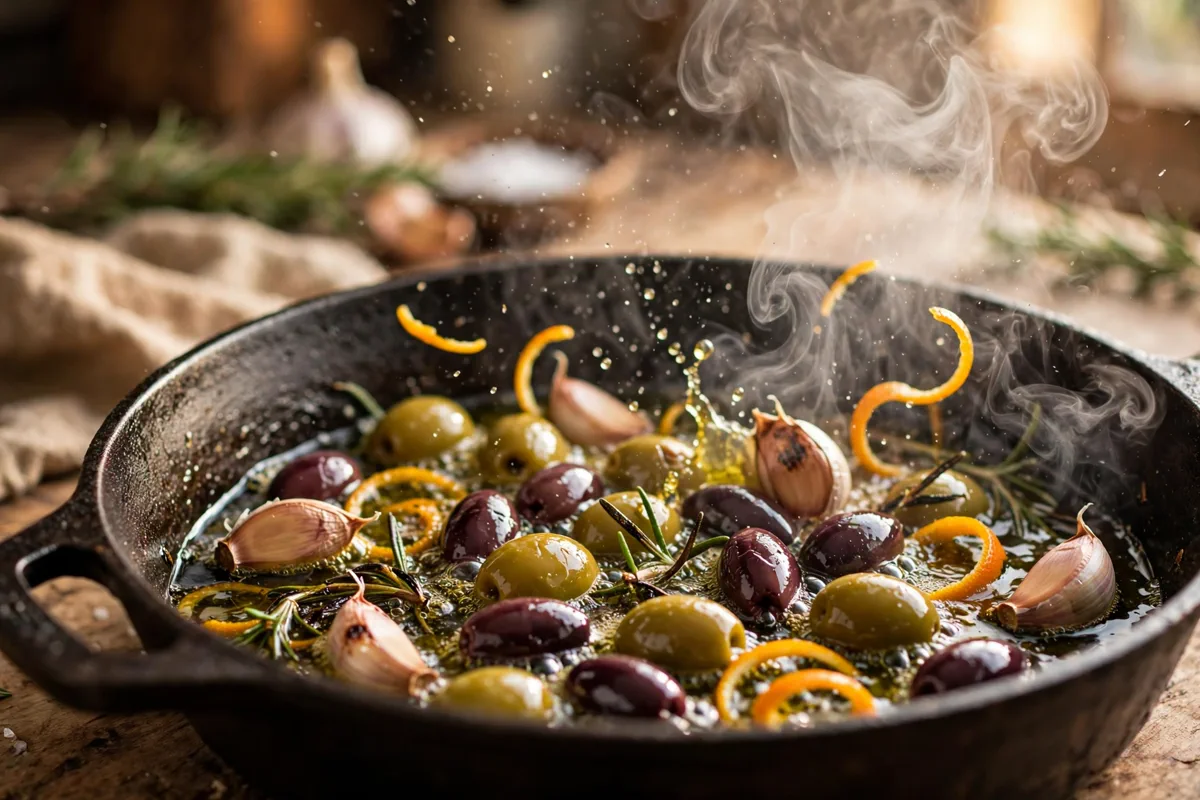
Keep the oil at a bare shimmer, not a sizzle. If you hear active frying, the heat is too high and the garlic and rosemary will turn bitter.
Step-by-Step Photos
Why You’ll Love This Recipe
Quick & EffortlessReady in just 15 minutes total with straightforward, foolproof prep.
Packed with Deep FlavorCarefully balanced with Mixed pitted olives, Olive oil, Orange peel for maximum satisfaction.
Family & Crowd FriendlyMakes 8 generous servings that can be effortlessly doubled or scaled using our smart scaler.
Made From ScratchReal ingredients and straightforward home cooking, with no shortcuts on flavor.
Ingredients Notes & Variations
Here is an overview of what you will need for this recipe. Be sure to scroll down to the printable recipe card below for exact scaled measurements!
Mixed pitted olives
16 ozdrained and rinsed (Castelvetrano, Kalamata, or a mix)
Olive oil
0.5 cupregular olive oil, not your pricey finishing bottle
Orange peel
3 piece2-inch strips, peeled with a vegetable peeler, no white pith
Lemon peel
2 piece2-inch strips, no white pith
Garlic cloves
3 piecesmashed
Fresh rosemary sprigs
2 piecefresh, not dried
Bay leaf
1 pieceFennel seeds
1 tsplightly crushed
Coriander seeds
0.5 tspRed pepper flakes
0.25 tspFlaky sea salt
1 pinchto finish, only if needed
How to Make (Step-by-Step Overview)
Here is a quick summary of the preparation process. Detailed cooking temperatures and step timers are included in the recipe card below.
1
2
3
4
5
6
Our Pro Tips for Success
- •Keep the oil at a bare shimmer, not a sizzle. If you hear active frying, the heat is too high and the garlic and rosemary will turn bitter.
- •Rinse the olives before they go in. Straight-from-the-jar brine will dominate the marinade no matter how good your spices are.
- •Use regular olive oil for warming, not your expensive finishing extra-virgin. Heat flattens its flavor. Drizzle the good stuff over the bowl at serving time if you want that peppery note.
- •Pitted olives are the right call for a party. Unpitted taste slightly more complex but guests will be fishing for pits.
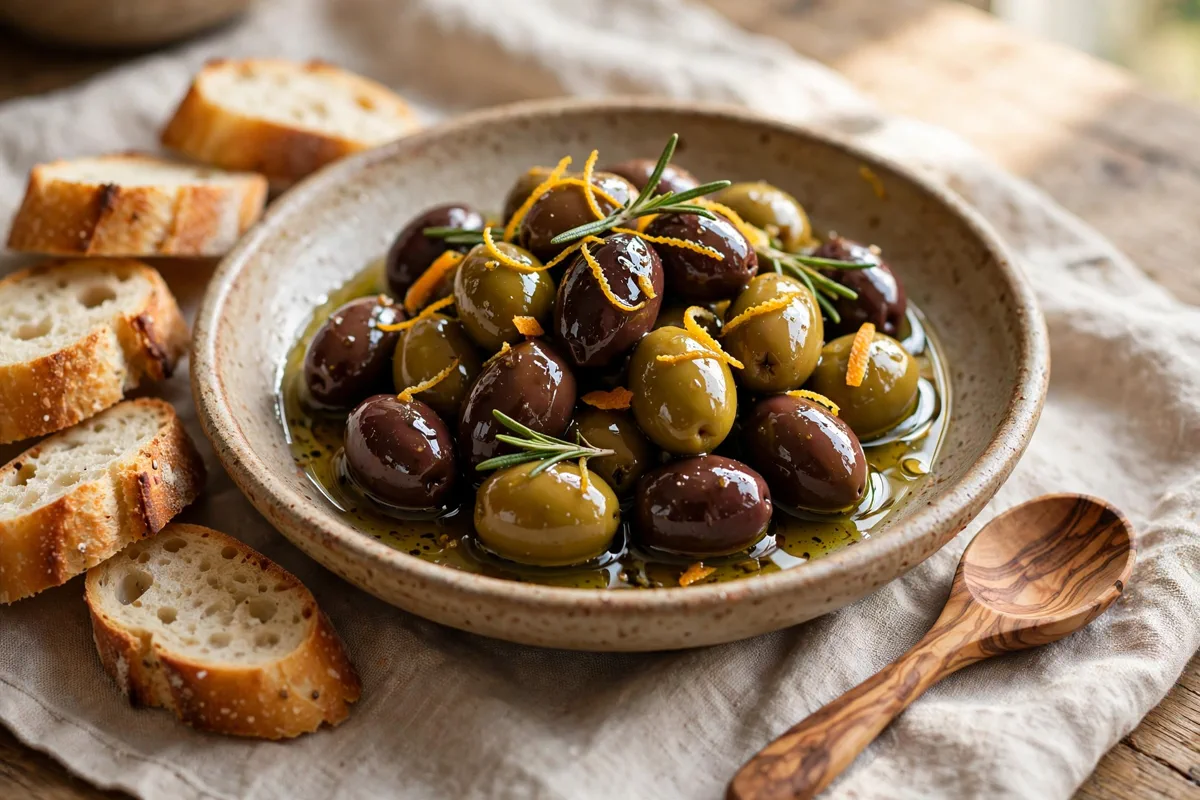
- •Serve these in a shallow bowl with lots of the oil and put out crusty bread. The mopping situation is half the point of this dish.
Storage & Make-Ahead Instructions
Refrigerator:Store leftovers in an airtight container for up to 3 to 4 days.
Freezer:Freeze in freezer-safe containers or bags for up to 2 months. Thaw overnight in the fridge.
Reheating:Reheat gently in a 350°F oven or covered skillet with a splash of broth until heated through.
Interactive Kitchen Assistant Live Smart Scaler
Our Recipe Precision Calculators
Calculate exact roasting times, internal temperatures, brining ratios, and safe thaw windows.
2.5 lbs (1.13 kg)
Recommended Timing & Thermals
Est. Cook Time45 mins
Rest Period7 mins
Pull From Heat160°F (71°C)
Final Carryover165°F (74°C)
Insert meat thermometer into thickest center without touching bone for 100% juicy safety.
Warm marinated olives are whole olives gently heated in seasoned olive oil until they are hot through. The heat softens their flesh and lets them drink in the flavor of citrus peel, fennel seed, garlic and rosemary. Ten minutes in a pan and a jar of ordinary olives turns into an appetizer people remember.
Why Warming Changes the Olive
Cold olives from a jar taste sharp and one-note. Salt leads, and the rest is just brine. Heat does two things at once. It rounds off the sharp edges of the brine, and it opens the olive up so the aromatics in the oil can move into the flesh. You are not cooking the olives. You are warming them through so they go from crunchy and salty to plump and fragrant. The difference is bigger than it sounds. Most people who taste these for the first time do not believe they started as the same olives they skip at a salad bar.
The method is simple on purpose. A saucepan, olive oil, a few aromatics, low heat, ten minutes. It takes pantry ingredients and fifteen minutes, and it lands on the table smelling like you worked on it all afternoon.
Picking Your Olives
Use a mix if you can. Big buttery Castelvetranos are the star here because their mild, creamy flesh shows off the citrus and fennel best. Add some Kalamatas for color and a deeper, winey note, plus a handful of green Lucques or Picholines if your store carries them for a firmer bite. Pitted olives are easier to eat as finger food and they absorb the marinade faster. Unpitted olives hold their shape better and taste a little more complex, but your guests will be fishing for pits. For a party, go pitted.
Skip the tiny canned black olives. They are too soft and their flavor disappears under the marinade. Jarred or deli-counter olives in brine are what you want. Give them a rinse under cold water and a quick pat dry before they go into the pan. This keeps the finished dish from tasting like straight salt water, and it keeps the oil from sputtering when the olives hit it.
The Citrus and Fennel Pairing
Orange peel is doing the heavy lifting here. Use a vegetable peeler to take wide strips from an orange, leaving the white pith behind, and those strips will release a sweet, perfumed oil into the pan as they warm. Lemon peel adds a brighter, sharper note underneath. Together they keep the dish from feeling heavy, which matters because this is all olives and olive oil.
Fennel seed is the flavor that makes people ask what is in these. A teaspoon of whole seeds, lightly crushed, gives a gentle anise warmth that sits underneath the citrus. It is not a licorice bomb. In this amount it reads as warmth and depth, the kind of background note that makes the whole pan smell incredible. Coriander seed goes with it naturally, a little floral and citrusy on its own. If you keep a fennel and coriander habit for roasted vegetables, this will feel familiar.
Garlic, Rosemary, and Heat Control
Smashed garlic cloves go in whole so they perfume the oil without burning into bitter bits. Fresh rosemary sprigs release their piney scent quickly in warm oil. A bay leaf, a small pinch of red pepper flakes for a slow background warmth, and that is the whole spice lineup. Nothing here fights for attention. They are all working on the oil, and the oil is working on the olives.
Heat control is the one thing to get right. You want the oil at a bare shimmer, small lazy bubbles rising around the olives, not a sizzle. If the garlic starts to take color, the heat is too high and the oil will taste bitter. Pull the pan off the burner for a minute and let it settle. Ten minutes at this gentle pace is enough. The olives should be hot all the way through when you press one with a fork, and the oil should smell like orange and rosemary.
Serving Ideas
Serve these warm, straight from the pan, in a shallow bowl with plenty of the oil. Put out crusty bread for mopping. That bread situation is half the point. The leftover oil, after the olives are gone, is seasoned and citrusy and worth keeping for a day or two in a jar for cooking or drizzling over grilled vegetables.
These fit anywhere appetizers go. Next to cheese and cured meat on a board, alongside drinks before dinner, or as the one hot thing at a tapas-style spread. This serves about eight as a pre-dinner snack. If it is the main appetizer for a group, double it without changing anything else.
Common Mistakes and How to Avoid Them
The most common mistake is letting the oil get hot enough to fry. The garlic turns brown, the rosemary gets bitter, and the whole batch tastes scorched. Keep the heat low enough that you see gentle movement in the oil but hear almost nothing. If in doubt, pull the pan off the heat for a minute. You can always warm it back up.
The second mistake is skipping the rinse. Olives straight from the jar carry a lot of brine, and that brine will dominate the marinade. A thirty-second rinse under cold water is enough. Pat them reasonably dry so the oil does not spit when they go in.
Do not use extra-virgin olive oil that you love for finishing. Warming it to this temperature for ten minutes flattens its flavor. Use a decent regular olive oil for the warming, and if you want, drizzle a spoonful of your good peppery extra-virgin over the bowl at serving time. That way you get the fresh green note where you can actually taste it.
One more: taste an olive before you decide it needs salt. The olives bring plenty of salt already. A pinch of flaky sea salt at the end is usually all it needs, and sometimes it needs none at all.
Swaps That Actually Work
No fennel seed? A small pinch of ground star anise works, but use it sparingly, maybe an eighth of a teaspoon, because ground star anise is much stronger than whole fennel seed. Caraway is not the same and will push this toward rye-bread territory, so skip that swap.
If orange is not on hand, tangerine or clementine peel works just as well. Skip bottled citrus juice entirely. It makes the oil murky and the flavor turns sour instead of bright. The peel is where the perfume lives.
Thyme can stand in for rosemary if that is what is growing on your windowsill. It is softer and a little sweeter, so use three sprigs instead of two. Dried rosemary is the one swap to avoid here. It stays woody and harsh in this short a warming time and never softens the way fresh does.
Make-Ahead and Storage
These are best served warm the day you make them, and that is when the texture is at its peak. They do keep well. Cool the pan, transfer olives and all of their oil into a sealed jar, and refrigerate for up to two weeks. The oil will solidify in the fridge. That is normal. Scoop out what you need, warm it gently in a pan over low heat for five minutes until the oil loosens and the olives are hot, and they are almost as good as fresh.
Do not reheat these in the microwave if you can avoid it. It heats unevenly and can leave the garlic tasting harsh. Low heat on the stove is the way. If you made a big batch for a party, warm only the olives you plan to serve so the rest stay at their best in the jar.
Questions We Hear
Can I make warm marinated olives ahead of a party?
Yes. Make the full batch up to a week ahead, refrigerate in its oil, and warm it gently in a pan for five minutes before guests arrive. The flavor actually deepens after a day or two in the oil.
What olives are best for warming?
Large brined olives like Castelvetrano, Kalamata, Lucques or Picholine. Pitted olives are easier to eat and absorb the marinade faster, so choose pitted for parties.
Can I use the leftover oil for anything?
Yes. Strain it into a jar and refrigerate for up to a week. Use it for cooking, drizzling over grilled vegetables, or tossing with roasted potatoes. It carries the citrus, garlic and herb flavor.
Will warming ruin expensive olives?
No, gentle warming does not ruin good olives. It softens their flesh and lets them absorb the marinade. Just keep the heat low so nothing fries or scorches.
Frequently Asked Questions
Yes. Make the full batch up to a week ahead, refrigerate it in its oil, and warm it gently in a pan for 5 minutes before guests arrive. The flavor actually deepens after a day or two in the oil.
Large brined olives like Castelvetrano, Kalamata, Lucques or Picholine work best. Pitted olives are easier to eat and absorb the marinade faster, so choose pitted when serving a crowd.
Easy Chicken Recipes • Official Card
Warm Marinated Olives with Citrus and Fennel
☆☆☆☆☆0.0 (0 reviews)•Recipe by Cooking With Guru Editorial Team•Updated: Jan 15, 2025
Warm marinated olives with citrus peel, fennel seed and rosemary in olive oil. A 15-minute appetizer that makes store olives taste like something else.
Prep Time5 mins
Cook Time10 mins
Total Time15 mins
Adjust Servings:
8
Ingredients
Click to check off16 oz Mixed pitted olives(drained and rinsed (Castelvetrano, Kalamata, or a mix))
1/2 cup Olive oil(regular olive oil, not your pricey finishing bottle)
3 piece Orange peel(2-inch strips, peeled with a vegetable peeler, no white pith)
2 piece Lemon peel(2-inch strips, no white pith)
3 piece Garlic cloves(smashed)
2 piece Fresh rosemary sprigs(fresh, not dried)
1 piece Bay leaf
1 tsp Fennel seeds(lightly crushed)
1/2 tsp Coriander seeds
1/4 tsp Red pepper flakes
1 pinch Flaky sea salt(to finish, only if needed)
Instructions
Step-by-Step0
0
0
0
CWG
Recipe Source
The Cooking With Guru Team
Our recipes are developed and checked by the Cooking With Guru team. Nutrition figures are estimates calculated from USDA data, and yields scale with the built-in portion tools so the recipe fits your kitchen.
More snack recipes to try!
🍽️
Turkish Menemen: One-Pan Eggs in Spicy Tomato Sauce
🍽️
High-Protein Cottage Cheese Egg Bake with Spinach
🍽️
Easy Chicken Congee Recipe with Crispy Garlic and Chili Oil
Comments & Questions (0)
Join the conversationNo comments yet!
Be the first to leave a comment or ask a question about Warm Marinated Olives with Citrus and Fennel.