🍽️
Prep time20 mins
Cook time100 mins
Ingredients10
desserteasy
Roasted Strawberry Eton Mess
Published: Jan 15, 2025
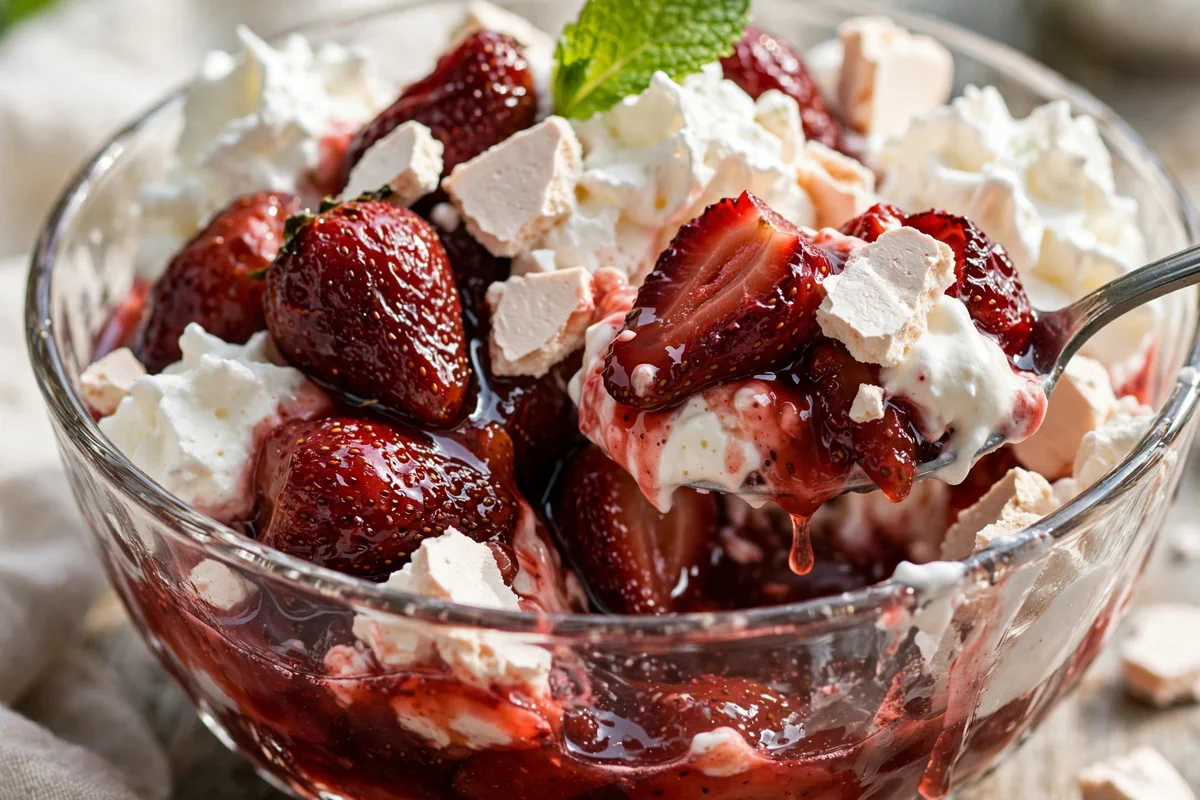
Strawberries roasted into syrup, crisp meringue, and barely-sweet cream: the British classic made fall-ready in about 2 hours, mostly hands-off.
Strawberries roasted into syrup, crisp meringue, and barely-sweet cream: the British classic made fall-ready in about 2 hours, mostly hands-off.
If you are looking for an ultra-satisfying, restaurant-quality meal that comes together with minimal effort, this Roasted Strawberry Eton Mess is about to become your new favorite. Everything is cooked to juicy, golden perfection with wholesome ingredients and incredible depth of flavor.
One simple tip!
Do not whisk the meringue past stiff peaks: once the whites hold their shape and the bowl feels cool, stop. Overbeaten meringue weeps sugar syrup and collapses in the oven.
Step-by-Step Photos
Why You’ll Love This Recipe
Quick & EffortlessReady in just 150 minutes total with straightforward, foolproof prep.
Packed with Deep FlavorCarefully balanced with fresh strawberries, granulated sugar, fresh lemon juice for maximum satisfaction.
Family & Crowd FriendlyMakes 6 generous servings that can be effortlessly doubled or scaled using our smart scaler.
Made From ScratchReal ingredients and straightforward home cooking, with no shortcuts on flavor.
Ingredients Notes & Variations
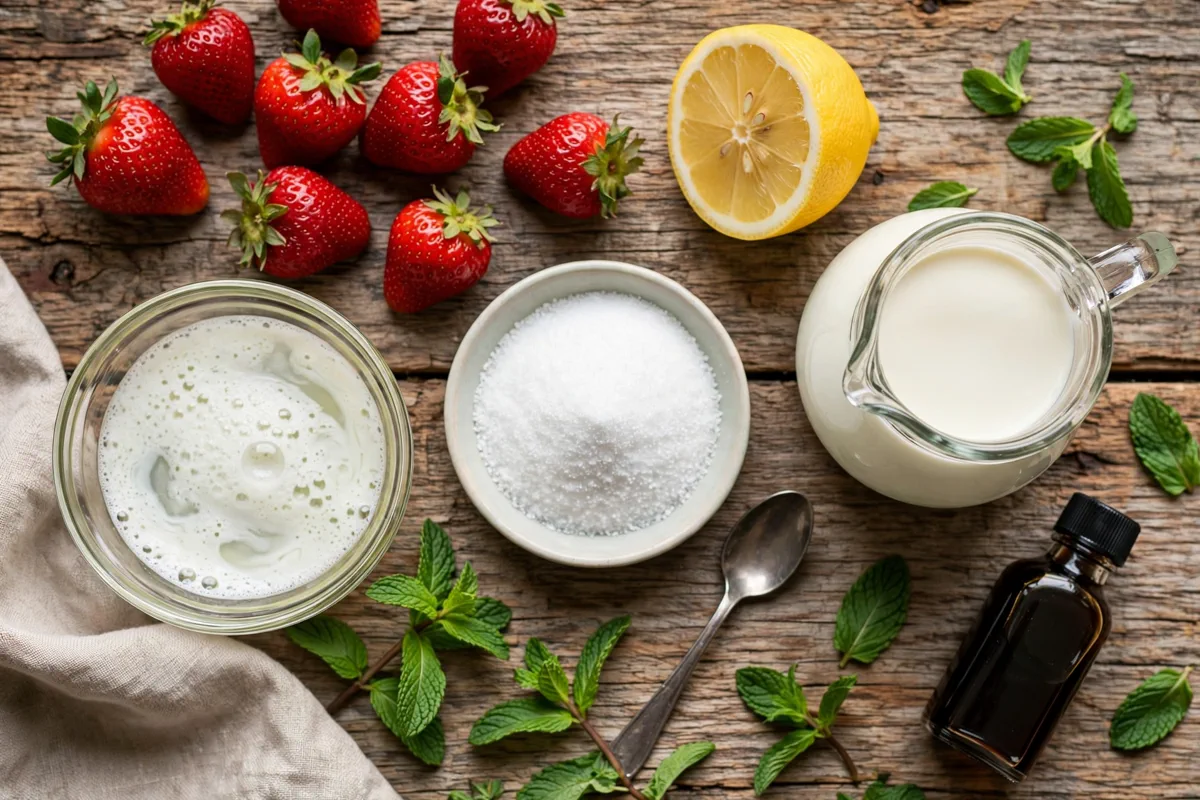
Here is an overview of what you will need for this recipe. Be sure to scroll down to the printable recipe card below for exact scaled measurements!
fresh strawberries
1.5 lbhulled and halved; save the prettiest few whole for the top
granulated sugar
0.25 cupfor roasting the berries
fresh lemon juice
1 tbspbrightens the syrup; bottled tastes flat here
large egg whites
3 pieceat room temperature; about 90 g total
superfine sugar
0.75 cupcastor sugar; granulated works but gives a coarser crumb
cream of tartar
0.25 tspstabilizes the whites
heavy whipping cream
2 cupcold, straight from the fridge
powdered sugar
2 tbspbarely sweetens the cream; the berries carry the sugar
vanilla extract
1 tsppure, not imitation
fresh mint leaves
6 piecesmall leaves only, for the top
How to Make (Step-by-Step Overview)
Here is a quick summary of the preparation process. Detailed cooking temperatures and step timers are included in the recipe card below.
1
Heat the oven to 250°F (120°C). Line a rimmed baking sheet with parchment. Beat the 3 egg whites with the cream of tartar on medium-high until soft, foamy peaks form, about 2 minutes. The mixture should look like loose foam, not yet glossy.
2
Add the superfine sugar one tablespoon at a time, beating 30 seconds between additions. When all the sugar is in, beat until stiff, glossy peaks stand straight when you lift the beater, about 4-5 minutes. Rub a dab between your fingers: it should feel completely smooth, with no graininess.
3
Dollop the meringue into 8 rough mounds on the parchment, each about the size of a fist. Bake until the mounds lift off the paper cleanly and feel dry and hollow when tapped, 90-100 minutes. Turn the oven off, crack the door, and let them cool inside for at least 30 minutes.
4
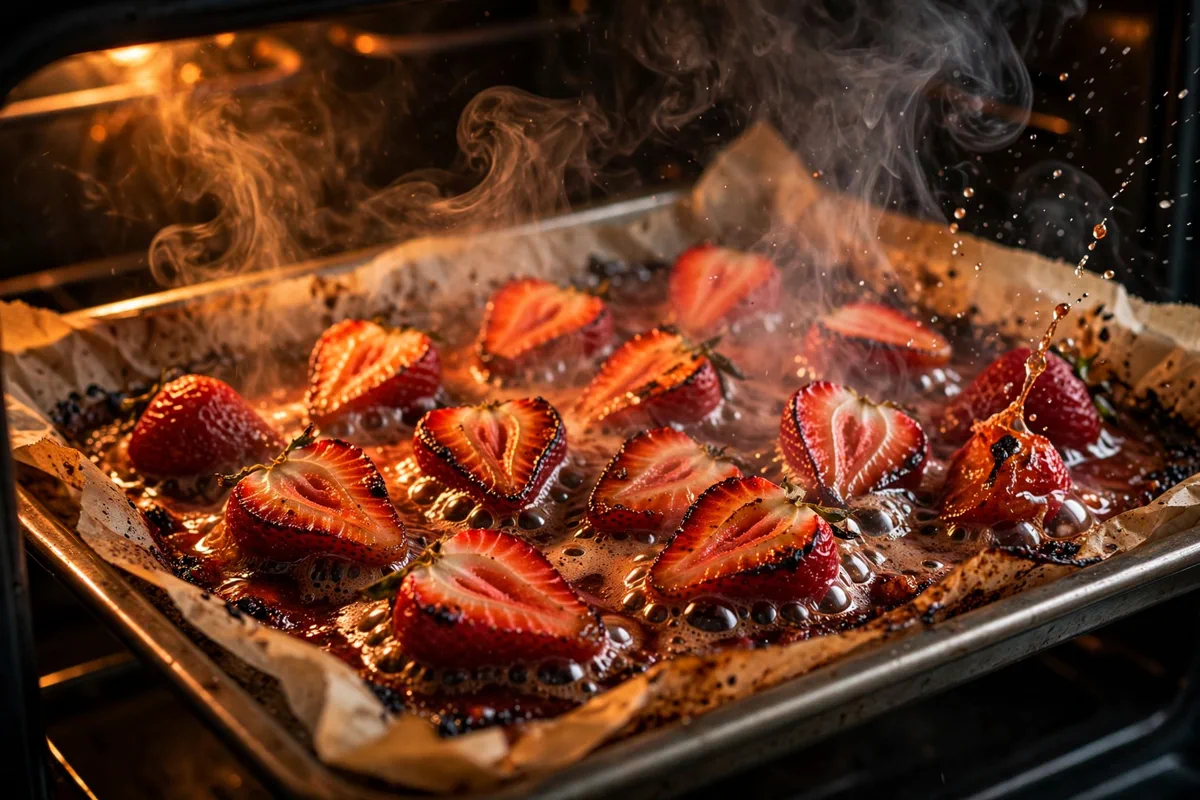
Raise the oven to 400°F (200°C). Toss the halved strawberries with the granulated sugar and lemon juice on a second lined baking sheet, spreading them in a single uncrowded layer. Roast until the edges caramelize and the juices bubble into a thick syrup, 20-25 minutes. You should hear a steady sizzle when you open the oven door. Cool to warm, about 20 minutes.
5
Beat the cold cream, powdered sugar, and vanilla on medium-high until soft peaks form, about 3 minutes. Stop when the cream holds its shape but the tips curl over. Overbeaten cream turns buttery once folded.
6
Break the meringue into big shards over a large bowl, about 2-inch pieces. Pour in the warm berries with all their syrup, add the cream, and fold 3-4 strokes with a spatula. The layers should stay distinct: streaks of red, white, and tan, not a pink blur.
7
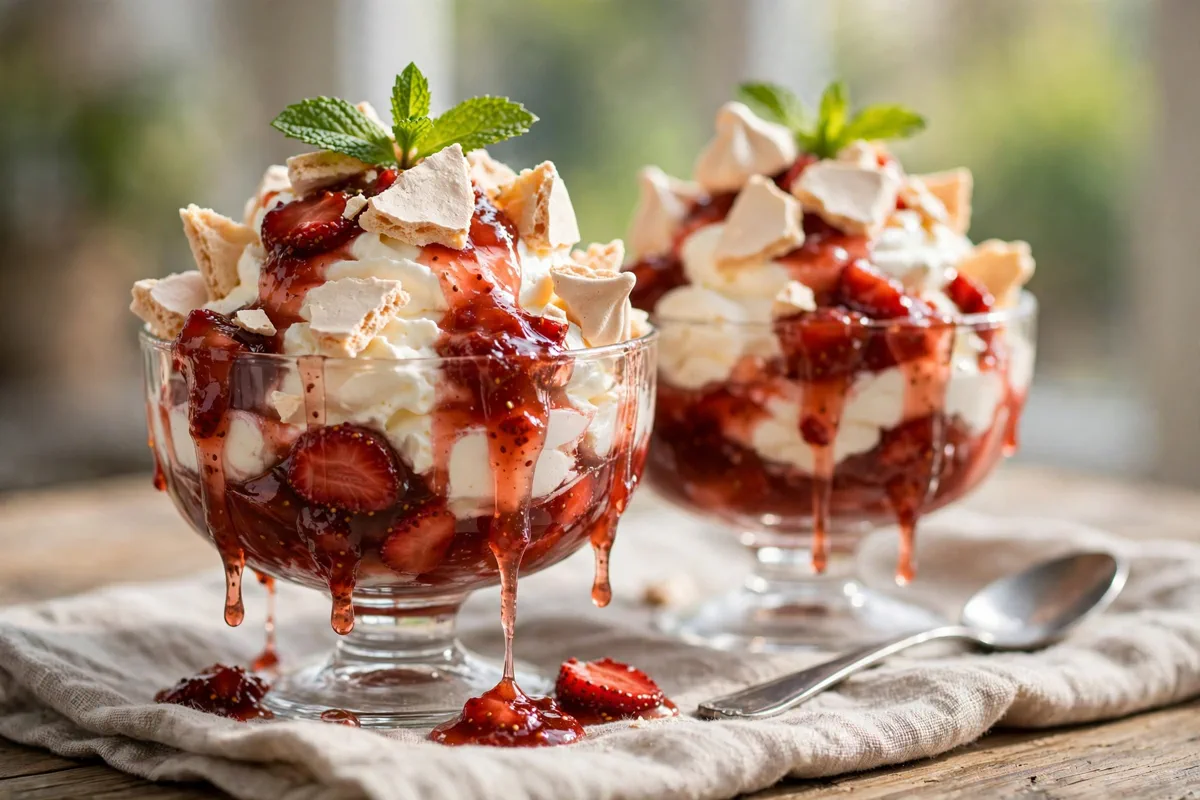
Spoon into bowls. Top each with a whole reserved strawberry, a drizzle of any syrup left in the pan, and a mint leaf. Serve within 2 hours.
Our Pro Tips for Success
- •Do not whisk the meringue past stiff peaks: once the whites hold their shape and the bowl feels cool, stop. Overbeaten meringue weeps sugar syrup and collapses in the oven.
- •Roast the strawberries on the middle rack and don't crowd the pan. Crowded berries steam instead of roast, and you lose the caramelized edges that make this version different from fresh.
- •Let the berries cool to warm before layering. Hot berries melt the cream and turn the whole bowl soupy; warm berries give you ribbons of syrup without the melt.
- •Whisk the cream to soft peaks, not stiff. Stiff cream turns grainy once you fold it, while soft cream flows between the meringue shards and sets in the bowl.
- •Bake the meringue until the shards lift off the parchment cleanly and feel dry all the way through. Any softness in the middle turns chewy within an hour of assembly.
Storage & Make-Ahead Instructions
Refrigerator:Store leftovers in an airtight container for up to 3 to 4 days.
Freezer:Freeze in freezer-safe containers or bags for up to 2 months. Thaw overnight in the fridge.
Reheating:Reheat gently in a 350°F oven or covered skillet with a splash of broth until heated through.
Interactive Kitchen Assistant Live Smart Scaler
Our Recipe Precision Calculators
Calculate exact roasting times, internal temperatures, brining ratios, and safe thaw windows.
2.5 lbs (1.13 kg)
Recommended Timing & Thermals
Est. Cook Time45 mins
Rest Period7 mins
Pull From Heat160°F (71°C)
Final Carryover165°F (74°C)
Insert meat thermometer into thickest center without touching bone for 100% juicy safety.
Eton mess is crushed meringue, whipped cream, and strawberries folded together in a bowl, served the same day it's assembled. It got its name at Eton College, the English boarding school, where it has been the dessert of the annual cricket match against Harrow since the 1800s. This version roasts the strawberries first, so their juices collapse into syrup and their edges caramelize — the British classic with a fall-ready edge.
Why roasting the strawberries is worth the extra step
Raw strawberries in an eton mess are perfectly good. But roasted strawberries change the whole dessert. Twenty minutes at 400°F does three things at once: it softens the berries into jammy pieces, it thickens their juices into a syrup that clings to the cream, and it caramelizes the cut edges so each bite has a slightly dark, almost toasty note. A spoonful of sugar before roasting helps draw the juice out, and the lemon juice keeps the syrup from tasting flat and one-note sweet.
The practical upshot: the syrup does the saucing for you. When you fold the warm berries into the bowl, that syrup streaks through the cream in ribbons instead of pooling at the bottom. You get color, moisture, and flavor in one move. No extra sauce to make, no reduction to babysit.
The meringue: what crisp and chewy should actually feel like
Eton mess meringue is not the bone-dry discs you find in a bakery case. It should be crisp on the outside with a slightly chewy center — the kind that shatters when you break it but gives a little resistance when you bite it. Getting there means two things: real stiff peaks before baking, and a slow, low bake.
On the stiffness: add the sugar a spoonful at a time, not all at once. Dumping it in weighs the foam down before the protein network has finished building, and you end up with a meringue that looks fine going into the oven and comes out flat and weepy. Rub a dab between your fingers near the end — if you feel grit, keep beating. Gritty meringue bakes up coarse and hollow.
On the bake: 250°F for 90 to 100 minutes, then cool in the turned-off oven with the door cracked. The gradual cool-down matters more than people think. Pulling hot meringue into a cool kitchen makes it crack and sweat, and the sweat softens the crisp shell you just built. If your meringue still feels soft in the middle after 100 minutes, give it another 10 — oven thermometers lie, and soft-centered meringue turns gummy within an hour of assembly.
Room-temperature whites, cold cream
The one temperature rule worth remembering: whites whip at room temperature, cream whips cold. Room-temperature whites reach full volume because their proteins stretch more easily; cold whites never quite get there. Cream does the opposite — warm cream won't hold air, and it curdles into butter faster. Separate the eggs when they're cold (cleaner break), then let the whites sit out 20 minutes before beating.
How to layer it without turning the bowl to soup
Eton mess has no strict layering order — that's the point of the name; it's a glorious mess. But there is a right way to fold it. Break the meringue into roughly 2-inch shards first, then add the berries with all their syrup, then the cream. Fold three or four strokes with a spatula and stop. The layers should stay visible: streaks of red syrup, white cream, tan meringue. If the whole bowl turns uniform pink, you've folded too much, and the texture goes from distinct bites to pudding.
Temperature is the other half of it. Let the berries cool from the oven until they're warm, not hot — about 20 minutes on the counter. Hot berries melt the cream on contact, and melted cream plus syrup plus meringue equals the very soup you're trying to avoid. Warm berries still soften the cream slightly where they touch, which is actually good: it gives you pockets where the cream and syrup have married.
Timing: assemble no more than 2 hours before serving, and chill the bowl until it goes to the table. The meringue starts softening the moment it meets cream, so an eton mess assembled at noon is a different dessert by dinner. Make the meringue and roast the berries ahead — both keep — but hold the fold until close to serving time.
Swaps that work, and a few that don't
This dessert is forgiving, but a few swaps change it in ways you should know about before you commit. Mascarpone works in place of half the cream and adds a richer, slightly tangy body — use a 1:1 swap for up to half the volume; replacing all the cream makes it too dense. Brown sugar on the berries instead of white gives the syrup a molasses depth that suits the fall version, though it darkens the color.
Frozen strawberries will roast, but they release far more water, so extend the roast by 5-8 minutes and expect a thinner syrup. Skip raspberries for roasting — they dissolve into seeds and mush. And while balsamic vinegar on strawberries is a classic pairing, keep it to a teaspoon here; more than that and the syrup tastes like salad dressing instead of dessert.
Storing it: three parts, three timelines
The three components age at completely different speeds, which is why you treat them separately. Baked meringue keeps up to 3 days in an airtight container at room temperature, with a paper towel inside to absorb humidity. Whipped cream holds about a day in the fridge, covered. Roasted berries keep 4 days refrigerated, and their syrup actually improves as it sits.
The assembled dessert keeps about 2 hours in the fridge before the meringue goes soft. Past that it still tastes fine — nobody will complain — but you lose the crunch that makes it eton mess instead of strawberry fool. Do not freeze the assembled dessert. The cream splits on thawing and the meringue turns to gum.
A dessert with a school attached
The story goes that eton mess was born from a pavlova that collapsed — the crushed version was easier to serve at a crowded cricket match than a pristine meringue cake. Whether or not that's literally true, it's the right way to think about this dessert: it refuses to be precious. Americans rarely make it, which is a shame, because it asks almost nothing of you and delivers something that looks like effort. A bowl of shattered meringue, jammy roasted strawberries, and barely-sweet cream needs no decorating skills and no special equipment beyond a mixer. That's the whole pitch.
Frequently Asked Questions
Eton mess is a British dessert of crushed meringue, whipped cream, and strawberries folded together in a bowl. The name dates to the 1800s at Eton College, where it was served at the annual cricket match against Harrow.
Yes, if you keep it to jammy roasted strawberries. Strawberries are low-acid and high in pectin relative to softer berries, so they hold their shape in the oven while their juices thicken into syrup. Blueberries roast fine too but stain everything purple; raspberries dissolve into mush.
Easy Chicken Recipes • Official Card
Roasted Strawberry Eton Mess
☆☆☆☆☆0.0 (0 reviews)•Recipe by Cooking With Guru Editorial Team•Updated: Jan 15, 2025
Strawberries roasted into syrup, crisp meringue, and barely-sweet cream: the British classic made fall-ready in about 2 hours, mostly hands-off.
Prep Time20 mins
Cook Time100 mins
Total Time150 mins
Adjust Servings:
6
Ingredients
Click to check off1.5 lb fresh strawberries(hulled and halved; save the prettiest few whole for the top)
1/4 cup granulated sugar(for roasting the berries)
1 tbsp fresh lemon juice(brightens the syrup; bottled tastes flat here)
3 piece large egg whites(at room temperature; about 90 g total)
3/4 cup superfine sugar(castor sugar; granulated works but gives a coarser crumb)
1/4 tsp cream of tartar(stabilizes the whites)
2 cups heavy whipping cream(cold, straight from the fridge)
2 tbsps powdered sugar(barely sweetens the cream; the berries carry the sugar)
1 tsp vanilla extract(pure, not imitation)
6 piece fresh mint leaves(small leaves only, for the top)
Equipment Needed
- rimmed baking sheet
- parchment paper
- stand mixer or hand mixer
- large mixing bowl
- spatula
- cooling rack
Instructions
Step-by-StepHeat the oven to 250°F (120°C). Line a rimmed baking sheet with parchment. Beat the 3 egg whites with the cream of tartar on medium-high until soft, foamy peaks form, about 2 minutes. The mixture should look like loose foam, not yet glossy.
Add the superfine sugar one tablespoon at a time, beating 30 seconds between additions. When all the sugar is in, beat until stiff, glossy peaks stand straight when you lift the beater, about 4-5 minutes. Rub a dab between your fingers: it should feel completely smooth, with no graininess.
Dollop the meringue into 8 rough mounds on the parchment, each about the size of a fist. Bake until the mounds lift off the paper cleanly and feel dry and hollow when tapped, 90-100 minutes. Turn the oven off, crack the door, and let them cool inside for at least 30 minutes.
Raise the oven to 400°F (200°C). Toss the halved strawberries with the granulated sugar and lemon juice on a second lined baking sheet, spreading them in a single uncrowded layer. Roast until the edges caramelize and the juices bubble into a thick syrup, 20-25 minutes. You should hear a steady sizzle when you open the oven door. Cool to warm, about 20 minutes.
Beat the cold cream, powdered sugar, and vanilla on medium-high until soft peaks form, about 3 minutes. Stop when the cream holds its shape but the tips curl over. Overbeaten cream turns buttery once folded.
Break the meringue into big shards over a large bowl, about 2-inch pieces. Pour in the warm berries with all their syrup, add the cream, and fold 3-4 strokes with a spatula. The layers should stay distinct: streaks of red, white, and tan, not a pink blur.
0Spoon into bowls. Top each with a whole reserved strawberry, a drizzle of any syrup left in the pan, and a mint leaf. Serve within 2 hours.
CWG
Recipe Source
The Cooking With Guru Team
Our recipes are developed and checked by the Cooking With Guru team. Nutrition figures are estimates calculated from USDA data, and yields scale with the built-in portion tools so the recipe fits your kitchen.
More dessert recipes to try!
🍽️
Turkish Menemen: One-Pan Eggs in Spicy Tomato Sauce
🍽️
High-Protein Cottage Cheese Egg Bake with Spinach
🍽️
Easy Chicken Congee Recipe with Crispy Garlic and Chili Oil
Comments & Questions (0)
Join the conversationNo comments yet!
Be the first to leave a comment or ask a question about Roasted Strawberry Eton Mess.


