🍽️
Prep time15 mins
Cook time25 mins
Ingredients14
dessert
Christmas Sugar Cookie Bars
Published: Jan 15, 2025
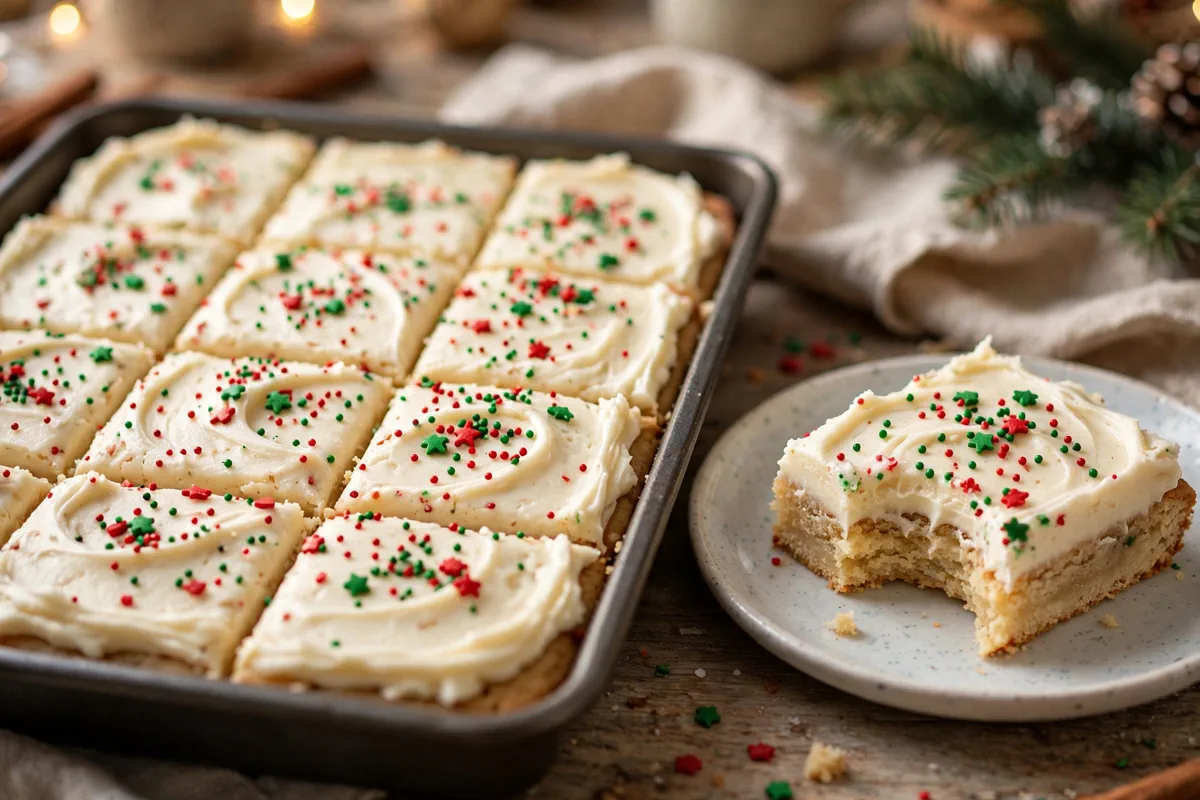
Soft sugar cookie bars with vanilla buttercream and sprinkles — frosted sugar-cookie flavor baked in one pan, no rolling or cutting.
Soft sugar cookie bars with vanilla buttercream and sprinkles — frosted sugar-cookie flavor baked in one pan, no rolling or cutting.
If you are looking for an ultra-satisfying, restaurant-quality meal that comes together with minimal effort, this Christmas Sugar Cookie Bars is about to become your new favorite. Everything is cooked to juicy, golden perfection with wholesome ingredients and incredible depth of flavor.
One simple tip!
Spoon the flour into the measuring cup and level it with a knife. Scooping straight from the bag packs in up to a quarter cup extra, and that is the most common reason these bars bake up dry.
Step-by-Step Photos
Why You’ll Love This Recipe
Quick & EffortlessReady in just 115 minutes total with straightforward, foolproof prep.
Packed with Deep FlavorCarefully balanced with unsalted butter, granulated sugar, large eggs for maximum satisfaction.
Family & Crowd FriendlyMakes 24 generous servings that can be effortlessly doubled or scaled using our smart scaler.
Made From ScratchReal ingredients and straightforward home cooking, with no shortcuts on flavor.
Ingredients Notes & Variations
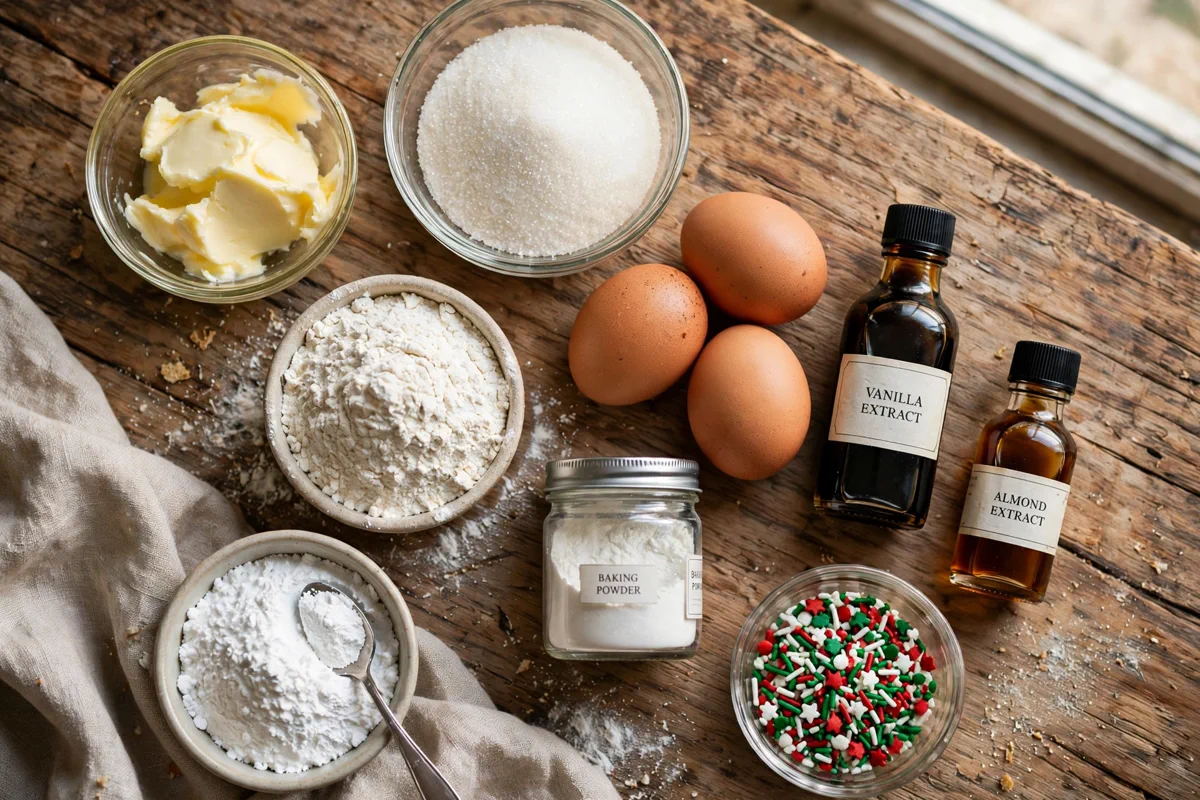
Here is an overview of what you will need for this recipe. Be sure to scroll down to the printable recipe card below for exact scaled measurements!
unsalted butter
1 cupsoftened to room temperature, for the bars
granulated sugar
1.5 cuplarge eggs
2 pieceroom temperature
vanilla extract
1 tbspfor the bars
almond extract
0.5 tspall-purpose flour
3 cupspooned into the cup and levelled, not scooped
baking powder
1 tspsalt
0.5 tspfor the bars
unsalted butter
0.5 cupsoftened to room temperature, for the frosting
powdered sugar
3 cupsifted if lumpy
whole milk
2 tbspplus a little more if the frosting is too stiff
vanilla extract
1 tspfor the frosting
salt
1 pinchfor the frosting
Christmas sprinkles
3 tbspred, green and white
How to Make (Step-by-Step Overview)
Here is a quick summary of the preparation process. Detailed cooking temperatures and step timers are included in the recipe card below.
Heat the oven to 350°F (175°C). Line a 9x13-inch metal baking pan with parchment paper, leaving overhang on the two long sides so you can lift the slab out later.
Beat the softened butter and granulated sugar in a large bowl for 3 minutes, until pale, fluffy, and noticeably lighter in colour.
Beat in the eggs one at a time, then beat in the vanilla extract and almond extract until the mixture looks smooth.
Whisk the flour, baking powder, and salt together in a separate bowl.
Add the dry mixture to the wet mixture and mix on low speed just until no dry flour is visible. Stop as soon as it comes together; overmixing makes tough bars.
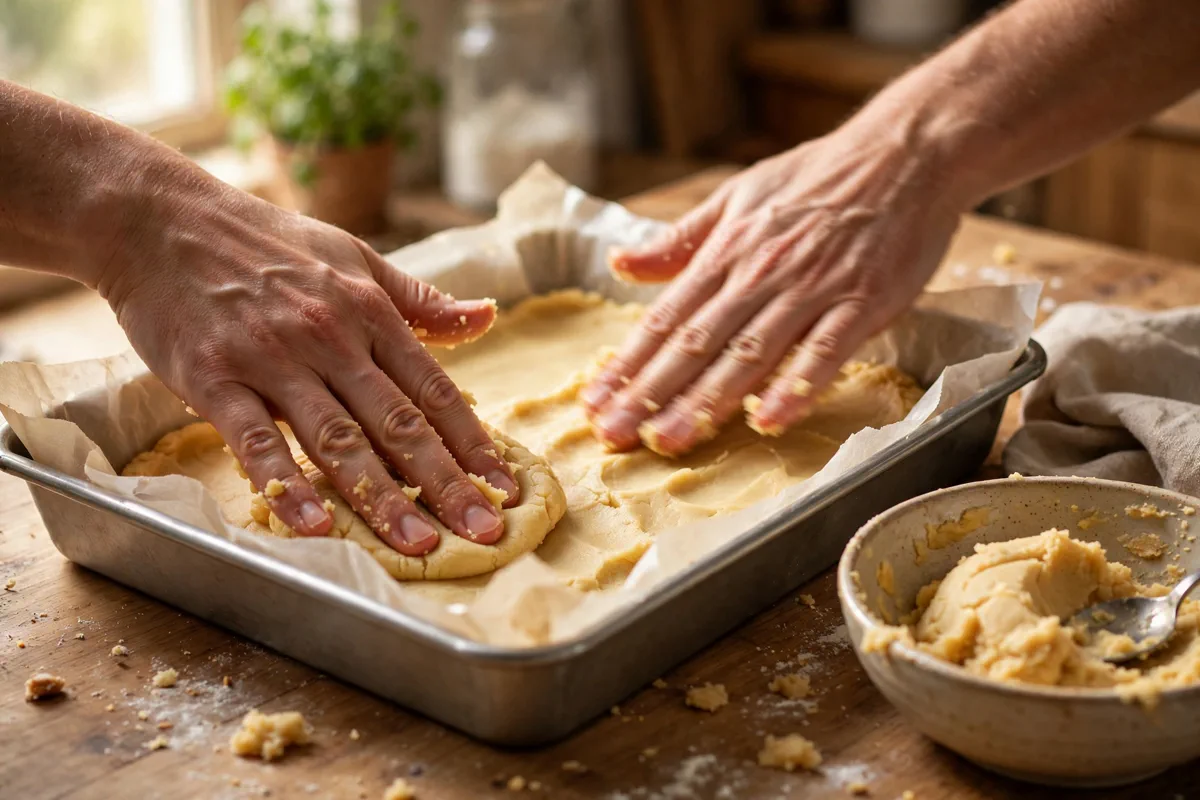
Press the dough into the lined pan in an even layer, pushing it into the corners. Smooth the top with a spatula or the back of a spoon.
Bake for 22 to 25 minutes, until the edges are set and just starting to turn pale gold and the center looks set but still pale. Do not wait for the top to brown.
Cool the slab in the pan for 15 minutes, then lift it out using the parchment overhang and set it on a wire rack to cool completely, about 45 minutes.
Make the frosting: beat the softened butter until smooth, then beat in the powdered sugar, milk, vanilla, and salt for 2 minutes until light and spreadable.
Spread the frosting over the fully cooled slab in an even layer, then scatter the sprinkles over the top right away, before the frosting starts to set.
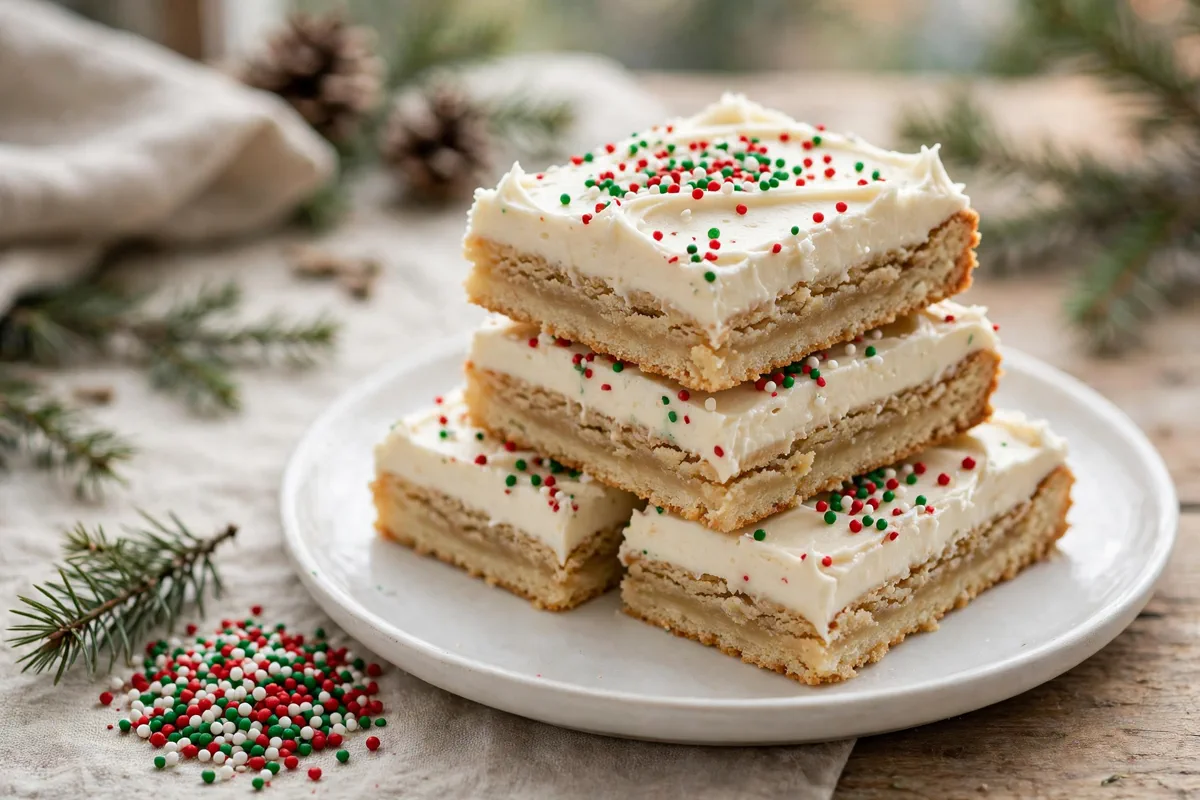
Chill the frosted slab for 20 minutes so the frosting firms up, then slice into 24 squares with a long sharp knife, wiping the blade clean between cuts.
Our Pro Tips for Success
- •Spoon the flour into the measuring cup and level it with a knife. Scooping straight from the bag packs in up to a quarter cup extra, and that is the most common reason these bars bake up dry.
- •Pull the pan when the edges are set and the center still looks a touch soft. The slab keeps baking from residual heat as it cools, and pale centers are what keep the bars soft instead of cakey.
- •Do not frost a warm slab. Even a slightly warm base melts the buttercream into a thin glaze. Wait until the slab feels cool all the way through, about 45 minutes on a rack.
- •Chill the frosted slab for 20 minutes before cutting. Cold frosting slices cleanly instead of dragging, and the squares come out with sharp edges.
- •Wipe the knife between cuts. One clean wipe per cut keeps the frosting lines tidy and stops crumbs from dragging across the white buttercream.
Storage & Make-Ahead Instructions
Refrigerator:Store leftovers in an airtight container for up to 3 to 4 days.
Freezer:Freeze in freezer-safe containers or bags for up to 2 months. Thaw overnight in the fridge.
Reheating:Reheat gently in a 350°F oven or covered skillet with a splash of broth until heated through.
Interactive Kitchen Assistant Live Smart Scaler
Our Recipe Precision Calculators
Calculate exact roasting times, internal temperatures, brining ratios, and safe thaw windows.
2.5 lbs (1.13 kg)
Recommended Timing & Thermals
Est. Cook Time45 mins
Rest Period7 mins
Pull From Heat160°F (71°C)
Final Carryover165°F (74°C)
Insert meat thermometer into thickest center without touching bone for 100% juicy safety.
What Christmas Sugar Cookie Bars Are
Christmas sugar cookie bars are a pan-baked version of the classic frosted sugar cookie. The same soft, buttery dough is pressed into a 9x13 pan, baked in one slab, spread with vanilla buttercream, and cut into squares. You get the same flavour as rolled cut-out cookies with no chilling, no rolling pin, and no cookie cutters.
The texture is what makes them work. The center stays soft and a little chewy, the edges bake up just firm enough to hold a clean square, and the buttercream sits in a thick, even layer on top. Red, green, and white sprinkles finish the pan, so it looks like Christmas the minute it is frosted. One pan makes 24 bars, which is about right for a cookie exchange, a school party, or a dessert table that needs one more thing.
Why Bars Instead of Cut-Outs
Cut-out sugar cookies are lovely, but they ask a lot of a busy December kitchen. The dough needs chilling, the rolling needs a floured surface, the cutters need cleaning, and every batch of scraps gets re-rolled a little tougher than the last. Bars skip all of that. The dough goes straight from the bowl into the pan, and the oven does the shaping.
The honest trade-off is the shapes. You will not get trees and stars from a 9x13 pan. What you keep is the flavour, and what you gain is time and consistency. Every bar bakes the same, every bar frosts the same, and the squares stack neatly in a container without a single broken point.
A metal 9x13 pan is the right tool here. Glass pans bake slower and can leave the center underdone while the edges dry out, and a smaller pan makes bars that are too thick to bake through. Line the pan with parchment and leave overhang on the long sides. That sling is how you lift the whole slab out in one piece for clean cutting later.
The Dough, in Plain Terms
Start with butter that is genuinely soft. It should dent easily when you press it with a finger and hold the dent, not feel cold and hard or greasy and melting. Beat it with the sugar for a full 3 minutes. The mixture turns pale and fluffy, and that air is part of what keeps the bars tender instead of dense. Rushing this step is the easiest way to get flat, heavy bars.
Eggs go in one at a time so the batter can absorb each one before the next arrives. Vanilla and almond extract go in with the eggs. Almond extract is the quiet ingredient here. Half a teaspoon will not make the bars taste like almonds. It adds the faint bakery note that makes people ask what is different about these cookies. If you dislike it, leave it out and add extra vanilla. The bars will still be good.
Flour is where most sugar cookie bars go wrong, so measure it properly. Spoon the flour into the measuring cup and level the top with a knife. Scooping straight from the bag packs the flour down and can add a quarter cup or more without you noticing. That extra flour is the difference between soft bars and dry ones. Mix the dry ingredients into the wet on low speed and stop the moment no dry flour is visible. A few streaks are fine. Overmixing builds gluten, and gluten makes tough bars.
Baking: When to Pull the Pan
Bake at 350 degrees Fahrenheit for 22 to 25 minutes. The edges should be set and just starting to turn pale gold. The center should look set but still pale, not wet and not browned. That pale center is the point. The slab keeps cooking from residual heat as it cools in the pan, and by the time it reaches room temperature the center will be fully baked and soft.
The common mistake is waiting for the top to brown. Sugar cookie bars do not brown the way chocolate chip cookies do. If the top looks golden, the edges are already dry and the bars will eat more like cake than cookies. Trust the edges and the timer instead of the colour on top.
Cool the slab in the pan for 15 minutes, then lift it out with the parchment sling and set it on a wire rack. It needs about 45 minutes to cool all the way through. Cutting or frosting a warm slab is a mess, so this wait is not optional.
The Frosting: Simple Buttercream That Holds Sprinkles
The frosting is a plain vanilla buttercream: softened butter, powdered sugar, milk, vanilla, and a pinch of salt. Beat the butter first until it is smooth, then add the rest and beat for 2 minutes. Two minutes matters. The frosting turns light and spreadable, and it holds a soft shape on the spatula instead of sliding off.
Check the consistency before you spread it. It should move easily under a spatula and hold a soft peak when you lift the beater. If it is stiff and tears, add milk half a teaspoon at a time. If it is loose and runny, add powdered sugar a spoonful at a time. Powdered sugar clumps, so sift it if your bag has been open a while. A lump in the frosting shows up on every bar.
Frost only when the slab is completely cool. Even a slightly warm base melts the buttercream into a thin glaze, and you lose the thick white layer that makes these bars look like frosted sugar cookies. Spread the frosting edge to edge in an even layer, then scatter the sprinkles right away. Buttercream starts to skin over within minutes, and sprinkles bounce off once that skin forms.
Cutting Clean Squares
Chill the frosted slab for 20 minutes before you cut it. Cold frosting slices cleanly instead of dragging across the knife, and the squares come out with sharp edges and tidy frosting lines. Use a long, sharp knife and cut straight down rather than sawing back and forth. Wipe the blade clean between cuts. One wipe per cut keeps crumbs out of the white frosting and keeps the lines straight.
Cut the slab into 24 squares, six across and four down. A ruler helps for the first cut or two until your eye finds the spacing. If a square sticks to the parchment, slide a thin spatula under it and lift straight up. Stack the cut bars in a single layer when you can, or put parchment between layers if you need to stack them. Frosting smudges easily, and a layer of parchment is cheaper than re-frosting.
Swaps That Work
Salted butter is a straight swap for unsalted in both the bars and the frosting. Just leave out the added salt in each part. The bars taste the same, and most people will not notice the difference. A cup-for-cup gluten-free flour blend also works here. The bars come out a little more tender and a little more crumbly, so handle them gently when you lift the slab out of the pan.
Cream cheese frosting is a fair swap for the vanilla buttercream if you like a slight tang with your sugar cookies. It needs to stay in the fridge, so the bars become a fridge dessert instead of a counter dessert. Skip the almond extract if you do not like it, and add extra vanilla instead.
One swap does not work. Do not replace the butter with margarine or oil. The dough needs real butter to hold its shape in the pan and to set properly as it cools. Oil makes a greasy slab that never quite firms up, and margarine changes both the flavour and the texture in ways no amount of frosting can hide.
Storing, Freezing, and Making Ahead
Cut bars keep in an airtight container at room temperature for up to 3 days. Put parchment between layers so the frosting stays clean. They keep in the fridge for up to 5 days, but let them sit out for 20 minutes before serving. Cold buttercream is firm and waxy, and it needs a little time at room temperature to soften back into the spread it was.
For longer storage, freeze the slab unfrosted. Wrap it tightly in plastic wrap and foil and freeze for up to 2 months. Thaw it overnight in the fridge, bring it to room temperature, then frost, sprinkle, and cut. Frosted bars can be frozen too, but the sprinkles may bleed colour as they thaw, so freezing unfrosted is the better plan when you have the choice.
These bars are a good make-ahead for a cookie exchange because the work splits across two days. Bake on day one, wrap the slab, and frost on day two. Nothing about the bars suffers from the wait, and the frosting goes on in ten minutes on the day you need them.
Frequently Asked Questions
Yes. Bake the slab up to 2 days ahead, wrap it tightly once cool, and frost it the day you serve it. The unfrosted slab also freezes well for up to 2 months; thaw it overnight in the fridge, then frost and cut.
The two usual causes are too much flour or too long in the oven. Spoon and level the flour instead of scooping from the bag, and pull the pan when the edges are set and the center still looks slightly soft, at 22 to 25 minutes.
Easy Chicken Recipes • Official Card
Christmas Sugar Cookie Bars
☆☆☆☆☆0.0 (0 reviews)•Recipe by Cooking With Guru Editorial Team•Updated: Jan 15, 2025
Soft sugar cookie bars with vanilla buttercream and sprinkles — frosted sugar-cookie flavor baked in one pan, no rolling or cutting.
Prep Time15 mins
Cook Time25 mins
Total Time115 mins
Adjust Servings:
24
Ingredients
Click to check off1 cup unsalted butter(softened to room temperature, for the bars)
1 1/2 cups granulated sugar
2 piece large eggs(room temperature)
1 tbsp vanilla extract(for the bars)
1/2 tsp almond extract
3 cups all-purpose flour(spooned into the cup and levelled, not scooped)
1 tsp baking powder
1/2 tsp salt(for the bars)
1/2 cup unsalted butter(softened to room temperature, for the frosting)
3 cups powdered sugar(sifted if lumpy)
2 tbsps whole milk(plus a little more if the frosting is too stiff)
1 tsp vanilla extract(for the frosting)
1 pinch salt(for the frosting)
3 tbsps Christmas sprinkles(red, green and white)
Instructions
Step-by-Step0
0
0
0
0
0
CWG
Recipe Source
The Cooking With Guru Team
Our recipes are developed and checked by the Cooking With Guru team. Nutrition figures are estimates calculated from USDA data, and yields scale with the built-in portion tools so the recipe fits your kitchen.
More dessert recipes to try!
🍽️
Turkish Menemen: One-Pan Eggs in Spicy Tomato Sauce
🍽️
High-Protein Cottage Cheese Egg Bake with Spinach
🍽️
Easy Chicken Congee Recipe with Crispy Garlic and Chili Oil
Comments & Questions (0)
Join the conversationNo comments yet!
Be the first to leave a comment or ask a question about Christmas Sugar Cookie Bars.


