🍽️
Prep time20 mins
Cook time0 mins
Ingredients15
dessert
Gingerbread Trifle
Published: Jan 15, 2025
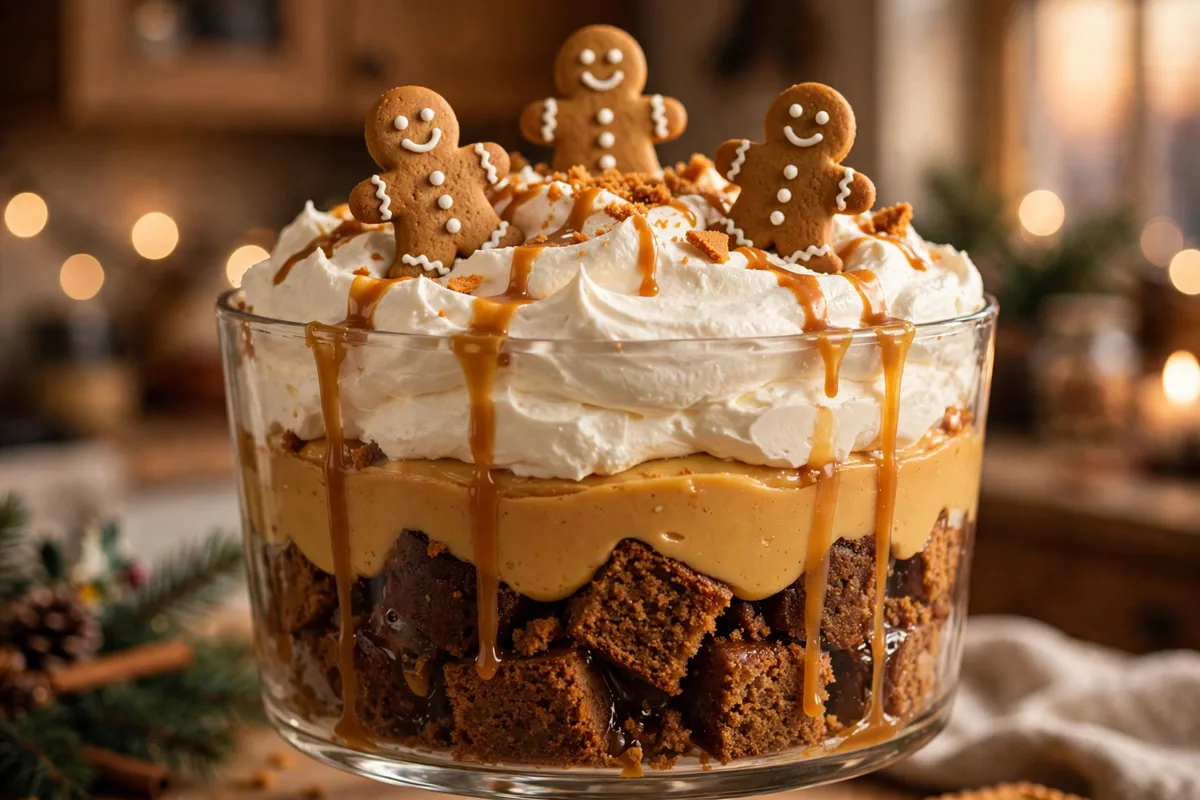
A 20-minute gingerbread trifle with Biscoff custard, caramel and whipped cream, layered in a glass bowl. No baking needed and it feeds a crowd.
A 20-minute gingerbread trifle with Biscoff custard, caramel and whipped cream, layered in a glass bowl. No baking needed and it feeds a crowd.
If you are looking for an ultra-satisfying, restaurant-quality meal that comes together with minimal effort, this Gingerbread Trifle is about to become your new favorite. Everything is cooked to juicy, golden perfection with wholesome ingredients and incredible depth of flavor.
One simple tip!
The custard is done when it coats a spoon and a finger drawn through it leaves a clean line. If it turns lumpy, push it through a sieve while it is still warm and it will smooth out.
Step-by-Step Photos
Why You’ll Love This Recipe
Quick & EffortlessReady in just 20 minutes total with straightforward, foolproof prep.
Packed with Deep FlavorCarefully balanced with gingerbread loaf, Biscoff spread, whole milk for maximum satisfaction.
Family & Crowd FriendlyMakes 10 generous servings that can be effortlessly doubled or scaled using our smart scaler.
Made From ScratchReal ingredients and straightforward home cooking, with no shortcuts on flavor.
Ingredients Notes & Variations
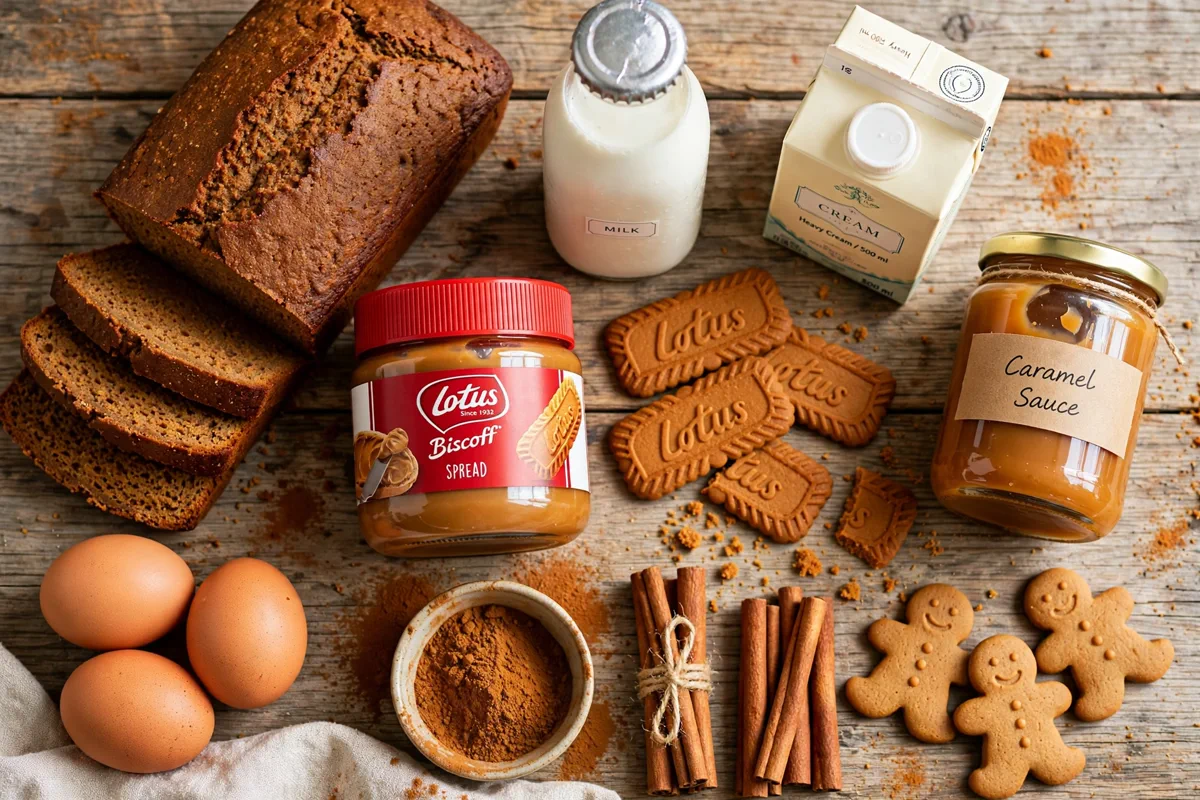
Here is an overview of what you will need for this recipe. Be sure to scroll down to the printable recipe card below for exact scaled measurements!
gingerbread loaf
1 piecestore-bought, about 450 g; or one 9-inch gingerbread cake, fully cooled
Biscoff spread
0.5 cupsmooth, not crunchy; warmed 20 seconds so it stirs in easily
whole milk
2 cupfor the custard; low-fat milk makes a thinner custard
egg yolks
4 piecelarge eggs, whites saved for another use
granulated sugar
0.33 cupfor the custard
cornstarch
3 tbspthis is what thickens the custard
vanilla extract
2 tspstirred in off the heat
unsalted butter
2 tbspstirred into the hot custard for shine
fine sea salt
0.25 tspa pinch in the custard keeps it from tasting flat
heavy whipping cream
2 cupcold, straight from the fridge; it whips faster cold
powdered sugar
3 tbspfor the whipped cream
caramel sauce
0.5 cupshop-bought or homemade; the pourable kind, not hard toffee
Biscoff cookies
8 piececrushed into crumbs for the layers
gingerbread men cookies
6 piecesmall ones for the top; break two into pieces for the edge
ground cinnamon
0.5 tspa light dusting on top just before serving
How to Make (Step-by-Step Overview)
Here is a quick summary of the preparation process. Detailed cooking temperatures and step timers are included in the recipe card below.
Whisk the egg yolks, granulated sugar, cornstarch and salt in a medium bowl until smooth and pale, about 1 minute. Set it by the stove.
Pour the milk into a medium saucepan and warm it over medium heat until steam rises and small bubbles form around the edge. Do not let it boil.
Slowly pour half the hot milk into the yolk mixture, whisking the whole time. This tempers the eggs so they do not scramble. Pour everything back into the saucepan.
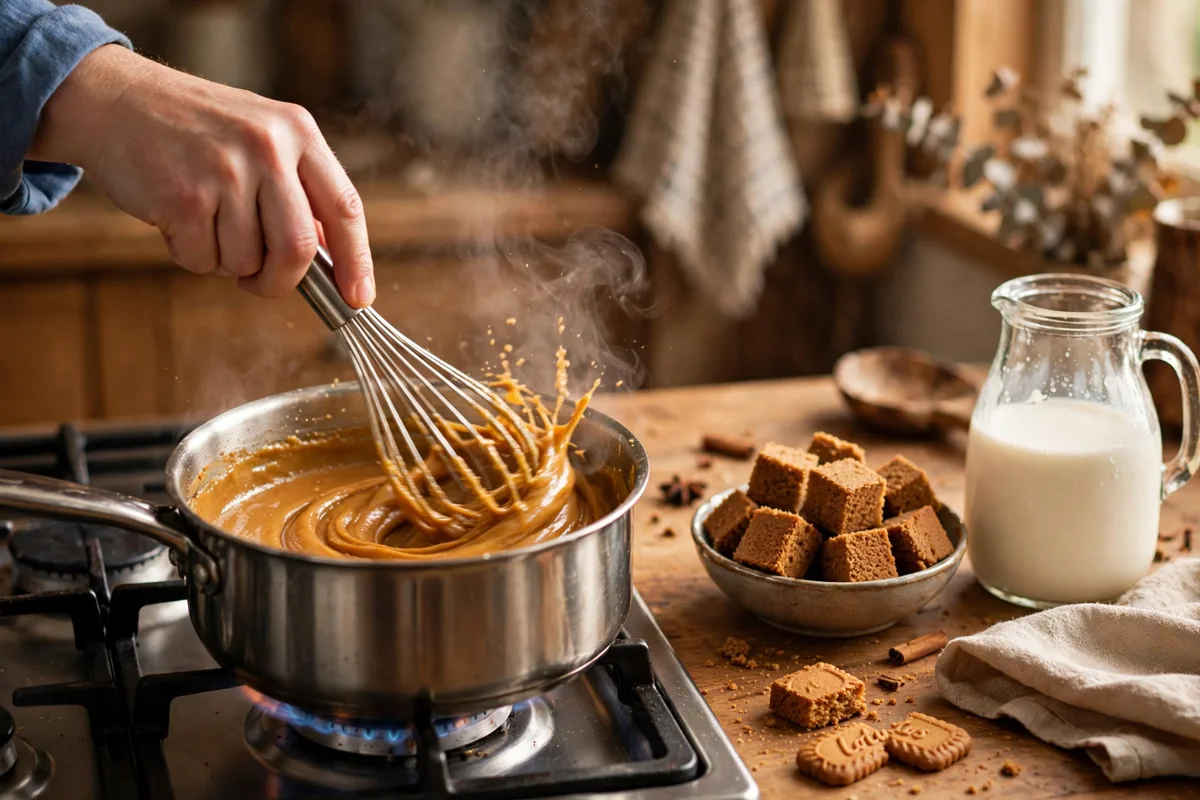
Cook over medium heat, whisking constantly, until the custard thickens enough to coat the back of a spoon and a line drawn through it holds. This takes about 3 minutes. Pull it off the heat the moment it thickens.
Whisk in the Biscoff spread, butter and vanilla extract until completely smooth. Press a piece of cling film right onto the surface so no skin forms, and set it aside to cool for 15 minutes.
While the custard cools, cut the gingerbread loaf into 2 cm cubes and crush the Biscoff cookies in a bag with a rolling pin. Keep the crumbs in a small bowl.
Pour the cold cream and powdered sugar into a large bowl. Whip with an electric whisk until soft peaks form, the point where the cream holds its shape but the tip flops over. Stop there. Over-whipped cream turns grainy.
Spoon one third of the gingerbread cubes into the bottom of a glass trifle bowl and press them into a flat layer. Spoon over one third of the custard, drizzle with a little caramel, scatter a third of the cookie crumbs, then spread a third of the whipped cream on top.
Repeat the layers twice more: cake, custard, caramel, crumbs, cream. Finish with a smooth layer of cream on top.
Drizzle the remaining caramel over the top in thin lines. Stand the gingerbread men around the edge, sprinkle the crushed pieces in the middle, and dust with cinnamon.
Cover loosely and chill for at least 2 hours so the layers settle and the cake softens at the edges. Serve cold, straight from the bowl, with a big spoon.
Our Pro Tips for Success
- •The custard is done when it coats a spoon and a finger drawn through it leaves a clean line. If it turns lumpy, push it through a sieve while it is still warm and it will smooth out.
- •Use a glass bowl if you have one. The layers are half the point of a trifle, and a clear bowl is what makes people reach for their phones before they reach for a spoon.
- •Whip the cream to soft peaks only. Stiff cream is hard to spread between layers and it firms up more in the fridge, which makes the trifle eat dry.
- •Let the custard cool for the full 15 minutes before layering. Warm custard melts the cream and the layers slide into each other instead of sitting in neat bands.
- •Cut the cake into even cubes, about 2 cm. Big chunks leave gaps and the trifle falls apart when you serve it. Small even cubes pack flat and hold together.
Storage & Make-Ahead Instructions
Refrigerator:Store leftovers in an airtight container for up to 3 to 4 days.
Freezer:Freeze in freezer-safe containers or bags for up to 2 months. Thaw overnight in the fridge.
Reheating:Reheat gently in a 350°F oven or covered skillet with a splash of broth until heated through.
Interactive Kitchen Assistant Live Smart Scaler
Our Recipe Precision Calculators
Calculate exact roasting times, internal temperatures, brining ratios, and safe thaw windows.
2.5 lbs (1.13 kg)
Recommended Timing & Thermals
Est. Cook Time45 mins
Rest Period7 mins
Pull From Heat160°F (71°C)
Final Carryover165°F (74°C)
Insert meat thermometer into thickest center without touching bone for 100% juicy safety.
What a gingerbread trifle actually is
A gingerbread trifle is a layered Christmas dessert built in a glass bowl: cubes of spiced gingerbread cake, a thick Biscoff custard, caramel sauce and softly whipped cream, repeated until the bowl is full. It takes about 20 minutes of hands-on work and no baking at all if you start with a shop-bought gingerbread loaf. The layers do the work. The cake soaks up a little custard and turns soft at the edges while the middle stays cakey, and the cream on top keeps the whole thing from feeling too sweet.
Trifles have been a British Christmas table regular for a long time, usually with sponge and sherry and fruit. This one skips the alcohol and the fruit and leans on the flavours people already want in December: ginger, molasses, caramel and warm spice. That is the whole idea. Nothing here needs a special trip or a new skill, just a bowl and about 20 minutes.
Why this one works in 20 minutes
Most trifles ask you to bake a sponge, make a jelly and wait for everything to set. This one cuts all three steps. A shop-bought gingerbread loaf is already spiced and already the right texture, so it goes straight into the bowl. The custard is the only thing you cook, and it takes about 10 minutes from a cold pan to a thick spoon-coating custard. The cream whips in three minutes. Assembly is five minutes of spooning layers into a bowl.
The 20 minutes is active time. After that the trifle needs at least 2 hours in the fridge, and that chill is not optional. It is what lets the cake soften into the custard and the layers settle into clean bands. If you serve it straight away, the cake is still firm and dry in the middle and the custard slides off instead of clinging. Make it in the morning and it is ready for the evening. Make it the day before and it is better still.
The layers, in order
There are five things in each layer and the order matters. Cake goes first because it is the base that soaks. Custard goes on the cake because it needs to seep into the cubes. Caramel goes over the custard because it is thin enough to drip down and sweeten the cake below. Cookie crumbs go next because they stay crunchy between the soft layers and give each spoonful some bite. Cream goes last in each layer because it seals everything in and keeps the next layer of cake from sinking.
Three repeats of that order fill a standard trifle bowl for 10 people. If your bowl is wider than it is tall, you will get two thicker layers instead of three thin ones, and that is fine.
Making the Biscoff custard
The custard is the one part that needs your attention. It is egg yolks, sugar, cornstarch and milk, cooked gently until thick, with Biscoff spread stirred in at the end. The cornstarch does the thickening, which makes this custard more forgiving than a classic egg-only custard. It still needs constant whisking, though. Walk away for a minute and the bottom catches, and a caught custard tastes burnt no matter what you stir into it.
Tempering sounds fussy and it is not. You pour half the hot milk into the yolks while whisking, then pour it all back into the pan. That one step is the difference between a smooth custard and sweet scrambled eggs. Once the custard thickens, take it off the heat right away. It keeps thickening as it cools, so if it looks perfect in the pan it will be too stiff in the bowl. You want it to coat a spoon and hold a line drawn through it, not stand up on its own.
Stir the Biscoff spread in while the custard is still warm. It melts in and turns the custard a pale caramel colour with a spiced biscuit flavour that runs through the whole trifle. Press cling film right onto the surface before it cools. Skip that and a skin forms, and a skin in a trifle is a lumpy layer nobody enjoys finding with a spoon.
Assembling it so the layers show
Use a glass bowl if you have one. The layers are half the point of a trifle, and a clear bowl is what makes people reach for their phones before they reach for a spoon. A straight-sided bowl shows the bands better than a sloped one, and a bowl that is too wide makes thin layers that disappear. A 2 to 3 litre bowl is right for 10 servings.
Press each layer of cake flat with the back of a spoon before you add the custard. Gaps between cubes become pockets of loose custard, and the trifle falls apart when you serve it. Small even cubes pack flat and hold together, which is why the recipe says 2 cm. It feels fussy when you are cutting, and it pays off at the table.
Spread the cream gently with the back of a spoon or an offset spatula. Dragging a knife through it pulls up the layer below. The top layer of cream is the one people see, so take an extra 30 seconds on it and smooth it flat before you add the caramel and the decorations.
The topping, and when to add it
Caramel goes on top in thin lines, not a thick pour. A thick pour slides off the cream and pools at the edge. Thin lines from a spoon or a squeezy bottle sit on the surface and look neat. The gingerbread men stand around the edge of the bowl, pushed into the cream just far enough to stay upright. Two more broken into pieces go in the middle. A light dusting of cinnamon finishes it.
All of this goes on after the chill, not before. Gingerbread men left in the fridge overnight go soft and lose their shape. Cinnamon left overnight sinks into the cream and leaves a dull grey patch. Add the decorations in the last five minutes before the trifle goes on the table and they stay crisp and bright.
When to serve it
This is a dessert for a crowd. Ten servings from one bowl means it suits Christmas dinner, a Boxing Day buffet, or any December gathering where you need something that looks like effort and took 20 minutes. It sits happily on a buffet table for an hour or two as long as the room is not too warm. If the room is hot, keep it in the fridge until people are ready and bring it out when you serve it.
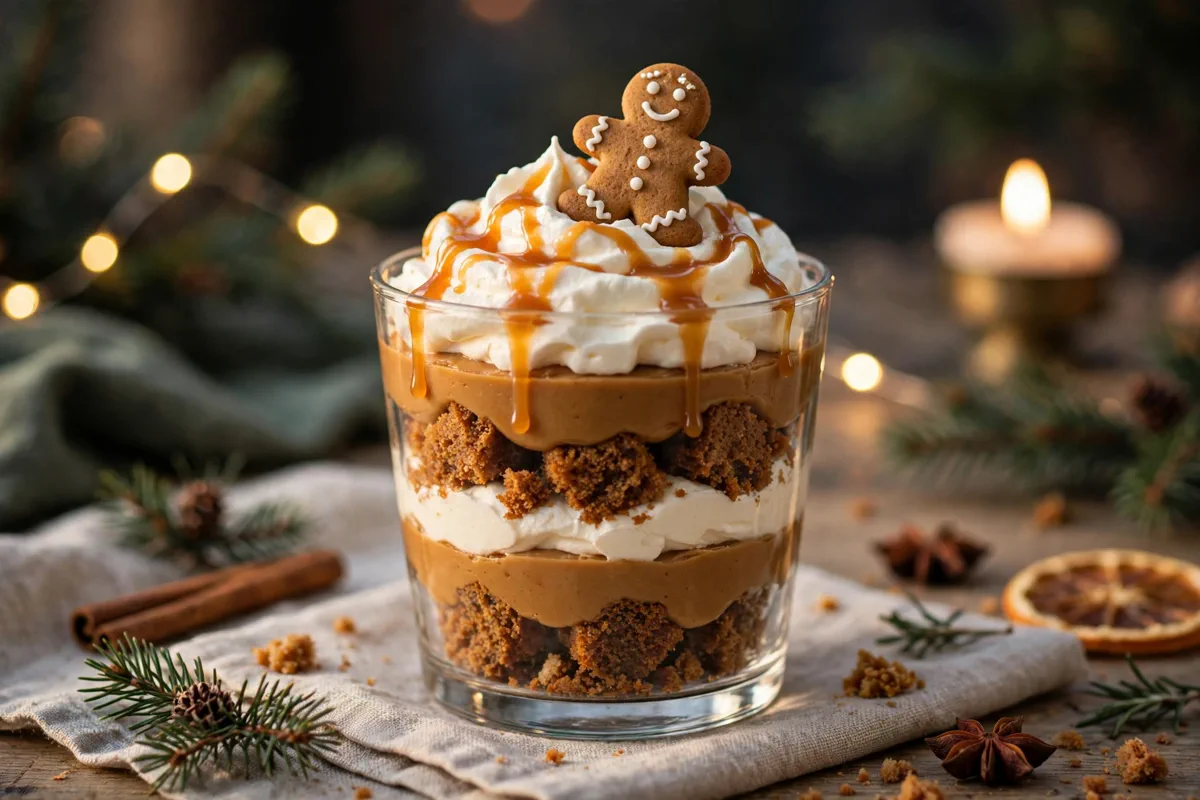
It pairs with nothing at all, which is part of the appeal. Coffee, tea, or a glass of something cold all work, and nobody needs a second dessert after a spoonful of this. If you want to stretch it further, serve smaller portions in glasses instead of one big bowl. The same recipe fills 10 small dessert glasses, and the layers show even better through glass.
What goes wrong, and how to fix it
The most common problem is a runny trifle. It usually means the custard was undercooked or the trifle was not chilled long enough. An undercooked custard never firms up, and no amount of chilling fixes it. The fix is in the pan: cook the custard until it coats a spoon and holds a line. If you have already layered it and it looks loose, chill it for 4 hours instead of 2 and serve it in glasses so it holds its shape.
The second problem is a trifle that is too sweet. Gingerbread, Biscoff, caramel and sweetened cream are all sweet on their own, and together they can tip over. The recipe keeps the sugar in the custard low for that reason, and the pinch of salt matters more than it looks. If your caramel sauce is very sweet, use a little less of it and add an extra spoonful of cookie crumbs. The crumbs are the least sweet part of the bowl and they balance each spoonful.
The third problem is cream that turns grainy. That happens when the cream is over-whipped. Stop at soft peaks, where the cream holds its shape but the tip flops over. If you go past that point, fold in a spoonful of unwhipped cream and stir gently. It will not be perfect, but it will smooth out enough to spread.
Storing it
Cover the bowl with cling film and keep it in the fridge for up to 3 days. Do not freeze it. The cream weeps when it thaws and the layers turn watery. If you are making it ahead, assemble everything except the gingerbread men and the cinnamon, and add those just before serving so they stay crisp.
Frequently Asked Questions
Yes, make it up to 24 hours ahead and keep it covered in the fridge. It tastes better the next day because the cake softens into the custard. Add the gingerbread men and the cinnamon dusting just before serving so they stay crisp.
Yes, use about 2 cups of ready-made custard and stir in the Biscoff spread while it is at room temperature. The trifle will be a little softer than with the homemade custard, so chill it for 3 hours instead of 2.
Easy Chicken Recipes • Official Card
Gingerbread Trifle
☆☆☆☆☆0.0 (0 reviews)•Recipe by Cooking With Guru Editorial Team•Updated: Jan 15, 2025
A 20-minute gingerbread trifle with Biscoff custard, caramel and whipped cream, layered in a glass bowl. No baking needed and it feeds a crowd.
Prep Time20 mins
Cook Time0 mins
Total Time20 mins
Adjust Servings:
10
Ingredients
Click to check off1 piece gingerbread loaf(store-bought, about 450 g; or one 9-inch gingerbread cake, fully cooled)
1/2 cup Biscoff spread(smooth, not crunchy; warmed 20 seconds so it stirs in easily)
2 cups whole milk(for the custard; low-fat milk makes a thinner custard)
4 piece egg yolks(large eggs, whites saved for another use)
1/3 cup granulated sugar(for the custard)
3 tbsps cornstarch(this is what thickens the custard)
2 tsps vanilla extract(stirred in off the heat)
2 tbsps unsalted butter(stirred into the hot custard for shine)
1/4 tsp fine sea salt(a pinch in the custard keeps it from tasting flat)
2 cups heavy whipping cream(cold, straight from the fridge; it whips faster cold)
3 tbsps powdered sugar(for the whipped cream)
1/2 cup caramel sauce(shop-bought or homemade; the pourable kind, not hard toffee)
8 piece Biscoff cookies(crushed into crumbs for the layers)
6 piece gingerbread men cookies(small ones for the top; break two into pieces for the edge)
1/2 tsp ground cinnamon(a light dusting on top just before serving)
Instructions
Step-by-StepCWG
Recipe Source
The Cooking With Guru Team
Our recipes are developed and checked by the Cooking With Guru team. Nutrition figures are estimates calculated from USDA data, and yields scale with the built-in portion tools so the recipe fits your kitchen.
More dessert recipes to try!
🍽️
Turkish Menemen: One-Pan Eggs in Spicy Tomato Sauce
🍽️
High-Protein Cottage Cheese Egg Bake with Spinach
🍽️
Easy Chicken Congee Recipe with Crispy Garlic and Chili Oil
Comments & Questions (0)
Join the conversationNo comments yet!
Be the first to leave a comment or ask a question about Gingerbread Trifle.


