Harissa Honey-Glazed Carrots With a Sweet Heat Kick
Published: Jan 15, 2025
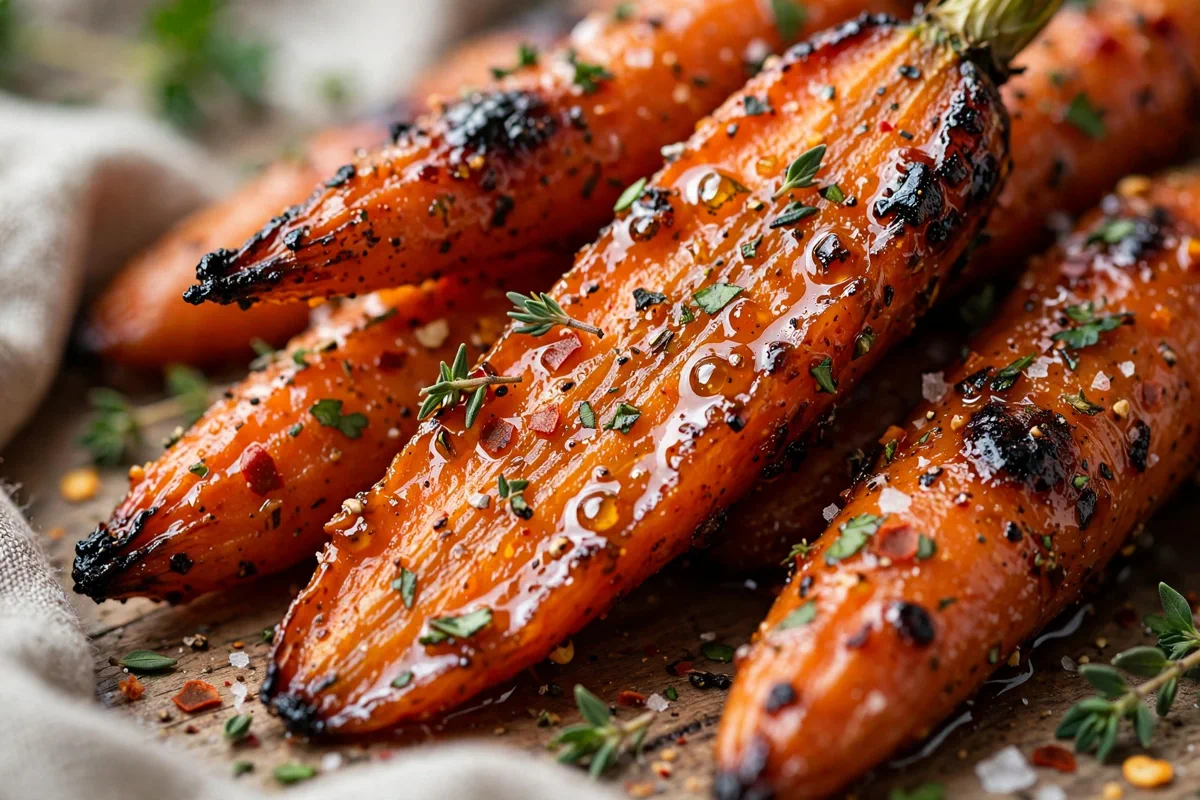
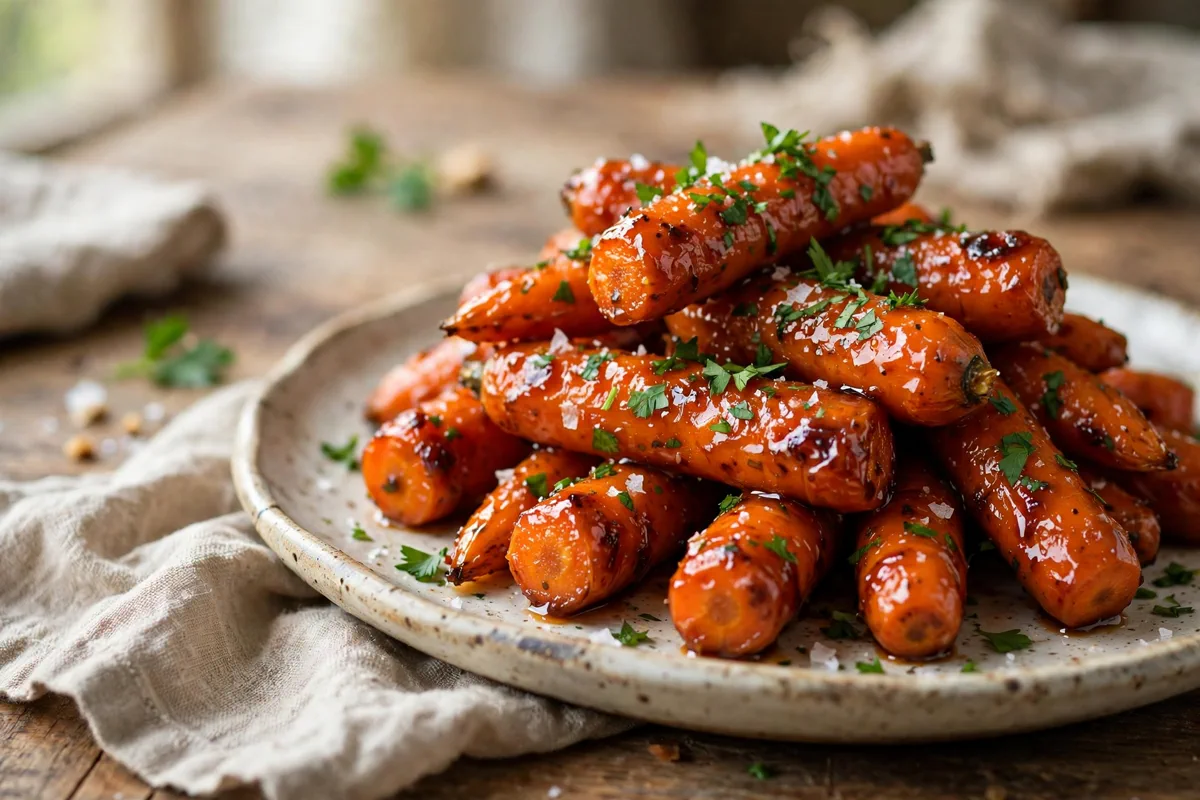
Roasted carrots lacquered in a sticky harissa-honey glaze — sweet heat, charred edges, and a side that steals the plate.
Roasted carrots lacquered in a sticky harissa-honey glaze — sweet heat, charred edges, and a side that steals the plate.
If you are looking for an ultra-satisfying, restaurant-quality meal that comes together with minimal effort, this Harissa Honey-Glazed Carrots With a Sweet Heat Kick is about to become your new favorite. Everything is cooked to juicy, golden perfection with wholesome ingredients and incredible depth of flavor.
One simple tip!
Cut the carrots to the same thickness or the thin ones will burn while the thick ones stay raw in the middle. A finger's width is the right target.
Step-by-Step Photos
Why You’ll Love This Recipe
Ingredients Notes & Variations
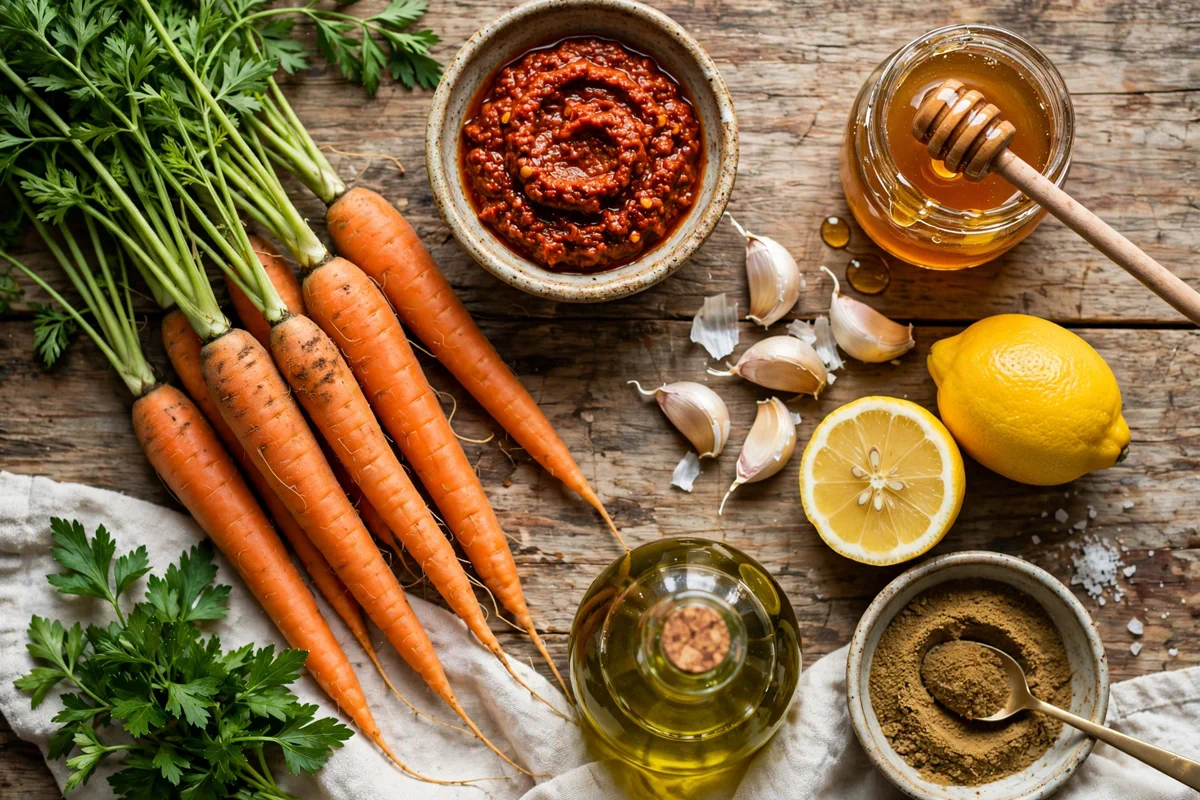
Here is an overview of what you will need for this recipe. Be sure to scroll down to the printable recipe card below for exact scaled measurements!
carrots
2 lbpeeled, halved lengthwise, thick ones quartered so pieces are even
harissa paste
2 tbsphoney
2 tbspolive oil
2 tbspgarlic
2 piecefinely minced
lemon juice
1 tbspfreshly squeezed
ground cumin
0.5 tspkosher salt
0.5 tspblack pepper
0.25 tspfreshly ground
fresh parsley
2 tbspchopped, for serving
flaky sea salt
1 pinchto finish
How to Make (Step-by-Step Overview)
Here is a quick summary of the preparation process. Detailed cooking temperatures and step timers are included in the recipe card below.
Our Pro Tips for Success
- •Cut the carrots to the same thickness or the thin ones will burn while the thick ones stay raw in the middle. A finger's width is the right target.
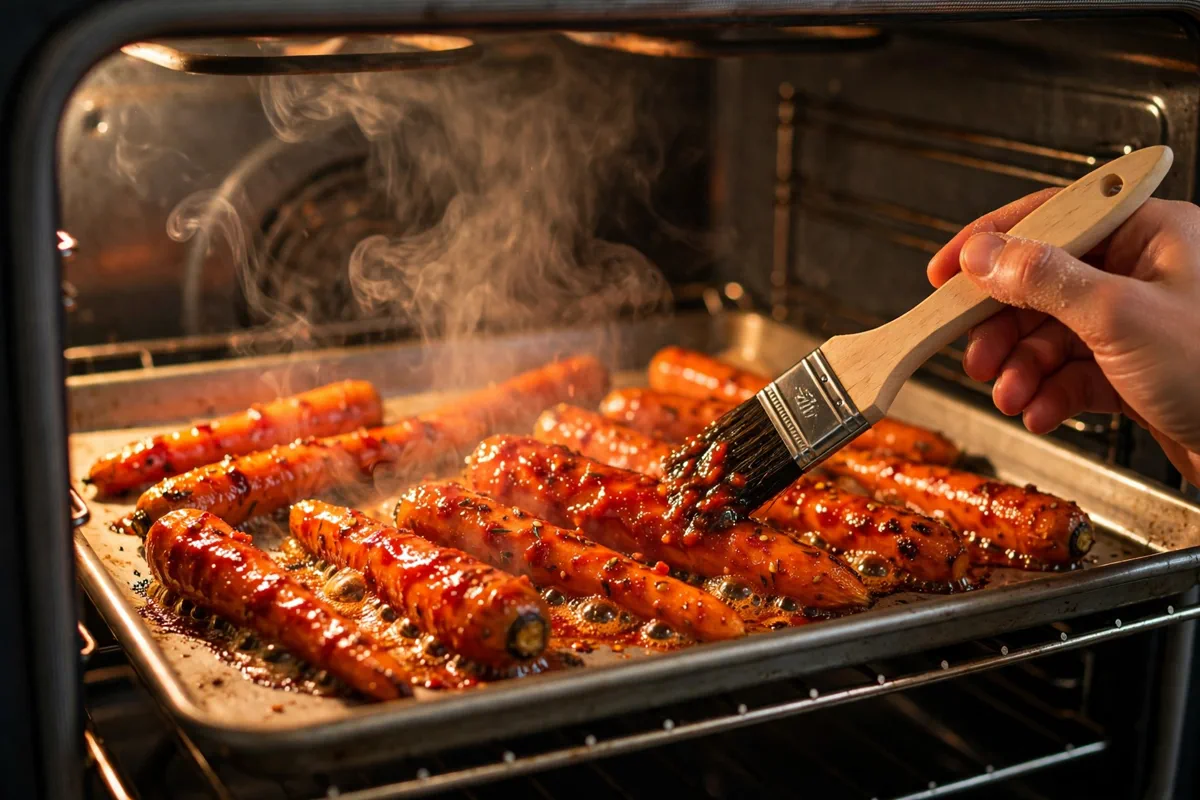
- •Glaze only in the last 10 minutes. Harissa and honey both carry sugars that darken fast, and glazing from the start gives you burnt edges instead of charred ones.
- •Taste your harissa before you mix the glaze. Some jars are mild and smoky, others are fiery — if yours runs hot, add honey a teaspoon at a time until the sweetness balances it.
- •Cut-side down is what builds the flat, browned face on each carrot. If you skip the flip, the top stays pale while the bottom overcooks.
- •The glaze should look like it is bubbling and clinging when you pull the pan out. If it looks wet and thin, give it 2 more minutes; if it smells sharp and dark, pull it right away.
Storage & Make-Ahead Instructions
Our Recipe Precision Calculators
Calculate exact roasting times, internal temperatures, brining ratios, and safe thaw windows.
Harissa honey-glazed carrots are roasted carrots coated in a sticky glaze of harissa paste, honey, garlic, lemon juice, and cumin. The oven does two jobs at once: it softens the carrots until they bend, and it sets the glaze into a glossy coat with dark, charred tips. The result is a side dish that is sweet, warm with spice, and bright at the edges.
The pairing works because the two sides of the glaze pull in opposite directions and meet in the middle. Honey brings the sweetness that makes the carrots taste like themselves, only more so. Harissa brings heat and a low, smoky warmth from chilies and spices. Lemon juice keeps the whole thing from getting heavy. None of the three would carry the dish alone; together they make a glaze that coats without drowning.
Why roast them in two stages
The recipe roasts the carrots plain first, then glazes them for the last 10 minutes. That order matters. Honey and harissa both carry sugars, and sugars darken fast at 425°F. If the glaze goes on at the start, it burns long before the carrots cook through, and you end up with bitter edges and raw centers. Roasting plain first lets the carrots soften and brown on their own. The glaze then has only one job: to bubble, thicken, and stick.
That second roast is short on purpose. Eight to ten minutes is enough for the glaze to turn from a sauce into a coat. You will know it is ready when the edges bubble and the tips look dark and lacquered. Two minutes past that point, the honey starts to smell sharp, and the glaze crosses from caramelized into burnt. Watch the last two minutes with your eyes, not the timer.
Cutting the carrots right
Even pieces are the quiet trick in this recipe. A carrot is a tapered root, fat at the top and thin at the tip, so a whole carrot cooks unevenly no matter what you do. Cutting lengthwise fixes that. Halve the slim ones, quarter the fat ones, and aim for pieces about a finger thick. Now every piece has the same distance from the heat, and they all finish at the same time.
Cut-side down is the second half of the trick. The flat face that touches the pan is where the browning happens. That flat, browned face is what gives each carrot its look and its flavor — the pan does the work the oven air cannot. Give the pieces space, too. A crowded pan traps steam, and steamed carrots go soft and pale instead of roasted and golden. If your pan is full, use a second one.
Picking your harissa
Harissa is not one fixed thing. Jars range from mild and smoky to properly fiery, and the same brand can change from batch to batch. Taste a little of yours before you mix the glaze. If it runs hot, the recipe still works — just add honey a teaspoon at a time until the sweetness balances the heat. If it runs mild, you can push the harissa up by half a tablespoon without changing anything else.
What you want in the bowl is a sauce that looks smooth and brick-red, thick enough to coat a spoon. If your harissa is the coarse, chunky kind, whisk it a little longer; the honey and lemon juice will loosen it. If it is a thin, saucy kind, the glaze will still set in the oven — just brush it on in a slightly heavier layer so it does not slide off in the heat.
What the glaze should look like at each stage
In the bowl, the glaze should be a smooth, deep red that drips slowly off the spoon. On the carrots going back into the oven, it should sit as a visible coat, not a puddle at the bottom of the pan. When the pan comes out, the glaze should bubble at the edges and look sticky, almost like it is painted on. If it still looks wet and loose, give it two more minutes. If the tips are dark and the pan smells sharp, pull it right away.
One more thing worth doing: scrape the pan. The glaze that drips onto the parchment and caramelizes there is the best part, and it belongs on the carrots, not in the bin. A spatula gets most of it. Whatever stays on the paper, leave it — it is the price of a hot oven.
When to serve them
These carrots are at their best straight from the oven, while the glaze is still glossy and the edges are crisp. They hold up on a table for about 20 minutes before the glaze starts to set and dull. If you are serving them as part of a bigger meal, time them to come out last, or hold them in a warm oven at 200°F for up to 15 minutes.
They fit in more places than you might expect. Next to roast chicken or grilled lamb, they are the bright, sweet counterpoint to rich meat. On a holiday table, they hold their own beside heavier dishes because the heat cuts through the richness. In a grain bowl with couscous, feta, and chickpeas, they become the main event rather than the side. The common thread is contrast: wherever the rest of the plate is rich or plain, these carrots add color and a little heat.
Leftovers and making ahead
Leftovers keep for 4 days in the fridge in a tight-lidded container. Reheat them on a sheet pan at 400°F for 8 to 10 minutes — the oven brings the glaze back to a bubble and firms the edges up again. The microwave will warm them, but it softens the carrots and thins the glaze, so it is a backup, not the plan.
You can also make the whole dish a day ahead. Roast and glaze, cool completely, and refrigerate covered. Reheat the same way, on a sheet pan at 400°F, and add the parsley and flaky salt fresh at the end so they stay bright. The carrots will not be quite as crisp as fresh from the oven, but the flavor holds, and for a busy holiday kitchen that trade is usually worth it.
A note on the heat
People hear harissa and expect a dish that burns. This one does not. Two tablespoons of harissa against two tablespoons of honey, with lemon and cumin in the mix, lands at a medium warmth — the kind of heat you notice after the sweetness, not before it. Kids who eat mild spice usually manage it fine. If your table runs cautious, start with one tablespoon of harissa and let people taste; you can always brush on more glaze, but you cannot take heat back off a roasted carrot.
- Roast plain first, glaze last — sugars burn before carrots cook.
- Cut to even thickness so every piece finishes together.
- Give the pan space; crowded carrots steam instead of roast.
- Taste your harissa and adjust the honey to match it.
- Serve hot, while the glaze is still glossy.
Frequently Asked Questions
No — they are medium heat at most. Harissa brings a warm, slow heat rather than a sharp burn, and the honey softens it further. If you want them milder, drop the harissa to 1 tablespoon and add an extra teaspoon of honey.
Yes. Roast and glaze them up to a day ahead, cool completely, and refrigerate in a covered container. Reheat on a sheet pan at 400°F for 8 to 10 minutes and add the parsley and flaky salt fresh just before serving.
Harissa Honey-Glazed Carrots With a Sweet Heat Kick
Roasted carrots lacquered in a sticky harissa-honey glaze — sweet heat, charred edges, and a side that steals the plate.
Ingredients
Click to check offInstructions
Step-by-StepThe Cooking With Guru Team
Our recipes are developed and checked by the Cooking With Guru team. Nutrition figures are estimates calculated from USDA data, and yields scale with the built-in portion tools so the recipe fits your kitchen.
More dinner recipes to try!
Comments & Questions (0)
Join the conversationNo comments yet!
Be the first to leave a comment or ask a question about Harissa Honey-Glazed Carrots With a Sweet Heat Kick.
You May Also Like
Maple Roasted Brussels Sprouts with Bacon
Air Fryer Halloumi Fries (2 Ingredients)

One-Pot Lemon Orzo with White Beans and Kale
Garlic Butter Salmon
Shrimp Scampi Pasta
Gochujang Butter Chicken Meatballs (20-Minute Dinner)
One-Pan Kielbasa with Apples and Cabbage (Fall Skillet)