🍽️
Prep time15 mins
Cook time15 mins
Ingredients17
lunch
Teriyaki Chicken Stir-Fry
Published: Jan 15, 2025
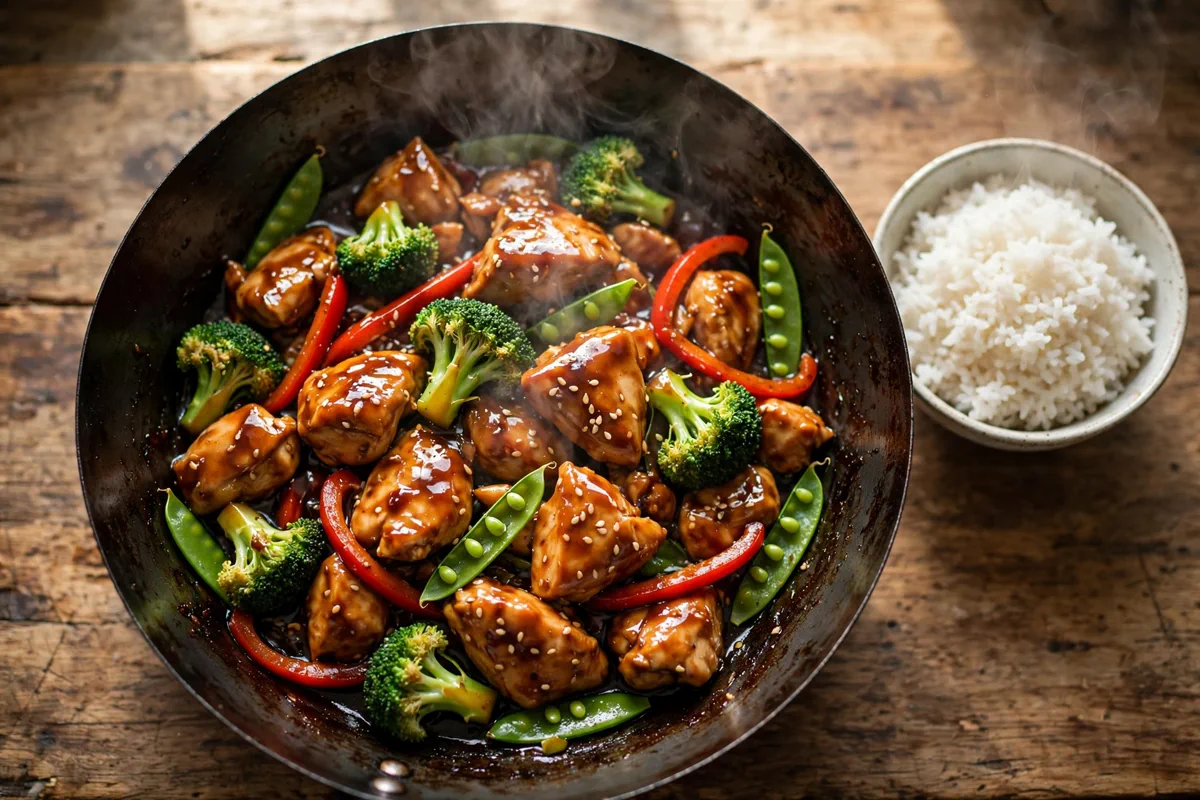
Glossy homemade teriyaki chicken with crisp broccoli, peppers and snap peas, ready in about 30 minutes. No bottle of sauce needed.
Glossy homemade teriyaki chicken with crisp broccoli, peppers and snap peas, ready in about 30 minutes. No bottle of sauce needed.
If you are looking for an ultra-satisfying, restaurant-quality meal that comes together with minimal effort, this Teriyaki Chicken Stir-Fry is about to become your new favorite. Everything is cooked to juicy, golden perfection with wholesome ingredients and incredible depth of flavor.
One simple tip!
Cut every piece of chicken the same size. A mix of big and small pieces means the small ones dry out while the big ones are still pink in the middle.
Step-by-Step Photos
Why You’ll Love This Recipe
Quick & EffortlessReady in just 30 minutes total with straightforward, foolproof prep.
Packed with Deep FlavorCarefully balanced with boneless skinless chicken thighs, soy sauce, honey for maximum satisfaction.
Family & Crowd FriendlyMakes 4 generous servings that can be effortlessly doubled or scaled using our smart scaler.
Made From ScratchReal ingredients and straightforward home cooking, with no shortcuts on flavor.
Ingredients Notes & Variations
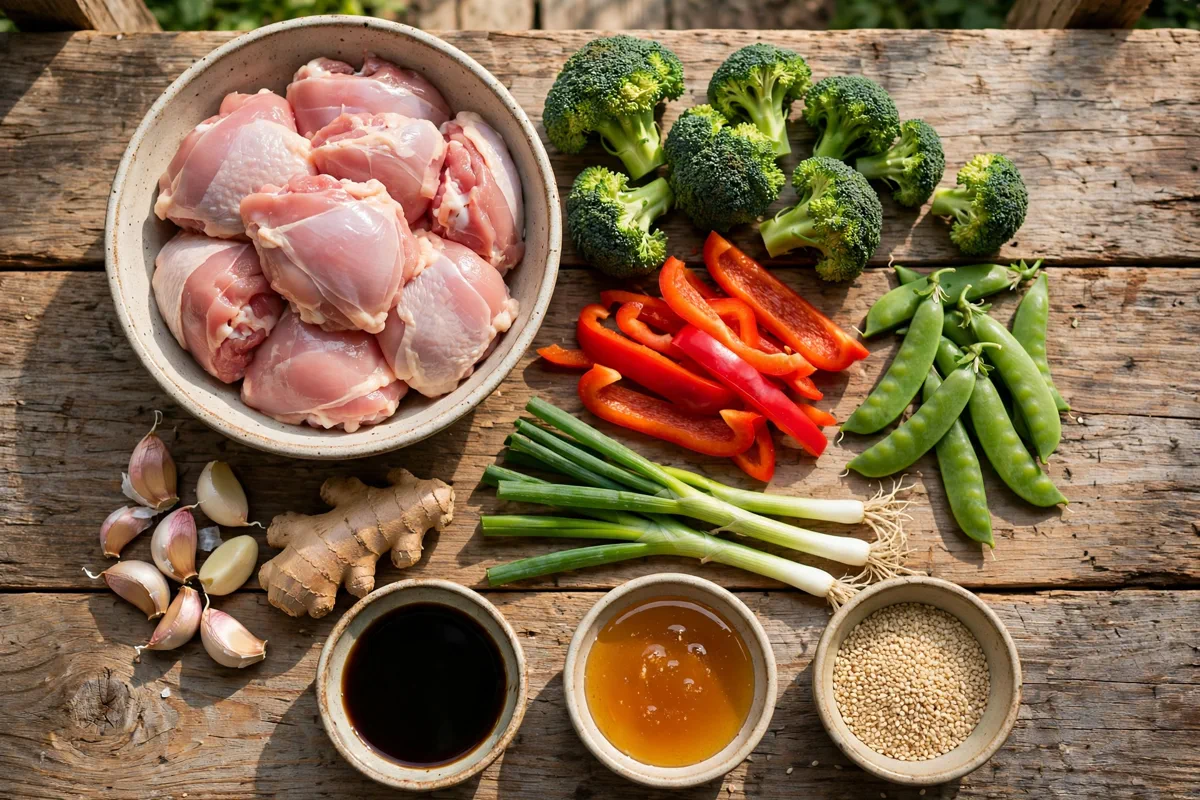
Here is an overview of what you will need for this recipe. Be sure to scroll down to the printable recipe card below for exact scaled measurements!
boneless skinless chicken thighs
1.5 lbcut into even bite-size pieces, about 1 inch
soy sauce
0.33 cuplow sodium works fine here
honey
2 tbspor brown sugar, same amount
rice vinegar
1 tbspunseasoned
toasted sesame oil
1 tspfor the sauce, not for frying
garlic cloves
3 piecefinely minced
fresh ginger
1 tbsppeeled and finely grated
cornstarch
1 tbspmixed with the water before it goes in the pan
water
2 tbspfor the cornstarch slurry
vegetable oil
1 tbspneutral oil with a high smoke point
broccoli florets
3 cupcut small so they cook fast
red bell pepper
1 piecesliced into thin strips
snap peas
1.5 cupstrings removed
green onions
3 piecethinly sliced, white and green parts kept separate
sesame seeds
1 tbspfor topping
kosher salt
0.5 tspfor seasoning the chicken
cooked jasmine rice
4 cupfor serving
How to Make (Step-by-Step Overview)
Here is a quick summary of the preparation process. Detailed cooking temperatures and step timers are included in the recipe card below.
Whisk the soy sauce, honey, rice vinegar, sesame oil, garlic, and ginger together in a small bowl. Stir the cornstarch into the water in a separate tiny bowl until smooth, then set both bowls by the stove.
Pat the chicken pieces dry with paper towels and season with the salt. A dry surface is what lets the chicken brown instead of steam.
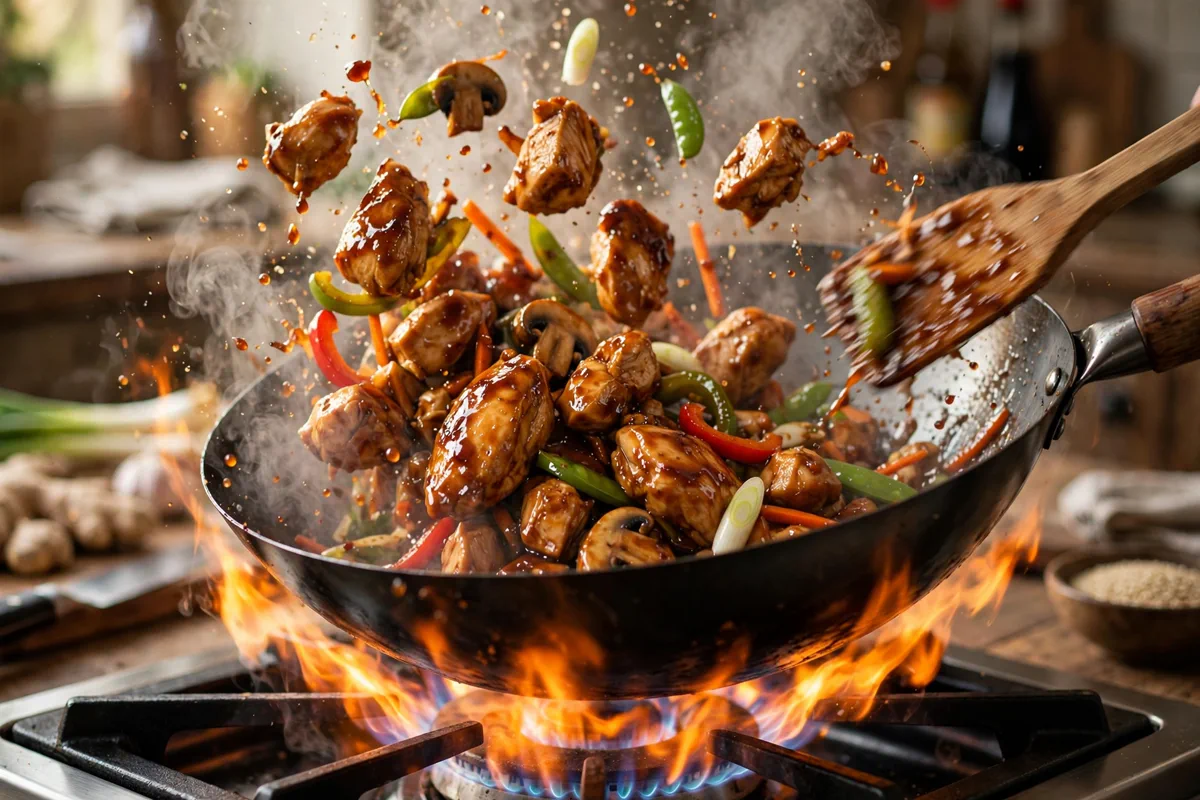
Set a large wok or skillet over high heat and add the vegetable oil. When the oil shimmers and a drop of water sizzles hard on contact, the pan is ready.
Add the chicken in a single layer and leave it alone for 3 minutes. Do not stir it yet. The pieces need contact with the hot pan to get color.
Stir the chicken and cook 3 more minutes, until the pieces are golden on the edges and cooked through. Scoop the chicken onto a plate and keep the pan on the heat.
Add the broccoli, bell pepper, and the white parts of the green onions to the same pan. Stir-fry for 2 minutes, until the broccoli turns bright green and the peppers just start to soften.
Add the snap peas and cook 1 more minute. They should still snap when you bite one. If they go limp, they have gone too far.
Return the chicken to the pan and pour in the sauce. Stir everything together and let it bubble for 1 minute.
Give the cornstarch slurry a quick re-stir, pour it in, and stir constantly for 30 seconds. The sauce will turn glossy and thick enough to coat a spoon. If it looks thin, give it another 30 seconds.
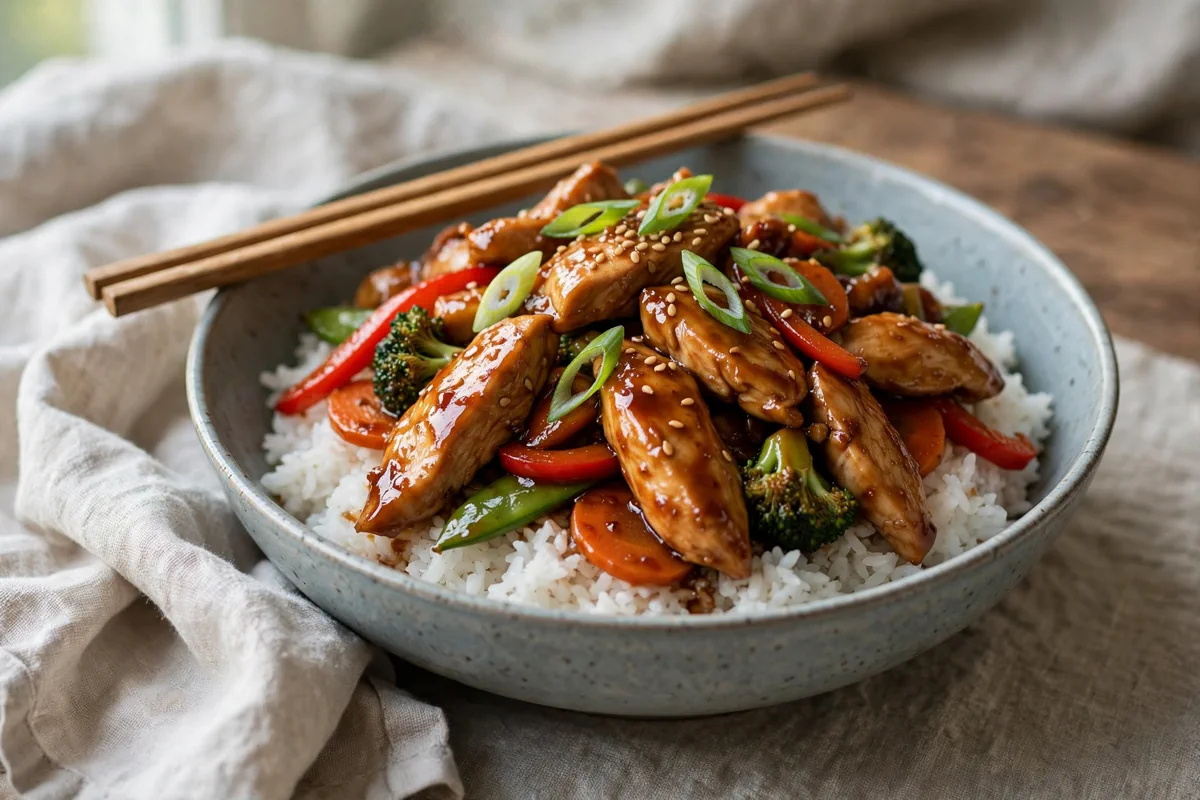
Take the pan off the heat. Spoon the stir-fry over bowls of rice, then scatter the green onion tops and sesame seeds over each serving.
Our Pro Tips for Success
- •Cut every piece of chicken the same size. A mix of big and small pieces means the small ones dry out while the big ones are still pink in the middle.
- •Do not crowd the pan. If the chicken pieces touch each other, they steam. Cook in two batches if your pan is small, and the browning will be much better.
- •Mix the cornstarch into the water before it touches the pan. Cornstarch dumped straight into hot sauce clumps on contact and never smooths out.
- •Wait for the sauce to actually bubble before you judge it. The cornstarch only thickens at a simmer, so a sauce that looks thin at first is usually fine after 30 seconds of bubbling.
- •Keep the vegetables in the pan for the shortest time you can stand. Broccoli that is still bright green and snap peas that still snap are what make this taste fresh instead of tired.
Storage & Make-Ahead Instructions
Refrigerator:Store leftovers in an airtight container for up to 3 to 4 days.
Freezer:Freeze in freezer-safe containers or bags for up to 2 months. Thaw overnight in the fridge.
Reheating:Reheat gently in a 350°F oven or covered skillet with a splash of broth until heated through.
Interactive Kitchen Assistant Live Smart Scaler
Our Recipe Precision Calculators
Calculate exact roasting times, internal temperatures, brining ratios, and safe thaw windows.
2.5 lbs (1.13 kg)
Recommended Timing & Thermals
Est. Cook Time45 mins
Rest Period7 mins
Pull From Heat160°F (71°C)
Final Carryover165°F (74°C)
Insert meat thermometer into thickest center without touching bone for 100% juicy safety.
Teriyaki chicken stir-fry is chicken and crisp vegetables cooked fast in a hot pan and coated in a glossy homemade teriyaki sauce, served over rice. The sauce is just soy sauce, honey, rice vinegar, garlic, and ginger, thickened with a little cornstarch, and it comes together in about 30 minutes from the time you start cutting. It tastes like the takeout version, except the vegetables still have bite and you know exactly what went into the sauce.
The takeout box is the benchmark for a lot of people, and that is fair. The problem with the takeout version is usually not the sauce. It is the vegetables. By the time a stir-fry rides home in a sealed container, the broccoli has gone soft and the peppers have given up. Cooking it at home fixes that one thing, and that one thing changes the whole dish. The chicken stays juicy, the sauce still coats everything, and the vegetables taste like themselves.
The sauce, in three parts
A good teriyaki sauce has three jobs: salty, sweet, and sharp. The soy sauce does the salty part. The honey does the sweet part. The rice vinegar does the sharp part, and it is the one people skip most often. Without it, the sauce tastes flat and sticky. With it, the sweetness has an edge and the whole pan tastes brighter.
The garlic and ginger go in raw and cook in the sauce for about a minute. That is enough. They do not need to be browned first, and browning them first can turn them bitter. The cornstarch is the last piece. Stirred into water first, it thickens the sauce into a glaze that clings to the chicken instead of pooling at the bottom of the bowl. The change happens fast, in about 30 seconds of bubbling, and you can see it happen. The sauce goes from watery to shiny and slow, and that is when it is done.
Cut the chicken the same size
Thighs are the better cut here. They stay moist at high heat, and they forgive a minute too long in the pan in a way breast meat does not. Cut them into pieces about an inch across, and try to keep them close to the same size. This is the step that decides whether the chicken cooks evenly. A pan with mixed sizes gives you dry small pieces and pink big ones, and no amount of sauce fixes that.
Pat the chicken dry before it goes in the pan. Wet chicken steams, and steamed chicken never browns. Season it with salt, but go light. The soy sauce brings plenty of salt on its own, and the half teaspoon here is mostly to season the meat itself before the sauce arrives.
Let the pan do the work
Stir-fry means hot and fast, and the pan has to be properly hot before anything touches it. High heat, a thin layer of oil, and a shimmer on the surface. If the oil is not shimmering, the chicken will sit and release its juices instead of searing, and you end up with gray meat in a puddle.
Once the chicken goes in, leave it alone for three minutes. This is the hardest part of the recipe, because it feels like you should be stirring. Do not stir. The pieces need steady contact with the hot pan to build color. After three minutes, stir once and give them three more. Then take the chicken out and set it aside. It goes back in at the end, and that short rest keeps it from overcooking while the vegetables have their turn.
The order that keeps the vegetables crisp
Vegetables go in hardest first. Broccoli and bell pepper need about two minutes in the hot pan. The white parts of the green onions go in with them and soften into the background. Snap peas go in last, for one minute only. They cook fast, and the difference between a snap pea with a snap and a limp one is about 30 seconds.
Keep everything moving once the vegetables are in. A stir-fry is not a dish you walk away from. Two minutes of steady stirring, and the broccoli should be bright green, not olive. Bright green means it is done. Olive means it has gone too far, and there is no way back from that.
How to tell the sauce is done
The chicken goes back in, the sauce goes over everything, and the pan should be bubbling within seconds. That bubbling is the signal. Stir in the cornstarch slurry, keep stirring, and watch the sauce. It will look thin for a moment, then it thickens all at once and turns glossy. A spoon dragged through it should leave a trail that holds for a second before closing. That is the glaze you want. If the sauce still runs like water after 30 seconds, it needs another 30 seconds of bubbling, not more cornstarch.
Take the pan off the heat as soon as the sauce thickens. The residual heat keeps cooking everything, and an extra minute on the burner is enough to soften the snap peas past the point you want. The green onion tops and sesame seeds go on at the table, not in the pan, so they stay fresh and the seeds keep their crunch.
What to serve with it
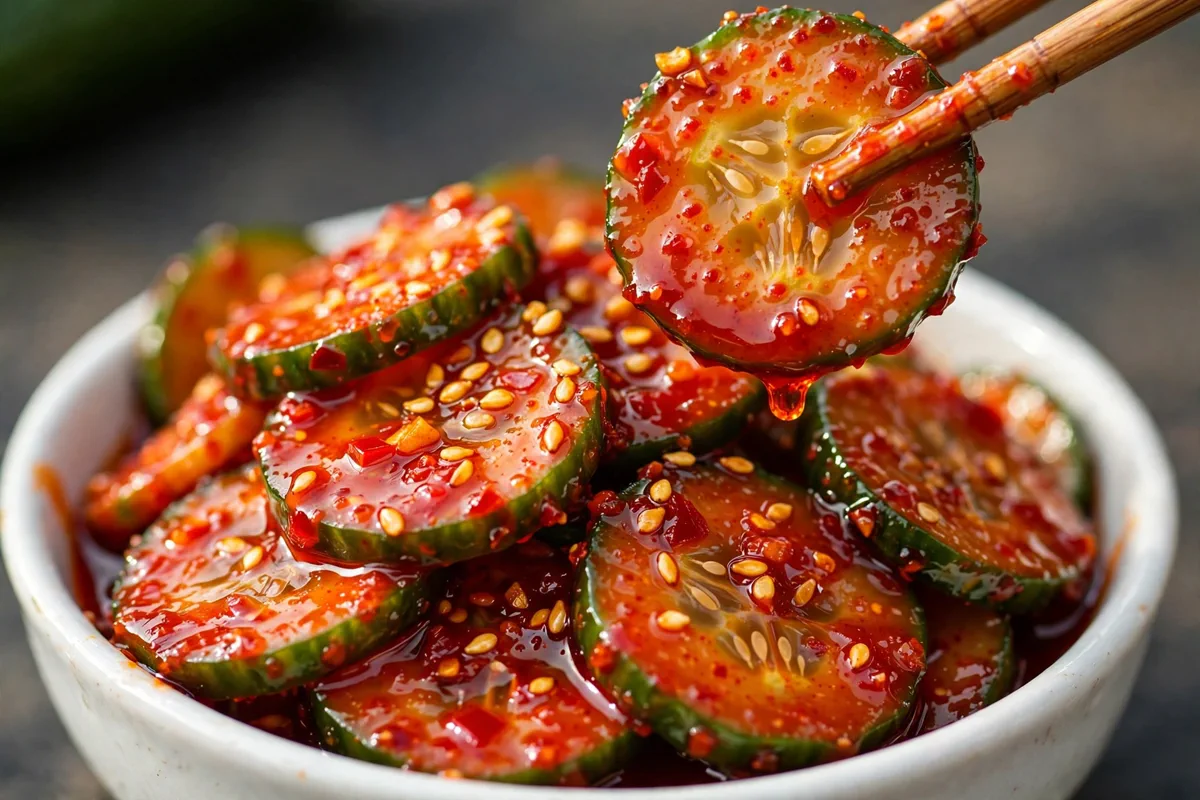
Jasmine rice is the usual partner. It is soft, a little fragrant, and it soaks up the sauce without turning to mush. Start the rice before you start cutting the chicken, so it is ready when the pan comes off the heat. Brown rice works too, and so do rice noodles if you want something lighter. A cucumber salad on the side is worth the five minutes it takes. Something cool and crunchy against a sweet, hot pan is a combination that never gets old.
Make it your own
The vegetables in this recipe are a starting point, not a rule. Mushrooms, carrots cut thin, baby corn, or zucchini all fit the same method, as long as you add the hard ones first and the soft ones last. The sauce stays the same. If you want heat, a teaspoon of chili garlic sauce stirred into the sauce bowl gives the glaze a slow burn without changing anything else. If you want it less sweet, cut the honey to one tablespoon and add a squeeze of lime at the end. The lime wakes the sauce up in the same way the vinegar does.
For a gluten-free version, tamari replaces the soy sauce one-for-one. Taste the finished sauce before serving, because tamari runs a little less salty and you may want a pinch more salt. The rest of the recipe stays the same.
Leftovers that still taste good
Leftovers keep for three days in the fridge, rice stored separately so it does not soak up the sauce overnight. Reheat the stir-fry in a skillet with a splash of water, which loosens the glaze back to the way it was. The vegetables will be softer the second day, and that is normal. The flavor holds up well, and the sauce actually deepens a little overnight. It is a solid lunch the next day, straight from the fridge container into a hot pan.
Frequently Asked Questions
Yes, up to a point. You can mix the sauce and cut all the vegetables the night before and keep them covered in the fridge, then the actual cooking takes about 15 minutes. The finished stir-fry is best eaten fresh, since the vegetables lose their snap after a night in the fridge.
The sauce is too thin because the cornstarch never reached a simmer, or it was not stirred into the water first. Make sure the pan is bubbling when the slurry goes in, stir it constantly, and give it a full 30 seconds. If it is still thin, mix another half teaspoon of cornstarch with a tablespoon of water and add it the same way.
Easy Chicken Recipes • Official Card
Teriyaki Chicken Stir-Fry
☆☆☆☆☆0.0 (0 reviews)•Recipe by Cooking With Guru Editorial Team•Updated: Jan 15, 2025
Glossy homemade teriyaki chicken with crisp broccoli, peppers and snap peas, ready in about 30 minutes. No bottle of sauce needed.
Prep Time15 mins
Cook Time15 mins
Total Time30 mins
Adjust Servings:
4
Ingredients
Click to check off1.5 lb boneless skinless chicken thighs(cut into even bite-size pieces, about 1 inch)
1/3 cup soy sauce(low sodium works fine here)
2 tbsps honey(or brown sugar, same amount)
1 tbsp rice vinegar(unseasoned)
1 tsp toasted sesame oil(for the sauce, not for frying)
3 piece garlic cloves(finely minced)
1 tbsp fresh ginger(peeled and finely grated)
1 tbsp cornstarch(mixed with the water before it goes in the pan)
2 tbsps water(for the cornstarch slurry)
1 tbsp vegetable oil(neutral oil with a high smoke point)
3 cups broccoli florets(cut small so they cook fast)
1 piece red bell pepper(sliced into thin strips)
1 1/2 cups snap peas(strings removed)
3 piece green onions(thinly sliced, white and green parts kept separate)
1 tbsp sesame seeds(for topping)
1/2 tsp kosher salt(for seasoning the chicken)
4 cups cooked jasmine rice(for serving)
Instructions
Step-by-Step0
0
0
0
CWG
Recipe Source
The Cooking With Guru Team
Our recipes are developed and checked by the Cooking With Guru team. Nutrition figures are estimates calculated from USDA data, and yields scale with the built-in portion tools so the recipe fits your kitchen.
More lunch recipes to try!
🍽️
Turkish Menemen: One-Pan Eggs in Spicy Tomato Sauce
🍽️
High-Protein Cottage Cheese Egg Bake with Spinach
🍽️
Easy Chicken Congee Recipe with Crispy Garlic and Chili Oil
Comments & Questions (0)
Join the conversationNo comments yet!
Be the first to leave a comment or ask a question about Teriyaki Chicken Stir-Fry.