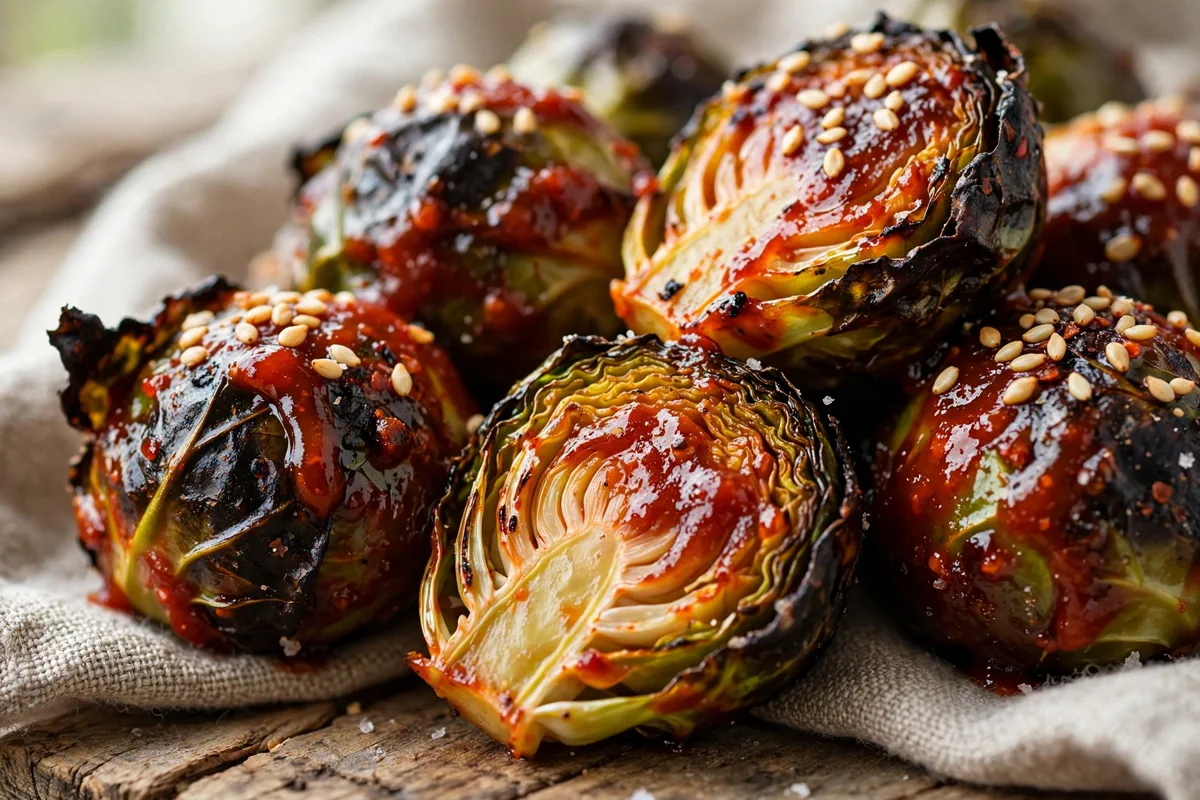
Gochujang Brussels Sprouts: The Spicy Side Stealing Thanksgiving
Published: Jan 15, 2025
Charred Brussels sprouts lacquered in a sticky gochujang-honey glaze — sweet heat, crisp edges, and the side everyone reaches for first.
Charred Brussels sprouts lacquered in a sticky gochujang-honey glaze — sweet heat, crisp edges, and the side everyone reaches for first.
If you are looking for an ultra-satisfying, restaurant-quality meal that comes together with minimal effort, this Gochujang Brussels Sprouts: The Spicy Side Stealing Thanksgiving is about to become your new favorite. Everything is cooked to juicy, golden perfection with wholesome ingredients and incredible depth of flavor.
One simple tip!
Cut-side down on the pan is what gives each sprout its flat, deeply browned face. If the pan is crowded, the sprouts steam instead of roast, so use a second pan rather than piling them up.
Step-by-Step Photos
Why You’ll Love This Recipe
Ingredients Notes & Variations
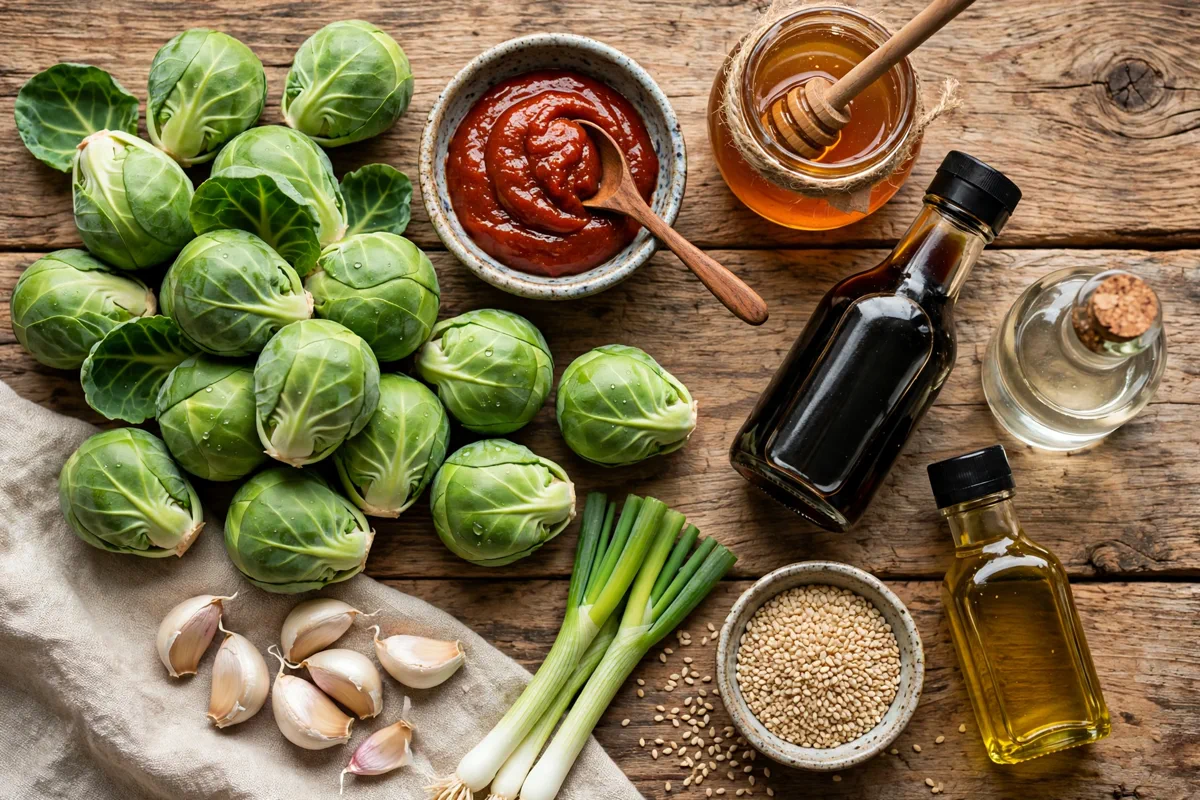
Here is an overview of what you will need for this recipe. Be sure to scroll down to the printable recipe card below for exact scaled measurements!
Brussels sprouts
1.5 lbtrimmed and halved through the stem
olive oil
3 tbspkosher salt
0.5 tspblack pepper
0.25 tspfreshly ground
gochujang
3 tbspKorean fermented chili paste
honey
2 tbsprice vinegar
1 tbspunseasoned
soy sauce
1 tbsplow-sodium if you have it
toasted sesame oil
1 tspgarlic
3 piececloves, finely grated or minced
sesame seeds
1 tbsptoasted
scallions
2 piecethinly sliced, for serving
How to Make (Step-by-Step Overview)
Here is a quick summary of the preparation process. Detailed cooking temperatures and step timers are included in the recipe card below.
Our Pro Tips for Success
- •Cut-side down on the pan is what gives each sprout its flat, deeply browned face. If the pan is crowded, the sprouts steam instead of roast, so use a second pan rather than piling them up.
- •Whisk the glaze while the sprouts roast so it is ready the second they come out hot. Glaze poured over hot sprouts clings; glaze on cold sprouts slides straight off.
- •Gochujang brands vary in heat. Taste the glaze before you toss — if yours runs hot, add honey a teaspoon at a time until the sweetness balances it.
- •Do not glaze before the first roast. The honey and gochujang sugars would burn long before the sprouts cook through, and you would lose the char that makes this dish work.
- •The second roast is only 5 minutes. That is enough to set the glaze into a sticky coat; much longer and the sugars start to darken too fast and turn bitter.
Storage & Make-Ahead Instructions
Our Recipe Precision Calculators
Calculate exact roasting times, internal temperatures, brining ratios, and safe thaw windows.
What Gochujang Does to Brussels Sprouts
Gochujang Brussels sprouts are halved sprouts roasted cut-side down until the flat faces turn dark and crisp, then tossed in a sticky glaze of gochujang, honey, rice vinegar, and soy sauce and roasted once more until the coating sets like lacquer. The result is a side dish that tastes sweet first, then warm, with a little tang at the end — and the sprouts keep their bite under the glaze instead of going soft. It takes 40 minutes from start to finish, and it earns its place on a holiday table where the usual sides all taste the same.
The reason this works so well at Thanksgiving is simple. Most of the table is rich and buttery: turkey with gravy, mashed potatoes, stuffing, rolls. A spoonful of something sweet, spicy, and a little sharp cuts straight through all of that. The sprouts do the job that cranberry sauce used to do, except they are hot, they are savory, and people actually finish them.
Roast First, Glaze Second
The single most important decision in this recipe is the order of operations. The sprouts roast naked first — just oil, salt, and pepper — for a full 20 minutes at 425°F. That is where the flavor comes from. The cut face browns, the outer leaves crisp and curl, and the inside turns tender without going mushy. None of that happens if the glaze goes on early, because honey and gochujang are both full of sugar, and sugar burns at roasting temperatures long before a sprout cooks through.
So the glaze waits in a bowl while the oven does the work. When the sprouts come out, they are hot enough that the glaze thins and clings on contact. You toss, spread them back out, and give them five more minutes. That second roast is not about cooking the sprouts further. It is about setting the glaze — driving off a little water so the coating turns from a sauce into a sticky skin that stays put when you serve them.
If you have ever had glazed sprouts where the sauce pools at the bottom of the dish, this two-step method is the fix. The glaze belongs on the sprout, not under it.
Cutting the Sprouts So They Actually Brown
Start by trimming the woody stem end and peeling off any yellowed outer leaves. Then cut each sprout in half straight through the stem. That last part matters: cutting through the stem keeps the leaves attached, so the halves stay together in the pan instead of falling apart into loose leaves that burn.
Size matters too. If a few sprouts are much bigger than the rest, cut those into quarters so everything cooks at the same pace. A pan of mixed sizes means some sprouts are still pale while others are done, and there is no good way to fix that once they are in the oven.
When you spread them on the pan, place every half cut-side down and give each one a little room. The flat face against the hot metal is what browns. A sprout sitting cut-side up roasts, but it steams more than it sears, and you lose the dark, almost caramelized face that makes this dish look as good as it tastes. If your pan is crowded, use a second pan. Crowding is the most common reason roasted sprouts come out soft and gray instead of crisp and browned.
The Glaze, Spoon by Spoon
Gochujang is a Korean fermented chili paste — thick, brick red, sweet and savory at once, with a slow heat that builds instead of hitting all at once. Three tablespoons is the right amount for a pound and a half of sprouts: enough to coat every piece without drowning them, and enough heat to be noticeable without chasing anyone away from the table.
Honey does two jobs here. It balances the chili heat, and it is what makes the glaze turn glossy and sticky in the second roast. Rice vinegar pulls in the opposite direction with a clean tang, so the glaze never tastes flat or one-note. Soy sauce adds salt and depth, and a single teaspoon of toasted sesame oil gives the whole thing a nutty background note. Grated garlic goes in raw, and the heat of the sprouts takes the raw edge off it.
Whisk the glaze while the sprouts roast and taste it before you toss. Gochujang brands are not all the same — some run hotter, some run sweeter. If yours leans hot, add honey a teaspoon at a time until the sweetness catches up. The glaze should taste sweet first, then warm, with a little tang at the end. If it tastes only of heat, it needs more honey. If it tastes only of sweet, it needs another half tablespoon of gochujang.
Getting the Char Without Burning the Glaze
Watch the second roast closely. Five minutes at 425°F is the sweet spot: the glaze bubbles, thickens, and clings. Past seven or eight minutes, the sugars start to darken too fast and the glaze turns bitter. If your oven runs hot, check at four minutes.
There is also a difference between char and burn, and the sprouts will teach you if you let them. The outer leaves will darken and crisp — that is char, and it tastes good. The glaze itself going black at the edges is burn, and it tastes bitter. If you see the glaze smoking or going black, pull the pan immediately. The sprouts are already cooked; the second roast is only about setting the coating.
Let the sprouts rest on the pan for two minutes after they come out. The glaze is molten straight from the oven and will slide off if you move them too soon. Two minutes is enough for it to set into the sticky coat you want, and the sprouts stay hot while it happens.
How to Tell They Are Done
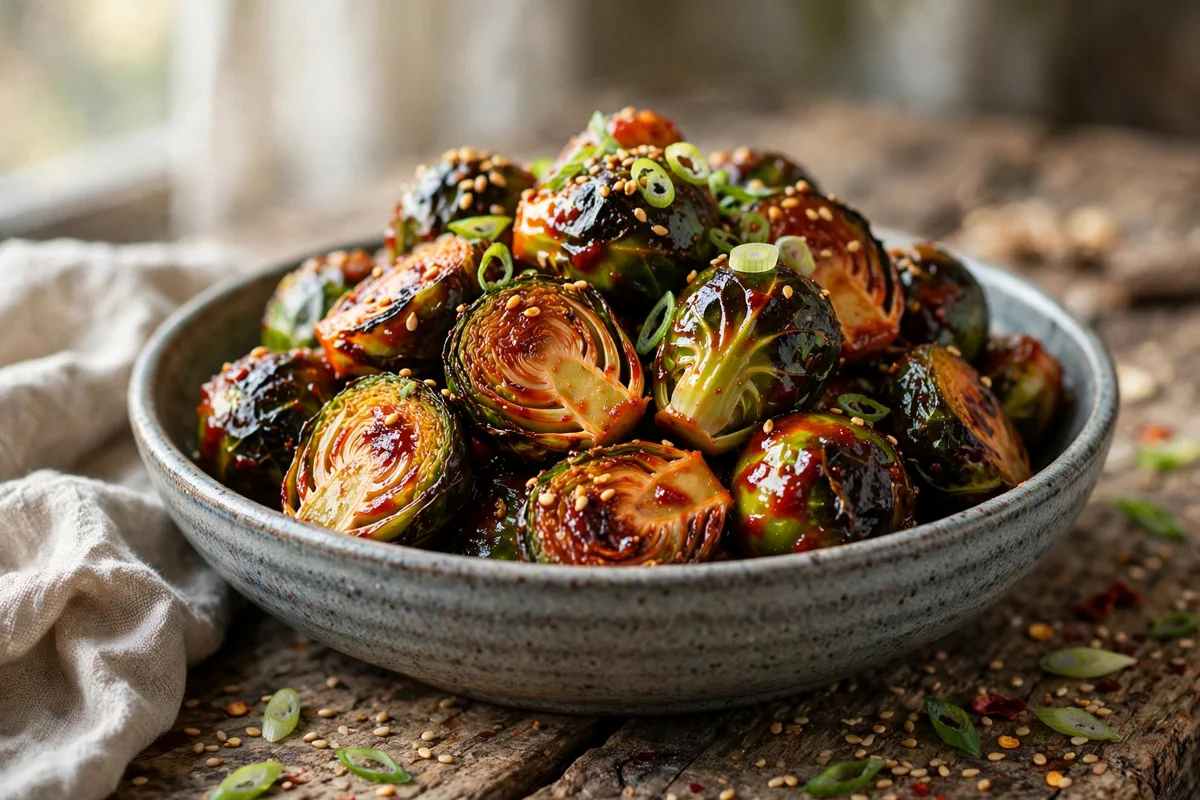
A finished sprout has a dark brown, almost mahogany cut face, crisp curled outer leaves, and a center that gives easily when you press it with a fork. The glaze should look glossy and cling to every ridge. If the cut face is pale, they needed more time in the first roast. If the glaze is dull and runny, they needed the full five minutes in the second roast.
Serving It at the Holiday Table
Move the sprouts to a serving dish and scatter the sesame seeds and sliced scallions over the top right before they go to the table. The seeds add a small crunch, and the scallions add a fresh bite that keeps the dish from feeling heavy. Serve them warm, not piping hot — the flavors settle as they cool slightly, and nobody burns their mouth on molten glaze.
They hold well on a buffet. The glaze keeps them from drying out, and they taste good at room temperature for an hour or so, which is more than most hot sides can say. If you are cooking for a crowd, this recipe doubles cleanly — just use two sheet pans and swap their positions halfway through the first roast so both pans brown evenly.
And if there are leftovers, they reheat better than almost any other Thanksgiving side. Eight to ten minutes on a sheet pan in a hot oven brings the glaze back to a bubble and crisps the edges again, so day-after sprouts taste close to fresh ones.
If You Do Not Have Gochujang
Gochujang is worth buying for this recipe — most grocery stores carry it now, usually in the international aisle, and a tub keeps for months in the fridge. If you truly cannot find it, sriracha mixed with a tablespoon of tomato paste and a pinch of sugar gets you part of the way there. It will be hotter and sharper, with none of the fermented depth, so start with 2 tablespoons of sriracha and taste as you go. The sprouts will still be good. They just will not be quite the same dish.
Frequently Asked Questions
No — they are medium heat at most. Gochujang brings a sweet, slow warmth rather than a sharp burn, and the honey softens it further. If you want them milder, drop the gochujang to 2 tablespoons and add an extra teaspoon of honey.
Yes. Roast and glaze them up to a day ahead, cool completely, and refrigerate in a covered container. Reheat on a sheet pan at 400°F for 8 to 10 minutes and add the sesame seeds and scallions fresh just before serving.
Gochujang Brussels Sprouts: The Spicy Side Stealing Thanksgiving
Charred Brussels sprouts lacquered in a sticky gochujang-honey glaze — sweet heat, crisp edges, and the side everyone reaches for first.
Ingredients
Click to check offInstructions
Step-by-StepThe Cooking With Guru Team
Our recipes are developed and checked by the Cooking With Guru team. Nutrition figures are estimates calculated from USDA data, and yields scale with the built-in portion tools so the recipe fits your kitchen.
More dinner recipes to try!
Comments & Questions (0)
Join the conversationNo comments yet!
Be the first to leave a comment or ask a question about Gochujang Brussels Sprouts: The Spicy Side Stealing Thanksgiving.