🍽️
Prep time15 mins
Cook time20 mins
Ingredients16
dinnermedium
Dan Dan Noodles (Sichuan Sesame-Paste Noodles)
Published: Oct 15, 2026
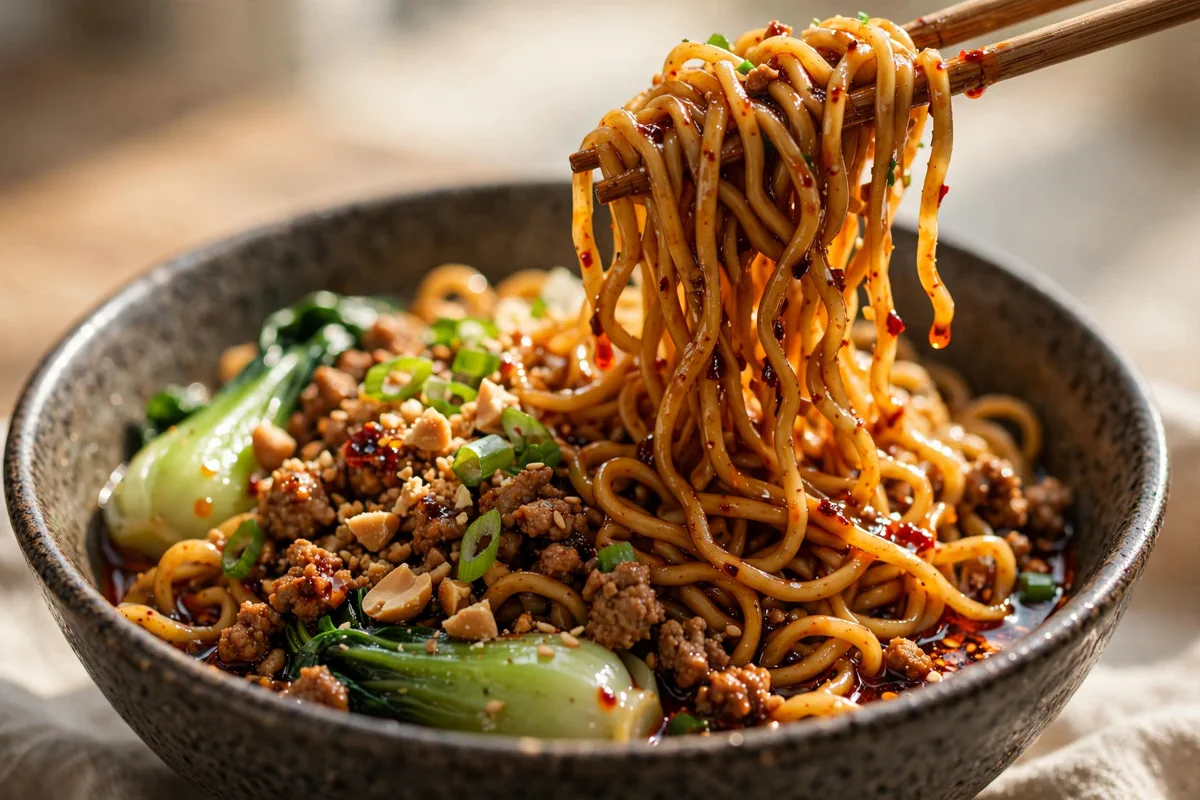
Dan dan noodles: springy wheat noodles tossed in sesame paste, chili oil, and black vinegar, topped with savory pork and mustard greens. Sichuan street food in 35 minutes.
Dan dan noodles: springy wheat noodles tossed in sesame paste, chili oil, and black vinegar, topped with savory pork and mustard greens. Sichuan street food in 35 minutes.
If you are looking for an ultra-satisfying, restaurant-quality meal that comes together with minimal effort, this Dan Dan Noodles (Sichuan Sesame-Paste Noodles) is about to become your new favorite. Everything is cooked to juicy, golden perfection with wholesome ingredients and incredible depth of flavor.
One simple tip!
Mix the sesame paste with the soy sauce first, before any water or stock touches it. The paste turns stubborn and grainy if you add water too early, but it melts smooth into the soy sauce every time.
Step-by-Step Photos
Why You’ll Love This Recipe
Quick & EffortlessReady in just 35 minutes total with straightforward, foolproof prep.
Packed with Deep FlavorCarefully balanced with Chinese wheat noodles (dan dan mian or thin ramen-style noodles), ground pork, Chinese sesame paste (zhima jiang) for maximum satisfaction.
Family & Crowd FriendlyMakes 4 generous servings that can be effortlessly doubled or scaled using our smart scaler.
Nutritious & High ProteinProvides 26g protein and only 640 calories per serving.
Ingredients Notes & Variations
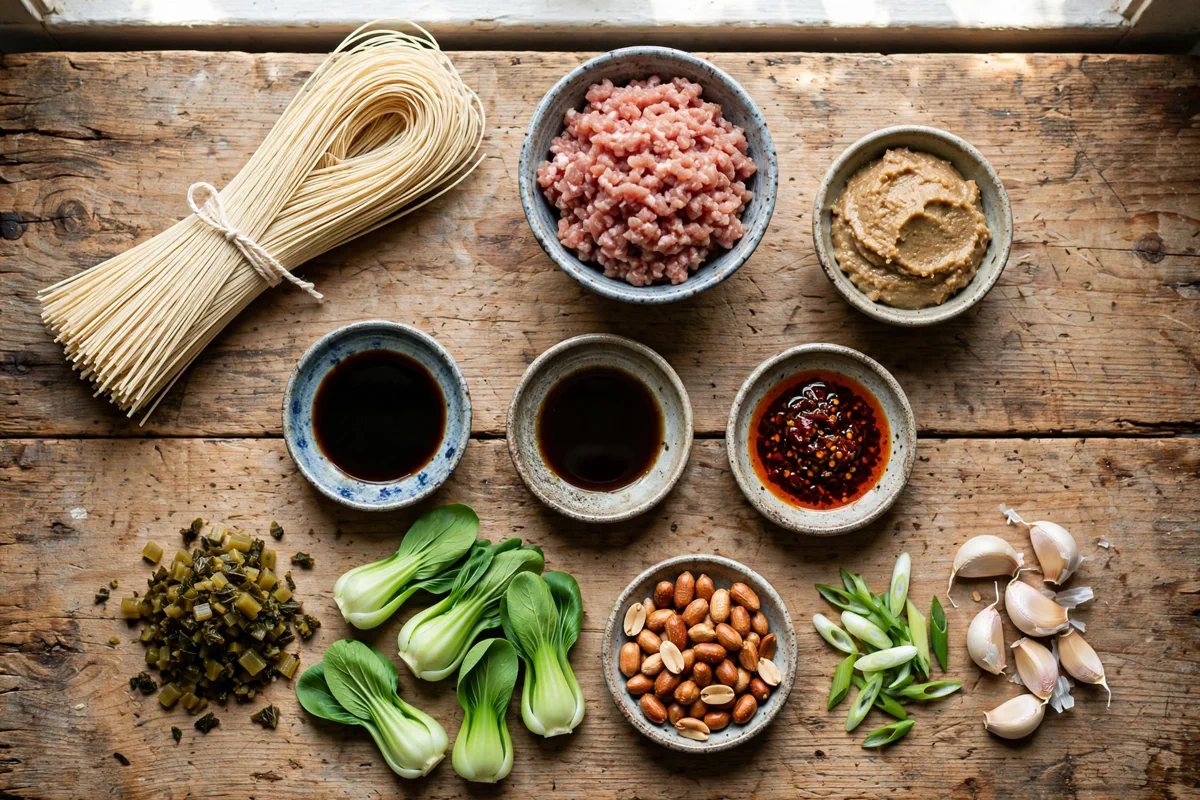
Here is an overview of what you will need for this recipe. Be sure to scroll down to the printable recipe card below for exact scaled measurements!
Chinese wheat noodles (dan dan mian or thin ramen-style noodles)
400 gfresh or dried; cook per package
ground pork
250 g80/20, not too lean
Chinese sesame paste (zhima jiang)
60 gabout 4 tbsp; tahini works in a pinch but is milder
light soy sauce
3 tbspdivided use
Chinkiang black vinegar
2 tbspthe dark, malty kind
Chinese chili oil with sediment
3 tbspscoop up the crunchy sediment too; adjust to heat preference
toasted sesame oil
1 tbspgranulated sugar
1 tspgarlic cloves
2 pieceminced
preserved mustard greens (sui mi ya cai)
30 grinsed, squeezed dry, finely chopped
Shaoxing wine
1 tbspdry sherry works
low-sodium chicken stock
120 mlor hot noodle cooking water
baby bok choy
4 piecehalved lengthwise; spinach works
scallions
3 piecethinly sliced
roasted peanuts
40 gcrushed
ground Sichuan peppercorns
1 tspoptional; toast and grind fresh for best flavor
How to Make (Step-by-Step Overview)
Here is a quick summary of the preparation process. Detailed cooking temperatures and step timers are included in the recipe card below.
1
Make the sauce base. In a medium bowl, whisk the sesame paste with 2 tablespoons of the soy sauce until completely smooth, then whisk in the sugar and minced garlic.
Look for: The paste should look like thick peanut butter: completely smooth, with no dry streaks.
2
Thin the sauce. Add the chicken stock one tablespoon at a time, whisking well after each addition, until the sauce pours easily off the spoon.
Look for: The sauce relaxes into something the thickness of heavy cream and turns glossy. It will thicken again as it sits; that is normal.
3
Divide the sauce among 4 warm serving bowls. To each bowl, add half a tablespoon of black vinegar, a drizzle of chili oil with sediment (about 2 teaspoons to start), and a few drops of toasted sesame oil.
Look for: Each bowl should show a dark sauce base with a red slick of chili oil on top.
4
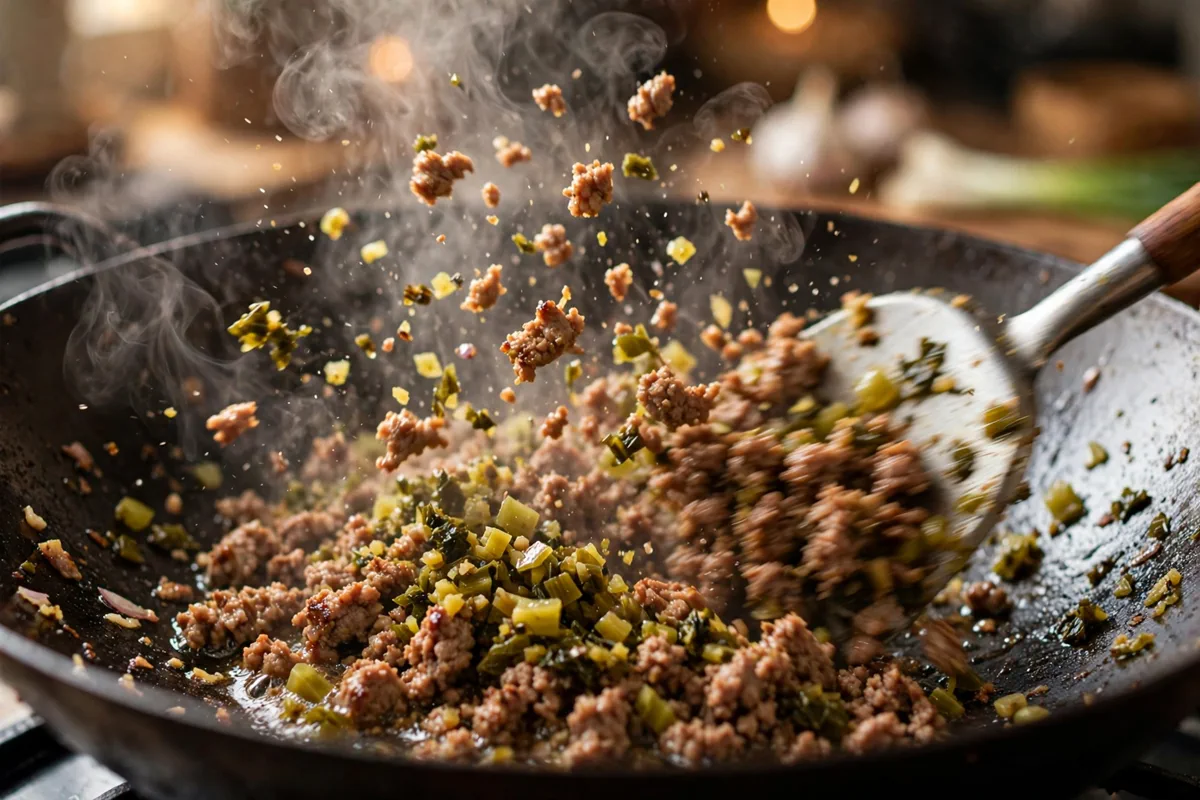
Cook the pork. Heat the wok or skillet over medium-high heat until hot. Add the ground pork and cook, breaking it into small crumbles with a spatula, for 5 to 6 minutes until no pink remains and the edges start to brown.
Look for: The pork should be broken into small crumbles with browned edges, and the pan should smell savory with no raw-meat aroma.
5
Season the pork. Add the Shaoxing wine, the remaining 1 tablespoon of soy sauce, and the chopped mustard greens. Stir-fry for 2 minutes more, then take off the heat.
Look for: You will smell the Shaoxing wine steam off in seconds, leaving a clean, savory aroma. The greens soften but keep a little crunch.
6
Boil the noodles. Bring a large pot of water to a rolling boil and cook the noodles according to the package directions, usually 3 to 4 minutes for fresh noodles.
Look for: The pot should be at a rolling boil the whole time. The strands will look plump and lose their raw, chalky center.
7
Blanch the bok choy. In the last 2 minutes of noodle cooking, drop the halved bok choy into the same pot and cook until the leaves are bright green and the stems are just tender, about 2 minutes. Lift them out with tongs.
Look for: The leaves turn bright green within a minute and the stems stay crisp. Do not let them go olive-colored or they turn limp.
8
Drain the noodles, reserving a mug of the cooking water. Divide the hot noodles directly over the sauce in each bowl.
Look for: The noodles go in pale on top of the dark sauce; the diner will mix them at the table.
9
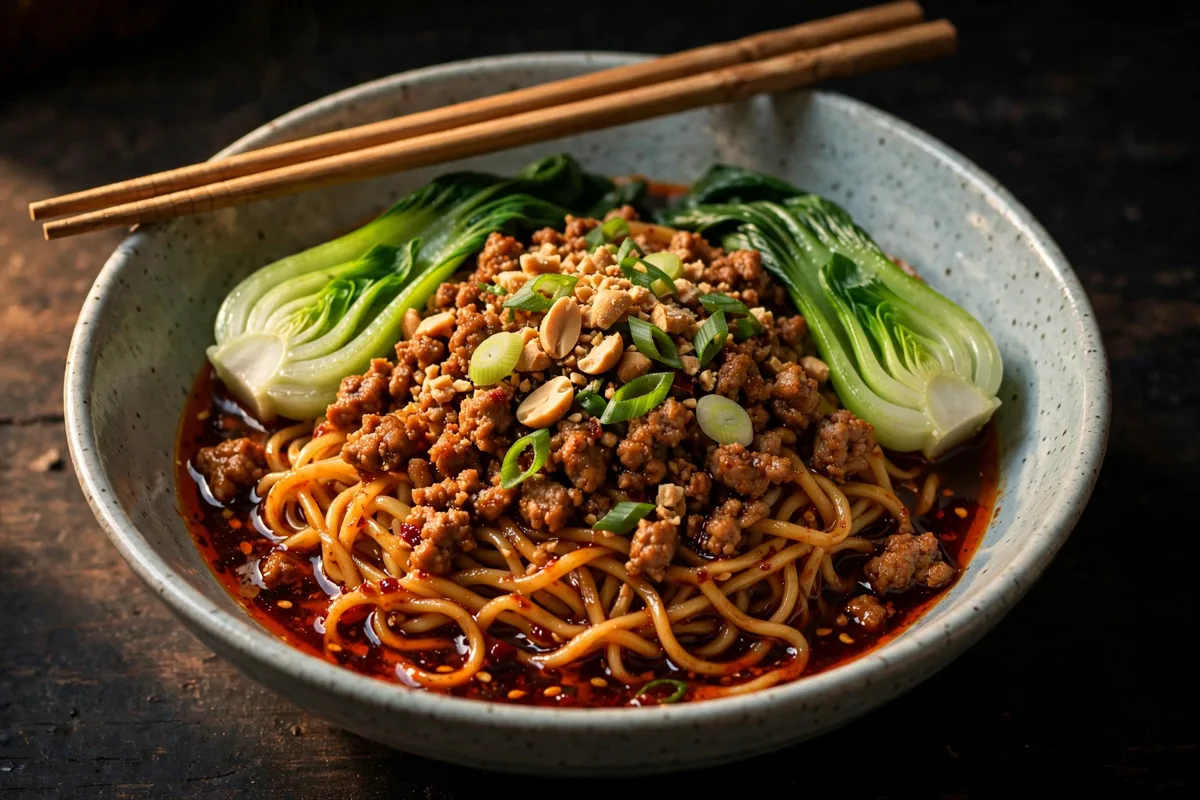
Top each bowl with a spoonful of the pork and mustard green mixture, two bok choy halves, a scatter of crushed peanuts, and sliced scallions.
Look for: The bowl should show distinct layers: pale noodles, dark pork, green bok choy, and red oil around the edges.
10
Serve immediately with chopsticks, telling everyone to toss their own bowl thoroughly so the sauce coats every strand. Dust with ground Sichuan peppercorns if using.
Look for: The noodles turn from pale to a deep, glossy red-brown. That is what you want: every strand coated.
Our Pro Tips for Success
- •Mix the sesame paste with the soy sauce first, before any water or stock touches it. The paste turns stubborn and grainy if you add water too early, but it melts smooth into the soy sauce every time.
- •Rinse the preserved mustard greens under cold water and squeeze them dry before chopping. Straight from the bag they can be too salty and will take over the bowl.
- •Save a mug of the noodle cooking water before you drain. A splash thins the sauce to the right gloss without watering down the flavor.
- •Toss the noodles at the table, not in the kitchen. Each diner stirs their own bowl so the sauce coats every strand while it is still hot.
Storage & Make-Ahead Instructions
Refrigerator:Store leftovers in an airtight container for up to 3 to 4 days.
Freezer:Freeze in freezer-safe containers or bags for up to 2 months. Thaw overnight in the fridge.
Reheating:Reheat gently in a 350°F oven or covered skillet with a splash of broth until heated through.
Interactive Kitchen Assistant Live Smart Scaler
Our Recipe Precision Calculators
Calculate exact roasting times, internal temperatures, brining ratios, and safe thaw windows.
2.5 lbs (1.13 kg)
Recommended Timing & Thermals
Est. Cook Time45 mins
Rest Period7 mins
Pull From Heat160°F (71°C)
Final Carryover165°F (74°C)
Insert meat thermometer into thickest center without touching bone for 100% juicy safety.
Dan dan noodles are Sichuan's most famous street noodles: springy wheat noodles tossed at the table in a sauce of Chinese sesame paste, chili oil, soy sauce, and Chinkiang black vinegar, then topped with savory minced pork, preserved mustard greens, and blanched greens. The name comes from the shoulder poles ("dan") that street vendors used to carry their pots and noodle baskets through Chengdu. This version follows the classic sesame-paste base, not the peanut-butter shortcut, and it comes together in about 35 minutes.
What makes the bowl work is contrast. The sauce is rich and nutty, the chili oil brings heat, the vinegar cuts through the fat, and the mustard greens add a salty, almost pickled bite on top. Nothing here is complicated on its own. The whole dish is about getting each part right and assembling hot.
Where Dan Dan Noodles Come From
Dan dan noodles started as true street food in Sichuan province. Vendors balanced a bamboo pole across one shoulder, a pot of sauce on one end and noodles and bowls on the other, and assembled each bowl to order. The original was a small, sauce-heavy snack: a handful of noodles, a spoonful of sauce, some pork topping, and greens. It was never a big bowl of soup.
That matters for how you eat it at home. The sauce goes in the bowl first, the hot noodles go on top, and each person tosses their own serving. Restaurants in Chengdu still serve it this way, with the layers visible until the diner stirs. If you have ever had a version where everything arrived pre-mixed and lukewarm, you have had a lesser bowl. Heat and the toss are part of the recipe.
The Sauce Is the Whole Recipe
Everything else in the dish is simple cooking. The sauce is where dan dan noodles are won or lost, so it deserves your full attention. Chinese sesame paste (zhima jiang) is the base, and it behaves very differently from the tahini or peanut butter that shortcuts use. It is thicker, roastier, and it seizes into a stiff lump the second cold liquid hits it. That is not a mistake; it is just how the paste works.
The fix is order. Whisk the paste with the soy sauce first, before anything watery goes near it. The salt and the small amount of liquid in the soy sauce are enough to start loosening it, and from there you add the stock a spoonful at a time, whisking until it relaxes. What you want at the end is a sauce that pours off the spoon like heavy cream. It will thicken as it sits on the counter, so whisk it again right before the noodles go in.
Then come the three flavor anchors: Chinkiang black vinegar, chili oil, and toasted sesame oil. The vinegar is non-negotiable. It is the dark, malty vinegar from Zhenjiang, and it gives the sauce its sour backbone. White vinegar or rice vinegar will taste thin and sharp by comparison. The chili oil should be the Chinese kind with the crunchy sediment at the bottom of the jar, because that sediment is half the point. Scoop it up deliberately. The toasted sesame oil goes in last, a single tablespoon, for aroma.
The Pork Topping and the Mustard Greens That Make It
The topping is seasoned ground pork, and it is more of a condiment than a main event. Two hundred fifty grams for four bowls is plenty. Brown it properly in a hot wok, breaking it into small crumbles, and let the edges catch some color before the wine and soy sauce go in. The pork should taste savory and a little caramelized, never steamed and gray.
The ingredient most home cooks have never bought is sui mi ya cai, the preserved mustard greens from Yibin in Sichuan. It comes in small vacuum-sealed packs and looks like dark, salty, shredded leaves. It is the quiet star of the topping: salty, funky in a good way, with a crunch that survives the hot pork. Rinse it under cold water and squeeze it dry before chopping, because straight from the pack it is saltier than the dish needs. If your Asian grocery does not carry it, pickled mustard greens are the closest substitute. The bowl will still be good, just a little less distinctive.
The Noodles and the Greens
Use thin Chinese wheat noodles, the kind sold as dan dan mian or sometimes just "thin wheat noodles" at the Asian market. Fresh noodles cook in 3 to 4 minutes and have the best chew, but dried work fine. In a real pinch, thin spaghetti will carry the sauce, though the texture is different enough that you will notice.
Cook the bok choy in the same pot as the noodles during the last two minutes. This is how it is done in noodle shops: one pot, everything blanched in sequence. The greens should come out bright green with stems that still have bite. They cool the palate between bites of the rich, spicy noodles, which is exactly their job.
Small Moves That Change the Bowl
- Warm your serving bowls with hot water and dump it out before assembling. The sauce is thin and the noodles cool fast; a warm bowl buys you several minutes of ideal eating temperature.
- Undercook the noodles by about 30 seconds. They keep cooking from residual heat while you portion and top, and dan dan noodles should have real chew, never softness.
- Taste the sauce before the noodles go in. It should taste slightly too strong on its own: too salty, too sour, too spicy. The plain noodles dilute it to exactly right.
- Keep the chili oil jar on the table. Heat tolerance varies wildly, and the person eating should control their own bowl. This is also how it is served in Sichuan.
Swaps That Still Work
- No pork: finely chopped shiitake or cremini mushrooms, cooked until they give up their water and brown, make a convincing topping. Pressed, crumbled extra-firm tofu works too. Keep the sauce exactly the same.
- No sesame paste: tahini is the honest substitute. It is milder and less roasty, so add an extra half tablespoon of toasted sesame oil to compensate.
- No Chinkiang vinegar: there is no great substitute, but a mix of balsamic vinegar and a splash of rice vinegar gets closer than plain rice vinegar alone.
- No bok choy: spinach, choy sum, or even shredded napa cabbage, blanched the same way, all do the job.
- Gluten-free: rice noodles and tamari in place of soy sauce make a workable version, though the chew of wheat noodles is part of the classic texture.
Keeping and Reheating
Dan dan noodles are best eaten the moment they are tossed, but the components keep well separately. Store the sauce in a sealed jar in the fridge for up to 5 days; it thickens when cold, so whisk in a spoonful of hot water before using. The pork topping keeps 3 days in a sealed container; reheat it in a hot skillet for 2 to 3 minutes until sizzling. Cooked plain noodles keep 2 days tossed with a drop of sesame oil to stop sticking; refresh them with a 30-second dip in boiling water before assembling. Do not store assembled bowls. The bok choy is best blanched fresh each time, but leftovers hold for a day.
Questions People Actually Ask
Can I make dan dan noodles ahead for a dinner party?
Make the sauce and the pork topping a day ahead and refrigerate both. When guests arrive, all you need is 10 minutes: boil water, cook noodles, blanch greens, assemble. Set out the components and let people build and toss their own bowls. It is faster than plating and more fun.
Is the Sichuan peppercorn necessary?
No. It adds the famous tongue-tingling sensation, but plenty of dan dan noodles in Sichuan are served without it. If you are new to it, start with half a teaspoon across four bowls. The tingle builds slowly and some people love it while others find it distracting.
Why do restaurant versions sometimes look almost dry?
Because the classic serving is a small portion of noodles with just enough sauce to coat, not a bowl of soup. If yours looks soupy, you added too much stock to the sauce or too little noodle. The sauce should cling to the strands, with a little red oil pooling at the bottom of the bowl, not a broth you could drink.
Can kids eat this?
Yes, with the chili oil on the side. The base sauce with just sesame paste, soy sauce, vinegar, and a little sugar is mild and nutty, and kids tend to like the pork topping. Let everyone add their own chili oil at the table.
Frequently Asked Questions
Yes, and it still tastes right. Swap in finely chopped shiitake or cremini mushrooms (about 250g) cooked the same way, or crumble in extra-firm tofu that you have pressed well. The sauce is the soul of the dish, so keep it unchanged.
Sui mi ya cai is a pickled mustard green from Sichuan, sold in small vacuum packs at Chinese and East Asian grocery stores (often in the pickled-vegetables aisle). If you cannot find it, pickled mustard greens or even finely chopped kimchi work as a substitute, though the flavor shifts slightly.
Easy Chicken Recipes • Official Card
Dan Dan Noodles (Sichuan Sesame-Paste Noodles)
☆☆☆☆☆0.0 (0 reviews)•Recipe by Cooking With Guru Editorial Team•Updated: Oct 15, 2026
Dan dan noodles: springy wheat noodles tossed in sesame paste, chili oil, and black vinegar, topped with savory pork and mustard greens. Sichuan street food in 35 minutes.
Prep Time15 mins
Cook Time20 mins
Total Time35 mins
Calories640 kcal
Adjust Servings:
4
Ingredients
Click to check off400 g Chinese wheat noodles (dan dan mian or thin ramen-style noodles)(fresh or dried; cook per package)
250 g ground pork(80/20, not too lean)
60 g Chinese sesame paste (zhima jiang)(about 4 tbsp; tahini works in a pinch but is milder)
3 tbsps light soy sauce(divided use)
2 tbsps Chinkiang black vinegar(the dark, malty kind)
3 tbsps Chinese chili oil with sediment(scoop up the crunchy sediment too; adjust to heat preference)
1 tbsp toasted sesame oil
1 tsp granulated sugar
2 piece garlic cloves(minced)
30 g preserved mustard greens (sui mi ya cai)(rinsed, squeezed dry, finely chopped)
1 tbsp Shaoxing wine(dry sherry works)
120 ml low-sodium chicken stock(or hot noodle cooking water)
4 piece baby bok choy(halved lengthwise; spinach works)
3 piece scallions(thinly sliced)
40 g roasted peanuts(crushed)
1 tsp ground Sichuan peppercorns(optional; toast and grind fresh for best flavor)
Equipment Needed
- wok or large skillet
- large pot for noodles
- small mixing bowls
- tongs
Instructions
Step-by-StepMake the sauce base. In a medium bowl, whisk the sesame paste with 2 tablespoons of the soy sauce until completely smooth, then whisk in the sugar and minced garlic.
Thin the sauce. Add the chicken stock one tablespoon at a time, whisking well after each addition, until the sauce pours easily off the spoon.
Divide the sauce among 4 warm serving bowls. To each bowl, add half a tablespoon of black vinegar, a drizzle of chili oil with sediment (about 2 teaspoons to start), and a few drops of toasted sesame oil.
Cook the pork. Heat the wok or skillet over medium-high heat until hot. Add the ground pork and cook, breaking it into small crumbles with a spatula, for 5 to 6 minutes until no pink remains and the edges start to brown.
Season the pork. Add the Shaoxing wine, the remaining 1 tablespoon of soy sauce, and the chopped mustard greens. Stir-fry for 2 minutes more, then take off the heat.
Boil the noodles. Bring a large pot of water to a rolling boil and cook the noodles according to the package directions, usually 3 to 4 minutes for fresh noodles.
Blanch the bok choy. In the last 2 minutes of noodle cooking, drop the halved bok choy into the same pot and cook until the leaves are bright green and the stems are just tender, about 2 minutes. Lift them out with tongs.
Drain the noodles, reserving a mug of the cooking water. Divide the hot noodles directly over the sauce in each bowl.
Top each bowl with a spoonful of the pork and mustard green mixture, two bok choy halves, a scatter of crushed peanuts, and sliced scallions.
Serve immediately with chopsticks, telling everyone to toss their own bowl thoroughly so the sauce coats every strand. Dust with ground Sichuan peppercorns if using.
Nutrition Facts (per serving)
Calories640 kcal
Protein26g
Carbs62g
Fat33g
Fiber4g
Sugar5g
Sodium1450mg
CWG
Recipe Source
The Cooking With Guru Team
Our recipes are developed and checked by the Cooking With Guru team. Nutrition figures are estimates calculated from USDA data, and yields scale with the built-in portion tools so the recipe fits your kitchen.
More dinner recipes to try!
🍽️
Turkish Menemen: One-Pan Eggs in Spicy Tomato Sauce
🍽️
High-Protein Cottage Cheese Egg Bake with Spinach
🍽️
Easy Chicken Congee Recipe with Crispy Garlic and Chili Oil
Comments & Questions (0)
Join the conversationNo comments yet!
Be the first to leave a comment or ask a question about Dan Dan Noodles (Sichuan Sesame-Paste Noodles).