🍽️
Prep time8 mins
Cook time12 mins
Ingredients11
dinner
Honey Miso Glazed Salmon with Rice
Published: Jan 15, 2025
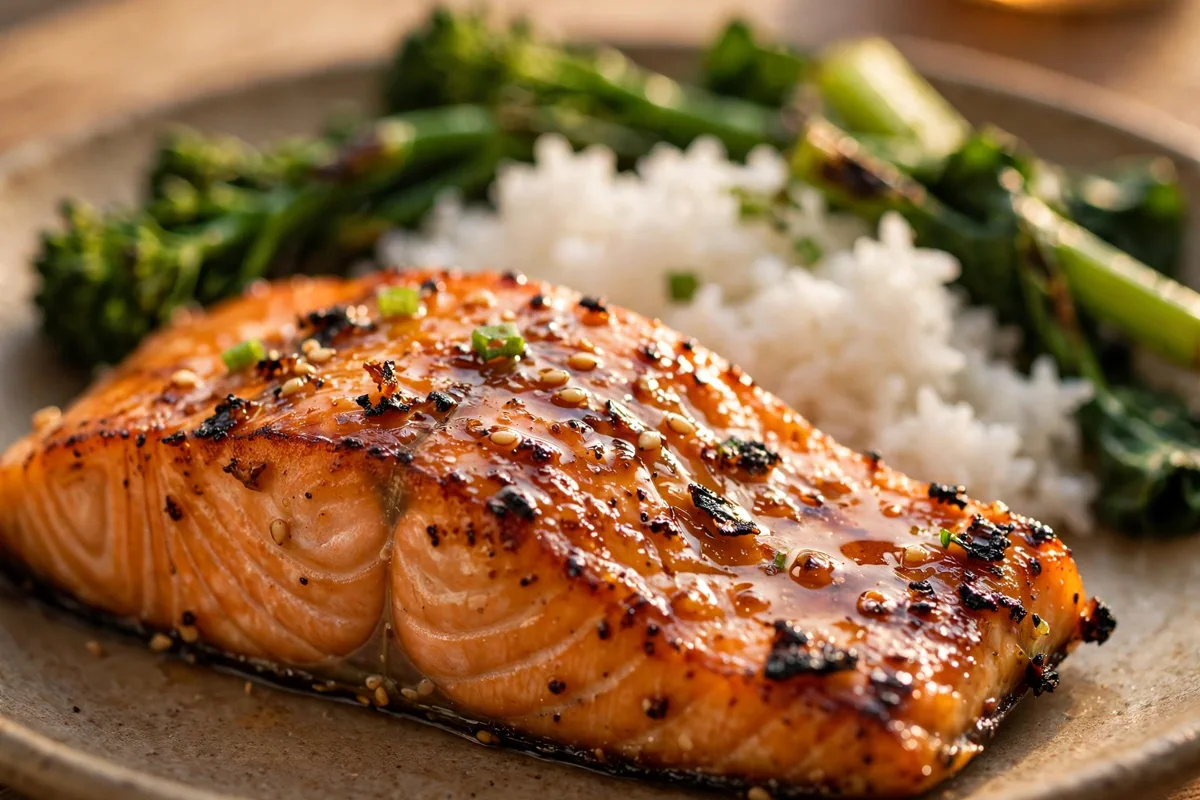
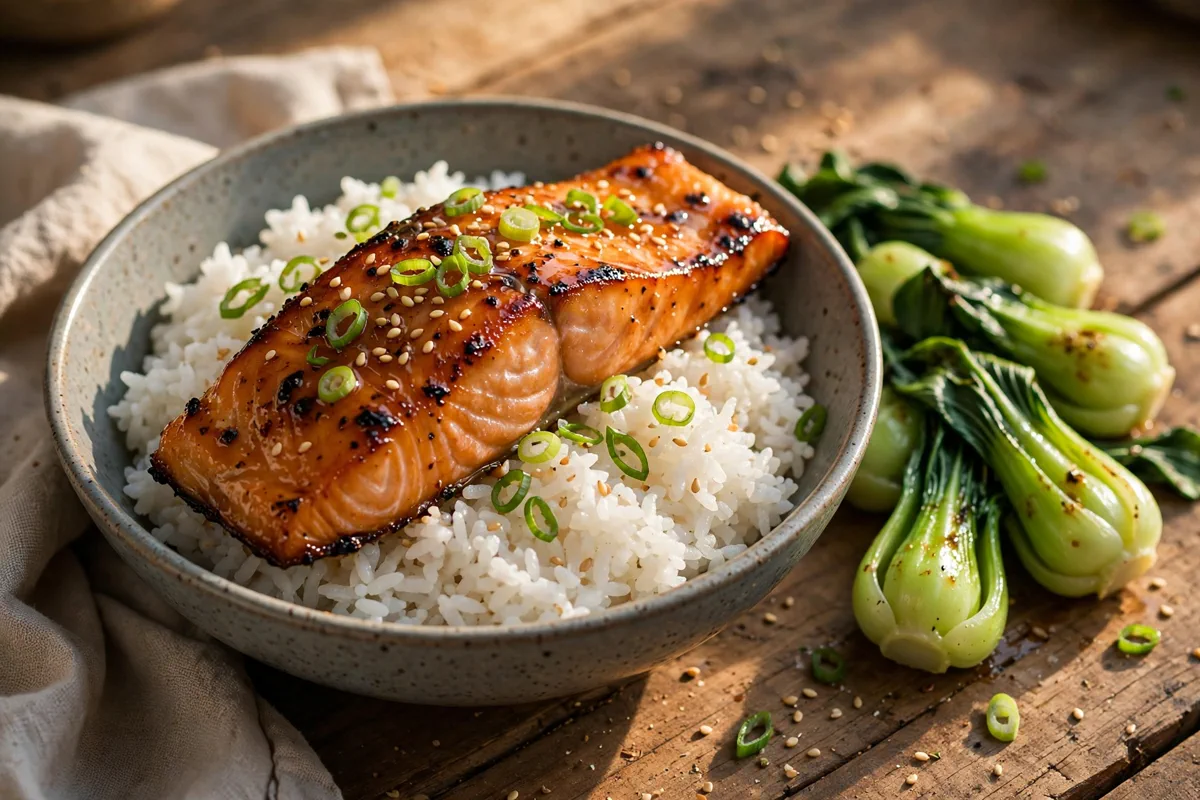
Honey miso glazed salmon with rice: a 12-minute oven glaze that turns sweet-savory and glossy, served over warm rice with greens.
Honey miso glazed salmon with rice: a 12-minute oven glaze that turns sweet-savory and glossy, served over warm rice with greens.
If you are looking for an ultra-satisfying, restaurant-quality meal that comes together with minimal effort, this Honey Miso Glazed Salmon with Rice is about to become your new favorite. Everything is cooked to juicy, golden perfection with wholesome ingredients and incredible depth of flavor.
One simple tip!
Use white miso, not red. Red miso is saltier and sharper, and it will overpower the honey. White (shiro) miso gives the mild, almost sweet base this glaze needs.
Step-by-Step Photos
Why You’ll Love This Recipe
Quick & EffortlessReady in just 22 minutes total with straightforward, foolproof prep.
Packed with Deep FlavorCarefully balanced with salmon fillets, white miso paste, honey for maximum satisfaction.
Family & Crowd FriendlyMakes 4 generous servings that can be effortlessly doubled or scaled using our smart scaler.
Made From ScratchReal ingredients and straightforward home cooking, with no shortcuts on flavor.
Ingredients Notes & Variations
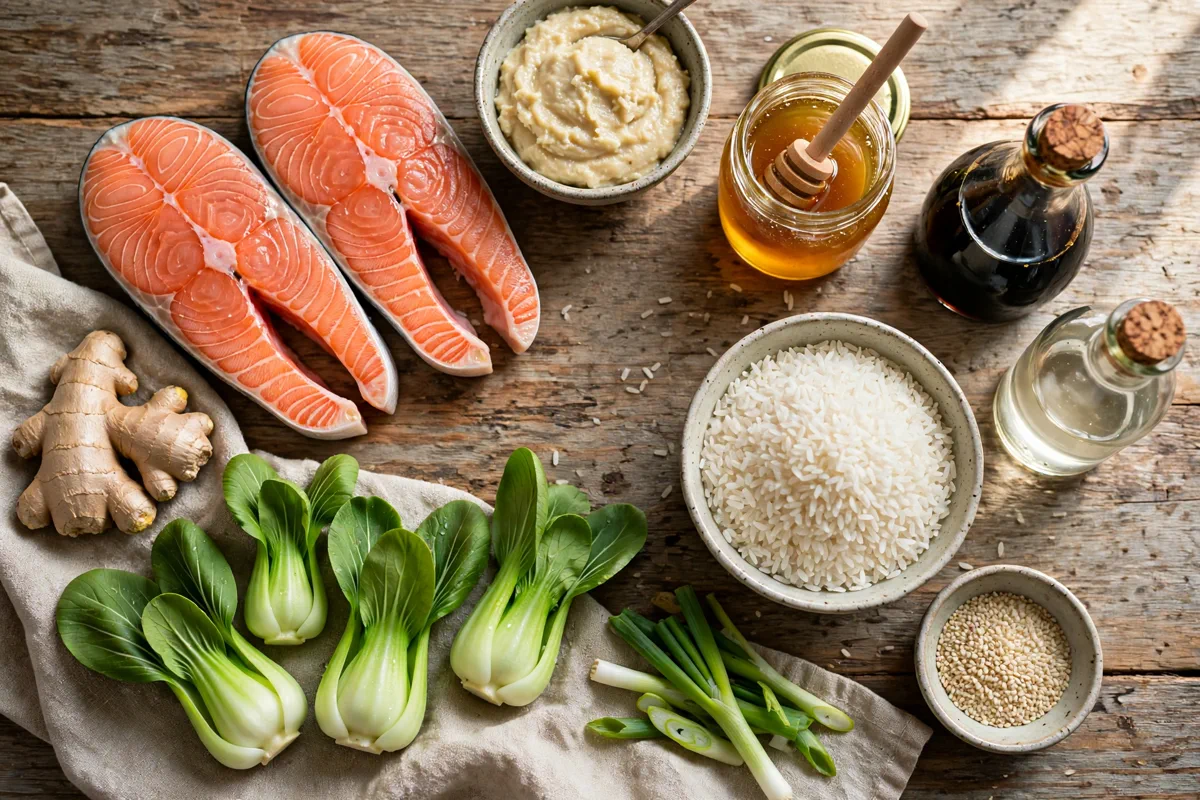
Here is an overview of what you will need for this recipe. Be sure to scroll down to the printable recipe card below for exact scaled measurements!
salmon fillets
4 pieceskin-on, about 170 g each, similar thickness
white miso paste
3 tbspshiro miso, smooth
honey
2 tbsprunny, not creamed
soy sauce
1 tbspregular, not dark
rice vinegar
1 tbspunseasoned
fresh ginger
1 tspfinely grated
cooked short-grain rice
2 cuphot, to serve
toasted sesame seeds
1 tspfor sprinkling
scallions
2 piecethinly sliced
baby bok choy
1 piecehalved lengthwise, for the side
salt
0.5 tspfor the greens
How to Make (Step-by-Step Overview)
Here is a quick summary of the preparation process. Detailed cooking temperatures and step timers are included in the recipe card below.
1
Heat the oven to 220°C (425°F). Line a small baking pan with parchment paper so the honey glaze cannot glue itself to the metal.
2
Whisk the white miso, honey, soy sauce, rice vinegar, and grated ginger in a small bowl until the miso dissolves and the mixture looks smooth and glossy.
3
Pat the salmon fillets very dry on all sides with a kitchen towel. Arrange them skin-side down in the lined pan with a little space between each one.
4
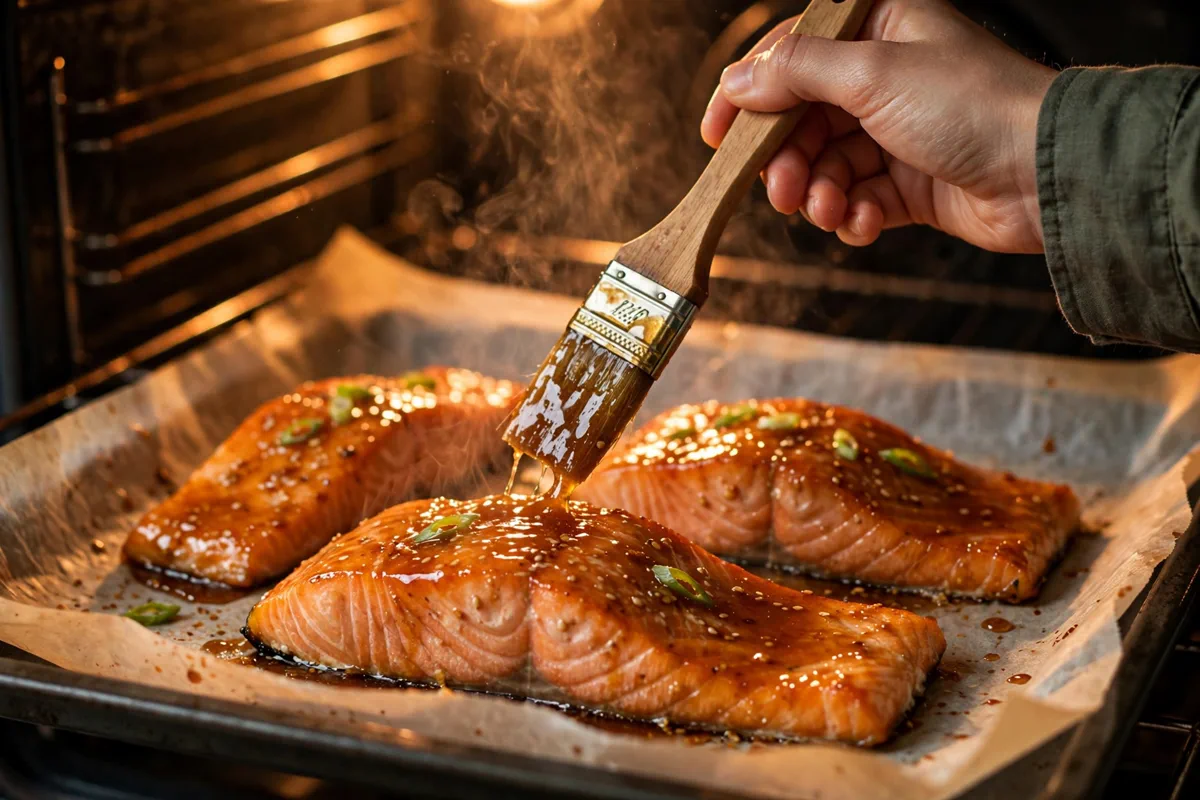
Brush a thin layer of glaze over the top and sides of each fillet, leaving some glaze in the bowl for the second coat.
5
Bake for 8 minutes. The glaze should look set and the surface slightly darker at the edges.
6
Switch the oven to the broiler on high. Brush on the remaining glaze, then broil 2 to 3 minutes, watching closely, until the tops turn glossy and caramelized at the corners. Listen for a gentle sizzle.
7
Meanwhile, steam the halved bok choy over the hot rice pot or in a covered pan with 2 tbsp water for 2 minutes until the stems turn bright green.
8
Rest the salmon 2 minutes, then serve over hot rice with the bok choy alongside. Scatter sesame seeds and scallions over everything.
Our Pro Tips for Success
- •Use white miso, not red. Red miso is saltier and sharper, and it will overpower the honey. White (shiro) miso gives the mild, almost sweet base this glaze needs.
- •Pat the fillets dry before the glaze goes on. A wet surface steams instead of caramelizing, so the edges never get that deep amber color.
- •Brush on two thin layers instead of one thick one. The first layer goes on before baking, the second after the broiler finish. That keeps the honey from burning while still building shine.
- •Watch the last two minutes under the broiler. Honey goes from caramelized to burnt in under a minute. When the edges look glossy and slightly darkened at the corners, pull it out.
Storage & Make-Ahead Instructions
Refrigerator:Store leftovers in an airtight container for up to 3 to 4 days.
Freezer:Freeze in freezer-safe containers or bags for up to 2 months. Thaw overnight in the fridge.
Reheating:Reheat gently in a 350°F oven or covered skillet with a splash of broth until heated through.
Interactive Kitchen Assistant Live Smart Scaler
Our Recipe Precision Calculators
Calculate exact roasting times, internal temperatures, brining ratios, and safe thaw windows.
2.5 lbs (1.13 kg)
Recommended Timing & Thermals
Est. Cook Time45 mins
Rest Period7 mins
Pull From Heat160°F (71°C)
Final Carryover165°F (74°C)
Insert meat thermometer into thickest center without touching bone for 100% juicy safety.
What This Dish Is
Honey miso glazed salmon with rice is a weeknight dinner built around one trick: a sweet-savory glaze that caramelizes in a hot oven. White miso gives it salt and depth, honey gives it shine and sweetness, and a little soy sauce and ginger round it out. The salmon bakes in 8 minutes, finishes under the broiler in 3, and lands on warm rice with greens. It tastes like something from a good Japanese restaurant, and it asks almost nothing of the cook.
Why the Glaze Works
The glaze works because honey and miso are doing different jobs. Honey caramelizes fast, which is why the fillets get those amber edges under the broiler. Miso does not caramelize the same way. It adds salt and a mild fermented savoriness that keeps the honey from tasting like dessert. The soy sauce deepens the salt, the rice vinegar cuts a little sweetness, and the ginger keeps it from tasting flat. Spread it thin and it clings. Spread it thick and it drips off and burns on the pan, which is why this recipe splits the glaze into two coats.
The Salmon Itself
Use fillets that are close to the same thickness. A thin tail piece will be done long before a thick center cut, and there is no way to fix that once they are in the oven. Skin-on fillets hold together better and the skin crisps a little on the hot parchment. If the fish is uneven, fold the thin tail under to even out the thickness before glazing.
The internal temperature is the only reliable doneness check. Pull the salmon when the thickest part reads 52°C (125°F) for medium or 57°C (135°F) for medium-well, keeping in mind it rises a couple of degrees as it rests. If there is no thermometer, press the side of the thickest fillet with a finger. It should feel firm but spring back. Flakes that separate easily without any translucency in the center mean it is done.
Building the Bowl
The rice matters more than people expect. Short-grain rice is sticky enough to catch drips of glaze, and a hot bowl of it underneath keeps the salmon warm while the gloss sets. Long-grain rice works, but the grains stay separate and the glaze runs to the bottom of the bowl instead of clinging.
Greens cut the richness. Baby bok choy is the natural pick: 2 minutes of steaming turns the leaves silky and the stems bright without any seasoning beyond a pinch of salt. Spinach, snap peas, or quick-pickled cucumber all do the same job. The point is something fresh and a little bitter against the sweet glaze.
Common Mistakes
The most common mistake is burning the glaze. Honey blackens fast under a broiler, and the window between caramelized and burnt is under a minute. Stand at the oven for those last 2 to 3 minutes and do not open another tab on the phone. The second most common mistake is a wet fillet. Any surface moisture steams under the glaze, so the edges never brown and the glaze slides off instead of clinging. The third is overcrowding. Fillets packed shoulder to shoulder trap steam between them, and steam is the enemy of caramelization. Give each piece a couple of centimeters of space.
Making It Your Own
The base glaze is a formula, not a law. A spoon of gochujang whisked in turns it Korean-leaning, though it also darkens faster under the broiler, so skip the second coat if adding it. A splash of mirin instead of the rice vinegar gives a softer sweetness. For a gluten-free version, use tamari in place of the soy sauce. The bok choy can be swapped for anything green that cooks in 2 to 3 minutes.
Timing the 12 Minutes
The whole cook is 8 minutes of baking plus 2 to 3 minutes under the broiler, and the timing is worth understanding. The 8 minutes of baking cooks the salmon through gently. The glaze sets on the surface during this time, which means it will not slide off when the broiler hits. The broiler's job is only caramelization. It does almost no cooking, which is why the broiler stage can be watched instead of timed. If the broiler is left to run on a timer while the cook looks away, the honey burns. This is a stand-there-and-watch step, every time.
One practical detail: start the bok choy when the salmon goes into the oven. The greens need 2 minutes of steaming, then they can sit covered in the pan while the salmon rests. The resting 2 minutes matters too. The glaze firms from liquid to glossy in that window, and cutting into the fish early lets the glaze run instead of clinging.
Picking the Right Miso
Miso is the part people get wrong, because the tubs all look the same. White miso, or shiro miso, is fermented for a shorter time and tastes mild and slightly sweet. That mildness is the whole point here. It salts the glaze without dominating it. Yellow miso is a step stronger and works as a substitute. Red miso is fermented much longer, tastes assertive and salty, and will push the glaze into sharp territory. If red is all that is on the shelf, use half the listed amount and add a little extra honey to balance it.
Store the opened tub in the fridge. Miso keeps for months there because the salt and fermentation preserve it. A thin dark layer on top of the tub is normal; stir it back in.
Feeding More People
This scales to 8 fillets without changing the method. Use a bigger pan so the fillets still have space between them, and double the glaze. The baking time stays at 8 minutes because the oven heat reaches each fillet the same way. The broiler time may need an extra minute with a full pan, but watch it rather than timing it. The rice scales naturally: 1 cup of dry short-grain rice gives about 3 cups cooked, which is enough for 4 generous servings.
Storage and Reheating
Leftover salmon keeps in a sealed container in the fridge for up to 2 days. Reheat gently at 150°C (300°F) for about 8 minutes, or in short bursts in the microwave at half power. High heat toughens the fish and the glaze goes tacky. Cold leftover salmon is also good flaked over a salad the next day, which avoids reheating entirely.
Frequently Asked Questions
Yes, with one adjustment: thaw the fillets fully and pat them completely dry first. Frozen salmon holds extra water, and that water will steam the glaze instead of letting it caramelize.
White (shiro) miso works best because it is mild and slightly sweet. Yellow miso is a fine second choice. Red miso is much saltier and will make the glaze sharp, so use half the amount if that is all you have.
Easy Chicken Recipes • Official Card
Honey Miso Glazed Salmon with Rice
☆☆☆☆☆0.0 (0 reviews)•Recipe by Cooking With Guru Editorial Team•Updated: Jan 15, 2025
Honey miso glazed salmon with rice: a 12-minute oven glaze that turns sweet-savory and glossy, served over warm rice with greens.
Prep Time8 mins
Cook Time12 mins
Total Time22 mins
Adjust Servings:
4
Ingredients
Click to check off4 piece salmon fillets(skin-on, about 170 g each, similar thickness)
3 tbsps white miso paste(shiro miso, smooth)
2 tbsps honey(runny, not creamed)
1 tbsp soy sauce(regular, not dark)
1 tbsp rice vinegar(unseasoned)
1 tsp fresh ginger(finely grated)
2 cups cooked short-grain rice(hot, to serve)
1 tsp toasted sesame seeds(for sprinkling)
2 piece scallions(thinly sliced)
1 piece baby bok choy(halved lengthwise, for the side)
1/2 tsp salt(for the greens)
Instructions
Step-by-StepHeat the oven to 220°C (425°F). Line a small baking pan with parchment paper so the honey glaze cannot glue itself to the metal.
Whisk the white miso, honey, soy sauce, rice vinegar, and grated ginger in a small bowl until the miso dissolves and the mixture looks smooth and glossy.
Pat the salmon fillets very dry on all sides with a kitchen towel. Arrange them skin-side down in the lined pan with a little space between each one.
Brush a thin layer of glaze over the top and sides of each fillet, leaving some glaze in the bowl for the second coat.
Bake for 8 minutes. The glaze should look set and the surface slightly darker at the edges.
Switch the oven to the broiler on high. Brush on the remaining glaze, then broil 2 to 3 minutes, watching closely, until the tops turn glossy and caramelized at the corners. Listen for a gentle sizzle.
Meanwhile, steam the halved bok choy over the hot rice pot or in a covered pan with 2 tbsp water for 2 minutes until the stems turn bright green.
Rest the salmon 2 minutes, then serve over hot rice with the bok choy alongside. Scatter sesame seeds and scallions over everything.
CWG
Recipe Source
The Cooking With Guru Team
Our recipes are developed and checked by the Cooking With Guru team. Nutrition figures are estimates calculated from USDA data, and yields scale with the built-in portion tools so the recipe fits your kitchen.
More dinner recipes to try!
🍽️
Turkish Menemen: One-Pan Eggs in Spicy Tomato Sauce
🍽️
High-Protein Cottage Cheese Egg Bake with Spinach
🍽️
Easy Chicken Congee Recipe with Crispy Garlic and Chili Oil
Comments & Questions (0)
Join the conversationNo comments yet!
Be the first to leave a comment or ask a question about Honey Miso Glazed Salmon with Rice.