🍽️
Prep time10 mins
Cook time20 mins
Ingredients17
dinner
Mabo Nasu (Japanese Eggplant in Spicy Pork Sauce)
Published: Jan 15, 2025
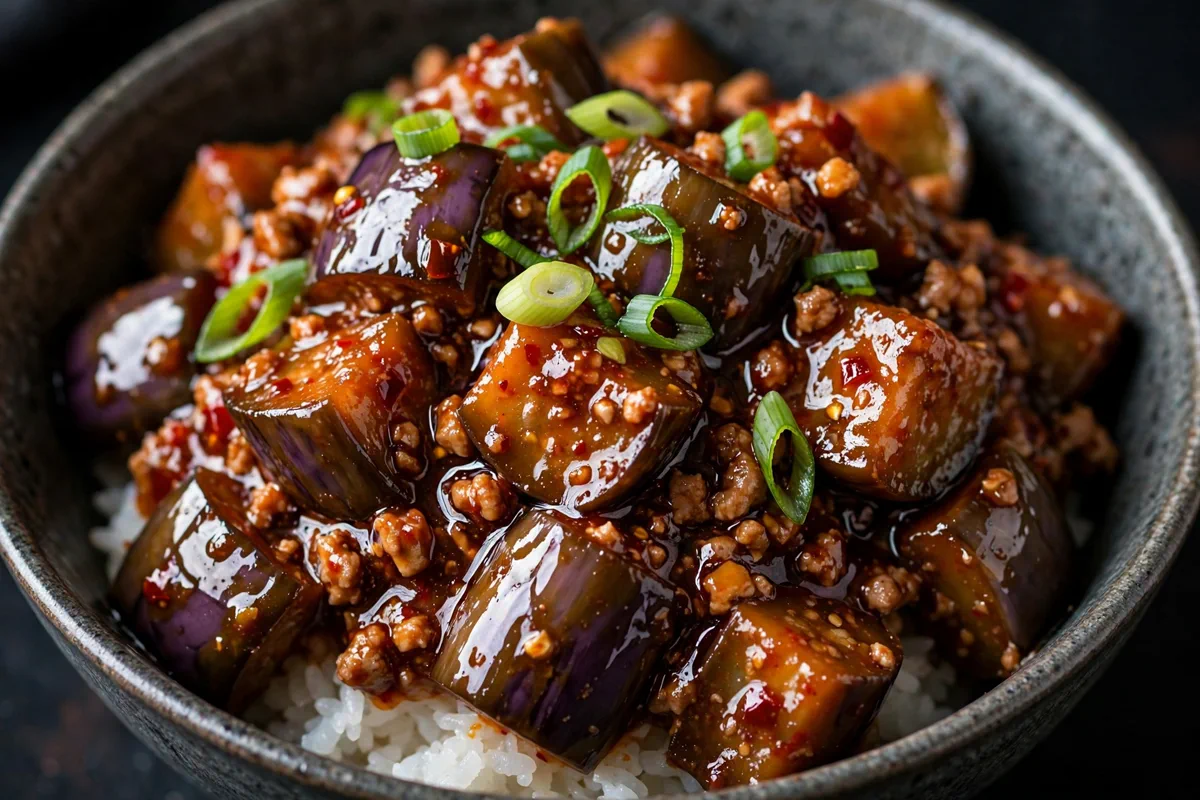
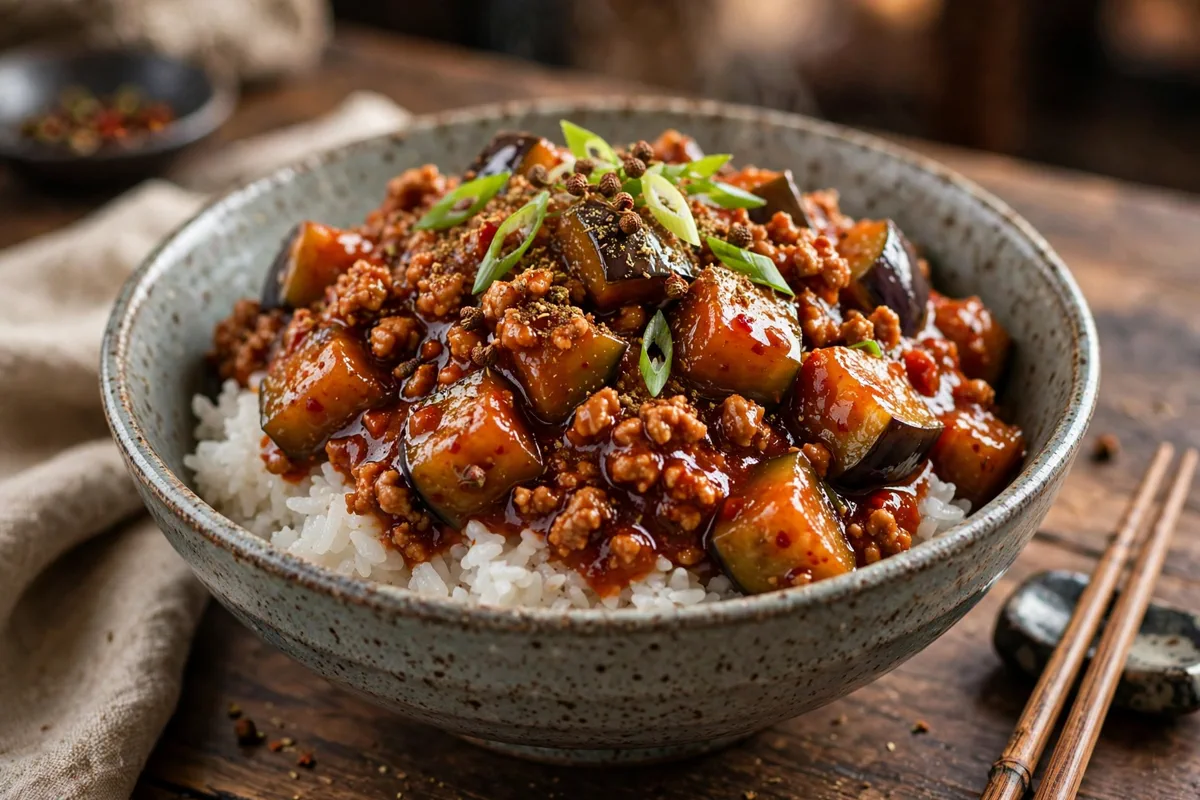
Mabo nasu pairs silky Japanese eggplant with a spicy pork and chili-bean sauce. Ready in 30 minutes — mapo flavor with half the prep of mapo tofu.
Mabo nasu pairs silky Japanese eggplant with a spicy pork and chili-bean sauce. Ready in 30 minutes — mapo flavor with half the prep of mapo tofu.
If you are looking for an ultra-satisfying, restaurant-quality meal that comes together with minimal effort, this Mabo Nasu (Japanese Eggplant in Spicy Pork Sauce) is about to become your new favorite. Everything is cooked to juicy, golden perfection with wholesome ingredients and incredible depth of flavor.
One simple tip!
Salt the eggplant and pat it dry — skip this and the cubes steam into soggy sponges instead of searing.
Step-by-Step Photos
Why You’ll Love This Recipe
Quick & EffortlessReady in just 30 minutes total with straightforward, foolproof prep.
Packed with Deep FlavorCarefully balanced with Japanese eggplant, ground pork, vegetable oil for maximum satisfaction.
Family & Crowd FriendlyMakes 4 generous servings that can be effortlessly doubled or scaled using our smart scaler.
Made From ScratchReal ingredients and straightforward home cooking, with no shortcuts on flavor.
Ingredients Notes & Variations
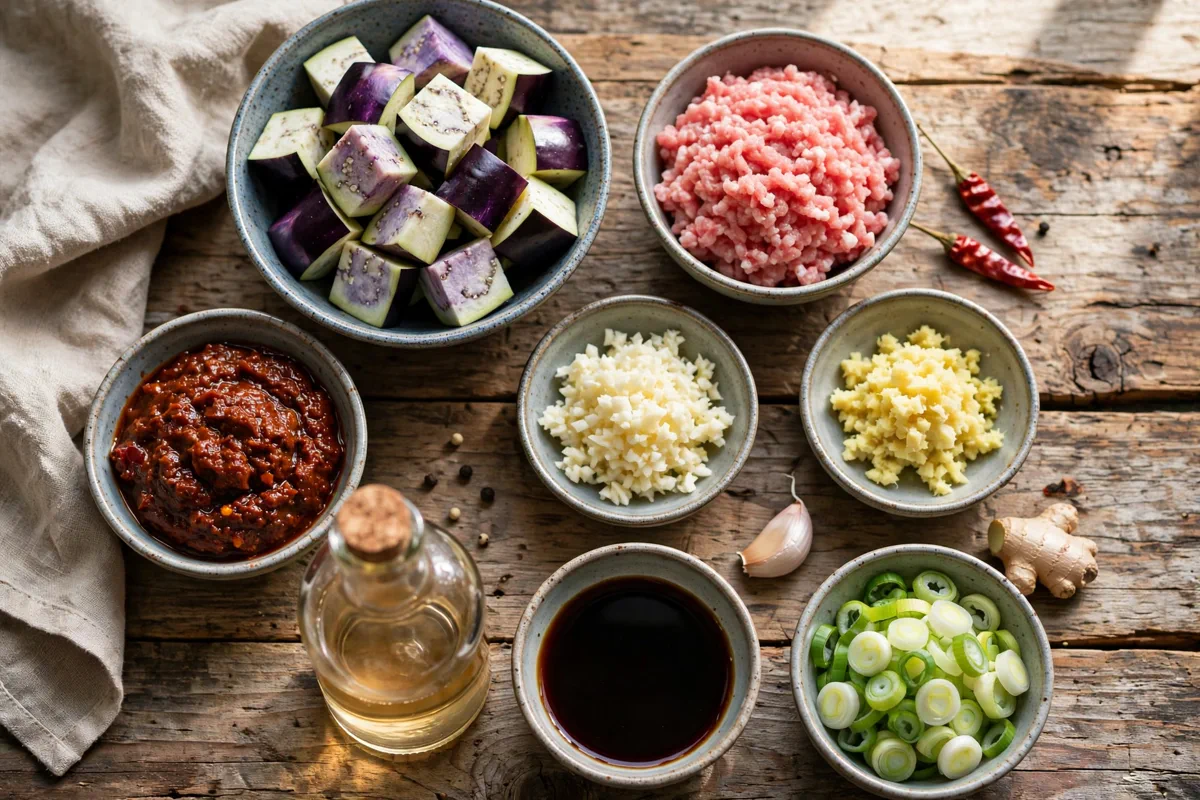
Here is an overview of what you will need for this recipe. Be sure to scroll down to the printable recipe card below for exact scaled measurements!
Japanese eggplant
3 piececut into 1-inch cubes
ground pork
225 gnot too lean — 80/20 works best
vegetable oil
2 tbspplus more for searing the eggplant
doubanjiang (spicy chili bean paste)
1.5 tbspthe soul of the dish — use the fermented red kind
tianmianjiang (sweet bean paste)
1 tbspbalances the heat
garlic
3 piececloves, minced
fresh ginger
1 tspminced
Shaoxing wine
1 tbspdeglazes and removes gaminess
chicken stock
1 cup240 ml
soy sauce
1 tbspsugar
1 tsprounds out the salt
cornstarch
1 tbspmixed with 2 tbsp cold water for the slurry
toasted sesame oil
1 tspstirred in off the heat
ground Sichuan peppercorns
0.5 tspfor the finishing dust
scallions
2 piecethinly sliced
salt
1 to tastesteamed short-grain rice
2 cupcooked, for serving
How to Make (Step-by-Step Overview)
Here is a quick summary of the preparation process. Detailed cooking temperatures and step timers are included in the recipe card below.
1
Toss the eggplant cubes with a generous pinch of salt and let them sit 10 minutes while you prep everything else. This draws out moisture so the cubes sear instead of steam.
2
Pat the eggplant very dry with a towel. Heat 1 tablespoon oil in a large skillet or wok over medium-high heat until it shimmers. Sear the eggplant in a single layer, turning occasionally, until golden on most sides, about 6 minutes. Work in two batches if the pan is crowded. Transfer to a plate.
3
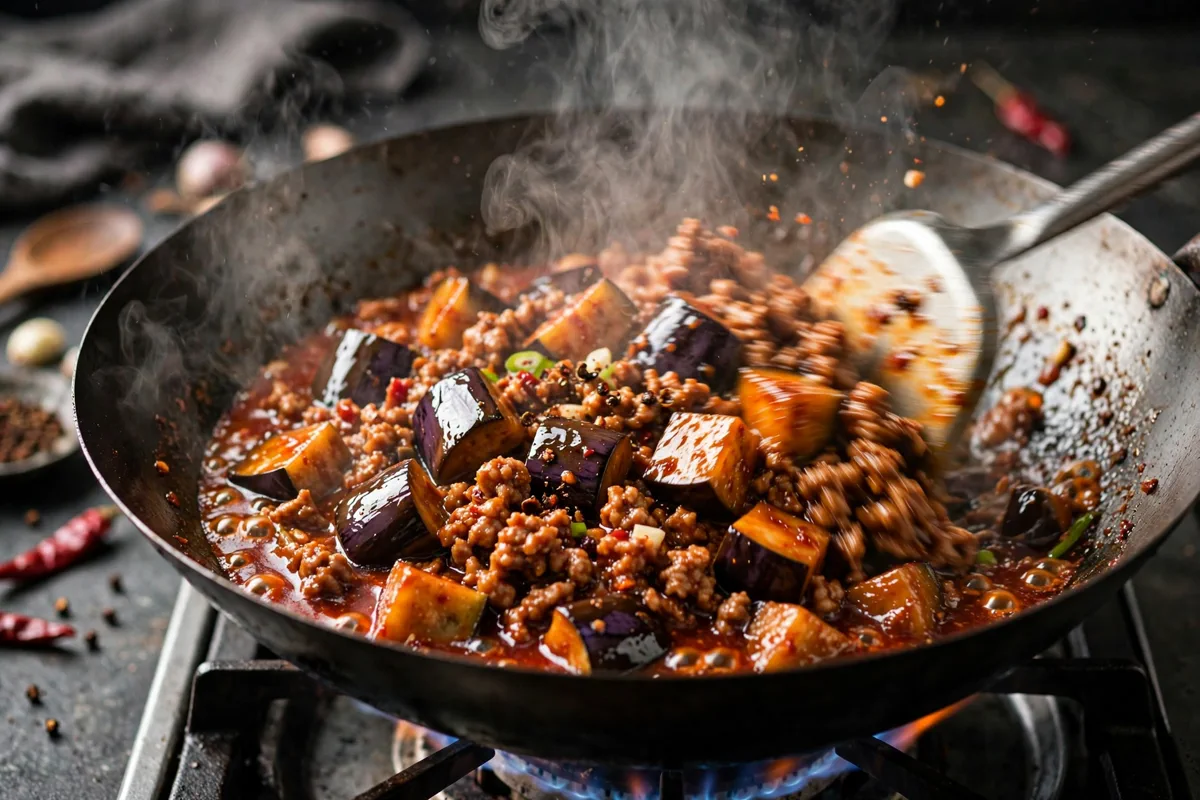
Add the remaining 1 tablespoon oil to the same pan over medium-high heat. Add the ground pork and break it into small crumbles with a spatula. Cook, stirring occasionally, until the pork is browned and a little crispy at the edges, about 5 minutes.
4
Push the pork to the sides. Add the doubanjiang, sweet bean paste, garlic, and ginger to the center. Stir and fry for 30 seconds until the oil turns red and smells deeply savory — this frying step is what wakes up the chili bean paste.
5
Pour in the Shaoxing wine and let it bubble for 30 seconds, scraping up the browned bits. Then add the chicken stock, soy sauce, and sugar. Stir everything together and bring to a simmer.
6
Return the eggplant to the pan. Simmer gently, stirring now and then, until the cubes are completely tender and the sauce has thickened slightly, about 5 minutes. The eggplant should look silky and almost melting at the edges.
7
Give the cornstarch slurry a quick re-stir and drizzle it in while stirring. Simmer 1 minute more until the sauce turns glossy and coats a spoon.
8
Take the pan off the heat. Stir in the sesame oil. Taste and adjust salt. Spoon over rice, then finish with the ground Sichuan peppercorns and sliced scallions. Serve immediately.
Our Pro Tips for Success
- •Salt the eggplant and pat it dry — skip this and the cubes steam into soggy sponges instead of searing.
- •Fry the doubanjiang in oil before any liquid goes in. Raw chili bean paste tastes flat and harsh; fried, it turns fragrant and deep red.
- •Don't cut the eggplant too small. One-inch cubes hold their shape through the simmer; half-inch cubes fall apart into the sauce.
- •The sauce should look like glossy gravy that barely coats the eggplant, not soup. If it's thin, simmer 2 more minutes before adding the slurry.
Storage & Make-Ahead Instructions
Refrigerator:Store leftovers in an airtight container for up to 3 to 4 days.
Freezer:Freeze in freezer-safe containers or bags for up to 2 months. Thaw overnight in the fridge.
Reheating:Reheat gently in a 350°F oven or covered skillet with a splash of broth until heated through.
Interactive Kitchen Assistant Live Smart Scaler
Our Recipe Precision Calculators
Calculate exact roasting times, internal temperatures, brining ratios, and safe thaw windows.
2.5 lbs (1.13 kg)
Recommended Timing & Thermals
Est. Cook Time45 mins
Rest Period7 mins
Pull From Heat160°F (71°C)
Final Carryover165°F (74°C)
Insert meat thermometer into thickest center without touching bone for 100% juicy safety.
What mabo nasu actually is
Mabo nasu is Japanese home cooking's answer to mapo tofu: cubes of Japanese eggplant braised in the same spicy, pork-laced, chili-bean sauce, spooned over rice. "Mabo" is the Japanese pronunciation of the Chinese "mapo," and "nasu" means eggplant. Where mapo tofu can be fiddly — the tofu shatters if you look at it wrong — eggplant is far more forgiving, which makes this the easier weeknight cousin.
Why Japanese eggplant, specifically
Japanese eggplants are long, thin, and almost seedless, with flesh that cooks up custardy rather than spongy. The thin skin goes silky in the sauce instead of tough. You can substitute globe eggplant in a pinch (see below), but if your market carries the long thin ones, use them — the texture difference is real.
The one step that decides everything
Salting and drying the eggplant. Skip this and the cubes go into the pan wet, steam themselves pale and rubbery, and drink the sauce unevenly. Ten minutes of salting draws out surface moisture; a thorough pat-down means the cubes actually sear, pick up golden color, and then absorb sauce like little flavor sponges. Everything after this step is easy. This step is the dish.
Frying the chili bean paste
Doubanjiang is fermented, salty, and deeply savory, but straight from the jar it tastes one-dimensional. The move is to fry it in hot oil with the garlic and ginger for about 30 seconds before any liquid hits the pan. You'll know it's working when the oil turns brick red and the kitchen smells like a great noodle shop. This thirty-second step is the difference between a flat hot sauce and a complex one.
Assembling the sauce
Once the paste is fried, the Shaoxing wine goes in to deglaze — a quick thirty seconds of bubbling lifts all the browned pork bits off the pan. Then the stock, soy sauce, and sugar. Taste the sauce at this point, before the eggplant returns: it should be salty, a little sweet, and properly spicy. It thickens slightly during the simmer, then the cornstarch slurry at the end gives it that glossy, spoon-coating finish. The sesame oil goes in off the heat so its toasted flavor doesn't cook out.
Getting the texture right
Perfect mabo nasu has eggplant cubes that are completely tender — yielding to a spoon — but still recognizable as cubes, not mush. That means simmering just until the edges go silky, about five minutes, then thickening. The sauce should cling, glossy, to every piece with a little pooling at the bottom of the bowl. If your sauce looks watery, simmer two more minutes before adding the slurry. If the cubes are falling apart, you cut them too small or simmered too long.
The numbing finish
The dusting of ground Sichuan peppercorns at the end is the classic ma-la move: the famous tingle-numb sensation. It's optional but it changes the dish — the heat becomes layered instead of one-note. Grind whole peppercorns fresh if you can; the pre-ground stuff fades faster. Half a teaspoon is enough for four servings.
Choosing the right eggplant at the store
Look for Japanese eggplants that feel firm all over with tight, glossy skin and no brown spots. They should be heavy for their length — a light, spongy one is old and will cook up bitter. Smaller ones (about six to eight inches long) are best; the big fat ones have developed more seeds and a coarser texture. If you're stuck between Japanese and Chinese eggplants (also long and thin), either works — Chinese ones are usually paler and slightly sweeter, Japanese ones a touch firmer, but in this sauce the difference is small.
Shopping for doubanjiang
The chili bean paste is the ingredient worth a trip to the Asian grocery. Look for the Sichuan-style fermented red kind — the label might say "chili bean paste" or "broad bean chili paste," and Pixian doubanjiang is the gold standard if you spot it. It should be thick, dark red, and smell fermented in a good way, like miso with heat. One jar lasts months in the fridge. Skip the bright red "chili garlic sauce" in a squeeze bottle; that's a different product and it won't give you this flavor.
Weeknight timing strategy
The total is thirty minutes, but here's how it actually flows: salt the eggplant first, then while it sits for ten minutes, mince your garlic and ginger, slice the scallions, and measure everything else into small bowls. By minute ten the eggplant goes in the pan, and from there it's all active cooking — twenty minutes of searing, browning, and simmering with no dead time. Everything moves fast once the pan is hot, so having the sauce ingredients ready before you start cooking is not a suggestion, it's the plan.
Dialing the heat up or down
As written, this is moderately spicy — a comfortable weeknight heat, not a dare. For a milder pot that kids will eat, cut the doubanjiang to 1 tablespoon, skip the Sichuan peppercorns entirely, and add half a teaspoon more sugar. The sauce stays savory and interesting without the burn. Going the other direction is easy: add a teaspoon of chili oil at the end with the sesame oil, or bump the peppercorns to a full teaspoon for a properly numbing finish. Taste the sauce before the slurry goes in — that's your last chance to adjust cleanly.
What the sauce should look like at each stage
This is a dish where the visuals tell you everything. After frying the paste, the oil should be visibly red-orange. After adding the stock, you want a thin, lively sauce that bubbles freely. After the eggplant simmers for five minutes, it should have reduced a little and started to look like thin gravy. Then the slurry turns it glossy and spoon-coating — it should leave a clear trail when you drag the spatula through it. If at any point it looks like soup, your heat is too low; if it's thickening before the eggplant is tender, splash in a few tablespoons of water.
Variations worth trying
Once you've made the classic version, the sauce base is a template. Swap the eggplant for pressed extra-firm tofu cubes and you have something close to mapo tofu — sear the tofu until golden the same way. For a richer version, use ground pork with a bit more fat and add a tablespoon of the rendered fat back into the sauce. Some Japanese home cooks stir a spoonful of miso into the sauce for extra depth; if you do, reduce the soy sauce by half so it doesn't turn too salty. None of these change the technique — same pan, same order, same timing.
Serving it the Japanese way
Over short-grain rice, always. The sauce is assertive and the rice is the neutral base that makes it a meal. A simple side works — steamed greens with a splash of soy, or a cucumber salad — but don't overthink it. This is a thirty-minute weeknight dinner, not a dinner party centerpiece. Leftovers reheat beautifully; some cooks swear it's better on day two once the eggplant has fully soaked up the sauce.
Common mistakes to watch
Besides the salting step, the two usual failures are crowding the pan when searing (work in two batches — steamed eggplant never browns) and adding the cornstarch slurry without re-stirring it (it settles in seconds, and unstirred slurry makes lumps). Fix both and the dish basically cooks itself.
Frequently Asked Questions
Mabo nasu is a Japanese home-cooking dish of eggplant braised in a spicy pork and chili-bean sauce, inspired by Chinese mapo tofu. "Mabo" comes from the Chinese "mapo" (pockmarked grandmother), and "nasu" means eggplant in Japanese. It's typically served over rice.
No, don't peel it. Japanese eggplant skin is thin and tender, and it turns silky rather than tough when cooked. The skin also helps the cubes hold their shape in the sauce.
Easy Chicken Recipes • Official Card
Mabo Nasu (Japanese Eggplant in Spicy Pork Sauce)
☆☆☆☆☆0.0 (0 reviews)•Recipe by Cooking With Guru Editorial Team•Updated: Jan 15, 2025
Mabo nasu pairs silky Japanese eggplant with a spicy pork and chili-bean sauce. Ready in 30 minutes — mapo flavor with half the prep of mapo tofu.
Prep Time10 mins
Cook Time20 mins
Total Time30 mins
Adjust Servings:
4
Ingredients
Click to check off3 piece Japanese eggplant(cut into 1-inch cubes)
225 g ground pork(not too lean — 80/20 works best)
2 tbsps vegetable oil(plus more for searing the eggplant)
1 1/2 tbsps doubanjiang (spicy chili bean paste)(the soul of the dish — use the fermented red kind)
1 tbsp tianmianjiang (sweet bean paste)(balances the heat)
3 piece garlic(cloves, minced)
1 tsp fresh ginger(minced)
1 tbsp Shaoxing wine(deglazes and removes gaminess)
1 cup chicken stock(240 ml)
1 tbsp soy sauce
1 tsp sugar(rounds out the salt)
1 tbsp cornstarch(mixed with 2 tbsp cold water for the slurry)
1 tsp toasted sesame oil(stirred in off the heat)
1/2 tsp ground Sichuan peppercorns(for the finishing dust)
2 piece scallions(thinly sliced)
1 to taste salt
2 cups steamed short-grain rice(cooked, for serving)
Instructions
Step-by-StepToss the eggplant cubes with a generous pinch of salt and let them sit 10 minutes while you prep everything else. This draws out moisture so the cubes sear instead of steam.
Pat the eggplant very dry with a towel. Heat 1 tablespoon oil in a large skillet or wok over medium-high heat until it shimmers. Sear the eggplant in a single layer, turning occasionally, until golden on most sides, about 6 minutes. Work in two batches if the pan is crowded. Transfer to a plate.
Add the remaining 1 tablespoon oil to the same pan over medium-high heat. Add the ground pork and break it into small crumbles with a spatula. Cook, stirring occasionally, until the pork is browned and a little crispy at the edges, about 5 minutes.
Push the pork to the sides. Add the doubanjiang, sweet bean paste, garlic, and ginger to the center. Stir and fry for 30 seconds until the oil turns red and smells deeply savory — this frying step is what wakes up the chili bean paste.
Pour in the Shaoxing wine and let it bubble for 30 seconds, scraping up the browned bits. Then add the chicken stock, soy sauce, and sugar. Stir everything together and bring to a simmer.
Return the eggplant to the pan. Simmer gently, stirring now and then, until the cubes are completely tender and the sauce has thickened slightly, about 5 minutes. The eggplant should look silky and almost melting at the edges.
Give the cornstarch slurry a quick re-stir and drizzle it in while stirring. Simmer 1 minute more until the sauce turns glossy and coats a spoon.
Take the pan off the heat. Stir in the sesame oil. Taste and adjust salt. Spoon over rice, then finish with the ground Sichuan peppercorns and sliced scallions. Serve immediately.
0CWG
Recipe Source
The Cooking With Guru Team
Our recipes are developed and checked by the Cooking With Guru team. Nutrition figures are estimates calculated from USDA data, and yields scale with the built-in portion tools so the recipe fits your kitchen.
More dinner recipes to try!
🍽️
Turkish Menemen: One-Pan Eggs in Spicy Tomato Sauce
🍽️
High-Protein Cottage Cheese Egg Bake with Spinach
🍽️
Easy Chicken Congee Recipe with Crispy Garlic and Chili Oil
Comments & Questions (0)
Join the conversationNo comments yet!
Be the first to leave a comment or ask a question about Mabo Nasu (Japanese Eggplant in Spicy Pork Sauce).