🍽️
Prep time10 mins
Cook time60 mins
Ingredients13
dinner
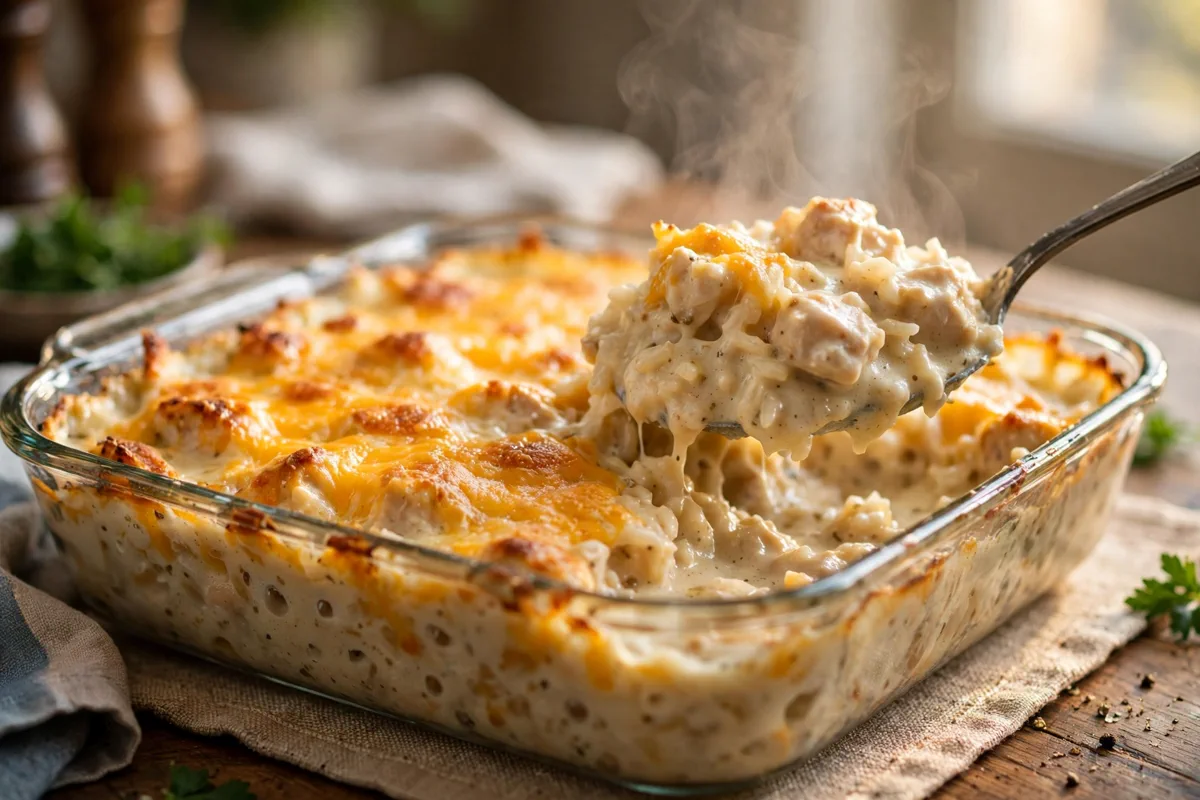
Easy Chicken and Rice Casserole
Published: Jan 15, 2025
One-pan chicken and rice casserole with no pre-cooking — raw rice bakes creamy under tender chicken in a 9x13 dish. Dinner in about an hour.
One-pan chicken and rice casserole with no pre-cooking — raw rice bakes creamy under tender chicken in a 9x13 dish. Dinner in about an hour.
If you are looking for an ultra-satisfying, restaurant-quality meal that comes together with minimal effort, this Easy Chicken and Rice Casserole is about to become your new favorite. Everything is cooked to juicy, golden perfection with wholesome ingredients and incredible depth of flavor.
One simple tip!
Rinse the rice before it goes in. A quick rinse washes off the loose surface starch that turns the sauce gummy, and the finished casserole comes out creamy instead of gluey.
Step-by-Step Photos
Why You’ll Love This Recipe
Quick & EffortlessReady in just 70 minutes total with straightforward, foolproof prep.
Packed with Deep FlavorCarefully balanced with boneless skinless chicken thighs, long-grain white rice, cream of mushroom soup for maximum satisfaction.
Family & Crowd FriendlyMakes 6 generous servings that can be effortlessly doubled or scaled using our smart scaler.
Made From ScratchReal ingredients and straightforward home cooking, with no shortcuts on flavor.
Ingredients Notes & Variations
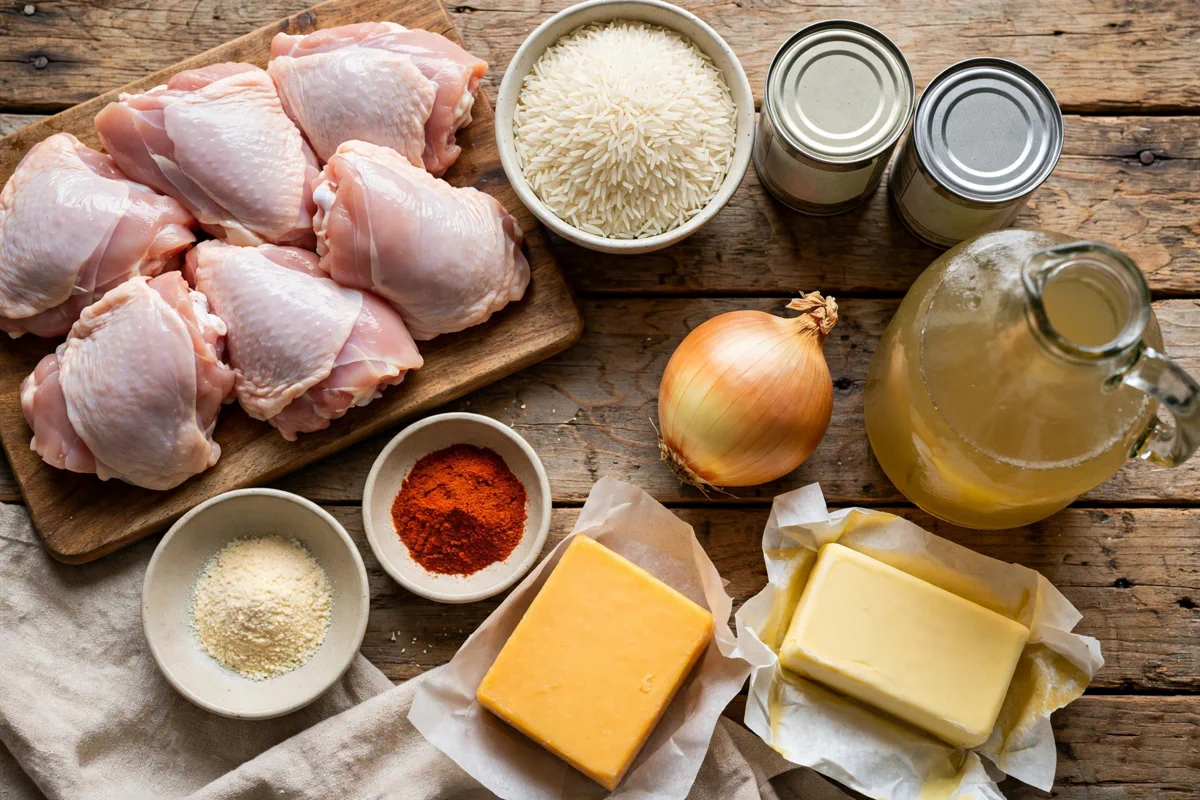
Here is an overview of what you will need for this recipe. Be sure to scroll down to the printable recipe card below for exact scaled measurements!
boneless skinless chicken thighs
1.5 lbabout 6 thighs, trimmed of excess fat
long-grain white rice
1.5 cupuncooked, rinsed
cream of mushroom soup
10.5 ozone 10.5-ounce can
cream of chicken soup
10.5 ozone 10.5-ounce can
low-sodium chicken broth
2 cupyellow onion
1 piecefinely diced
garlic powder
1 tsppaprika
1 tspsweet, not smoked
salt
0.5 tspblack pepper
0.5 tspfreshly ground
shredded cheddar cheese
1.5 cupsharp cheddar, freshly shredded if possible
unsalted butter
1 tbspsoftened, for greasing the dish
fresh parsley
2 tbspchopped, for serving
How to Make (Step-by-Step Overview)
Here is a quick summary of the preparation process. Detailed cooking temperatures and step timers are included in the recipe card below.
Heat the oven to 375 degrees F. Grease a 9x13-inch baking dish with the softened butter, getting into the corners so the rice does not stick.
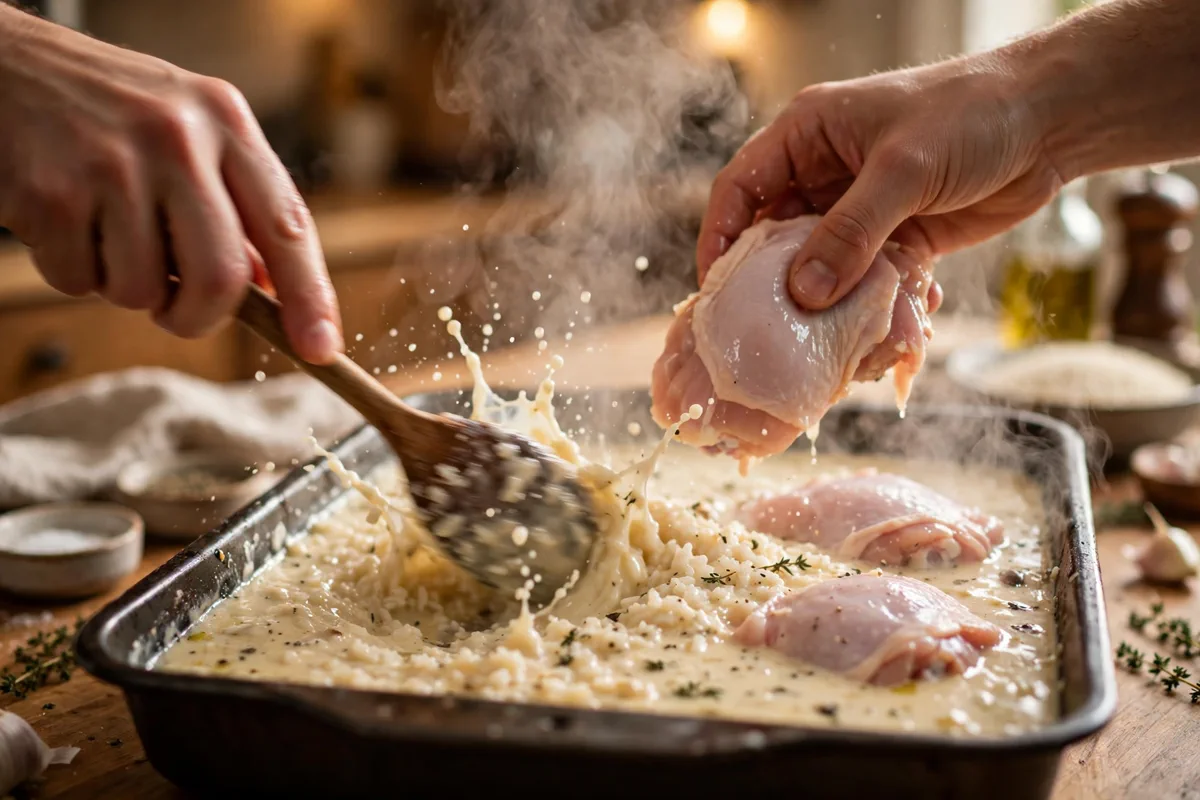
Tip both cans of soup into the dish and add the chicken broth, diced onion, garlic powder, paprika, salt and pepper. Stir with a fork until the soups loosen into a smooth, pale sauce with no thick lumps.
Stir in the rinsed rice and spread it into an even layer across the bottom of the dish. Every grain should be sitting in liquid, with none piled up dry on top.
Lay the chicken thighs on top of the rice in a single layer, leaving a little space between them. Spoon some of the sauce over each piece so the tops stay moist while they bake.
Cover the dish tightly with aluminum foil, crimping the edges all the way around so no steam escapes. Bake for 50 minutes. You should hear a gentle simmer if you listen close to the oven door.
Pull the dish out and lift a corner of the foil to check the rice. It should be almost tender with a little liquid still in the dish. If the rice looks dry and chalky, add a splash of hot broth, reseal the foil and bake 10 minutes more.
Take the foil off completely, sprinkle the shredded cheddar evenly over the chicken and rice, and slide the dish back in uncovered for 10 to 15 minutes, until the cheese is melted and bubbling at the edges and the chicken reads 165 degrees F at the thickest part.
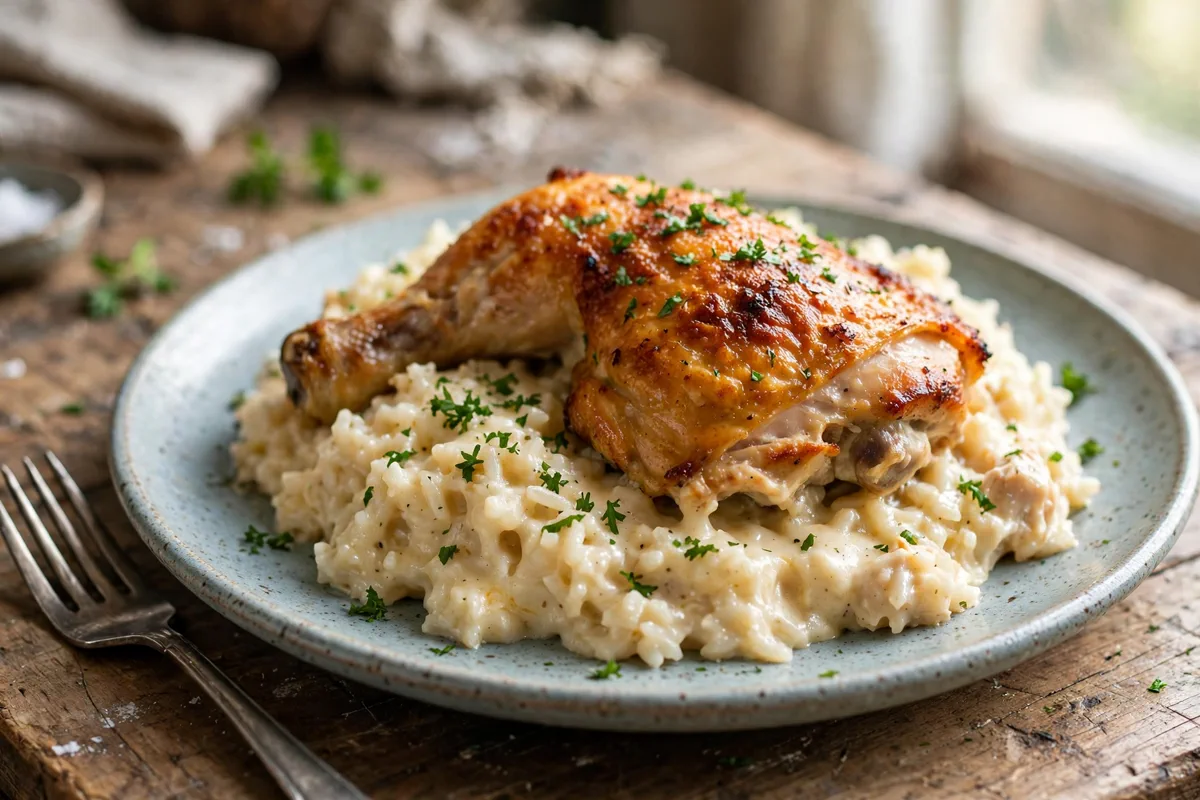
Rest the casserole for 10 minutes before serving. The rice firms up and drinks in the last of the sauce during the rest, so the scoops hold together instead of running across the plate. Scatter the chopped parsley over the top and serve straight from the dish.
Our Pro Tips for Success
- •Rinse the rice before it goes in. A quick rinse washes off the loose surface starch that turns the sauce gummy, and the finished casserole comes out creamy instead of gluey.
- •Crimp the foil like you mean it. A loose foil tent lets steam escape, the top layer of rice dries out, and you end up with crunchy grains that no amount of extra baking will fix.
- •Use thighs, not breasts, if you have the choice. Thighs stay juicy through a full hour in the oven, while breasts dry out in the same time. If you only have breasts, pull them at 160 degrees F and let carryover heat finish the job.
- •Do not stir the rice halfway through. Lifting the foil dumps the steam the rice needs, and stirring breaks the grains so the sauce turns starchy. Trust the seal and check once at the 50-minute mark.
- •Let it rest the full 10 minutes. The casserole looks a little loose when it comes out of the oven, and it is tempting to serve it right away. The rest is when the rice absorbs the last of the sauce and the scoops hold their shape.
Storage & Make-Ahead Instructions
Refrigerator:Store leftovers in an airtight container for up to 3 to 4 days.
Freezer:Freeze in freezer-safe containers or bags for up to 2 months. Thaw overnight in the fridge.
Reheating:Reheat gently in a 350°F oven or covered skillet with a splash of broth until heated through.
Interactive Kitchen Assistant Live Smart Scaler
Our Recipe Precision Calculators
Calculate exact roasting times, internal temperatures, brining ratios, and safe thaw windows.
2.5 lbs (1.13 kg)
Recommended Timing & Thermals
Est. Cook Time45 mins
Rest Period7 mins
Pull From Heat160°F (71°C)
Final Carryover165°F (74°C)
Insert meat thermometer into thickest center without touching bone for 100% juicy safety.
Easy chicken and rice casserole is a one-pan dinner where raw long-grain rice, canned soups, chicken broth and boneless chicken thighs bake together in a 9x13 dish. Nothing is pre-cooked. The rice absorbs the broth as it bakes, the chicken stays tender under a tight foil seal, and a layer of melted cheddar finishes the top. It goes from pantry to oven in about ten minutes, and the oven does the rest.
This is the kind of dinner that exists for the nights when cooking feels like one chore too many. There is no browning, no boiling a pot of rice first, no second pan to wash. You stir everything into the dish, lay the chicken on top, seal it with foil, and walk away. An hour later there is a full dinner on the table, and the only dish to wash is the one it baked in.
Why the rice goes in raw
Most chicken and rice casseroles ask you to cook the rice first, which defeats the point of a one-pan dinner. This version skips that step entirely, and it works because the liquid is measured for it. One and a half cups of raw long-grain rice needs about three and a half cups of liquid to cook through, and that is exactly what the two cans of soup plus two cups of broth add up to. The soup is thick, so the mixture looks heavy when you stir it together, but it loosens as the oven heat works on it.
The foil seal is the other half of the method. Rice cooks by absorbing hot liquid and steam, and an uncovered dish lets that steam drift away into the oven. With the foil crimped tight, the dish becomes its own little steam chamber. The bottom layer of rice sits in the sauce and cooks like rice in a pot, while the steam rising off it cooks the grains sitting higher up. That is why the recipe says to check the rice only once, at the 50-minute mark. Every time you lift the foil you lose the steam the rice is counting on.
The soup is the sauce
There is no separate sauce to make. The cream of mushroom and cream of chicken soups, thinned with broth, become the sauce as they heat. Mushroom soup brings an earthy, savory depth. Chicken soup brings body and a mild, familiar flavor that lets the chicken itself stand out. Together they make a sauce that is rich without being heavy, and it coats the rice instead of pooling around it.
It is worth stirring the soups and broth together before the rice goes in. Canned soup straight from the can is thick and lumpy, and if you skip the stirring you end up with pockets of plain soup and pockets of plain broth in the finished dish. A fork and thirty seconds of stirring fixes that. You want a smooth, pale sauce with no thick lumps, and the onion and seasonings evenly spread through it.
The onion matters more than it looks like it should. It softens in the sauce over the hour in the oven and sweetens slightly, and it gives the whole dish a savory base that the canned soups alone do not have. Dice it fine so it disappears into the rice rather than turning up as big soft chunks in every spoonful.
Thighs earn their place here
Boneless, skinless chicken thighs are the right cut for a casserole that bakes for an hour. They have enough fat running through them to stay juicy for the full cooking time, and they forgive a few extra minutes in the oven if the rice needs them. Breasts are leaner, and lean meat dries out in a long bake. That is not a rule against using them, only a reason to check them earlier and pull them at 160 degrees F, letting the heat left in the meat carry them the last few degrees.
Lay the thighs in a single layer with a little space between them. Crowding them together means the pieces in the middle steam instead of baking in the sauce, and they cook unevenly. Spooning some sauce over the tops keeps them moist while the foil is on, and it helps the cheese cling to them later. You do not need to season the chicken separately. The sauce it sits in for an hour seasons it from the outside in, and the paprika and garlic powder in the sauce do the work.
One thing worth saying plainly: the chicken goes in raw, on top of raw rice, and both cook together. That feels odd the first time, but the dish reaches well past the safe temperature for chicken long before the rice is done. A thermometer in the thickest part of the largest thigh should read 165 degrees F. If it reads lower, put the foil back on and give it ten more minutes. The rice will not mind.
The cheese goes on last, and that is not a garnish
The cheddar goes on after the foil comes off, and it does two jobs. The first is obvious: a bubbling, golden top that makes the whole dish look finished. The second is less obvious. The cheese melts into the surface of the rice and forms a light seal that keeps the top layer from drying out while the casserole rests. Ten to fifteen minutes uncovered is enough. Longer than that and the cheese starts to brown and crisp at the edges, which some people like, but it also pulls moisture out of the rice underneath.
Shredding your own cheddar is worth the two minutes it takes. Pre-shredded cheese is coated to keep the shreds from sticking together in the bag, and that coating keeps it from melting as smoothly. It still works, and nobody will complain about it, but a block of sharp cheddar run across a box grater melts into a smoother, more even layer with a sharper flavor.
Five things that make it work
- Rinse the rice. A quick rinse under cold water washes off the loose starch on the surface of the grains. Skip it and the sauce turns gummy as the rice cooks.
- Spread the rice in an even layer. A mound in the middle means dry grains on top and soggy grains at the bottom. Push it flat with a spoon before the chicken goes on.
- Crimp the foil tight. Run your fingers along every edge and press the foil down around the rim of the dish. A gap the size of a coin is enough to let the steam out.
- Check the rice at 50 minutes, not before. Opening the oven early dumps the heat and steam the dish needs, and it adds minutes to the total time.
- Rest it for ten minutes. The casserole looks loose when it comes out of the oven. The rest lets the rice drink in the last of the sauce, and the scoops hold their shape on the plate.
What to serve with it
This casserole is a full meal on its own: protein, starch and sauce in one dish. But if the table feels bare, a simple green vegetable is the right call. Steamed broccoli, green beans with a little butter, or a bagged salad with a sharp vinaigrette all work. The vinaigrette matters: something bright and acidic cuts through the richness of the cheese sauce and keeps the meal from feeling heavy.
Keep the sides simple. The whole point of this dinner is that it asks almost nothing of you, and a fussy side dish undoes that.
Leftovers are the quiet win
This casserole makes six generous servings, and if your household is smaller than that, the leftovers are genuinely good. The rice firms up in the fridge and the flavors settle overnight, so a reheated portion the next day tastes a little more put together than it did fresh from the oven. Pack it in single portions so reheating is quick, and sprinkle a spoonful of broth over the top before microwaving so the rice steams instead of drying out.
It also freezes well, which makes it a useful thing to double. Bake two dishes on a Sunday, eat one, freeze the other in portions, and there is a homemade dinner in the freezer for a night when cooking is not going to happen.
A note on the canned soup
Some cooks feel uneasy about canned soup in a recipe, and that is a fair instinct in general. Here it is doing a specific job: a thick, seasoned, shelf-stable sauce base that needs no cooking of its own. Making a sauce from scratch means a roux, milk, stock, and a second pan, and the result is not meaningfully better in a dish where the sauce spends an hour baking under foil. Low-sodium broth keeps the salt in check, since the soups bring plenty of their own.
Frequently Asked Questions
No, the rice cooks right in the dish. The two cans of soup plus 2 cups of broth give the raw rice exactly the liquid it needs, and the tight foil seal traps the steam so it cooks through in about 50 minutes. Just do not use instant or minute rice, which turns to mush in the same time.
The foil seal was loose, or some rice sat above the liquid. Every grain needs to be submerged before the dish goes in the oven, and the foil has to be crimped tight all the way around. If it happens, add a splash of hot broth, reseal, and bake 10 more minutes.
Easy Chicken Recipes • Official Card
Easy Chicken and Rice Casserole
☆☆☆☆☆0.0 (0 reviews)•Recipe by Cooking With Guru Editorial Team•Updated: Jan 15, 2025
One-pan chicken and rice casserole with no pre-cooking — raw rice bakes creamy under tender chicken in a 9x13 dish. Dinner in about an hour.
Prep Time10 mins
Cook Time60 mins
Total Time70 mins
Adjust Servings:
6
Ingredients
Click to check off1.5 lb boneless skinless chicken thighs(about 6 thighs, trimmed of excess fat)
1 1/2 cups long-grain white rice(uncooked, rinsed)
10.5 oz cream of mushroom soup(one 10.5-ounce can)
10.5 oz cream of chicken soup(one 10.5-ounce can)
2 cups low-sodium chicken broth
1 piece yellow onion(finely diced)
1 tsp garlic powder
1 tsp paprika(sweet, not smoked)
1/2 tsp salt
1/2 tsp black pepper(freshly ground)
1 1/2 cups shredded cheddar cheese(sharp cheddar, freshly shredded if possible)
1 tbsp unsalted butter(softened, for greasing the dish)
2 tbsps fresh parsley(chopped, for serving)
Instructions
Step-by-Step0
0
0
0
0
CWG
Recipe Source
The Cooking With Guru Team
Our recipes are developed and checked by the Cooking With Guru team. Nutrition figures are estimates calculated from USDA data, and yields scale with the built-in portion tools so the recipe fits your kitchen.
More dinner recipes to try!
🍽️
Turkish Menemen: One-Pan Eggs in Spicy Tomato Sauce
🍽️
High-Protein Cottage Cheese Egg Bake with Spinach
🍽️
Easy Chicken Congee Recipe with Crispy Garlic and Chili Oil
Comments & Questions (0)
Join the conversationNo comments yet!
Be the first to leave a comment or ask a question about Easy Chicken and Rice Casserole.