🍽️
Prep time15 mins
Cook time30 mins
Ingredients17
luncheasy
Roasted Cauliflower Shawarma Wraps
Published: Oct 20, 2026
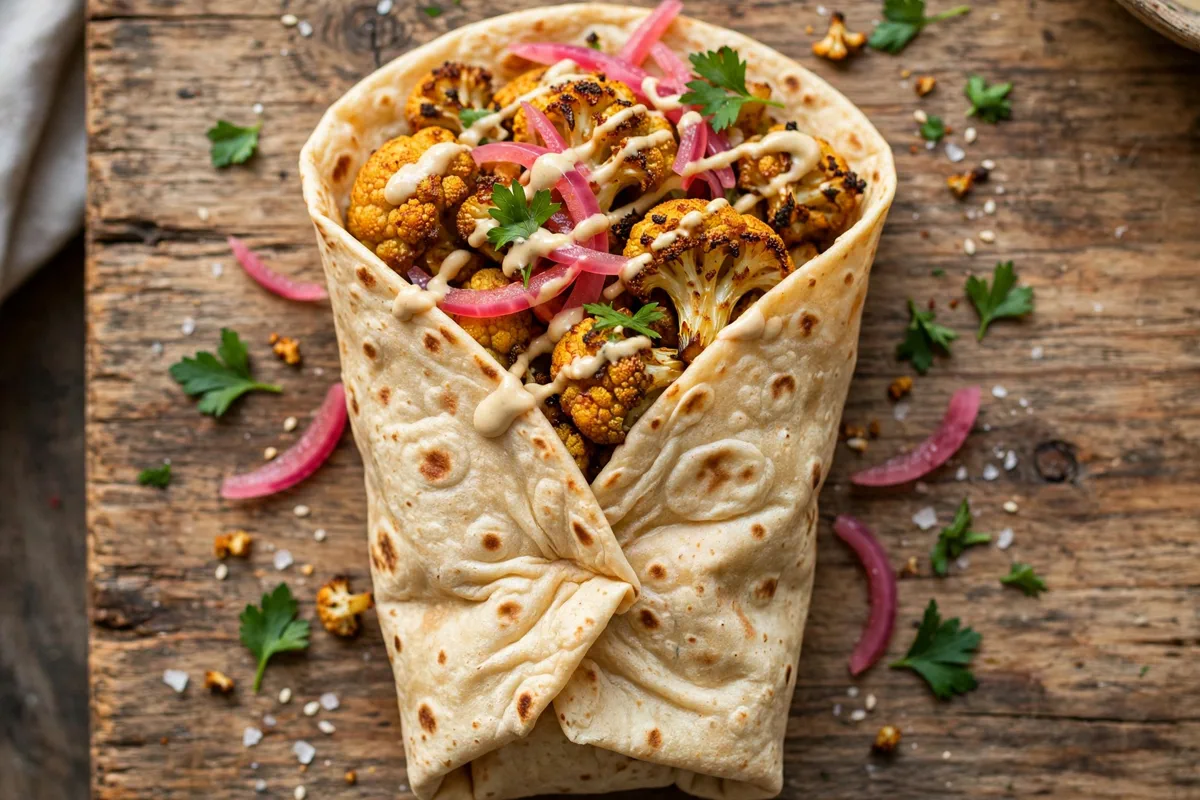
Crispy spice-crusted roasted cauliflower in warm flatbread with tahini, pickled onions, and herbs. Real shawarma flavor, no meat.
Crispy spice-crusted roasted cauliflower in warm flatbread with tahini, pickled onions, and herbs. Real shawarma flavor, no meat.
If you are looking for an ultra-satisfying, restaurant-quality meal that comes together with minimal effort, this Roasted Cauliflower Shawarma Wraps is about to become your new favorite. Everything is cooked to juicy, golden perfection with wholesome ingredients and incredible depth of flavor.
One simple tip!
Cut the florets to a similar size, about 1 to 1.5 inches. Small florets burn before the big ones crisp, so even pieces roast evenly.
Step-by-Step Photos
Why You’ll Love This Recipe
Quick & EffortlessReady in just 45 minutes total with straightforward, foolproof prep.
Packed with Deep FlavorCarefully balanced with cauliflower, olive oil, ground cumin for maximum satisfaction.
Family & Crowd FriendlyMakes 4 generous servings that can be effortlessly doubled or scaled using our smart scaler.
Nutritious & High ProteinProvides 12g protein and only 420 calories per serving.
Ingredients Notes & Variations
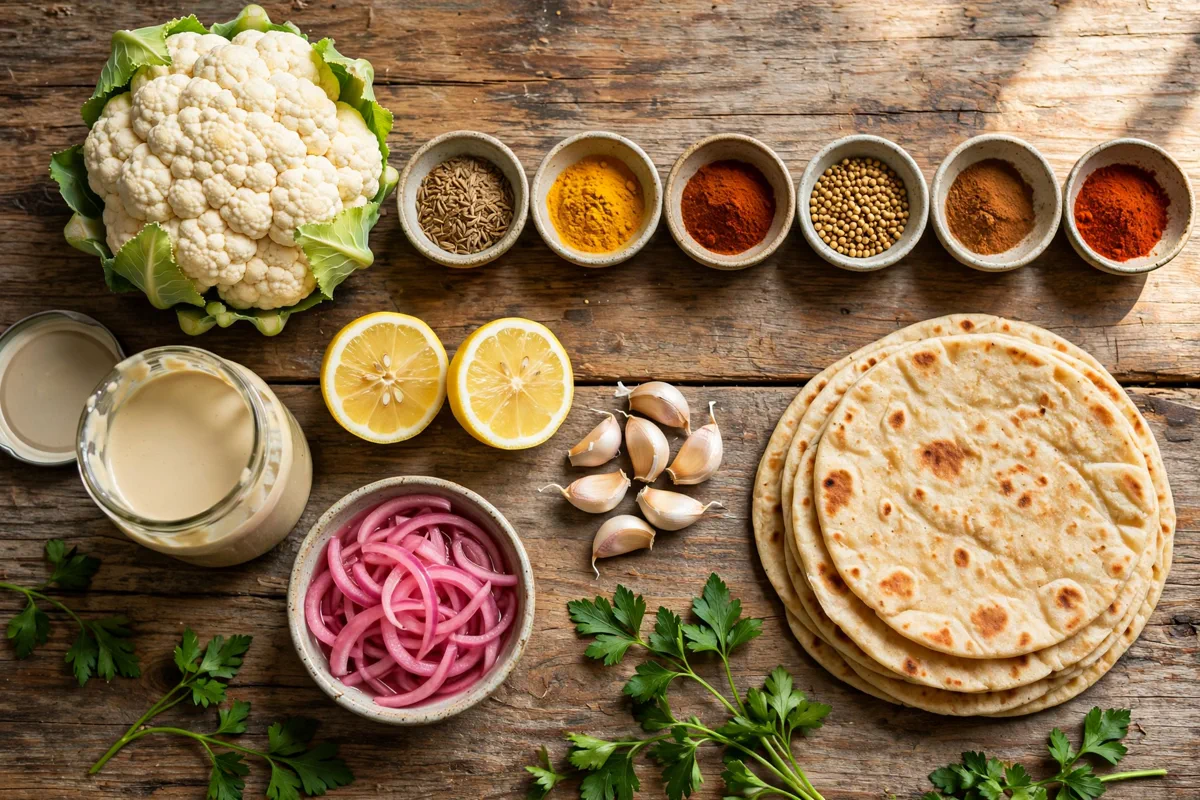
Here is an overview of what you will need for this recipe. Be sure to scroll down to the printable recipe card below for exact scaled measurements!
cauliflower
1 piece1 large head, cut into 1 to 1.5-inch florets
olive oil
3 tbspdivided
ground cumin
1 tspground coriander
1 tspsmoked paprika
1 tspground turmeric
0.5 tspgarlic powder
0.5 tspground cinnamon
0.25 tspcayenne pepper
0.25 tspadjust to your heat tolerance
kosher salt
1 tspdivided
tahini
0.25 cupwell stirred
lemon juice
2 tbspfreshly squeezed
garlic
1 piece1 clove, finely grated
cold water
3 tbspplus more as needed
flatbread or pita
4 piecelarge, warmed
pickled red onions
0.5 cupdrained
fresh parsley
0.25 cupchopped
How to Make (Step-by-Step Overview)
Here is a quick summary of the preparation process. Detailed cooking temperatures and step timers are included in the recipe card below.
1
Heat the oven to 425°F (220°C). Line a large rimmed baking sheet with parchment paper.
Look for: the oven should feel hot on your face when you open the door
2
In a large mixing bowl, whisk 2 tablespoons of the olive oil with the cumin, coriander, smoked paprika, turmeric, garlic powder, cinnamon, cayenne, and 3/4 teaspoon of the salt.
Look for: the bowl contents look like a thick, rust-colored paste
3
Add the cauliflower florets and toss until every piece is coated in the spice paste.
Look for: every floret has an even coating and no dry white spots remain
4
Spread the cauliflower in a single layer on the prepared sheet. Leave space between the pieces so they roast instead of steaming.
Look for: florets are spread out, not touching each other
5
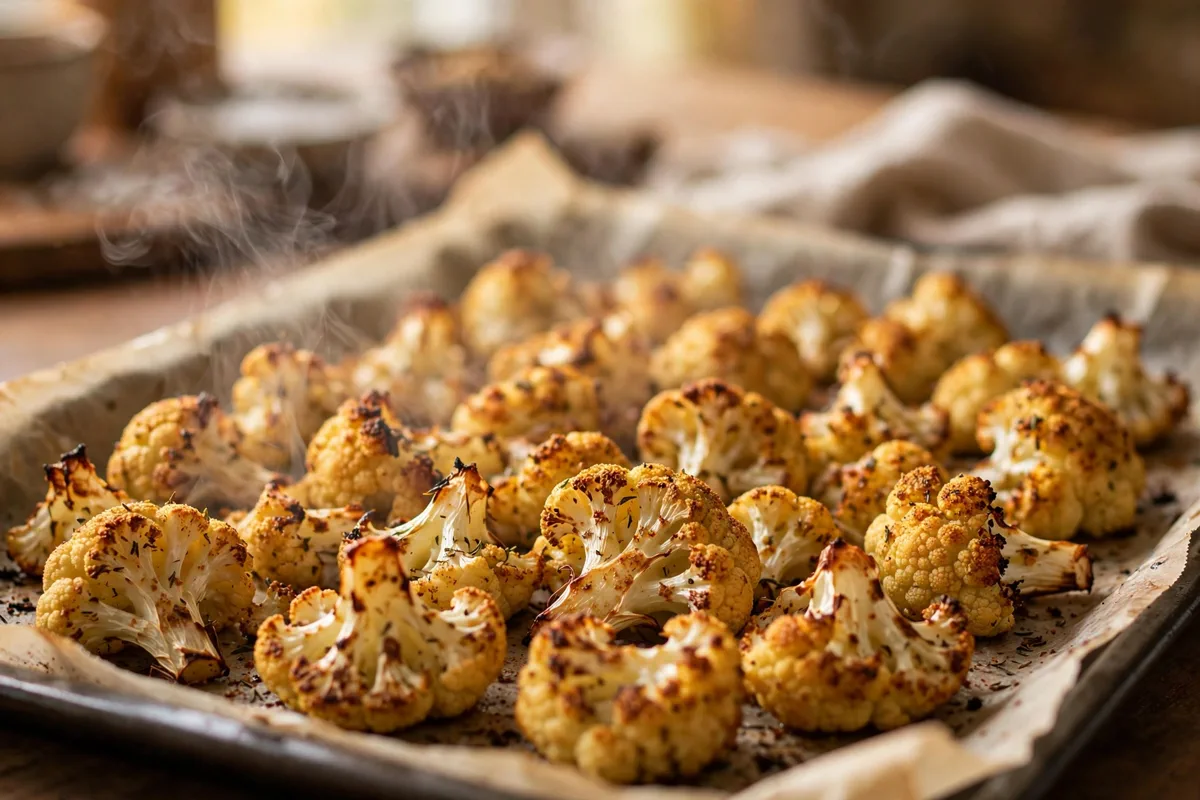
Roast 25 to 30 minutes, turning once halfway, until the edges are browned and crisp and the thickest florets are fork-tender.
Look for: edges are deep golden-brown with dark crispy tips; a fork slides into the thickest floret easily
6
While the cauliflower roasts, whisk the tahini, lemon juice, grated garlic, the remaining 1 tablespoon olive oil, and the remaining 1/4 teaspoon salt in a small bowl. Whisk in the cold water one tablespoon at a time until the sauce is smooth and pourable.
Look for: the sauce ribbons off the whisk and holds a soft peak
7
Warm the flatbread in a dry skillet over medium heat, 30 seconds per side, or in the hot oven during the last 2 minutes of roasting.
Look for: the bread is warm and bendy, not stiff
8
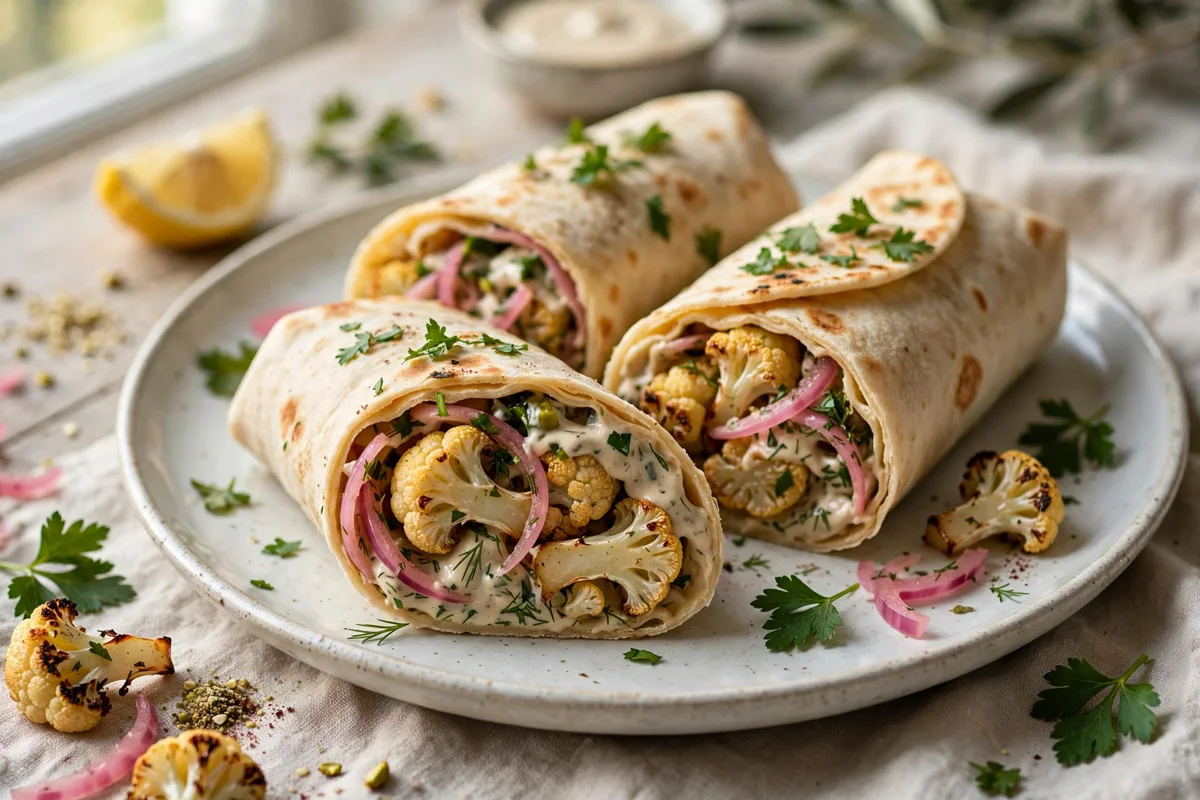
Assemble: spread a spoonful of tahini down the center of each flatbread, pile on the roasted cauliflower, and top with pickled red onions and parsley. Fold and serve right away.
Look for: the filling sits in a row down the center, not piled in the middle
Our Pro Tips for Success
- •Cut the florets to a similar size, about 1 to 1.5 inches. Small florets burn before the big ones crisp, so even pieces roast evenly.
- •Spread the cauliflower in one layer with space between florets. Crowding the pan steams the cauliflower and kills the crispy edges.
- •Mix the spice oil in the big bowl first, then add the cauliflower. Tossing dry spices directly onto oiled florets leaves patchy, bitter clumps.
- •Do not skip warming the flatbread. Cold bread tears when you fold it and the whole wrap eats stiff instead of soft.
- •Let the tahini rest 5 minutes after whisking. It keeps thickening slightly, which is exactly the spreadable texture you want.
Storage & Make-Ahead Instructions
Refrigerator:Store leftovers in an airtight container for up to 3 to 4 days.
Freezer:Freeze in freezer-safe containers or bags for up to 2 months. Thaw overnight in the fridge.
Reheating:Reheat gently in a 350°F oven or covered skillet with a splash of broth until heated through.
Interactive Kitchen Assistant Live Smart Scaler
Our Recipe Precision Calculators
Calculate exact roasting times, internal temperatures, brining ratios, and safe thaw windows.
2.5 lbs (1.13 kg)
Recommended Timing & Thermals
Est. Cook Time45 mins
Rest Period7 mins
Pull From Heat160°F (71°C)
Final Carryover165°F (74°C)
Insert meat thermometer into thickest center without touching bone for 100% juicy safety.
Roasted cauliflower shawarma wraps take a head of cauliflower, coat it in a warm spice blend of cumin, coriander, smoked paprika, and a touch of cinnamon, roast it at high heat until the edges crisp and char, and pile it into warm flatbread with tahini sauce, pickled red onions, and parsley. It is a vegetarian wrap that eats with the same satisfaction as the meat version from a shawarma shop, because the spice crust and the char deliver the flavor your brain is waiting for.
Shawarma shops cook meat on a vertical spit, shaving off pieces that have been basted in their own fat for hours. The result is meat with deeply browned, crispy edges soaked in spice. Cauliflower cannot be basted in fat for hours, but it has a natural trick: its florets have dozens of little edges and surfaces that brown fast in a hot oven. When those edges caramelize, they get the same savory depth that makes shawarma addictive. We are not copying the technique. We are borrowing the flavor logic and letting the cauliflower do what it does best.
The spice blend that makes it taste like shawarma
Real shawarma seasoning is a warm-spice mix. Cumin and coriander form the base in almost every version. Garlic and paprika add the savory background. And there is almost always a sweet warm spice in the mix: cinnamon, allspice, or cloves. That sweet spice is the one thing people taste and cannot name. It is what separates shawarma seasoning from fajita seasoning or generic taco seasoning. We use a small amount of cinnamon for exactly this reason. It is not enough to taste like cinnamon toast. It is enough to make the blend read as shawarma.
The cayenne is there for background heat, not for fire. A quarter teaspoon across four servings gives warmth without changing the flavor. If you like real heat, add more. If you cook for kids, leave it out and nobody will miss it.
Why the oven temperature matters so much
At 400°F, cauliflower roasts fine but stays a little pale and soft. At 425°F, the sugars on the surface start caramelizing properly and the spice coating dries out into a crust instead of staying pasty. That is the whole difference between cauliflower that tastes roasted and cauliflower that tastes like a spice paste with cauliflower underneath. Do not be tempted to lower the heat to "be safe." Cauliflower is forgiving at 425°F. It takes a lot to burn it, and you want those dark edges.
The other half of the equation is space. Florets packed shoulder to shoulder release steam and stay soft. Florets with air between them roast. Use the biggest sheet pan you own. If your cauliflower does not fit in one layer, use two pans rather than crowding one. It sounds like extra dishes, but crowded cauliflower is the single most common reason this dish comes out limp.
The tahini sauce: how to get it right
Tahini has a reputation for being difficult, and the difficulty is real but short-lived. When you add water to tahini, it seizes. It goes thick, stiff, and grainy, and for a moment it looks broken. It is not broken. Keep whisking and keep adding water slowly, and it relaxes back into a smooth, pourable sauce. This happens every single time. The mistake is panicking at the seizing stage and either stopping or dumping in all the water at once.
Two details make the sauce better than average. First, grate the garlic instead of mincing it. Minced garlic leaves chunks that burn your tongue; grated garlic melts into the sauce and the flavor distributes evenly. Second, use cold water. It sounds fussy, but cold water makes a thicker, silkier emulsion than room-temperature water. The sauce should be thick enough to spread but thin enough to drizzle. If it sits for more than 10 minutes before serving, it will thicken. Stir in a teaspoon of water to loosen it.
A note on tahini itself
Stir the jar before you measure. Tahini separates in the jar, and the solid layer at the bottom is thick and bitter on its own. If you scoop from an unstirred jar, the top of the jar gives you thin oil and the bottom gives you paste, and neither one is right. Stir the whole jar until it is uniform, then measure. This one step fixes most bad tahini sauces.
Building the wrap so it holds together
The order of assembly matters more than it seems. Tahini goes down first, spread in a stripe down the center of the bread. The sauce is the glue. Then the hot cauliflower, then the pickled onions and parsley. The hot cauliflower sits on the sauce, which protects the bread from getting soggy while it rests on your plate for the two minutes it takes you to sit down.
Fold the bottom up first, then the sides. This is the standard wrap fold and it keeps the filling from sliding out the back. If your flatbread is small or you stuffed it generously, serve it open-faced with a fork. There is no rule that says every wrap must close.
Pickled onions: the non-negotiable topping
The sharp acidity of pickled onions cuts through the rich tahini and the warm spices. Without something acidic, the wrap eats heavy and flat after the first few bites. If you do not have pickled onions on hand, a handful of chopped fresh tomatoes with a squeeze of lemon does a similar job. But quick-pickled red onions take 20 minutes and keep for weeks in the fridge, so there is very little reason not to have a jar. We keep one going at all times for exactly this kind of dish.
What to serve alongside
These wraps are a full meal on their own, but a small side rounds out a weeknight dinner. A simple cucumber and tomato salad with olive oil and lemon fits the Middle Eastern frame. Hummus and pita chips make it feel like a takeout spread. If you want it heartier, add a handful of roasted chickpeas to the wrap itself or serve the cauliflower over rice with the tahini drizzled on top instead of in bread.
Common mistakes and how to fix them
- The cauliflower steams instead of roasting. The pan was crowded or the florets were too small. Spread them out, use two pans if needed, and cut pieces at least 1 inch across.
- The spice coating tastes bitter. The spices were applied unevenly and some spots got scorched raw spice. Mix the oil and spices into a paste first, then toss the cauliflower in it, so every piece gets an even coat.
- The wrap falls apart. The bread was cold or the filling was piled too high in the center. Warm the bread so it flexes, and distribute the filling in a stripe instead of a mound.
- The tahini sauce is too thick to spread. It sat too long or not enough water went in. Whisk in cold water a teaspoon at a time until it moves like honey.
Making it ahead for the week
This recipe meal-preps well with one rule: keep the components separate until you eat. Roast the cauliflower on Sunday and store it in a sealed container. Make the tahini sauce and keep it in a jar. Slice parsley and store it in a damp paper towel in a bag. Then each day, warm the cauliflower in a hot oven or air fryer for 8 minutes, warm a flatbread, and assemble in 2 minutes. The whole thing tastes as good as fresh, which is more than you can say for most meal-prep lunches. Assembled wraps are the only thing that does not hold: the bread goes soggy within an hour.
That is the whole recipe. One head of cauliflower, a handful of pantry spices, tahini, and bread. Nothing exotic to buy, nothing complicated to learn. The shawarma flavor is real because the spice blend is real. Make it once on a weeknight and it will land in your regular rotation.
Frequently Asked Questions
Yes, and it is the fastest swap. One 15-ounce can of chickpeas, drained, patted very dry, and roasted the same way works with the same spice mix.
Tahini seizes when the water goes in too fast, so add it a tablespoon at a time and whisk hard. It will smooth out; if it stays thick, keep whisking and add a little more water.
Easy Chicken Recipes • Official Card
Roasted Cauliflower Shawarma Wraps
☆☆☆☆☆0.0 (0 reviews)•Recipe by Cooking With Guru Editorial Team•Updated: Oct 20, 2026
Crispy spice-crusted roasted cauliflower in warm flatbread with tahini, pickled onions, and herbs. Real shawarma flavor, no meat.
Prep Time15 mins
Cook Time30 mins
Total Time45 mins
Calories420 kcal
Adjust Servings:
4
Ingredients
Click to check off1 piece cauliflower(1 large head, cut into 1 to 1.5-inch florets)
3 tbsps olive oil(divided)
1 tsp ground cumin
1 tsp ground coriander
1 tsp smoked paprika
1/2 tsp ground turmeric
1/2 tsp garlic powder
1/4 tsp ground cinnamon
1/4 tsp cayenne pepper(adjust to your heat tolerance)
1 tsp kosher salt(divided)
1/4 cup tahini(well stirred)
2 tbsps lemon juice(freshly squeezed)
1 piece garlic(1 clove, finely grated)
3 tbsps cold water(plus more as needed)
4 piece flatbread or pita(large, warmed)
1/2 cup pickled red onions(drained)
1/4 cup fresh parsley(chopped)
Equipment Needed
- large rimmed baking sheet
- parchment paper
- large mixing bowl
- small bowl for tahini sauce
- whisk
Instructions
Step-by-StepHeat the oven to 425°F (220°C). Line a large rimmed baking sheet with parchment paper.
In a large mixing bowl, whisk 2 tablespoons of the olive oil with the cumin, coriander, smoked paprika, turmeric, garlic powder, cinnamon, cayenne, and 3/4 teaspoon of the salt.
Add the cauliflower florets and toss until every piece is coated in the spice paste.
Spread the cauliflower in a single layer on the prepared sheet. Leave space between the pieces so they roast instead of steaming.
Roast 25 to 30 minutes, turning once halfway, until the edges are browned and crisp and the thickest florets are fork-tender.
While the cauliflower roasts, whisk the tahini, lemon juice, grated garlic, the remaining 1 tablespoon olive oil, and the remaining 1/4 teaspoon salt in a small bowl. Whisk in the cold water one tablespoon at a time until the sauce is smooth and pourable.
Warm the flatbread in a dry skillet over medium heat, 30 seconds per side, or in the hot oven during the last 2 minutes of roasting.
Assemble: spread a spoonful of tahini down the center of each flatbread, pile on the roasted cauliflower, and top with pickled red onions and parsley. Fold and serve right away.
Nutrition Facts (per serving)
Calories420 kcal
Protein12g
Carbs48g
Fat22g
Fiber7g
Sugar6g
Sodium620mg
CWG
Recipe Source
The Cooking With Guru Team
Our recipes are developed and checked by the Cooking With Guru team. Nutrition figures are estimates calculated from USDA data, and yields scale with the built-in portion tools so the recipe fits your kitchen.
More lunch recipes to try!
🍽️
Turkish Menemen: One-Pan Eggs in Spicy Tomato Sauce
🍽️
High-Protein Cottage Cheese Egg Bake with Spinach
🍽️
Easy Chicken Congee Recipe with Crispy Garlic and Chili Oil
Comments & Questions (0)
Join the conversationNo comments yet!
Be the first to leave a comment or ask a question about Roasted Cauliflower Shawarma Wraps.