🍽️
Prep time20 mins
Cook time14 mins
Ingredients10
snack
Cheddar Herb Shortbread
Published: Jan 15, 2025
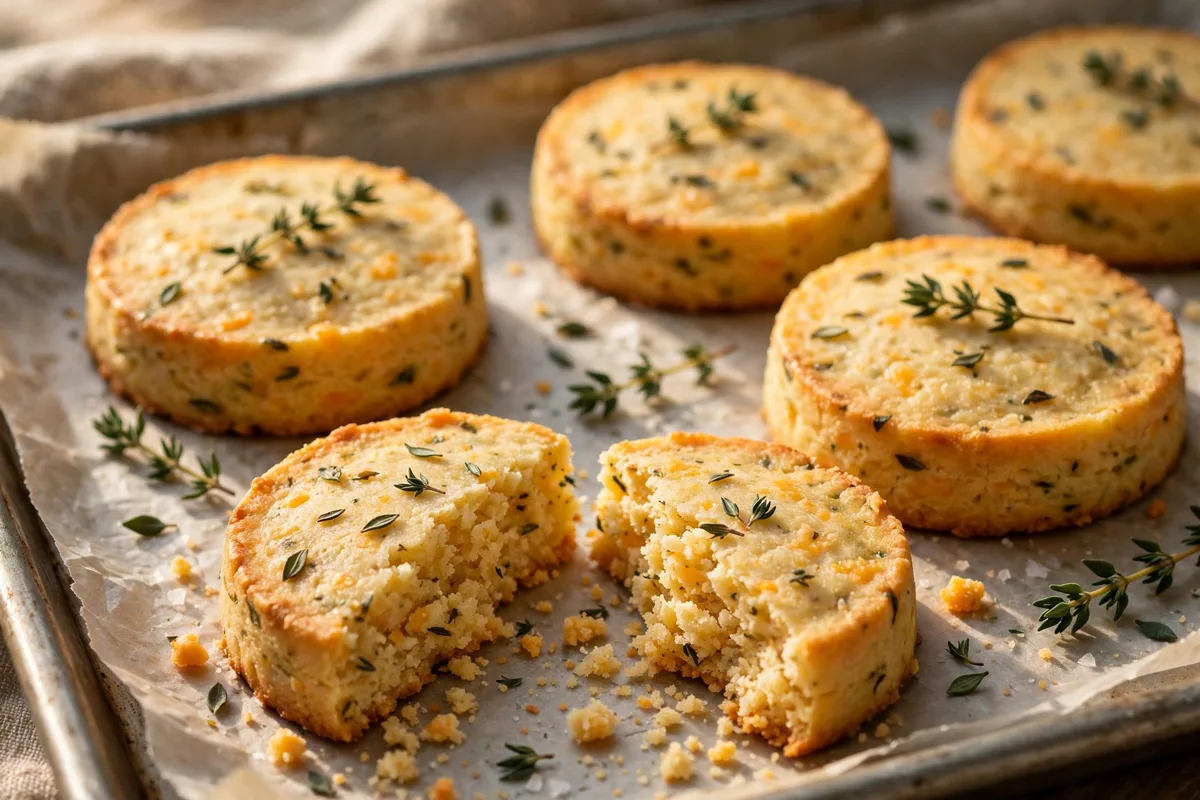
Buttery cheddar herb shortbread rounds with thyme and black pepper — slice-and-bake savoury cookies that vanish off the cheese board.
Buttery cheddar herb shortbread rounds with thyme and black pepper — slice-and-bake savoury cookies that vanish off the cheese board.
If you are looking for an ultra-satisfying, restaurant-quality meal that comes together with minimal effort, this Cheddar Herb Shortbread is about to become your new favorite. Everything is cooked to juicy, golden perfection with wholesome ingredients and incredible depth of flavor.
One simple tip!
Grate the cheddar on the fine side of the grater. Thick shreds leave greasy pockets in the baked rounds, while fine shreds melt evenly into the dough.
Step-by-Step Photos
Why You’ll Love This Recipe
Quick & EffortlessReady in just 64 minutes total with straightforward, foolproof prep.
Packed with Deep FlavorCarefully balanced with all-purpose flour, unsalted butter, sharp cheddar for maximum satisfaction.
Family & Crowd FriendlyMakes 24 generous servings that can be effortlessly doubled or scaled using our smart scaler.
Made From ScratchReal ingredients and straightforward home cooking, with no shortcuts on flavor.
Ingredients Notes & Variations
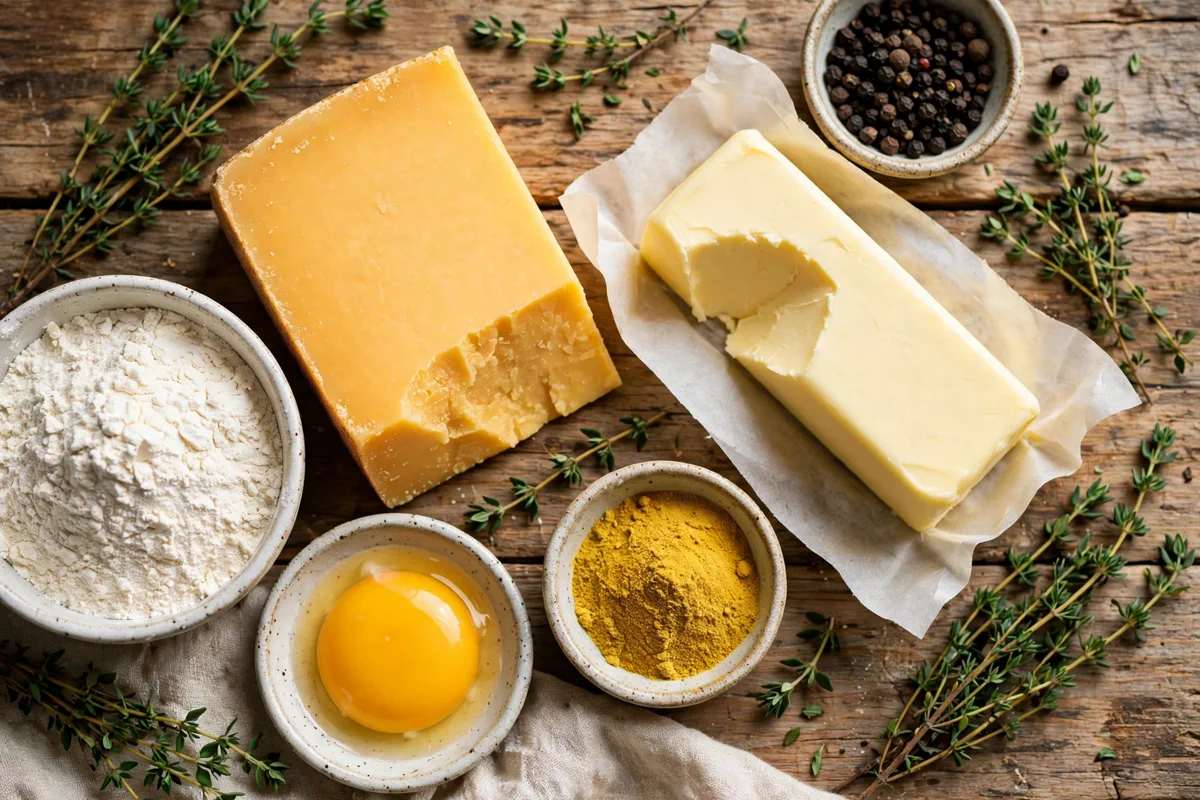
Here is an overview of what you will need for this recipe. Be sure to scroll down to the printable recipe card below for exact scaled measurements!
all-purpose flour
1 cup125 g, spooned and levelled, not scooped from the bag
unsalted butter
113 gcold, cut into small cubes
sharp cheddar
1 cupabout 100 g, finely grated from a block, not pre-shredded
fresh thyme leaves
1 tbspstripped from the stems, plus a few extra leaves for pressing on top
black pepper
1 tspfreshly ground, coarse rather than fine
mustard powder
0.5 tspdry English mustard powder, for a quiet background warmth
fine sea salt
0.5 tspreduce to a quarter teaspoon if your cheddar is very salty
cayenne pepper
0.25 tspoptional, a small pinch of heat at the back of the bite
egg yolk
1 piecelarge, at room temperature, to bind the dough
cold water
1 tbsponly if the dough will not come together
How to Make (Step-by-Step Overview)
Here is a quick summary of the preparation process. Detailed cooking temperatures and step timers are included in the recipe card below.
Grate the cheddar on the fine side of a box grater and set it aside. Fine shreds melt into the dough; thick shreds leave greasy pockets.
Whisk the flour, mustard powder, salt, black pepper and cayenne together in a large bowl until the specks of pepper are evenly spread through the flour.
Add the cold butter cubes and rub them into the flour with your fingertips until the mix looks like coarse breadcrumbs with a few pea-sized bits of butter still visible.
Stir in the grated cheddar and the thyme leaves, then add the egg yolk and mix with a fork until the dough starts to clump.
Tip the dough onto the counter and press it together with your hands. If it still crumbles apart, sprinkle in the cold water, a teaspoon at a time, until it holds together when squeezed.
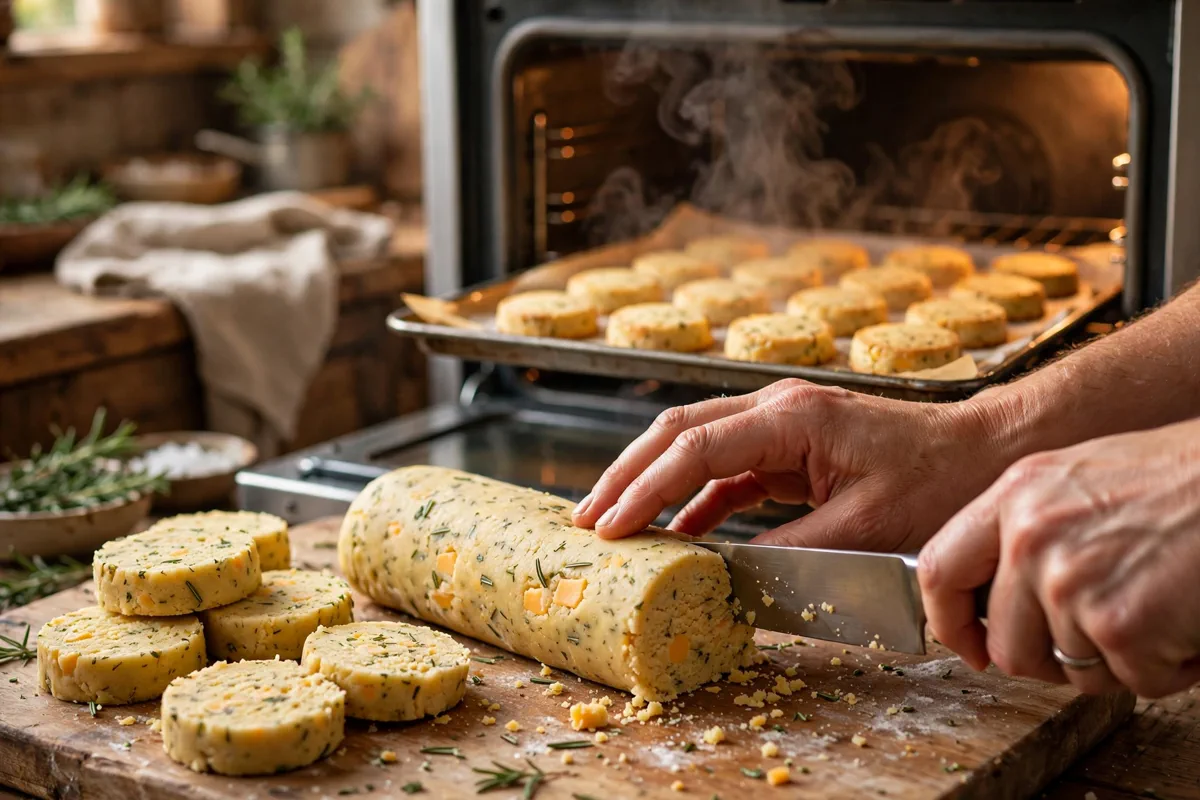
Roll the dough into a log about 5 cm across and 20 cm long, pressing it firm so there are no air gaps. Wrap it tightly in cling film, twisting the ends like a sweet wrapper.
Chill the log in the fridge for 30 minutes, until it feels solid and does not dent when you press it. A firm log is what gives you clean, round slices.
Heat the oven to 175°C (350°F) and line a baking tray with parchment paper.
Unwrap the log and slice it into rounds about 6 mm thick, turning the log a quarter turn after every few cuts so it stays round instead of flattening on one side.
Lay the rounds on the tray about 3 cm apart and press a thyme leaf or two onto the top of each one. The leaves toast gently and look lovely on the finished cookie.
Bake for 13 to 15 minutes, until the edges turn golden and the tops look set and dry. The centres will still feel a little soft when you take them out; they firm up as they cool.
Leave the shortbread on the tray for 5 minutes, then move it to a wire rack to cool completely before storing.
Our Pro Tips for Success
- •Grate the cheddar on the fine side of the grater. Thick shreds leave greasy pockets in the baked rounds, while fine shreds melt evenly into the dough.
- •Chill the log until it feels solid and does not dent when pressed. A soft log flattens on the board and gives oval slices with thin edges that burn.
- •Turn the log a quarter turn after every few cuts. This keeps the rounds round instead of letting the log flatten on one side.
- •Judge doneness by the edges, not the tops. The tops stay pale even when the rounds are ready; the edges turning light golden is the honest signal.
- •If your kitchen is warm, chill the sliced rounds on the tray for 10 minutes before baking. A cold round going into a hot oven holds its shape instead of spreading.
Storage & Make-Ahead Instructions
Refrigerator:Store leftovers in an airtight container for up to 3 to 4 days.
Freezer:Freeze in freezer-safe containers or bags for up to 2 months. Thaw overnight in the fridge.
Reheating:Reheat gently in a 350°F oven or covered skillet with a splash of broth until heated through.
Interactive Kitchen Assistant Live Smart Scaler
Our Recipe Precision Calculators
Calculate exact roasting times, internal temperatures, brining ratios, and safe thaw windows.
2.5 lbs (1.13 kg)
Recommended Timing & Thermals
Est. Cook Time45 mins
Rest Period7 mins
Pull From Heat160°F (71°C)
Final Carryover165°F (74°C)
Insert meat thermometer into thickest center without touching bone for 100% juicy safety.
What cheddar herb shortbread is
Cheddar herb shortbread is a savoury slice-and-bake cookie made from butter, flour, sharp cheddar, thyme and black pepper. The dough is rolled into a log, chilled, sliced into rounds and baked until the edges turn golden. The result is crumbly, buttery and salty, with a gentle peppery warmth at the back of each bite. It belongs on a cheese board, next to a bowl of soup, or in a tin by the kettle.
It looks like a biscuit and eats like one, but it is not a sweet cookie that happens to have cheese in it. The cheddar is the main flavour here, not a garnish. A full cup of finely grated sharp cheddar goes into a single cup of flour, which is why the crumb tastes so strongly of cheese instead of tasting like plain shortbread with a cheesy hint.
Why this method works
Shortbread has very little in it, so the method carries the whole recipe. Cold butter rubbed into flour makes a crumbly dough instead of a smooth one, and that crumb is the whole point. If the butter melts before it reaches the oven, the rounds spread into thin, greasy discs. Keeping the butter cold and chilling the log before slicing is what keeps each round thick and neat.
The log shape is doing real work too. Rolling the dough into a cylinder and chilling it firm means every slice is the same thickness, so every round bakes at the same speed. A log that is still soft when you cut it flattens on the board and gives you ovals with thin edges that burn before the middles cook.
One egg yolk holds the dough together without turning it into a rich biscuit. The yolk adds just enough fat and protein to bind the crumbs. A whole egg would make the shortbread cakey and pale, so the white stays out of the bowl.
The cheese matters more than anything else
Use a block of sharp cheddar and grate it yourself. Pre-shredded cheese is coated in anti-caking starch, and that starch dries the dough out and dulls the flavour. A block grated on the fine side of the grater melts evenly into the flour and gives the shortbread a proper cheddar bite.
Sharp or extra-sharp cheddar is the right call. Mild cheddar disappears once it is baked, and you end up with a buttery cookie that tastes faintly of nothing. An aged cheddar brings salt and tang, so you can hold back on the salt in the dough. Taste your cheddar before you start. If it is very salty, cut the salt in the recipe to a quarter teaspoon.
The mustard powder is easy to skip and worth keeping. Half a teaspoon will not make the shortbread taste of mustard. It sits quietly behind the cheddar and sharpens it, the way a little mustard sharpens a cheese sauce. Leave it out if you do not have it, but do not replace it with prepared mustard, which adds water and changes the dough.
Thyme, pepper and the little choices that show
Fresh thyme is better than dried here. The leaves are small and soft, and they press neatly onto the top of each round without poking out and burning. Dried thyme works in a pinch, but use half the amount and rub it between your fingers first so it does not stay in woody flakes.
Coarse black pepper is not a mistake. Fine pepper disappears into the dough and gives a flat heat. Coarse pepper leaves tiny dark flecks you can see and a little pop of warmth in each bite. Grind it fresh if you can. Pre-ground pepper that has sat open for months has lost most of its bite.
The cayenne is optional and small on purpose. A quarter teaspoon will not make the shortbread spicy. It gives a slow warmth at the back of the throat that makes people reach for a second round before they know why. If you are baking for children, leave it out and nobody will miss it.
Shaping the log
The log is the only part that takes practice, and even a rough log still bakes into good shortbread. Roll the dough on the counter with both hands, pressing firmly so the dough compacts and no air stays trapped inside. Air pockets turn into holes in the baked rounds.
Wrap the log tightly in cling film and twist the ends. The twist does two things: it squeezes the log into a neater cylinder, and it stops the ends drying out in the fridge. If the log comes out of the fridge slightly flat on one side, roll it gently on the counter for a few seconds before slicing and it will round out again.
Turn the log a quarter turn after every few slices. This is the small habit that keeps the rounds round. A log that always sits on the same side slowly flattens under its own weight, and the rounds at the end of the log come out oval.
How to tell when they are done
Watch the edges, not the tops. The tops of these rounds stay pale even when they are ready, because the cheese colours the crumb from within. The edges are the honest signal: when they turn a light golden brown, the shortbread is done. Pull the tray at 13 minutes and check, then give it another minute or two if the edges are still pale.
The centres will feel soft when the tray comes out of the oven. That is normal. Shortbread firms as it cools, and a round that feels perfect straight from the oven will be hard once it is cold. Leave the rounds on the tray for five minutes, then move them to a rack. Moving them too soon breaks them, because the butter is still soft.
When to serve them
These are at their best the day they are baked, when the crumb is crisp at the edges and tender in the middle. They are also the kind of thing to make ahead for a gathering, because they keep well and they travel well in a tin.
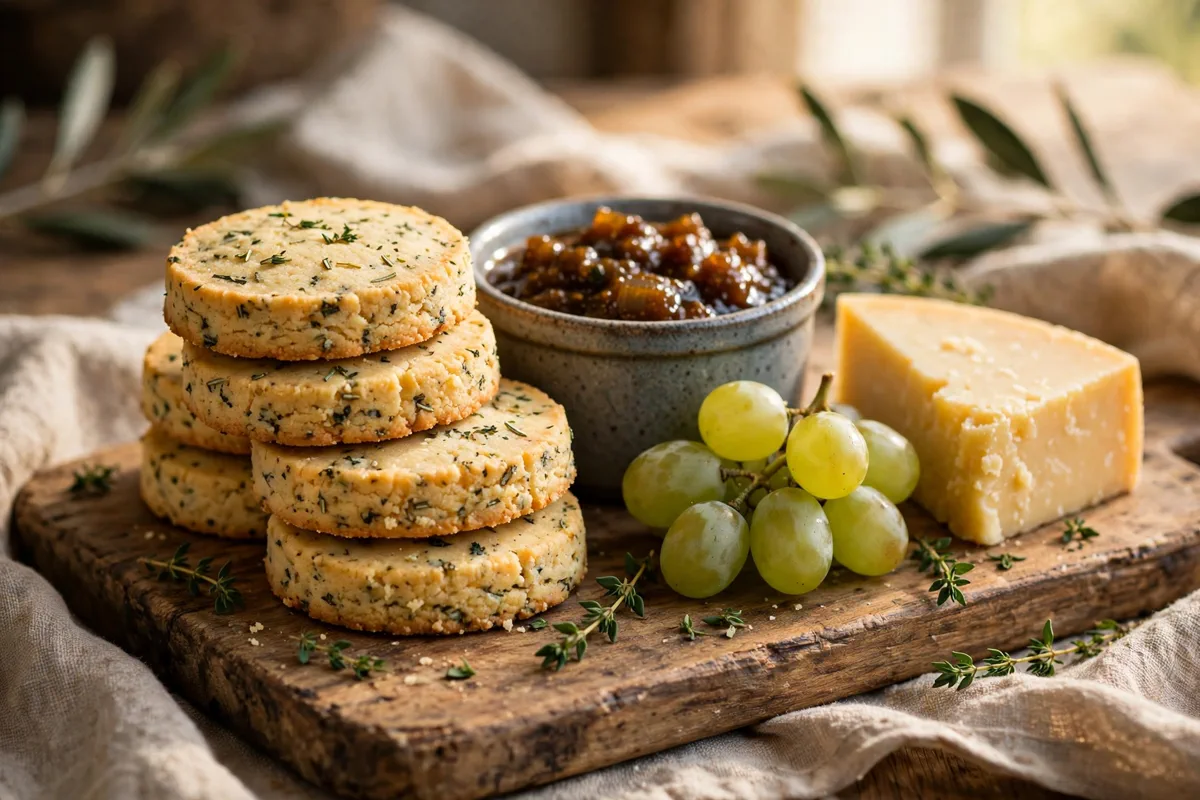
Put them on a cheese board next to a soft cheese and some chutney, and they disappear first. They work with soup too, in place of bread, especially a tomato soup or a squash soup where a salty, buttery crumb is welcome. A few rounds with a glass of red wine or a cold beer need no explanation.
They also make a good small gift. A tin of these, tied with a bit of string, is a better host gift than a bottle of wine nobody asked for, because it looks like someone actually made something.
What goes wrong and how to fix it
If the dough will not hold together, it is usually because the butter was too cold and the crumbs never stuck, or the flour was packed too tightly into the cup. Add cold water a teaspoon at a time and press the dough with your hands rather than kneading it. Kneading develops gluten and makes the shortbread tough.
If the rounds spread in the oven, the log was not cold enough, or the oven was not fully hot when the tray went in. Chill the sliced rounds on the tray in the fridge for ten minutes before baking if your kitchen is warm. A hot oven sets the edges fast, which holds the shape.
If the bottoms brown before the tops are set, the tray is too low in the oven or the tray itself is dark and thin. Move the tray to the middle rack and use a light-coloured baking tray if you have one. Dark trays run hotter and brown the bottoms first.
If the shortbread tastes bland, the cheddar was too mild. Next time, use an extra-sharp block and grate it fine so more of it melts into the crumb. A little extra black pepper helps too, and it will not make the rounds spicy, just more interesting.
Frequently Asked Questions
Yes, the log freezes very well for up to 3 months. Wrap it tightly in cling film, then in foil, and slice it straight from frozen — just add 2 minutes to the baking time.
It will work, but the result is drier and less cheesy. Pre-shredded cheese is coated in anti-caking starch, which dries the dough and dulls the flavour — grate a block of sharp cheddar yourself if you can.
Easy Chicken Recipes • Official Card
Cheddar Herb Shortbread
☆☆☆☆☆0.0 (0 reviews)•Recipe by Cooking With Guru Editorial Team•Updated: Jan 15, 2025
Buttery cheddar herb shortbread rounds with thyme and black pepper — slice-and-bake savoury cookies that vanish off the cheese board.
Prep Time20 mins
Cook Time14 mins
Total Time64 mins
Adjust Servings:
24
Ingredients
Click to check off1 cup all-purpose flour(125 g, spooned and levelled, not scooped from the bag)
113 g unsalted butter(cold, cut into small cubes)
1 cup sharp cheddar(about 100 g, finely grated from a block, not pre-shredded)
1 tbsp fresh thyme leaves(stripped from the stems, plus a few extra leaves for pressing on top)
1 tsp black pepper(freshly ground, coarse rather than fine)
1/2 tsp mustard powder(dry English mustard powder, for a quiet background warmth)
1/2 tsp fine sea salt(reduce to a quarter teaspoon if your cheddar is very salty)
1/4 tsp cayenne pepper(optional, a small pinch of heat at the back of the bite)
1 piece egg yolk(large, at room temperature, to bind the dough)
1 tbsp cold water(only if the dough will not come together)
Instructions
Step-by-StepCWG
Recipe Source
The Cooking With Guru Team
Our recipes are developed and checked by the Cooking With Guru team. Nutrition figures are estimates calculated from USDA data, and yields scale with the built-in portion tools so the recipe fits your kitchen.
More snack recipes to try!
🍽️
Turkish Menemen: One-Pan Eggs in Spicy Tomato Sauce
🍽️
High-Protein Cottage Cheese Egg Bake with Spinach
🍽️
Easy Chicken Congee Recipe with Crispy Garlic and Chili Oil
Comments & Questions (0)
Join the conversationNo comments yet!
Be the first to leave a comment or ask a question about Cheddar Herb Shortbread.