🍽️
Prep time15 mins
Cook time40 mins
Ingredients14
lunch
Roasted Red Pepper Tomato Soup
Published: Jan 15, 2025
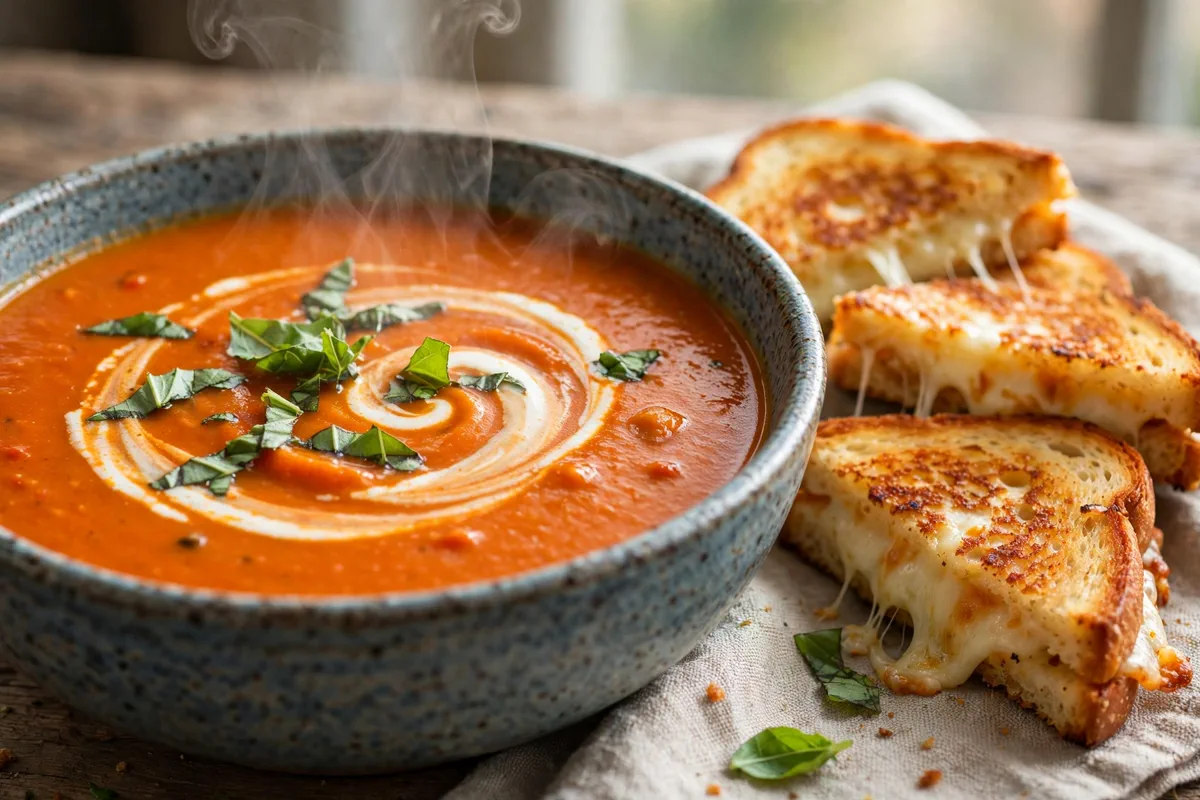
Roasted peppers, tomatoes and a whole garlic bulb blended silky with broth and cream. The oven does the work, no peeling, no long simmer.
Roasted peppers, tomatoes and a whole garlic bulb blended silky with broth and cream. The oven does the work, no peeling, no long simmer.
If you are looking for an ultra-satisfying, restaurant-quality meal that comes together with minimal effort, this Roasted Red Pepper Tomato Soup is about to become your new favorite. Everything is cooked to juicy, golden perfection with wholesome ingredients and incredible depth of flavor.
One simple tip!
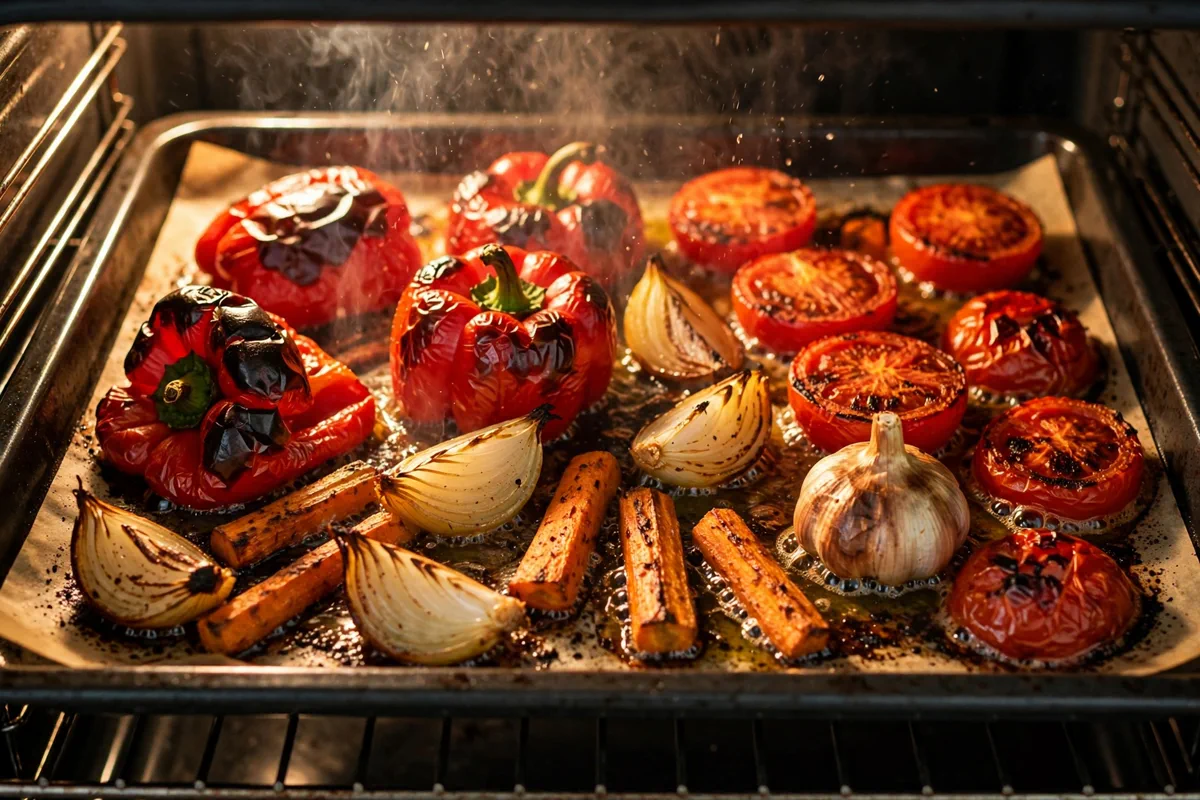
Roast the peppers cut-side down. They steam in their own moisture that way, the skins blister, and the flesh turns soft enough to blend without any peeling.
Step-by-Step Photos
Why You’ll Love This Recipe
Quick & EffortlessReady in just 55 minutes total with straightforward, foolproof prep.
Packed with Deep FlavorCarefully balanced with red bell peppers, ripe tomatoes, yellow onion for maximum satisfaction.
Family & Crowd FriendlyMakes 4 generous servings that can be effortlessly doubled or scaled using our smart scaler.
Made From ScratchReal ingredients and straightforward home cooking, with no shortcuts on flavor.
Ingredients Notes & Variations
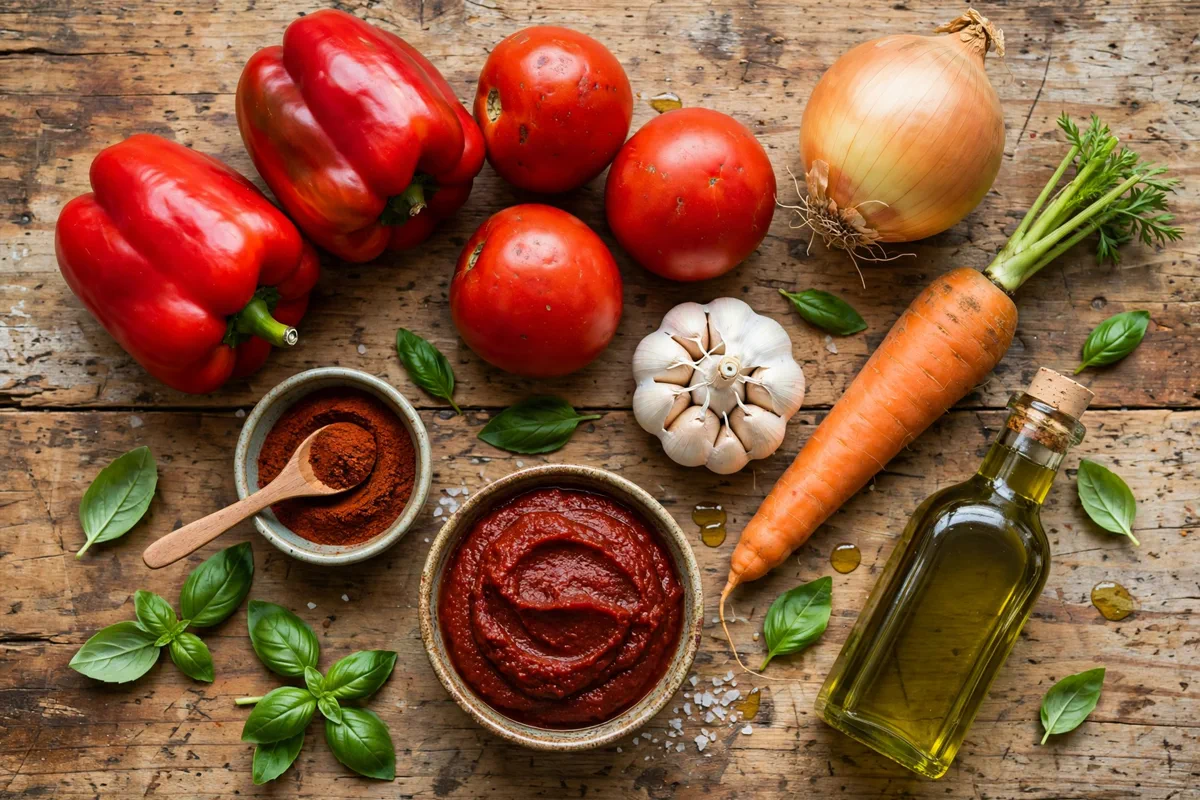
Here is an overview of what you will need for this recipe. Be sure to scroll down to the printable recipe card below for exact scaled measurements!
red bell peppers
4 piecehalved, seeds and stems removed
ripe tomatoes
6 pieceabout 900 g, halved
yellow onion
1 piecepeeled and quartered
carrot
1 piecepeeled and cut into thick chunks
whole garlic bulb
1 piecetop sliced off so the cloves show
olive oil
3 tbspfor drizzling over the tray
vegetable broth
3 cuplow sodium if you have it
tomato paste
2 tbspadds depth to the tomato flavour
smoked paprika
1 tspnot sweet paprika, the smoky kind
salt
1 tspplus more to taste
black pepper
0.5 tspfreshly ground
sugar
1 tsponly if the tomatoes taste sharp
heavy cream
0.5 cupplus a little extra for swirling on top
fresh basil leaves
0.25 cuptorn, for serving
How to Make (Step-by-Step Overview)
Here is a quick summary of the preparation process. Detailed cooking temperatures and step timers are included in the recipe card below.
Heat the oven to 220 C (425 F) and line a large baking tray with parchment paper.
Place the peppers cut-side down on the tray, with the tomatoes cut-side up, the onion quarters, carrot chunks and the garlic bulb beside them.
Drizzle everything with the olive oil and sprinkle over half the salt.
Roast for 30 to 35 minutes, until the pepper skins blister and blacken in spots and the tomato edges darken and collapse.
Leave the tray to sit for 5 minutes, then squeeze the soft garlic cloves out of their skins straight into a blender.
Tip everything from the tray into the blender, including the juices, and add the vegetable broth, tomato paste and smoked paprika.
Blend on high for 2 full minutes until completely smooth. If your blender is small, work in two batches and combine them in the pot.
Pour the soup into a pot and bring it to a gentle simmer over medium heat. Cook for 10 minutes, stirring now and then.
Turn the heat to low and stir in the heavy cream. Taste and add the rest of the salt, the black pepper, and the sugar if the tomatoes need it.
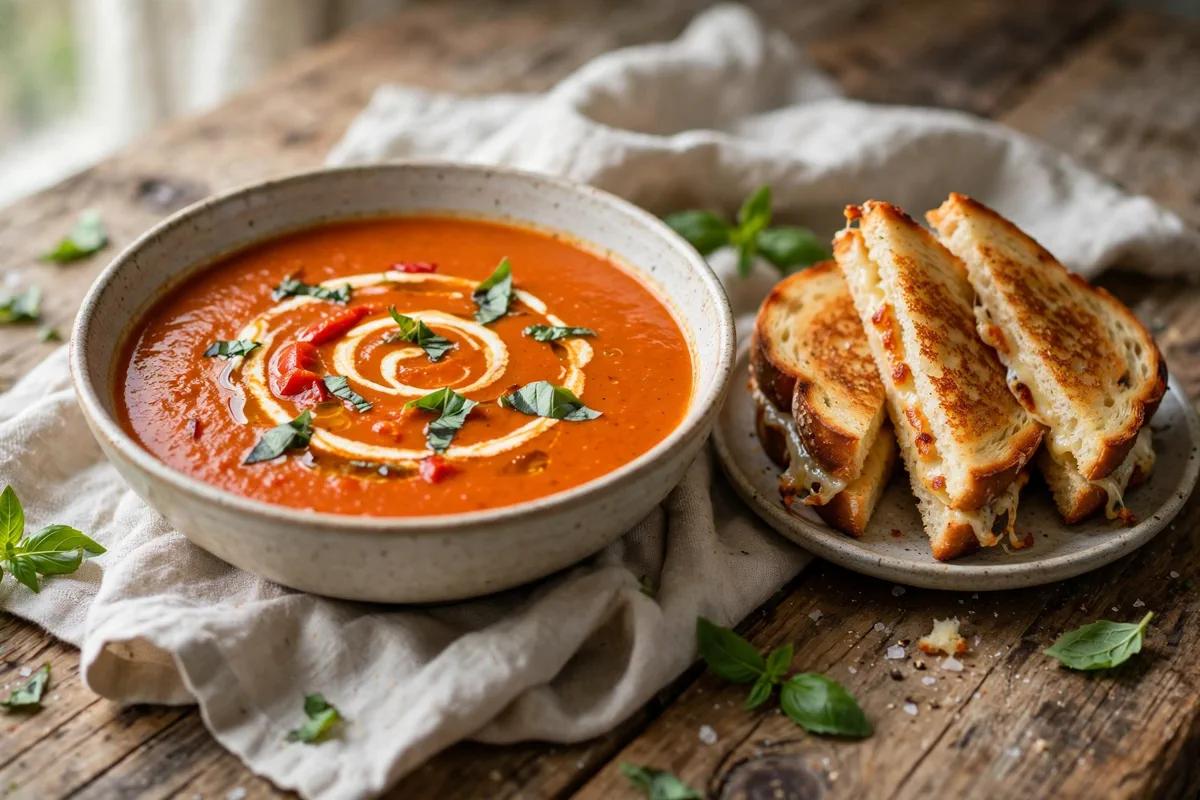
Ladle into bowls and top with a swirl of cream and torn basil. Serve hot.
Our Pro Tips for Success
- •Roast the peppers cut-side down. They steam in their own moisture that way, the skins blister, and the flesh turns soft enough to blend without any peeling.
- •Do not skip the carrot. It is not there to fill space. It adds sweetness that balances the tomatoes and gives the soup body, so you need less cream to get a thick texture.
- •Blend for a full two minutes, not thirty seconds. The skins break down completely only with a long blend, and that is the difference between smooth soup and soup with flecks in it.
- •If the soup tastes sharp after blending, add the sugar before you add more salt. Tomatoes vary a lot, and a teaspoon of sugar rounds off the acid without making the soup sweet.
- •Add the cream off the boil and keep the heat low after it goes in. Boiling a cream soup can make it split, and once it splits there is no neat way back.
Storage & Make-Ahead Instructions
Refrigerator:Store leftovers in an airtight container for up to 3 to 4 days.
Freezer:Freeze in freezer-safe containers or bags for up to 2 months. Thaw overnight in the fridge.
Reheating:Reheat gently in a 350°F oven or covered skillet with a splash of broth until heated through.
Interactive Kitchen Assistant Live Smart Scaler
Our Recipe Precision Calculators
Calculate exact roasting times, internal temperatures, brining ratios, and safe thaw windows.
2.5 lbs (1.13 kg)
Recommended Timing & Thermals
Est. Cook Time45 mins
Rest Period7 mins
Pull From Heat160°F (71°C)
Final Carryover165°F (74°C)
Insert meat thermometer into thickest center without touching bone for 100% juicy safety.
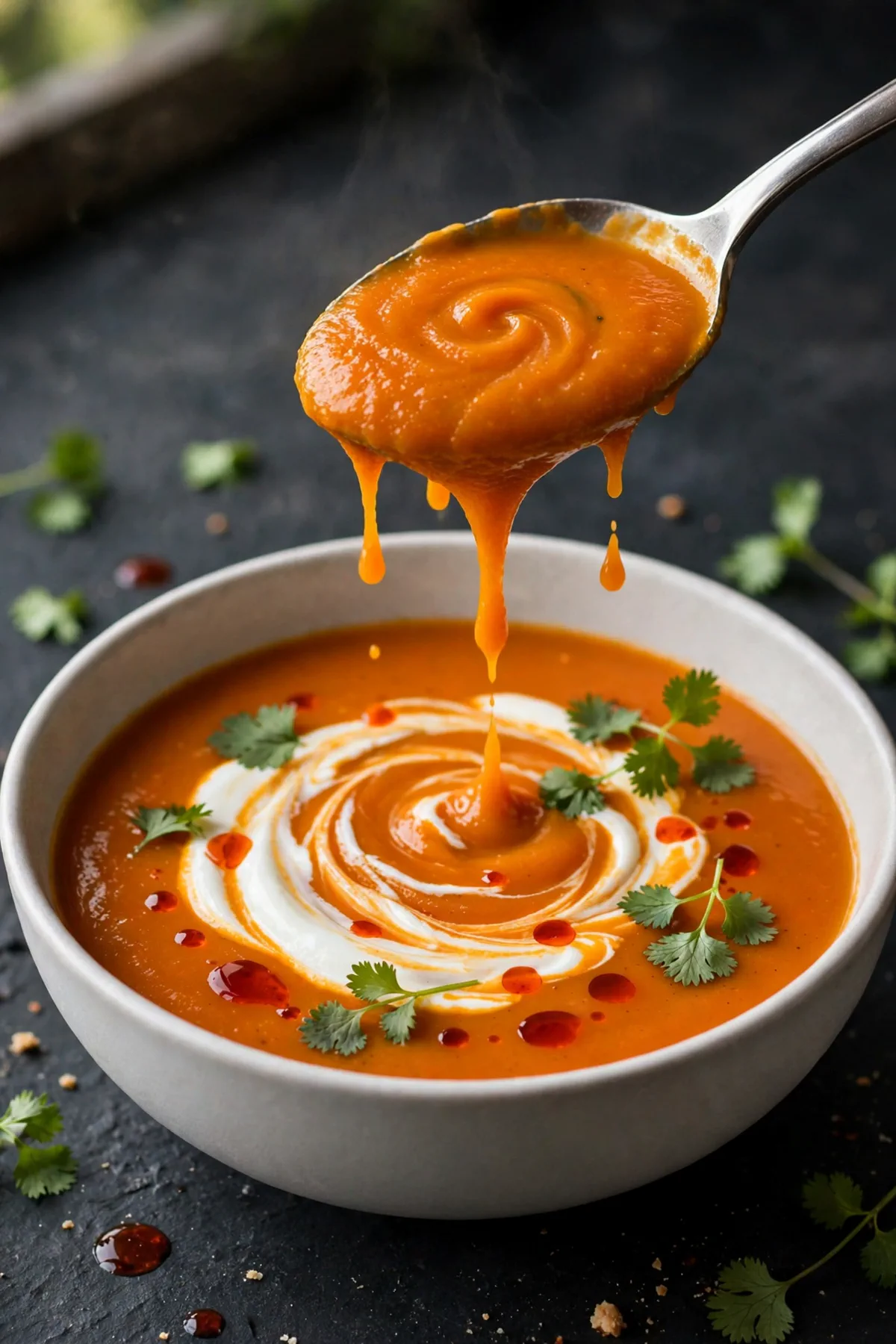
Roasted red pepper tomato soup is a smooth, orange-red soup made by roasting peppers, tomatoes, onion, carrot and a whole head of garlic in the oven, then blending them with vegetable broth and a swirl of cream. The roasting does the flavour work: the peppers soften and sweeten, the tomatoes collapse into jammy edges, and the garlic turns soft enough to squeeze straight out of its skin. It takes about 55 minutes from start to finish, and most of that is hands-off while the oven runs.
This is the soup to make when you want something that tastes slow-cooked but you do not want to stand over a pot. There is no long simmer and no careful stirring. You cut, you roast, you blend. The oven builds the flavour while you do something else, and the blender does the rest. It is also a good way to use up peppers and tomatoes that are past their best for salads but still fine for cooking. A soft tomato that would be sad sliced raw is perfect here.
Why roasting changes the soup
A tomato soup made on the hob starts with raw tomatoes and has to cook its way to depth. Roasting takes a shortcut. At 220 C, the tomatoes lose water and their flavour concentrates. The edges catch and darken a little, which adds a smoky note that a pot of simmering tomatoes never gets. The peppers go soft and sweet. The onion turns mild. The garlic, roasted whole in its skin, goes soft and spreadable, with none of the sharp bite raw garlic has.
The point is that all of this happens at once, on one tray, with no attention from you. You are not building flavour in stages or watching a pot. The oven is doing it. That is the whole appeal of this recipe, and it is why it works on a weeknight. The active work is about fifteen minutes: cutting vegetables, tipping a tray into a blender, seasoning the pot.
One thing worth knowing is that the tray should not be crowded. If the vegetables are packed tight, they steam instead of roast, and you lose the darkened edges that carry the flavour. Use your largest tray, and spread things out in a single layer. If everything does not fit, use two trays rather than piling it up. It makes a real difference to the finished soup.
The carrot is not a filler
People see a carrot in a tomato soup recipe and assume it is there to bulk things out. It is doing two jobs here, and both matter. The first is sweetness. Tomatoes vary, and some batches are sharp enough to make the soup taste thin and acidic. The roasted carrot adds a gentle sweetness that rounds the tomatoes off, so you often do not need the sugar at all.
The second job is body. A carrot blends into a thick, smooth puree, and it thickens the soup without flour or a long reduction. That is why this soup feels substantial with only half a cup of cream. If you leave the carrot out, the soup will still taste fine, but it will be thinner, and you will probably reach for more cream to fix it. Keep the carrot in.
About the skins, and why you can leave them
Most roasted pepper soup recipes tell you to peel the peppers, and that step is the reason many people never make them. Peeling hot peppers one by one is fiddly, slow, and messy. Here, you skip it entirely. The peppers roast until their skins blister, and then they go into the blender, skins and all.
The trick is the length of the blend. Thirty seconds is not enough, and the soup will have visible flecks. Two full minutes on high speed breaks the skins down completely. If your blender is not very powerful, you can help it along by blending in two batches, or by passing the finished soup through a fine sieve. The sieve step takes two minutes and gives you a texture that feels like it came from a restaurant kitchen, but it is optional. With a good blender and a two-minute blend, most people will not bother.
One thing to watch: the tomato skins can be a little tougher than the pepper skins. The same long blend handles them, but if you are using a small or older blender, the sieve is your friend. Do not worry about losing flavour through the sieve. What stays behind is mostly skin and a few seeds, and the soup that passes through keeps all of its flavour.
Getting the texture you want
This soup should pour like thick cream, not like water and not like a paste. After blending, if it looks too thick, add broth a quarter of a cup at a time until it moves the way you want it to. If it is too thin, simmer it for a few more minutes with the lid off. It is easier to thin a thick soup than to thicken a thin one, so go slowly with the extra broth.
Taste before you serve. Tomatoes are unpredictable, and the same recipe can need different seasoning depending on the batch. The sugar is there for sharp tomatoes, not for sweet ones, so taste first and add it only if you need it. Salt is the same. Add it in pinches, stir, and taste again. A soup that tastes flat usually needs salt, not more ingredients.
The cream goes in last
Cream goes in at the very end, over low heat, and the soup should not boil after it is added. This matters because cream can split if it boils, and a split soup looks grainy and cannot be fixed by stirring. Turn the heat down, stir the cream in slowly, and take the pot off the heat as soon as it is mixed through.
If you want the soup to look as good as it tastes, save a spoonful of cream for the top. A white swirl against the orange-red soup, with torn basil over it, is the whole presentation. It takes ten seconds and it is the difference between a bowl of soup and a bowl of soup that someone wants to photograph. The basil should be torn, not chopped, because chopping bruises it and turns the edges dark.
What to put next to the bowl
A grilled cheese sandwich is the classic partner, and it earns its place here. The soup is smooth and rich, and a crisp, buttery sandwich gives you something to bite into and something to dip. Cut it into triangles, the way the soup looks best in a photo, and serve it on the side of the bowl rather than on top, so it stays crisp.
If grilled cheese is too much for a light lunch, a thick slice of crusty bread does the same job. A simple green salad with a sharp dressing also works, because the acid in the dressing cuts through the cream in the soup. What you do not need is a heavy side. The soup is filling on its own, and the side should be there to add crunch or contrast, not more richness.
Making it ahead
This soup is one of those dishes that tastes better the next day. The flavours settle overnight, and the paprika and garlic mellow into the tomatoes. If you are making it for guests, cook it the day before, cool it, and keep it in the fridge. Reheat it gently over medium-low heat, stir in the cream at the end, and add the basil fresh. Nobody will know it was made a day early.
It keeps in the fridge for up to four days in a sealed container. For longer storage, freeze it before you add the cream, in portions, for up to three months. Thaw it overnight in the fridge, reheat it slowly, and stir the cream in while it warms up. Add the basil only when you serve it, because it wilts and darkens if it sits in hot soup.
That is the whole recipe. Cut, roast, blend, season, serve. The oven does the hard part, the blender does the rest, and the bowl in front of you tastes like a soup that took far longer than it did.
Frequently Asked Questions
No. Roast the peppers until the skins blister, then put everything in the blender, skins and all. A full two-minute blend on high breaks the skins down completely. If you want it extra silky, pass the soup through a fine sieve after blending.
Yes. Use two jars of roasted red peppers, about 340 g drained, and add them straight to the blender. Roast the tomatoes, onion, carrot and garlic as normal, and skip roasting the peppers. The flavour is close, just a little less smoky.
Easy Chicken Recipes • Official Card
Roasted Red Pepper Tomato Soup
☆☆☆☆☆0.0 (0 reviews)•Recipe by Cooking With Guru Editorial Team•Updated: Jan 15, 2025
Roasted peppers, tomatoes and a whole garlic bulb blended silky with broth and cream. The oven does the work, no peeling, no long simmer.
Prep Time15 mins
Cook Time40 mins
Total Time55 mins
Adjust Servings:
4
Ingredients
Click to check off4 piece red bell peppers(halved, seeds and stems removed)
6 piece ripe tomatoes(about 900 g, halved)
1 piece yellow onion(peeled and quartered)
1 piece carrot(peeled and cut into thick chunks)
1 piece whole garlic bulb(top sliced off so the cloves show)
3 tbsps olive oil(for drizzling over the tray)
3 cups vegetable broth(low sodium if you have it)
2 tbsps tomato paste(adds depth to the tomato flavour)
1 tsp smoked paprika(not sweet paprika, the smoky kind)
1 tsp salt(plus more to taste)
1/2 tsp black pepper(freshly ground)
1 tsp sugar(only if the tomatoes taste sharp)
1/2 cup heavy cream(plus a little extra for swirling on top)
1/4 cup fresh basil leaves(torn, for serving)
Instructions
Step-by-Step0
0
0
0
0
0
CWG
Recipe Source
The Cooking With Guru Team
Our recipes are developed and checked by the Cooking With Guru team. Nutrition figures are estimates calculated from USDA data, and yields scale with the built-in portion tools so the recipe fits your kitchen.
More lunch recipes to try!
🍽️
Turkish Menemen: One-Pan Eggs in Spicy Tomato Sauce
🍽️
High-Protein Cottage Cheese Egg Bake with Spinach
🍽️
Easy Chicken Congee Recipe with Crispy Garlic and Chili Oil
Comments & Questions (0)
Join the conversationNo comments yet!
Be the first to leave a comment or ask a question about Roasted Red Pepper Tomato Soup.