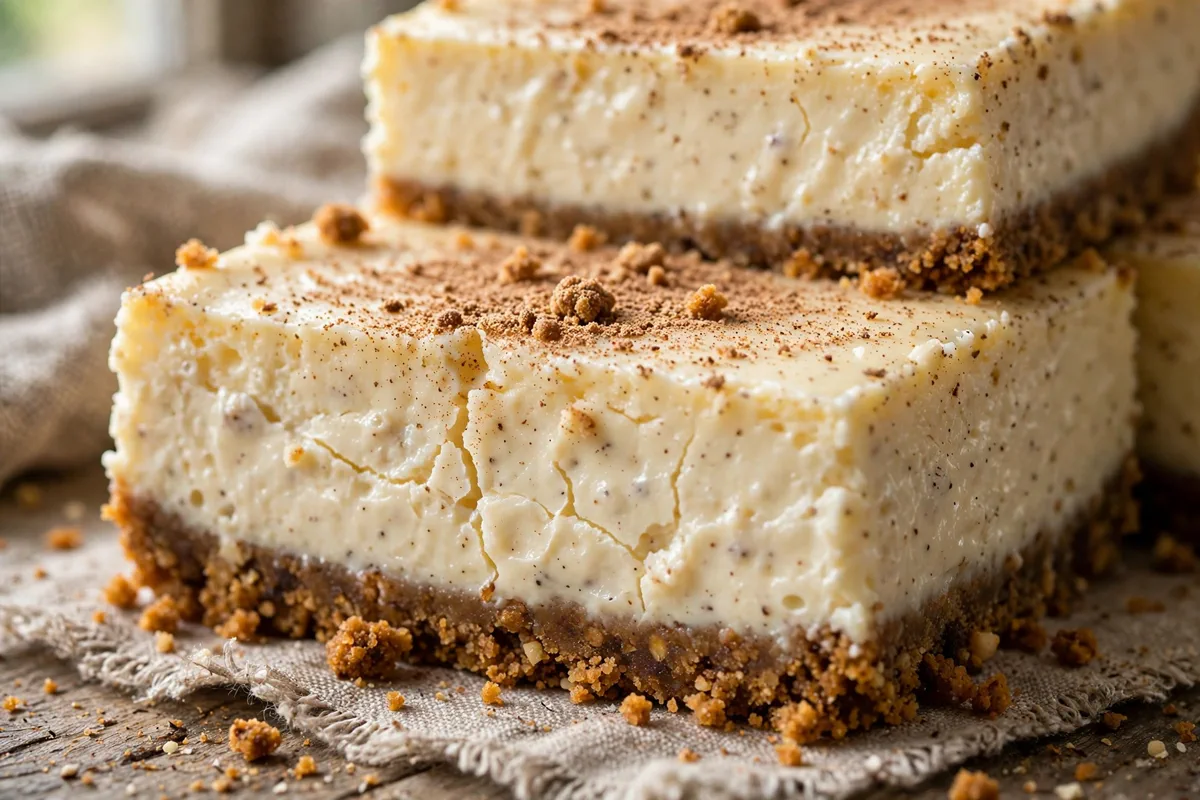
Eggnog Cheesecake Bars With a Gingersnap Crust
Published: Jan 15, 2025
Creamy eggnog cheesecake bars on a crisp gingersnap crust, dusted with nutmeg. Sliceable, make-ahead, and built for the holidays.
Creamy eggnog cheesecake bars on a crisp gingersnap crust, dusted with nutmeg. Sliceable, make-ahead, and built for the holidays.
If you are looking for an ultra-satisfying, restaurant-quality meal that comes together with minimal effort, this Eggnog Cheesecake Bars With a Gingersnap Crust is about to become your new favorite. Everything is cooked to juicy, golden perfection with wholesome ingredients and incredible depth of flavor.
One simple tip!
Room-temperature cream cheese is the whole game. Cold cream cheese leaves lumps no amount of beating fixes, so set the blocks out 45 minutes before you start.
Step-by-Step Photos
Why You’ll Love This Recipe
Ingredients Notes & Variations
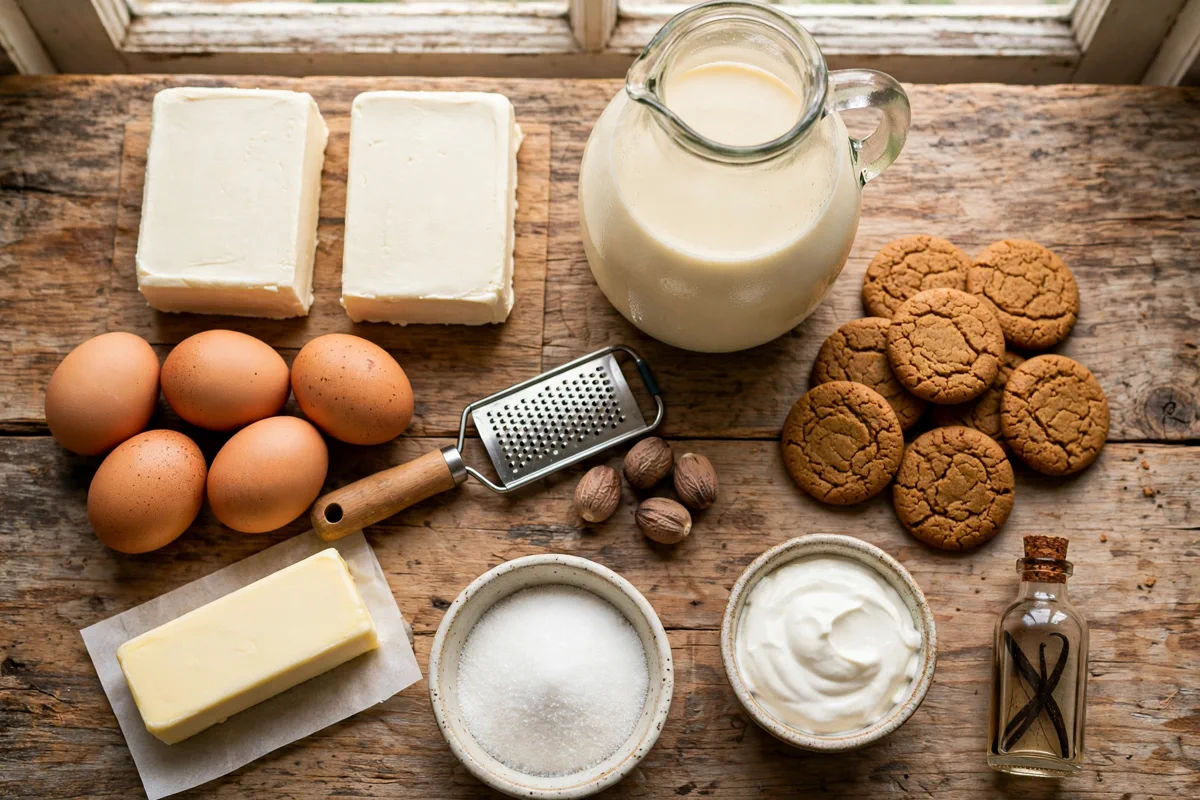
Here is an overview of what you will need for this recipe. Be sure to scroll down to the printable recipe card below for exact scaled measurements!
gingersnap cookies
200 gcrushed into fine crumbs, about 2 cups
unsalted butter
75 gmelted, for the crust
granulated sugar
2 tbspfor the crust
cream cheese
680 gfull-fat, at room temperature, 3 blocks
granulated sugar
150 gfor the filling
eggnog
180 mlfull-fat, store-bought or homemade, shaken well
sour cream
120 gfull-fat, at room temperature
eggs
3 piecelarge, at room temperature
vanilla extract
2 tspground nutmeg
1 tspfreshly grated if possible, plus a pinch extra for dusting
rum extract
1 tspoptional, adds the classic eggnog warmth
all-purpose flour
2 tbsphelps the bars set and slice cleanly
How to Make (Step-by-Step Overview)
Here is a quick summary of the preparation process. Detailed cooking temperatures and step timers are included in the recipe card below.
Heat the oven to 160 C (325 F). Line a 9x9 inch (23 cm) square pan with parchment paper, leaving overhang on two sides so you can lift the bars out later.
Put the gingersnap cookies in a zip bag and crush with a rolling pin until you have fine, even crumbs. Tip them into a bowl and stir in the melted butter and 2 tablespoons of sugar until the crumbs look like wet sand and clump when squeezed.
Press the crumb mixture firmly and evenly into the lined pan, using the flat bottom of a glass to pack it down. Bake for 10 minutes until it smells warm and spicy and the edges look set. Leave the oven on and set the pan aside.
Beat the room-temperature cream cheese in a large bowl on medium speed until completely smooth, about 2 minutes. Scrape the bowl down twice. Any lumps now will stay lumps in the finished bars, so take your time here.
Add the sugar and flour and beat on low just until combined. Pour in the eggnog, sour cream, vanilla, nutmeg, and rum extract if using. Mix on low until the batter looks smooth and pourable, about 1 minute. Stop as soon as it comes together.
Add the eggs one at a time, mixing on low after each one just until the yellow disappears. Do not overbeat once the eggs are in, or the bars will puff up in the oven and sink as they cool.
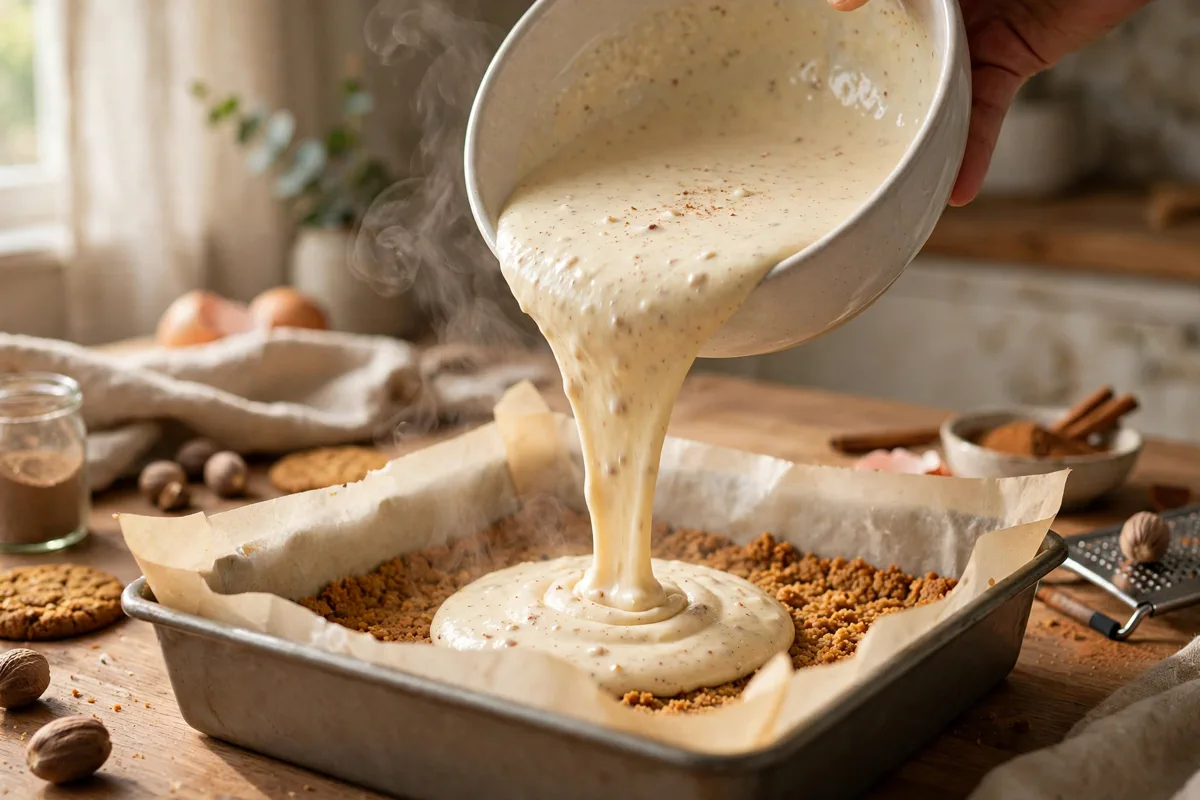
Pour the filling over the warm crust and smooth the top with a spatula. Tap the pan gently on the counter twice to pop any large air bubbles.
Bake for 40 to 45 minutes. The bars are done when the edges are set and the center still wobbles slightly when you nudge the pan, like set jelly. The surface should look matte, not wet and shiny.
Cool in the pan on a rack for 1 hour, then cover and chill in the fridge for at least 4 hours, or overnight. Cold bars cut far more cleanly than warm ones.
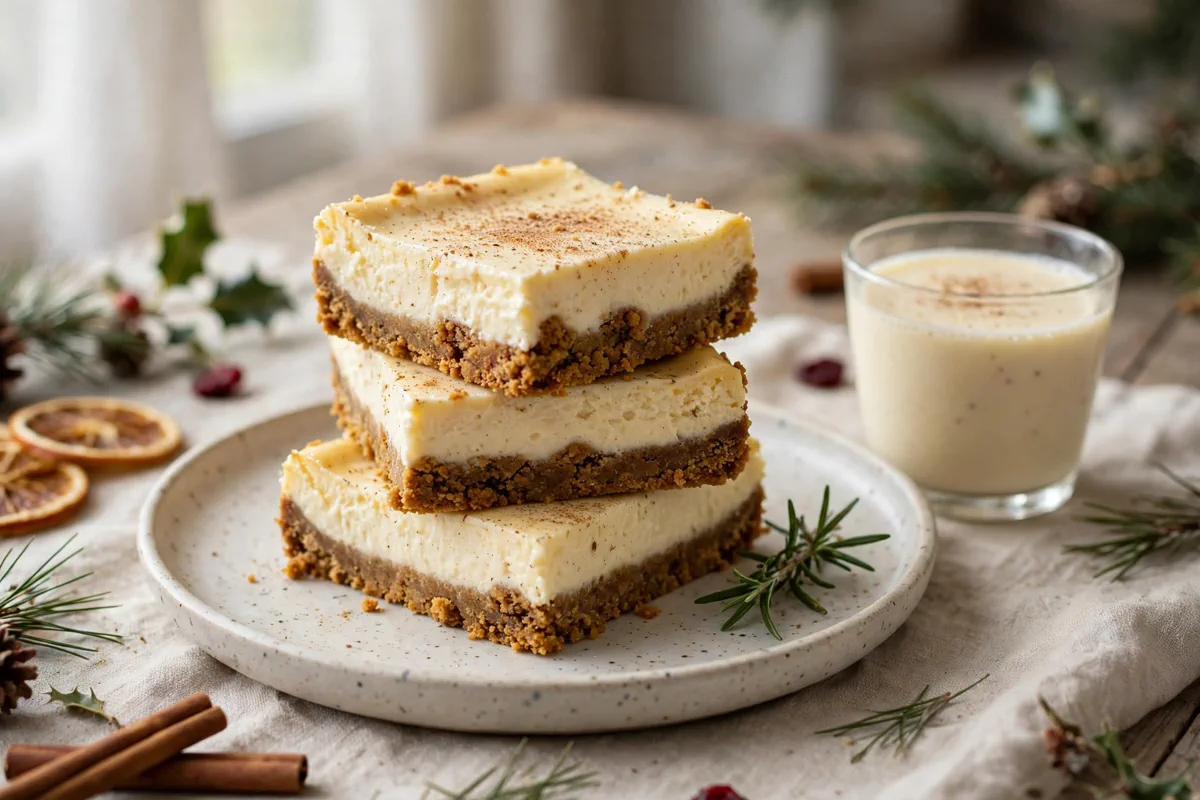
Lift the slab out using the parchment overhang. Dust the top lightly with nutmeg. Cut into 16 bars with a long sharp knife, wiping the blade clean between cuts for neat edges. Serve cold.
Our Pro Tips for Success
- •Room-temperature cream cheese is the whole game. Cold cream cheese leaves lumps no amount of beating fixes, so set the blocks out 45 minutes before you start.
- •Judge doneness by the wobble, not the clock. If the center still moves like set jelly at 40 minutes, it is done. A fully firm center in the oven means overbaked bars.
- •Mix on low once the eggs go in. Fast beating whips air into the batter, and the bars puff up, crack, and sink as they cool.
- •Chill overnight if you can. The eggnog flavor deepens, the texture firms up, and the bars slice into clean squares instead of smearing.
- •Use a hot, dry knife for cutting. Run the blade under hot water, wipe it dry, and cut in one smooth motion. Wipe between every cut.
Storage & Make-Ahead Instructions
Our Recipe Precision Calculators
Calculate exact roasting times, internal temperatures, brining ratios, and safe thaw windows.
What eggnog cheesecake bars are
Eggnog cheesecake bars are a sliceable, pan-baked version of eggnog cheesecake: a creamy filling made with real eggnog, cream cheese, nutmeg, and vanilla, set on a crisp gingersnap crust. They bake in a square pan, chill until firm, and cut into neat squares you can pick up and eat without a plate or a fork. The flavor lands right where you expect it to, warm nutmeg and vanilla up front, a gentle tang from the cream cheese, and a spiced snap from the crust underneath.
They exist because a whole cheesecake is a commitment. It needs a springform pan, a water bath, a long slow bake, and a nervous wait to see if it cracked. Bars skip most of that. The same filling bakes faster in a shallow pan, cools faster, and slices into portions without the ceremony. If you want eggnog cheesecake on a weeknight in December, or you need a dessert for a table of sixteen people, bars are the practical shape.
Why the bar format works here
A square pan changes the math in your favor. The filling is only about an inch and a half deep, so heat reaches the center quickly and evenly. That means less time in the oven and less chance of the edges overbaking while the middle catches up. It also means the bars set firmly enough to slice, which matters, because nobody wants a cheesecake bar that slumps.
The crust does more work in a bar than it does in a whole cheesecake. In a springform, the crust is a thin base under a tall filling. Here the ratio is closer, so every bite gets crust and filling together. That is why gingersnaps are the right call. Graham crackers would be fine, but they disappear next to the eggnog. Gingersnaps bring their own ginger and molasses flavor, and they hold their crunch after a night in the fridge. The crust is not a background player in this recipe. It is half the flavor.
The gingersnap crust, done right
The crust is three ingredients: gingersnap crumbs, melted butter, and a little sugar. The part people get wrong is the crumb size. You want fine, even crumbs, not a mix of dust and chunks. Big pieces do not bind, and the crust crumbles when you cut it. A zip bag and a rolling pin gets you there in a minute, or a food processor on short pulses does the same job. Check the crumbs with your fingers before you add the butter. They should feel like coarse sand.
Butter is the glue, and the amount matters. Too little and the crust falls apart. Too much and it turns greasy and soggy under the filling. Seventy-five grams of butter to two hundred grams of crumbs is the ratio that holds together and still tastes like a cookie. Stir until the crumbs look like wet sand and clump when you squeeze a handful. If they fall apart dry, add melted butter a teaspoon at a time.
Press the crumbs in firmly. Use the flat bottom of a glass and push down hard, especially into the corners. A loose crust is the number one reason bars fall apart when you lift them out. Then bake the crust on its own for ten minutes. This short bake dries the surface out and sets the butter, so the filling does not soak straight through. You will smell the ginger warm up. That is the crust telling you it is ready.
The filling: eggnog, nutmeg, and texture
The filling is cream cheese, sugar, eggnog, sour cream, eggs, vanilla, nutmeg, and a little flour. Each one has a job. The cream cheese is the body. The eggnog brings the flavor and thins the batter just enough to pour. The sour cream adds tang and keeps the texture soft instead of stiff. The eggs set the whole thing. The flour is a quiet helper, two tablespoons that firm the bars up so they slice cleanly without changing the taste.
Use full-fat everything. Light eggnog is mostly water and sugar, and it makes a filling that never quite sets. Low-fat cream cheese does the same thing from the other direction. This is a dessert where the fat is doing structural work, not just adding richness. Full-fat eggnog, full-fat cream cheese, full-fat sour cream. The bars are small, and one bar is enough.
Nutmeg is the flavor that makes people say eggnog instead of just sweet cheesecake. Freshly grated nutmeg is noticeably better than the jarred powder that has sat in a cupboard for a year. It smells sharper and warmer, and you need less of it. One teaspoon in the filling plus a light dusting on top is the right amount. More than that and the bars start tasting dusty instead of spiced.
The rum extract is optional, and the bars are good without it. It adds a warm, slightly caramel note that reads as eggnog to most people, even though there is no alcohol in the recipe. If you skip it, add an extra half teaspoon of vanilla. Nobody will miss it.
Mixing without lumps or cracks
Cheesecake filling fails in two ways: lumps and cracks. Both come from rushing the mixing. Start with the cream cheese completely at room temperature. Forty-five minutes on the counter is enough for a block to soften through. Beat it alone first, on medium speed, for two full minutes, scraping the bowl down twice. When it looks like thick frosting with no lumps at all, you are ready for the rest.
After the cream cheese is smooth, everything else goes in on low speed. Sugar and flour first, then the eggnog, sour cream, vanilla, nutmeg, and rum extract. The batter should look smooth and pourable. Then the eggs go in one at a time, mixing on low just until each yolk disappears. This is the step where people overbeat. Fast mixing whips air into the batter, and air expands in the oven. The bars puff up, the top cracks, and they sink as they cool. Low speed and a light hand keep the top flat.
Pour the filling over the warm crust and smooth it with a spatula. Tap the pan on the counter twice. That pops the big air bubbles that would otherwise leave holes in the finished bars. Then it goes straight into the oven.
Baking and the wobble test
The oven stays at 160 C, which is 325 F. That is lower than most baking, and it is deliberate. A gentle oven sets the filling slowly from the edges in, which keeps the top flat and the texture even. At 40 minutes, open the oven and nudge the pan. The edges should be set. The center should wobble when you move it, the way set jelly wobbles. That is done. Take it out.
The wobble scares first-timers, and it should not. The bars keep cooking from residual heat as they cool, and they firm up fully in the fridge. If you wait until the center looks completely firm in the oven, you have overbaked, and the bars will be dry and may crack. Trust the wobble. It is the most reliable doneness test for any cheesecake, bars included.
Cool the pan on a rack for an hour before it goes into the fridge. Going straight from a hot oven to a cold fridge can make the top crack from the sudden temperature change. Then cover the pan and chill for at least four hours. Overnight is better. The flavor deepens, the texture firms, and the bars cut cleanly. Patience is the only ingredient you cannot rush here.
Cutting clean bars
Use the parchment overhang to lift the whole slab out of the pan in one piece. Set it on a cutting board. Dust the top with nutmeg now, not before chilling, so the dusting stays dry and visible. Then cut with a long, sharp knife. Run the blade under hot water, wipe it dry, and cut in one smooth motion. Wipe the blade clean between every cut. A dirty blade drags filling across the crust and smears the edges.
Sixteen bars from a nine-inch pan is the right size, about two inches square each. They are rich, and a small square is enough after a big meal. If you want smaller bites for a party spread, cut twenty-five instead. Just know the smaller you go, the more the wiping-between-cuts step matters.
Serving and keeping them
Serve the bars cold, straight from the fridge. They hold their shape at room temperature for about an hour, then soften, so return leftovers to the fridge.
In the fridge they keep for five days in an airtight container, with parchment between the layers. They freeze well too, up to two months, wrapped individually. Thaw them overnight in the fridge, still wrapped, so condensation does not wet the crust.
Frequently Asked Questions
Yes, store-bought full-fat eggnog works well. Shake the carton before measuring, and use the thick, full-fat kind rather than light eggnog, which makes the filling too thin to set firmly.
Cracking usually comes from overbaking or beating too much air into the batter. Bake only until the center still wobbles slightly, mix on low once the eggs are in, and let the bars cool slowly in the pan before chilling.
Eggnog Cheesecake Bars With a Gingersnap Crust
Creamy eggnog cheesecake bars on a crisp gingersnap crust, dusted with nutmeg. Sliceable, make-ahead, and built for the holidays.
Ingredients
Click to check offInstructions
Step-by-StepHeat the oven to 160 C (325 F). Line a 9x9 inch (23 cm) square pan with parchment paper, leaving overhang on two sides so you can lift the bars out later.
0Put the gingersnap cookies in a zip bag and crush with a rolling pin until you have fine, even crumbs. Tip them into a bowl and stir in the melted butter and 2 tablespoons of sugar until the crumbs look like wet sand and clump when squeezed.
0Press the crumb mixture firmly and evenly into the lined pan, using the flat bottom of a glass to pack it down. Bake for 10 minutes until it smells warm and spicy and the edges look set. Leave the oven on and set the pan aside.
Beat the room-temperature cream cheese in a large bowl on medium speed until completely smooth, about 2 minutes. Scrape the bowl down twice. Any lumps now will stay lumps in the finished bars, so take your time here.
Add the sugar and flour and beat on low just until combined. Pour in the eggnog, sour cream, vanilla, nutmeg, and rum extract if using. Mix on low until the batter looks smooth and pourable, about 1 minute. Stop as soon as it comes together.
Add the eggs one at a time, mixing on low after each one just until the yellow disappears. Do not overbeat once the eggs are in, or the bars will puff up in the oven and sink as they cool.
0Pour the filling over the warm crust and smooth the top with a spatula. Tap the pan gently on the counter twice to pop any large air bubbles.
0Bake for 40 to 45 minutes. The bars are done when the edges are set and the center still wobbles slightly when you nudge the pan, like set jelly. The surface should look matte, not wet and shiny.
Cool in the pan on a rack for 1 hour, then cover and chill in the fridge for at least 4 hours, or overnight. Cold bars cut far more cleanly than warm ones.
Lift the slab out using the parchment overhang. Dust the top lightly with nutmeg. Cut into 16 bars with a long sharp knife, wiping the blade clean between cuts for neat edges. Serve cold.
0The Cooking With Guru Team
Our recipes are developed and checked by the Cooking With Guru team. Nutrition figures are estimates calculated from USDA data, and yields scale with the built-in portion tools so the recipe fits your kitchen.
More dessert recipes to try!
Comments & Questions (0)
Join the conversationNo comments yet!
Be the first to leave a comment or ask a question about Eggnog Cheesecake Bars With a Gingersnap Crust.
You May Also Like
Pumpkin Tiramisu Cups
Cranberry Pear Crumble Bars With a Buttery Shortbread Crust
No-Bake Snow Globe Cheesecakes That Look Like Magic

Apple Butter Bars with Oat Crumble
Christmas Sugar Cookie Bars
Cranberry Orange Shortbread Bars
Pecan Pie Bars (All the Pie, None of the Fuss)
