🍽️
Prep time110 mins
Cook time35 mins
Ingredients14
bakingIntermediate
Black Sesame Babka (Marbled Swirl Loaf)
Published: Jan 15, 2025
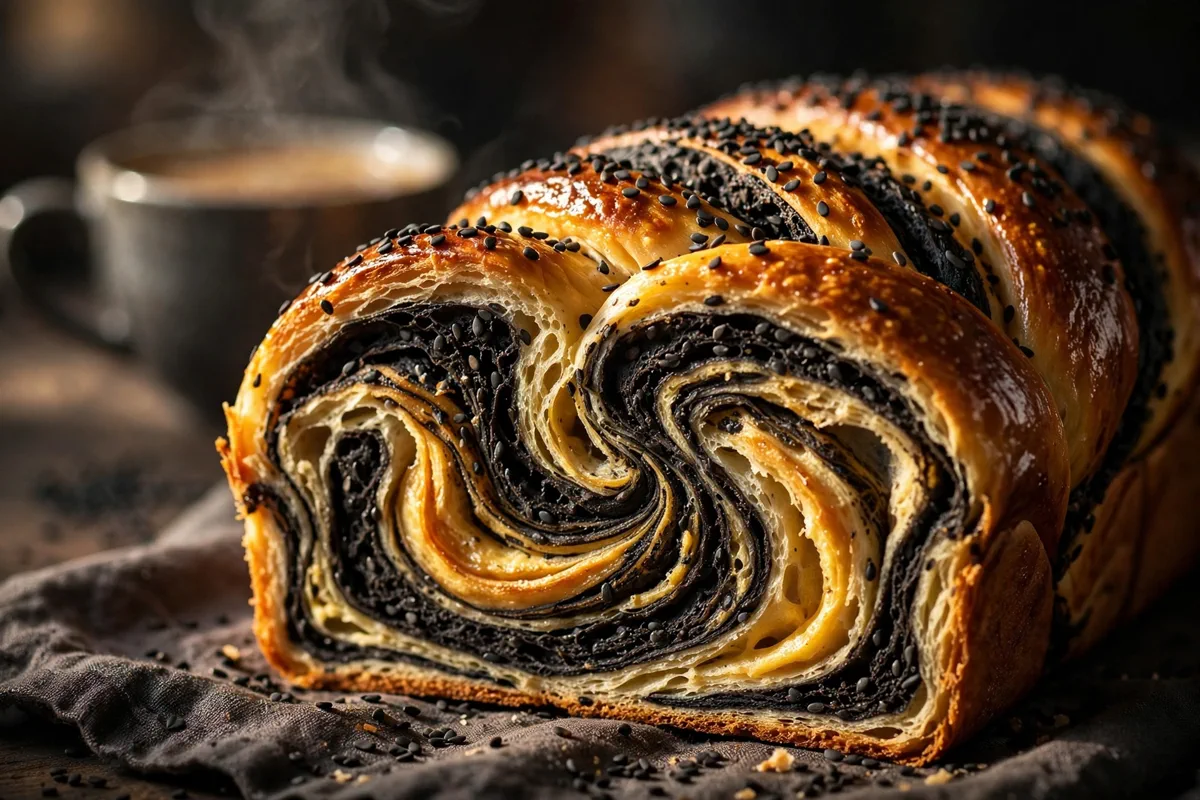
Marbled black sesame babka with a glossy golden crust and dramatic nutty swirls. The filling is toasty and barely sweet, and the loaf stays soft for days.
Marbled black sesame babka with a glossy golden crust and dramatic nutty swirls. The filling is toasty and barely sweet, and the loaf stays soft for days.
If you are looking for an ultra-satisfying, restaurant-quality meal that comes together with minimal effort, this Black Sesame Babka (Marbled Swirl Loaf) is about to become your new favorite. Everything is cooked to juicy, golden perfection with wholesome ingredients and incredible depth of flavor.
One simple tip!
Grind the toasted sesame seeds until they look like damp sand with a few coarser bits. If you grind to a paste it turns oily and the filling will squeeze out during the twist instead of staying in stripes.
Step-by-Step Photos
Why You’ll Love This Recipe
Quick & EffortlessReady in just 145 minutes total with straightforward, foolproof prep.
Packed with Deep FlavorCarefully balanced with all-purpose flour, granulated sugar, instant yeast for maximum satisfaction.
Family & Crowd FriendlyMakes undefined generous servings that can be effortlessly doubled or scaled using our smart scaler.
Made From ScratchReal ingredients and straightforward home cooking, with no shortcuts on flavor.
Ingredients Notes & Variations
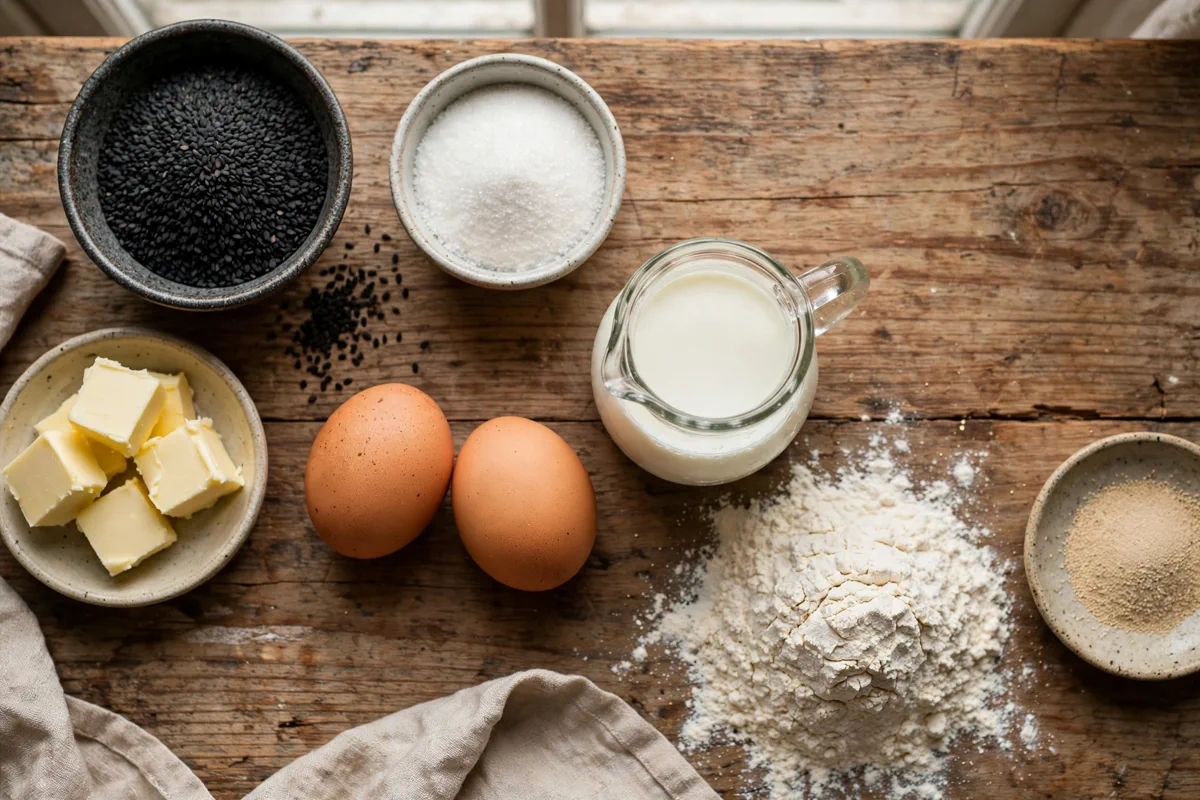
Here is an overview of what you will need for this recipe. Be sure to scroll down to the printable recipe card below for exact scaled measurements!
all-purpose flour
3.25 cupplus a little extra for dusting
granulated sugar
0.25 cupfor the dough
instant yeast
2.25 tspone standard packet
fine sea salt
1 tspfor the dough
large eggs
2 pieceroom temperature
whole milk
0.5 cupwarm, about 105-110°F
unsalted butter
6 tbspsoftened at room temperature, for the dough
black sesame seeds
0.75 cuptoasted in a dry pan until fragrant, then ground
granulated sugar
0.5 cupfor the filling
unsalted butter
4 tbspmelted, for the filling
fine sea salt
0.5 tspfor the filling; balances the sweetness
water
0.25 cupfor the syrup
granulated sugar
0.25 cupfor the syrup
sesame seeds
1 tbspblack or mixed, for sprinkling on top
How to Make (Step-by-Step Overview)
Here is a quick summary of the preparation process. Detailed cooking temperatures and step timers are included in the recipe card below.
Combine the flour, 1/4 cup sugar, yeast, and 1 tsp salt in the bowl of a stand mixer. Add the eggs and warm milk and mix on low with the dough hook until a shaggy mass forms, about 2 minutes.
With the mixer on medium-low, add the softened butter one tablespoon at a time, waiting until each piece disappears before adding the next. Knead until the dough is smooth, elastic, and pulls away from the sides of the bowl, 8 to 10 minutes. It will feel soft and slightly tacky.
Shape the dough into a ball, place it in a lightly oiled bowl, cover with plastic wrap or a damp towel, and let it rise in a warm spot until doubled in size, about 1 to 1.5 hours. It should hold a dent when poked.
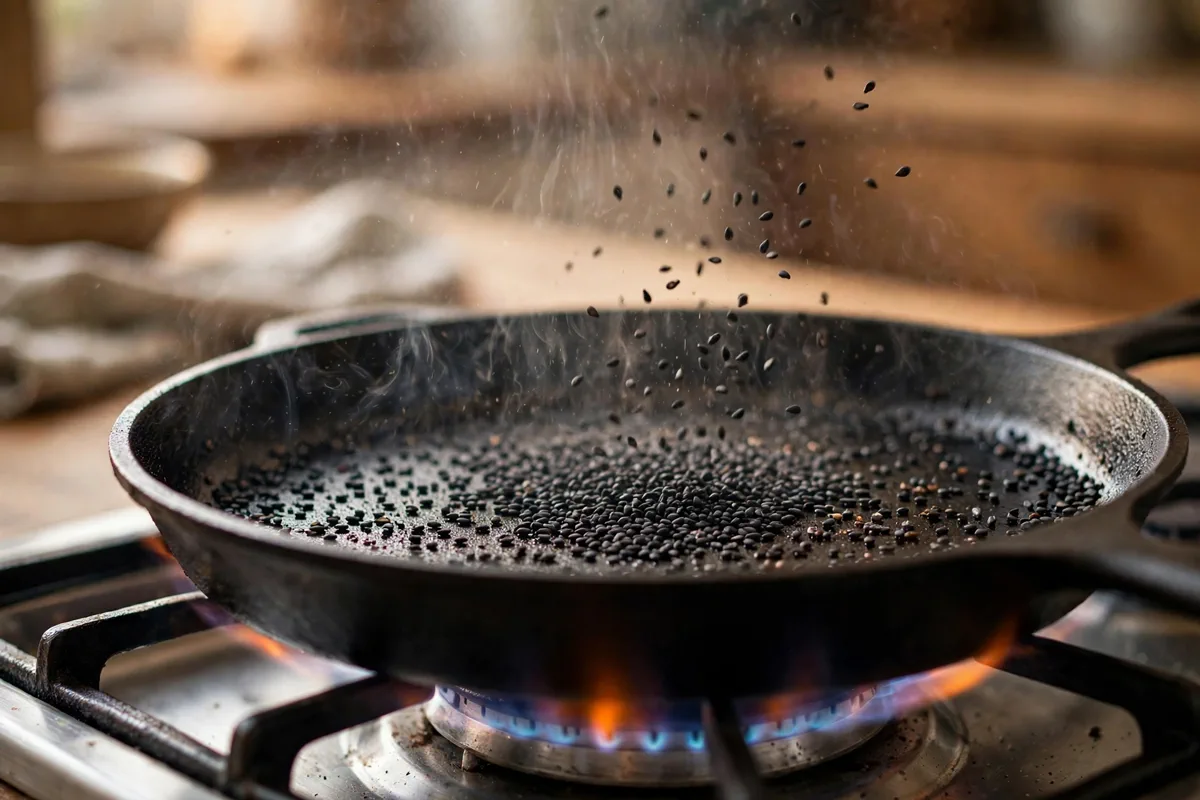
While the dough rises, toast the black sesame seeds in a dry skillet over medium heat, shaking the pan, until they smell nutty and a few start popping, 3 to 4 minutes. Let them cool for 5 minutes, then grind to damp-sand texture in a spice grinder or with a mortar and pestle.
Stir the ground sesame with the remaining 1/2 cup sugar, melted butter, and 1/2 tsp salt until it forms a thick, spreadable paste. It should spread like peanut butter, not run.
Grease a 9x5-inch loaf pan and line the long sides with a parchment sling. Punch the dough down and roll it on a lightly floured surface into a 12-by-16-inch rectangle, keeping the thickness even.
Spread the sesame paste over the dough in an even layer, stopping 1 inch short of the far short edge. Sprinkle with the topping sesame seeds if you like a speckled top.
Starting from the near short edge, roll the dough into a tight log, pinching the bare edge to seal. Place the log seam-side down and chill it for 10 minutes so it firms up.
With a sharp knife, slice the log in half lengthwise so the cut faces show the swirl layers. Lay the two halves cut-side up and twist them over each other like a rope, cut sides facing outward, then transfer the twisted loaf into the prepared pan, tucking the ends under.
Cover loosely and let rise until puffy and the dough springs back slowly when poked, about 45 minutes. Near the end of the rise, heat the oven to 350°F.
Bake until deeply golden and a skewer inserted in the center comes out with moist crumbs but no raw dough, 30 to 35 minutes. If the top darkens too fast, tent it loosely with foil for the last 10 minutes.
While the babka bakes, simmer the water and 1/4 cup sugar in a small pan until the sugar dissolves, about 3 minutes, then remove from heat. As soon as the loaf comes out of the oven, brush it generously with the hot syrup in two coats, listening for the sizzle.
Cool in the pan for 15 minutes, then lift out with the parchment sling and cool on a rack for at least 45 more minutes before slicing. The swirl sets as it cools.
Our Pro Tips for Success
- •Grind the toasted sesame seeds until they look like damp sand with a few coarser bits. If you grind to a paste it turns oily and the filling will squeeze out during the twist instead of staying in stripes.
- •Roll the dough out on a lightly floured surface to a true rectangle, about 12 by 16 inches. An even rectangle means the swirls distribute evenly instead of bunching at one end of the loaf.
- •Leave a 1-inch bare border on the far short edge when you spread the filling. That clean edge seals the log so the roll does not unspool in the oven.
- •Chill the cut log for 10 minutes before twisting if the dough feels soft and sticky. Cold dough twists neatly; warm dough smears and the swirl lines blur together.
- •Brush the syrup on while the loaf is still hot, two thin coats. You will hear it sizzle. The hot crust drinks the syrup in, which keeps the slices soft the next day.
Storage & Make-Ahead Instructions
Refrigerator:Store leftovers in an airtight container for up to 3 to 4 days.
Freezer:Freeze in freezer-safe containers or bags for up to 2 months. Thaw overnight in the fridge.
Reheating:Reheat gently in a 350°F oven or covered skillet with a splash of broth until heated through.
Interactive Kitchen Assistant Live Smart Scaler
Our Recipe Precision Calculators
Calculate exact roasting times, internal temperatures, brining ratios, and safe thaw windows.
2.5 lbs (1.13 kg)
Recommended Timing & Thermals
Est. Cook Time45 mins
Rest Period7 mins
Pull From Heat160°F (71°C)
Final Carryover165°F (74°C)
Insert meat thermometer into thickest center without touching bone for 100% juicy safety.
What black sesame babka tastes like
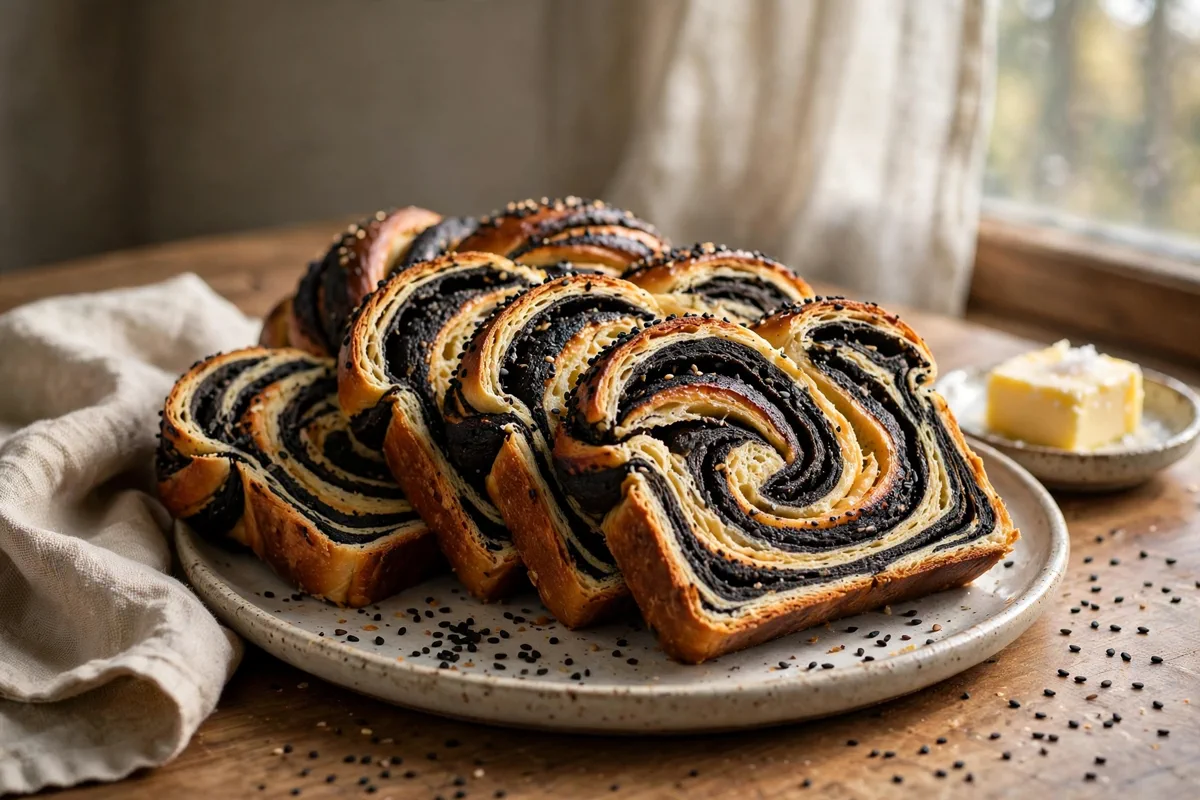
A babka is an enriched yeast loaf rolled around a filling, sliced, and twisted so the layers marble. This version fills it with ground toasted black sesame mixed with sugar and butter. The result is a golden loaf with bold black-and-gold swirls. The flavor is toasty and nutty with a faint bitterness that keeps the sweetness in check, like a sesame candy folded into soft bread.
Why the dough works the way it does
This dough is rich: eggs, butter, and milk make the crumb soft and slightly sweet. The trade-off is that rich doughs rise slowly, especially in a cool kitchen. Give it the full rise time. A doubled dough has enough structure to hold the heavy filling without collapsing, and it produces the open, springy crumb that makes each slice look lacy around the dark swirls.
Room-temperature ingredients matter more here than in lean breads. Cold eggs or milk slow the yeast and make the softened butter seize into lumps instead of blending in. Set the eggs and butter out when you start, and warm the milk to about 105 to 110 degrees, warm to the touch but not hot.
Grinding the sesame filling right
The filling is the whole point of this loaf, so it deserves care. Toast the seeds first in a dry pan until they smell like roasted nuts and a few pop. Toasting wakes up the oils and deepens the flavor; untoasted sesame tastes flat and grassy by comparison.
Grind to the texture of damp sand. A spice grinder does this in short pulses, and a mortar and pestle works if you have patience. Stop before the seeds release enough oil to turn into paste. Paste is too greasy and slides out of the roll during twisting, taking your swirl lines with it. Damp-sand texture stays put and bakes into distinct stripes.
Mix the ground sesame with sugar, melted butter, and salt. The salt is not optional here. Without it the filling reads one-note sweet, and with it the nuttiness comes forward. Taste a spoonful before you spread it. It should taste like a slightly under-sweetened sesame candy.
Rolling and twisting the marbled swirl
Roll the dough into a true rectangle, roughly 12 by 16 inches, with even thickness. If one end is thicker, the swirls bunch at that end and the loaf bakes unevenly. Take a minute with the rolling pin to square the corners.
Spread the filling evenly and leave the far short edge bare so you can seal the log. Roll firmly from the near edge. A loose roll makes gaps between the layers that open into tunnels during baking. A firm, even roll gives tight marbling.
The dramatic part is the cut-and-twist. Slice the chilled log lengthwise with a sharp knife so the layered interior shows, then lay the halves cut-side up and twist them over each other. Put the twisted loaf in the pan with the cut sides facing out. That is what creates the exposed marbled pattern on top instead of a plain golden crust.
How to tell when it is done
The loaf should be deeply golden, not pale. Pale babka is underbaked babka. A skewer pushed into the center should come out with moist crumbs clinging to it but no wet dough. If the top browns too quickly before the center sets, tent the pan loosely with foil for the final 10 minutes.
The syrup brushed on right out of the oven does two jobs. It gives the crust a glossy finish and it soaks in, keeping the crumb soft for days. Brush it on in two thin coats while the loaf is hot. You will hear it sizzle as it hits the crust.
Serving and gifting
This is a good loaf to bring somewhere. It travels well, it looks impressive without any extra decoration, and it feeds a crowd from one pan. Slice it at home so the marbled faces show. Arrange the slices cut-side up on a plate and people will photograph it before they eat it.
If your kitchen runs cold
Enriched doughs stall in cool kitchens, and a stalled babka bakes dense. If your kitchen is under 68 degrees, give the dough a warmer spot for its rises. A good trick is to put the covered bowl in the oven with just the light on, which usually holds around 75 to 80 degrees. Do not turn the oven on, even briefly, because the bowl will overheat. Check the dough by poking it. A ready dough holds the dent. An under-risen dough springs back right away, and an over-risen one deflates. The poke test is more reliable than the clock.
What goes wrong and how to prevent it
A soggy bottom usually means the filling was too wet or the loaf was underbaked. Make the paste thick enough to spread without running, and bake until the skewer test shows only moist crumbs. If the bottom still feels soft after slicing, put the slices cut-side down in a hot dry skillet for a minute or two. It crisps them and the flavor is better for it.
If the filling leaks out during baking, the log was probably not sealed or the twist was loose. Seal the bare edge firmly with a pinch, tuck the twisted ends under in the pan, and make sure the second rise does not go past the point where the dough springs back slowly when poked. A loaf that rises too long before baking has no strength left to hold its shape in the oven.
Storing and serving
Once fully cooled, wrap the loaf tightly in plastic wrap and keep it at room temperature for up to 3 days. The syrup glaze keeps it from drying out. For longer storage, slice and freeze the slices in a single layer, then move them to a freezer bag for up to 2 months. Warm frozen slices straight from the freezer in a 325-degree oven for about 8 minutes.
Serve slices at room temperature or lightly warmed. It is good plain, but a smear of salted butter on a warm slice is hard to beat.
Frequently Asked Questions
Yes, and it holds up well. Bake, cool completely, wrap the whole loaf tightly in two layers of plastic wrap, and freeze up to 2 months. Thaw at room temperature still wrapped, then warm slices in a 325°F oven for 5 minutes.
You can, but the flavor will be milder and less toasty. Black sesame is what gives this loaf its deep, nutty character and the dramatic dark swirl; white sesame reads more subtle and the color contrast disappears.
Easy Chicken Recipes • Official Card
Black Sesame Babka (Marbled Swirl Loaf)
☆☆☆☆☆0.0 (0 reviews)•Recipe by Cooking With Guru Editorial Team•Updated: Jan 15, 2025
Marbled black sesame babka with a glossy golden crust and dramatic nutty swirls. The filling is toasty and barely sweet, and the loaf stays soft for days.
Prep Time110 mins
Cook Time35 mins
Total Time145 mins
Adjust Servings:
4
Ingredients
Click to check off0 cup all-purpose flour(plus a little extra for dusting)
0 cup granulated sugar(for the dough)
0 tsp instant yeast(one standard packet)
0 tsp fine sea salt(for the dough)
NaN piece large eggs(room temperature)
0 cup whole milk(warm, about 105-110°F)
0 tbsp unsalted butter(softened at room temperature, for the dough)
0 cup black sesame seeds(toasted in a dry pan until fragrant, then ground)
0 cup granulated sugar(for the filling)
0 tbsp unsalted butter(melted, for the filling)
0 tsp fine sea salt(for the filling; balances the sweetness)
0 cup water(for the syrup)
0 cup granulated sugar(for the syrup)
0 tbsp sesame seeds(black or mixed, for sprinkling on top)
Equipment Needed
- stand mixer with dough hook (optional, hand-kneading works)
- 9x5-inch loaf pan
- rolling pin
- kitchen scale or measuring cups
- spice grinder or mortar and pestle
Instructions
Step-by-StepCombine the flour, 1/4 cup sugar, yeast, and 1 tsp salt in the bowl of a stand mixer. Add the eggs and warm milk and mix on low with the dough hook until a shaggy mass forms, about 2 minutes.
With the mixer on medium-low, add the softened butter one tablespoon at a time, waiting until each piece disappears before adding the next. Knead until the dough is smooth, elastic, and pulls away from the sides of the bowl, 8 to 10 minutes. It will feel soft and slightly tacky.
Shape the dough into a ball, place it in a lightly oiled bowl, cover with plastic wrap or a damp towel, and let it rise in a warm spot until doubled in size, about 1 to 1.5 hours. It should hold a dent when poked.
While the dough rises, toast the black sesame seeds in a dry skillet over medium heat, shaking the pan, until they smell nutty and a few start popping, 3 to 4 minutes. Let them cool for 5 minutes, then grind to damp-sand texture in a spice grinder or with a mortar and pestle.
Stir the ground sesame with the remaining 1/2 cup sugar, melted butter, and 1/2 tsp salt until it forms a thick, spreadable paste. It should spread like peanut butter, not run.
0Grease a 9x5-inch loaf pan and line the long sides with a parchment sling. Punch the dough down and roll it on a lightly floured surface into a 12-by-16-inch rectangle, keeping the thickness even.
0Spread the sesame paste over the dough in an even layer, stopping 1 inch short of the far short edge. Sprinkle with the topping sesame seeds if you like a speckled top.
0Starting from the near short edge, roll the dough into a tight log, pinching the bare edge to seal. Place the log seam-side down and chill it for 10 minutes so it firms up.
With a sharp knife, slice the log in half lengthwise so the cut faces show the swirl layers. Lay the two halves cut-side up and twist them over each other like a rope, cut sides facing outward, then transfer the twisted loaf into the prepared pan, tucking the ends under.
0Cover loosely and let rise until puffy and the dough springs back slowly when poked, about 45 minutes. Near the end of the rise, heat the oven to 350°F.
Bake until deeply golden and a skewer inserted in the center comes out with moist crumbs but no raw dough, 30 to 35 minutes. If the top darkens too fast, tent it loosely with foil for the last 10 minutes.
While the babka bakes, simmer the water and 1/4 cup sugar in a small pan until the sugar dissolves, about 3 minutes, then remove from heat. As soon as the loaf comes out of the oven, brush it generously with the hot syrup in two coats, listening for the sizzle.
Cool in the pan for 15 minutes, then lift out with the parchment sling and cool on a rack for at least 45 more minutes before slicing. The swirl sets as it cools.
CWG
Recipe Source
The Cooking With Guru Team
Our recipes are developed and checked by the Cooking With Guru team. Nutrition figures are estimates calculated from USDA data, and yields scale with the built-in portion tools so the recipe fits your kitchen.
More baking recipes to try!
🍽️
Turkish Menemen: One-Pan Eggs in Spicy Tomato Sauce
🍽️
High-Protein Cottage Cheese Egg Bake with Spinach
🍽️
Easy Chicken Congee Recipe with Crispy Garlic and Chili Oil
Comments & Questions (0)
Join the conversationNo comments yet!
Be the first to leave a comment or ask a question about Black Sesame Babka (Marbled Swirl Loaf).