🍽️
Prep time10 mins
Cook time15 mins
Ingredients8
dinnereasy
Miso Carbonara (No Cream, All Umami)
Published: Oct 15, 2026
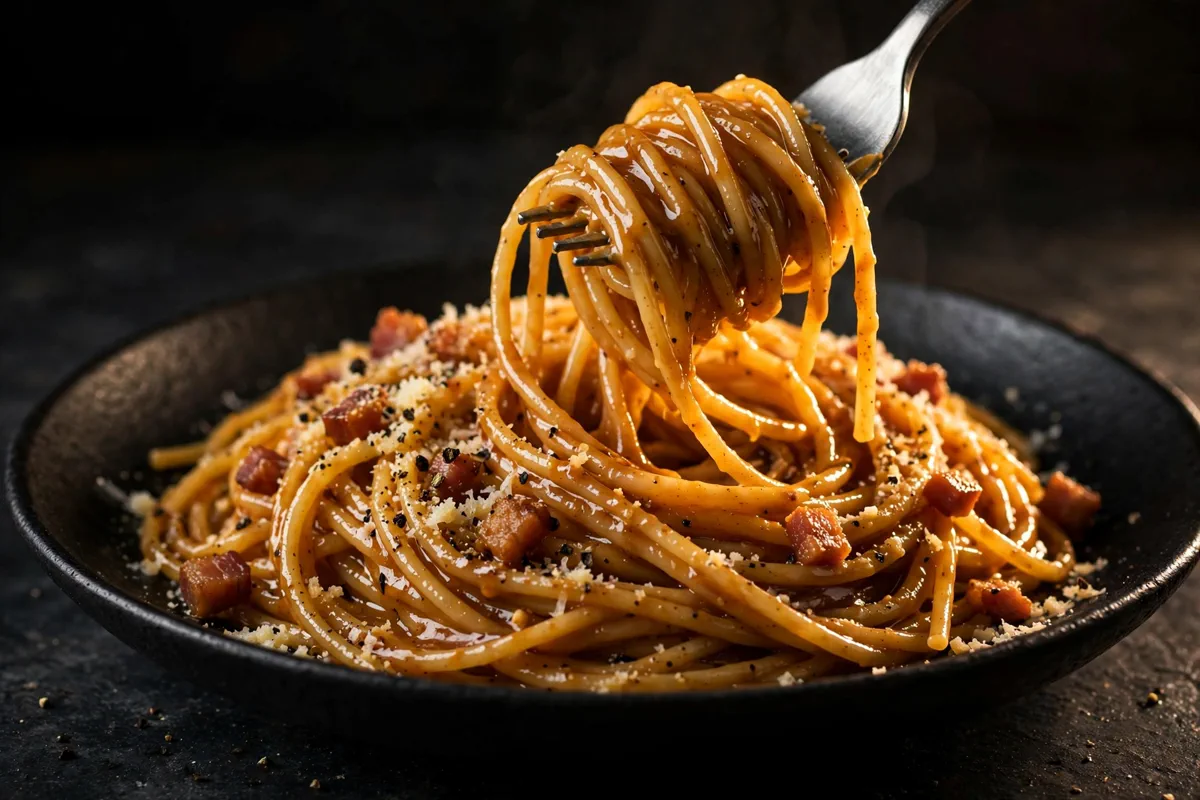
Classic carbonara with a spoonful of white miso whisked into the egg sauce — deeper, silkier, ready in 25 minutes.
Classic carbonara with a spoonful of white miso whisked into the egg sauce — deeper, silkier, ready in 25 minutes.
If you are looking for an ultra-satisfying, restaurant-quality meal that comes together with minimal effort, this Miso Carbonara (No Cream, All Umami) is about to become your new favorite. Everything is cooked to juicy, golden perfection with wholesome ingredients and incredible depth of flavor.
One simple tip!
Whisk the miso completely smooth with warm water before it meets the eggs. A surviving lump shows up in the finished sauce as a pale speck that tastes sharply of salt.
Step-by-Step Photos
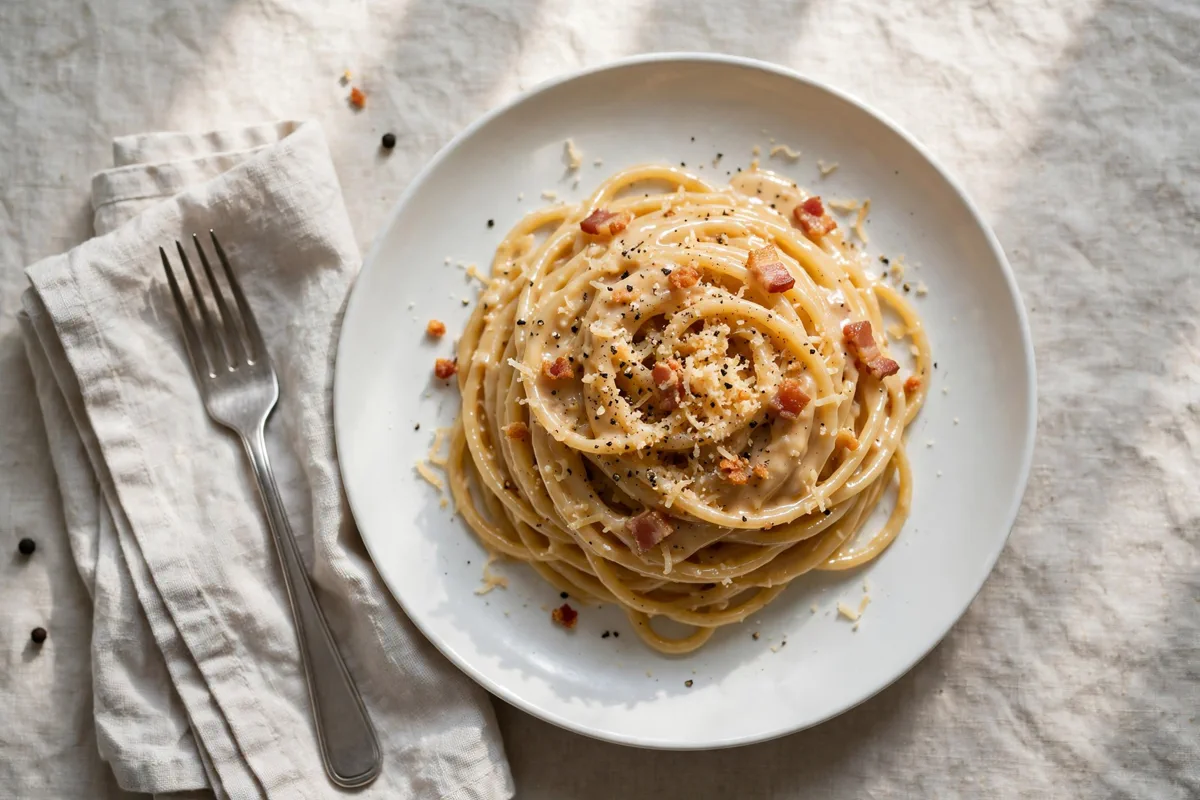
Why You’ll Love This Recipe
Quick & EffortlessReady in just 25 minutes total with straightforward, foolproof prep.
Packed with Deep FlavorCarefully balanced with spaghetti, thick-cut bacon, large eggs for maximum satisfaction.
Family & Crowd FriendlyMakes 2 generous servings that can be effortlessly doubled or scaled using our smart scaler.
Nutritious & High ProteinProvides 34g protein and only 760 calories per serving.
Ingredients Notes & Variations
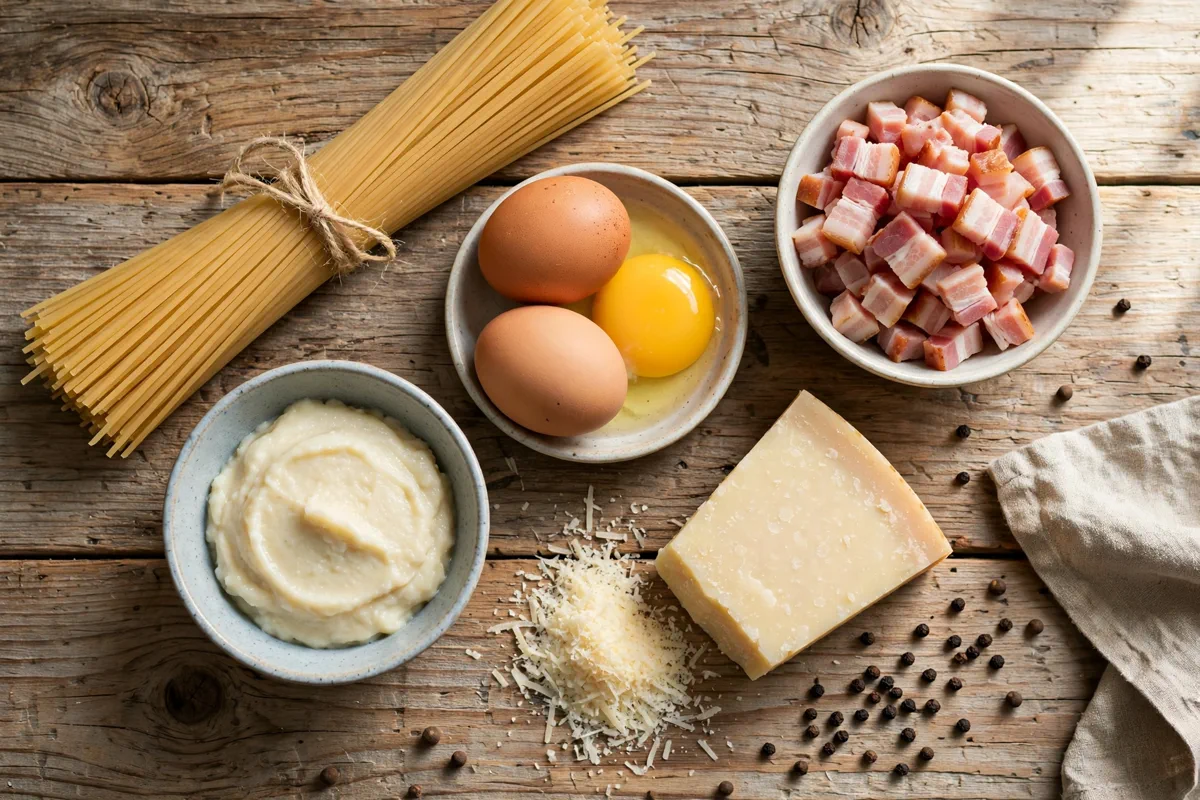
Here is an overview of what you will need for this recipe. Be sure to scroll down to the printable recipe card below for exact scaled measurements!
spaghetti
8 ozbucatini or rigatoni work too
thick-cut bacon
4 ozcut into small dice; pancetta or guanciale also work
large eggs
2 pieceroom temperature
large egg yolk
1 piecethe extra yolk makes the sauce silkier
white miso paste
1 tbspshiro miso, not red
freshly grated Parmigiano-Reggiano
0.5 cupplus more for serving
freshly cracked black pepper
1 tspplus more to finish
kosher salt
1 tbspfor the pasta water
How to Make (Step-by-Step Overview)
Here is a quick summary of the preparation process. Detailed cooking temperatures and step timers are included in the recipe card below.
1
Bring a large pot of water to a rolling boil and add the tablespoon of kosher salt. It should taste like the sea.
Look for: Big, vigorous bubbles across the whole surface of the pot, not a lazy simmer.
2
While the water heats, cut the bacon into small dice, about the size of a pea. Put it in a cold 12-inch skillet.
Look for: Even, pea-sized pieces so they render at the same rate.
3
Set the skillet over medium heat and cook the bacon, stirring now and then, until crisp and deeply golden with rendered fat in the pan.
Look for: The loud sizzle quiets down and the pieces turn crisp-edged and amber. Listen for the sound to calm before you move on.
4
While the bacon cooks, whisk the miso with a splash of warm water in a medium bowl until completely smooth, then whisk in the two eggs, the yolk, the grated Parmesan, and the black pepper until you have a thick paste.
Look for: No miso lumps when you drag the whisk across the bowl. The paste should look like thick pancake batter.
5
Take the bacon off the heat and leave it in its fat. When the pasta water is boiling, add the spaghetti and cook until one minute short of the package time.
Look for: The strand should still have a firm white core when you bite it. It finishes in the sauce.
6
Just before draining, scoop out one and a half cups of the starchy pasta water. Then drain the spaghetti.
Look for: The water looks cloudy and slightly golden. That starch is what thickens the sauce.
7
Tip the drained spaghetti into the skillet with the bacon. Toss it through the rendered fat for a full minute so the pan cools a little and steam escapes.
Look for: The pasta is hot to touch but the pan is no longer hissing aggressively.
8
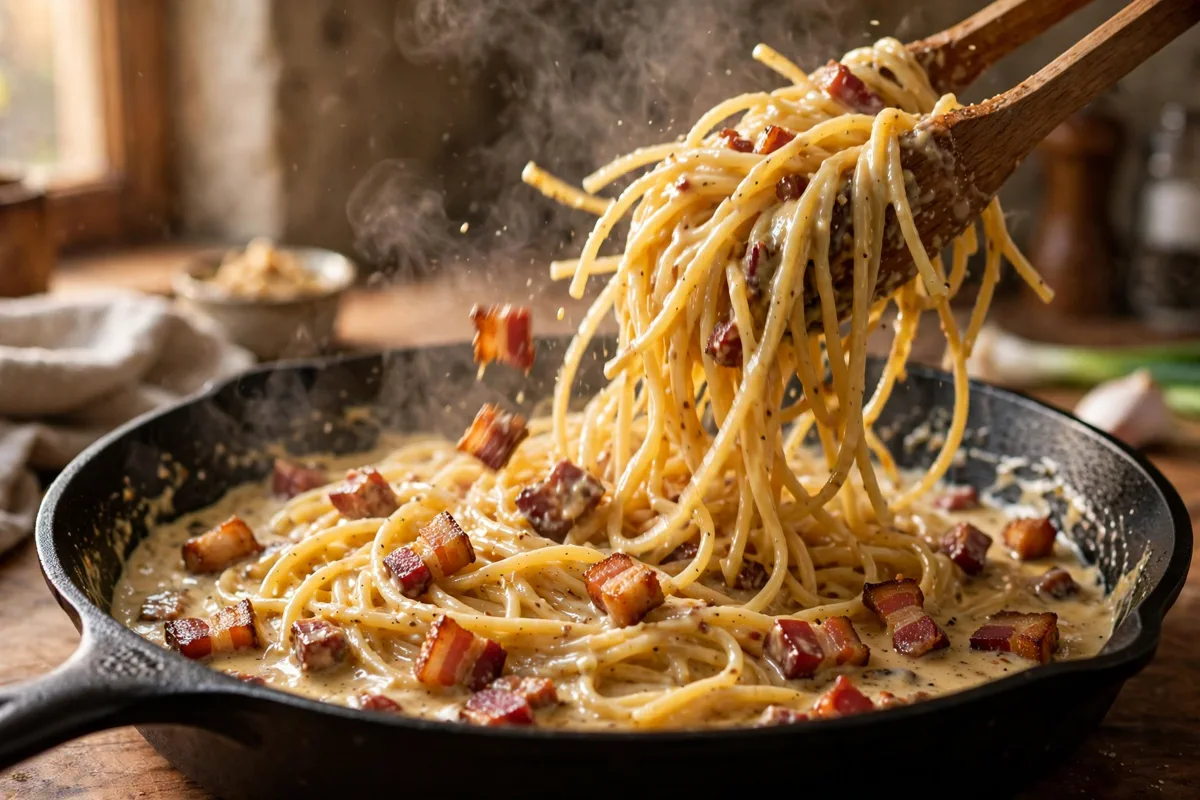
Pour the egg and miso mixture over the pasta and toss fast and constantly, adding pasta water a splash at a time, until every strand is coated in a glossy sauce.
Look for: The sauce goes from loose and pale to creamy and clinging over about a minute. Stop adding water when it just barely holds on the noodles.
9
Divide between two warm bowls and finish with more grated Parmesan and a hard crack of black pepper. Serve right away.
Look for: The sauce should shimmer and slowly settle, not pool at the bottom of the bowl.
Our Pro Tips for Success
- •Whisk the miso completely smooth with warm water before it meets the eggs. A surviving lump shows up in the finished sauce as a pale speck that tastes sharply of salt.
- •The pan must be off the heat and the pasta rested a full minute before the egg mixture goes in. That pause is the entire difference between silk and scrambled eggs.
- •Add pasta water a splash at a time and toss between splashes. You can always add more liquid, but you cannot take it back once the sauce goes soupy.
- •Grate the Parmesan from a wedge. Pre-grated cheese is coated to stop clumping, and that coating stops it melting smoothly into the sauce.
- •Serve in warm bowls. A cold bowl sucks the heat out of the sauce in under a minute and it tightens into a paste.
Storage & Make-Ahead Instructions
Refrigerator:Store leftovers in an airtight container for up to 3 to 4 days.
Freezer:Freeze in freezer-safe containers or bags for up to 2 months. Thaw overnight in the fridge.
Reheating:Reheat gently in a 350°F oven or covered skillet with a splash of broth until heated through.
Interactive Kitchen Assistant Live Smart Scaler
Our Recipe Precision Calculators
Calculate exact roasting times, internal temperatures, brining ratios, and safe thaw windows.
2.5 lbs (1.13 kg)
Recommended Timing & Thermals
Est. Cook Time45 mins
Rest Period7 mins
Pull From Heat160°F (71°C)
Final Carryover165°F (74°C)
Insert meat thermometer into thickest center without touching bone for 100% juicy safety.
Miso carbonara is classic Italian carbonara with one change: a tablespoon of white miso whisked into the egg-and-Parmesan sauce. The miso's fermented saltiness deepens the sauce the way extra Parmesan would, only rounder and more savory, and the technique stays the same: hot pasta tossed off the heat so the eggs turn silky instead of scrambling.
Why a Spoonful of Miso Changes the Whole Plate
Carbonara's flavor is really about salt. The pork brings salt, the Parmesan brings salt, and the black pepper adds heat against all that richness. Miso slides into that system naturally because it is already doing what Parmesan does, only through fermentation. White miso tastes mild, a little sweet, and deeply savory, which means it rounds out the sauce without announcing itself. Nobody eating this will think "this tastes like miso soup." They will think the carbonara tastes better than usual.
The trick is proportion. One tablespoon of white miso in a sauce for two servings is enough to notice and not enough to dominate. Go past that and the sauce starts tasting like a Japanese dish wearing an Italian costume, which is fun but no longer carbonara. The miso also lets you be a little more relaxed about the cheese. It covers small measurement wobbles, so if you under-grate the Parmesan by a spoonful, the dish still lands.
The Off-Heat Toss Is Everything
Carbonara has no cream in it. The sauce is made by heat alone: the residual warmth of the pasta melts the Parmesan and gently thickens the eggs into something that clings to every strand. That process has a ceiling. Leave the skillet over a burner while you toss and you will get breakfast, small yellow curds stuck to the pasta instead of a glossy coating. Take the pan off the heat first and you stay in control.
The waiting part is the part most recipes rush. After you drop the drained pasta into the skillet with the bacon, give it a full minute. Toss it around, let some steam escape, let the pan cool a little. The pasta should feel hot to touch but not violent. Then pour in the egg and miso mixture and toss fast and constantly. You are looking for a sauce that starts loose and tightens up over about a minute of tossing. Pasta water is your steering wheel. Add it a splash at a time, and stop when the sauce looks like it is just barely holding onto the noodles. It will firm up as it sits.
Pick the Right Miso, and Do Not Skip the Good Cheese
White miso, the pale golden kind labeled shiro, is the one for this dish. It is fermented for a shorter time than red miso, so it tastes sweeter and milder, and it dissolves into a sauce without streaks. Red miso would bulldoze the Parmesan and turn the whole thing brownish. Yellow miso works in a pinch but tastes a touch stronger, so cut it back to two teaspoons.
Miso is lumpy straight from the tub, so whisk it with a splash of warm water until it is completely smooth before it meets the eggs. Any surviving lump will show up in the finished sauce as a pale speck that tastes sharply of salt. The Parmesan matters too. A wedge you grate yourself melts into a sauce. The pre-grated kind in the green can or the bag is coated so the shreds do not clump, and that coating stops it melting smoothly, which is exactly how people end up with a grainy carbonara. Pecorino Romano is the Roman classic and makes a sharper, saltier sauce, so if you swap it in, cut the miso back by half a teaspoon.
When the Sauce Misbehaves
Scrambled eggs mean the pan was too hot when the egg mixture went in. It happens to everyone once. There is no true fix, but you can rescue the plate: toss the pasta with an extra splash of hot pasta water and a spoonful more Parmesan, and the starch and cheese will smooth over the texture. Next time, wait longer after draining. Clumpy sauce that looks pasty instead of glossy means too little liquid. Loosen it with pasta water one spoonful at a time, tossing between splashes, until it moves freely.
A sauce that pools at the bottom of the bowl means too much liquid or not enough tossing. Carbonara sauce tightens with motion. Toss for a full minute before deciding it needs more cheese. And if the whole dish tastes flat despite the miso, it is almost always underseasoned pasta water. The water should taste like the sea. That salt seasons every strand from the inside, and no amount of sauce fixes pasta that was cooked in bland water.
Sensible Swaps, Honest Trade-Offs
Guanciale is the traditional pork and it renders a peppery fat that is hard to beat, but it is a specialty-store purchase. Pancetta is the closest everyday swap and tastes nearly identical here. Bacon works too, but choose a thick-cut smoked bacon and know the smoke will peek through the miso. It is pleasant, just less Roman. Turkey bacon is the one swap we do not recommend. It does not render enough fat and the sauce ends up lean and dry.
Spaghetti is the classic shape, but bucatini holds the sauce beautifully because the sauce sneaks into the hollow center, and rigatoni's ridges grab it just as well. Avoid angel hair, which overcooks before the sauce is ready, and avoid any shape with a ruffled edge that traps the egg mixture in clumps. For a gluten-free version, a sturdy rice or corn-based spaghetti works, but rinse it briefly after draining. Gluten-free pasta releases extra surface starch that can turn the sauce gummy.
Leftovers, Reheated Right
Carbonara is a same-night dish, full stop. The egg sauce sets as it cools and reheating scrambles it into something closer to a frittata texture. That said, we have eaten plenty of leftover carbonara and it is still good if you treat it gently. Store it in an airtight container in the fridge for up to 2 days. To reheat, put it in a cold skillet with a spoonful of water, cover it, and warm it over the lowest heat your stove manages, tossing every couple of minutes. The water turns to steam, the steam loosens the sauce, and the low heat keeps the eggs from tightening further. The microwave works in a pinch at 50 percent power in 30-second bursts with a stir between each, but the texture will be a little grainy. Do not freeze it. Freezing ruins egg-thickened sauces completely.
Quick Answers Before You Cook
Do I really not need cream? Correct. Real carbonara never has cream. The sauce gets its richness from eggs, cheese, pork fat, and starchy pasta water. Cream actually dulls the miso's flavor, so skip it.
Can I use yellow or red miso? Yellow miso is fine at two teaspoons. Red miso is too strong and too dark for this dish, and it will turn the sauce an unappetizing tan color.
Why are my eggs scrambling? The pan or pasta was too hot when the egg mixture went in, or you stopped tossing. Wait a full minute after draining, pour the eggs over while tossing, and keep the pasta moving for the whole minute.
Frequently Asked Questions
No. One tablespoon of white miso adds savory depth without a distinct miso flavor. It tastes like a better carbonara, not a Japanese dish.
Yes, but the sauce needs the rendered fat. Brown sliced mushrooms in butter until crisp and use them in place of the bacon, adding an extra tablespoon of butter to the pan for the tossing step.
Easy Chicken Recipes • Official Card
Miso Carbonara (No Cream, All Umami)
☆☆☆☆☆0.0 (0 reviews)•Recipe by Cooking With Guru Editorial Team•Updated: Oct 15, 2026
Classic carbonara with a spoonful of white miso whisked into the egg sauce — deeper, silkier, ready in 25 minutes.
Prep Time10 mins
Cook Time15 mins
Total Time25 mins
Calories760 kcal
Adjust Servings:
2
Ingredients
Click to check off8 oz spaghetti(bucatini or rigatoni work too)
4 oz thick-cut bacon(cut into small dice; pancetta or guanciale also work)
2 piece large eggs(room temperature)
1 piece large egg yolk(the extra yolk makes the sauce silkier)
1 tbsp white miso paste(shiro miso, not red)
1/2 cup freshly grated Parmigiano-Reggiano(plus more for serving)
1 tsp freshly cracked black pepper(plus more to finish)
1 tbsp kosher salt(for the pasta water)
Equipment Needed
- large pot
- 12-inch skillet
- medium mixing bowl
- whisk
- measuring cup
Instructions
Step-by-StepBring a large pot of water to a rolling boil and add the tablespoon of kosher salt. It should taste like the sea.
While the water heats, cut the bacon into small dice, about the size of a pea. Put it in a cold 12-inch skillet.
Set the skillet over medium heat and cook the bacon, stirring now and then, until crisp and deeply golden with rendered fat in the pan.
While the bacon cooks, whisk the miso with a splash of warm water in a medium bowl until completely smooth, then whisk in the two eggs, the yolk, the grated Parmesan, and the black pepper until you have a thick paste.
Take the bacon off the heat and leave it in its fat. When the pasta water is boiling, add the spaghetti and cook until one minute short of the package time.
Just before draining, scoop out one and a half cups of the starchy pasta water. Then drain the spaghetti.
Tip the drained spaghetti into the skillet with the bacon. Toss it through the rendered fat for a full minute so the pan cools a little and steam escapes.
Pour the egg and miso mixture over the pasta and toss fast and constantly, adding pasta water a splash at a time, until every strand is coated in a glossy sauce.
Divide between two warm bowls and finish with more grated Parmesan and a hard crack of black pepper. Serve right away.
Nutrition Facts (per serving)
Calories760 kcal
Protein34g
Carbs88g
Fat32g
Fiber4g
Sugar3g
Sodium1150mg
CWG
Recipe Source
The Cooking With Guru Team
Our recipes are developed and checked by the Cooking With Guru team. Nutrition figures are estimates calculated from USDA data, and yields scale with the built-in portion tools so the recipe fits your kitchen.
More dinner recipes to try!
🍽️
Turkish Menemen: One-Pan Eggs in Spicy Tomato Sauce
🍽️
High-Protein Cottage Cheese Egg Bake with Spinach
🍽️
Easy Chicken Congee Recipe with Crispy Garlic and Chili Oil
Comments & Questions (0)
Join the conversationNo comments yet!
Be the first to leave a comment or ask a question about Miso Carbonara (No Cream, All Umami).