Baked Mac and Cheese With the Crunchiest Cheese Crust
Published: Jan 15, 2025
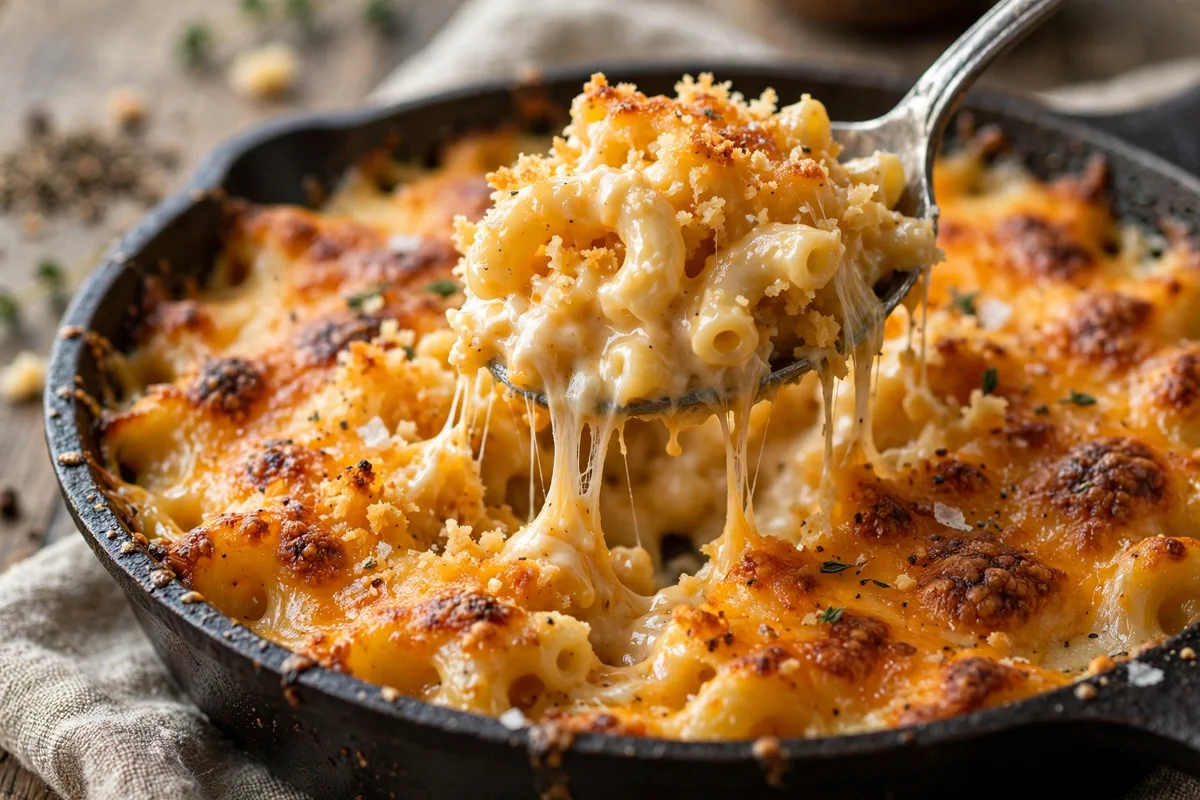
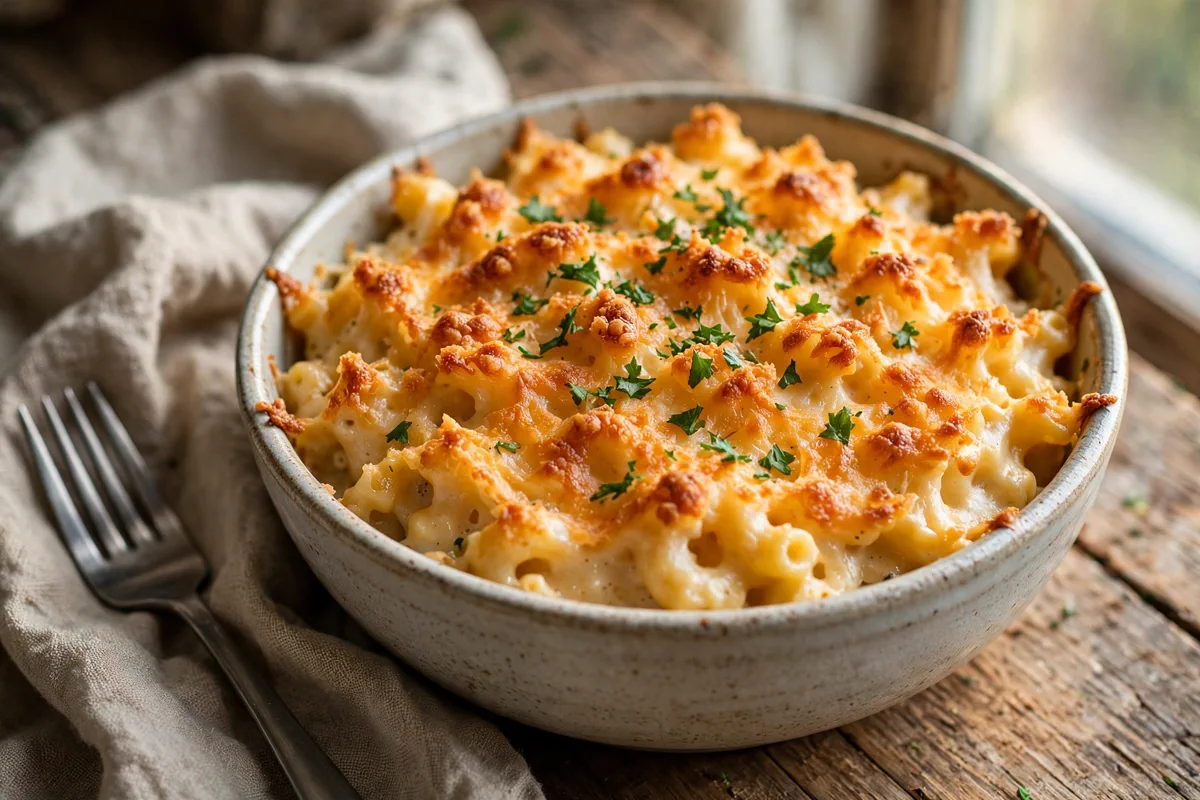
Baked mac and cheese with a deep golden, crunchy cheese crust and a creamy cheddar sauce — the side dish that disappears first at holiday tables.
Baked mac and cheese with a deep golden, crunchy cheese crust and a creamy cheddar sauce — the side dish that disappears first at holiday tables.
If you are looking for an ultra-satisfying, restaurant-quality meal that comes together with minimal effort, this Baked Mac and Cheese With the Crunchiest Cheese Crust is about to become your new favorite. Everything is cooked to juicy, golden perfection with wholesome ingredients and incredible depth of flavor.
One simple tip!
Shred the cheese from blocks. Bagged shredded cheese is coated in starch, and that starch is the most common reason a cheese sauce turns grainy.
Step-by-Step Photos
Why You’ll Love This Recipe
Ingredients Notes & Variations
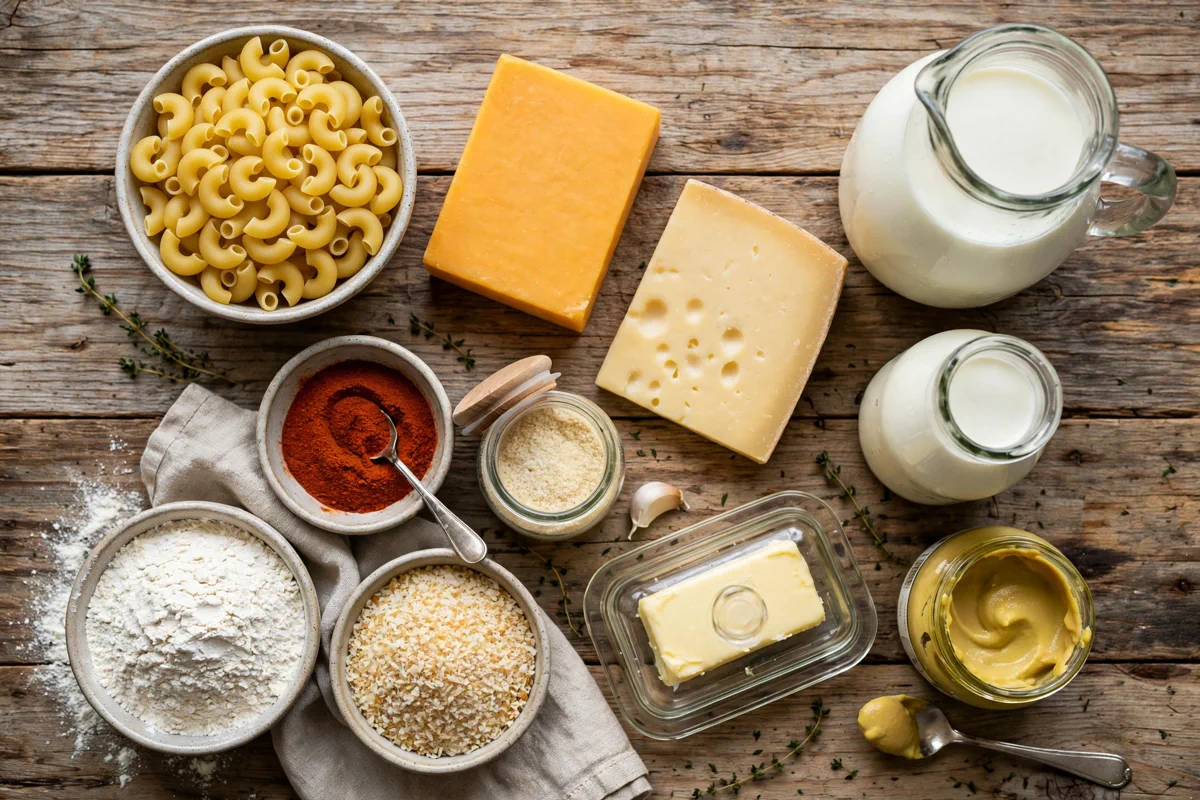
Here is an overview of what you will need for this recipe. Be sure to scroll down to the printable recipe card below for exact scaled measurements!
Elbow macaroni
450 guncooked
Unsalted butter
85 gdivided — 60 g for the sauce, 25 g melted for the breadcrumb topping
All-purpose flour
60 gWhole milk
720 mlHeavy cream
240 mlSharp cheddar cheese
340 gshredded from a block, divided — most for the sauce, 60 g for the top
Gruyère cheese
170 gshredded from a block, for the sauce
Parmesan cheese
50 gfinely grated, for the breadcrumb topping
Dijon mustard
1 tbspGarlic powder
1 tspSmoked paprika
1 tspFine sea salt
1 tspplus more for the pasta water
Black pepper
0.5 tspfreshly ground
Cayenne pepper
1 pinchPanko breadcrumbs
80 gfor the crunchy topping
How to Make (Step-by-Step Overview)
Here is a quick summary of the preparation process. Detailed cooking temperatures and step timers are included in the recipe card below.
Heat the oven to 190°C (375°F). Butter a cast iron dish or a 23 by 33 cm (9 by 13 inch) baking dish.
Bring a large pot of well-salted water to a rolling boil. Cook the macaroni for 2 minutes less than the package time, then drain. Do not rinse it — the starch on the surface helps the sauce cling.
While the pasta cooks, melt 60 g of the butter in a large saucepan over medium heat. Whisk in the flour and cook for 1 minute, stirring the whole time, until it smells nutty and looks like wet sand.
Pour in the milk and cream in a slow stream, whisking constantly so no lumps form. Let the sauce simmer gently for 3 to 4 minutes, stirring often, until it thickens enough to coat the back of a spoon.
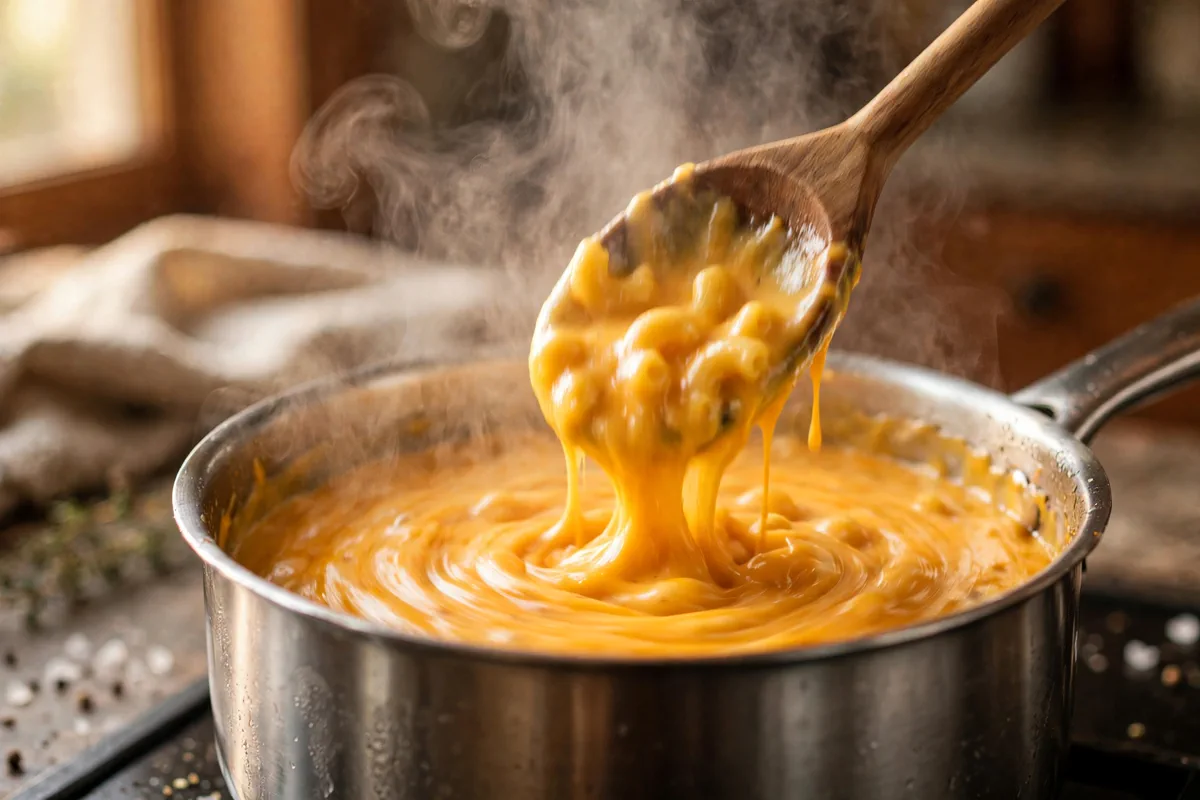
Take the pan off the heat. Add the cheddar and Gruyère a handful at a time, stirring until each handful melts before adding the next. The sauce should look glossy and pour in a slow, thick ribbon.
Stir in the Dijon mustard, garlic powder, smoked paprika, salt, pepper, and cayenne. Taste the sauce — it should taste a little saltier than you expect, since the pasta will soak up seasoning as it bakes.
Fold the drained pasta into the warm sauce and stir until every piece is coated.
Pour the macaroni into the buttered dish and level the top with the back of a spoon.
Toss the panko, Parmesan, and the remaining melted butter together in a small bowl. Scatter the reserved cheddar over the pasta, then sprinkle the buttered crumbs evenly over the top. Press them down very lightly so they sit on the cheese instead of sinking into the sauce.
Bake uncovered for 25 to 30 minutes, until the sauce bubbles at the edges and the top is deep golden brown with darker spots where the cheese caught the heat. If the top browns too fast, lay foil loosely over the dish for the last 5 minutes.
Let the dish rest for 10 minutes before serving so the sauce sets and each scoop holds its shape.
Our Pro Tips for Success
- •Shred the cheese from blocks. Bagged shredded cheese is coated in starch, and that starch is the most common reason a cheese sauce turns grainy.
- •Take the pot off the heat before the cheese goes in. Above 80°C (175°F) the cheese proteins tighten and the sauce turns gritty.
- •Undercook the pasta by two minutes. It finishes cooking in the oven, and fully cooked pasta bakes into mush.
- •The sauce should look a little too thin when it goes into the dish. The pasta absorbs liquid as it bakes, and a sauce that starts thick turns dry.
- •Let it rest for 10 minutes after baking. The sauce sets, the servings hold their shape, and the crust firms up so it cracks instead of sliding.
Storage & Make-Ahead Instructions
Our Recipe Precision Calculators
Calculate exact roasting times, internal temperatures, brining ratios, and safe thaw windows.
What Baked Mac and Cheese Actually Is
Baked mac and cheese is elbow macaroni folded into a thick cheddar cheese sauce, topped with more cheese and buttered breadcrumbs, and baked in a cast iron dish until the top turns deep golden and crisp. The inside stays creamy and soft while the top layer bakes into a crust you can hear crack when a spoon breaks through it. This version leans on sharp cheddar for flavour, Gruyère for melt, and a thin layer of Parmesan and panko on top for the crunch. It is the side dish that disappears first at a holiday table, and it works just as well on a regular Tuesday.
The trick to this recipe is treating the sauce and the topping as two separate jobs. The sauce needs to stay smooth, which means the cheese goes in off the heat and the pasta goes in slightly undercooked. The topping needs to stay dry until it hits the oven, which means the breadcrumbs get tossed with melted butter and go on last. Get those two things right and the rest is simple: a hot oven, a cast iron dish, and about half an hour.
Why the Crust Turns Out Crunchy
A crunchy top is not one ingredient doing the work. It is three layers stacked in the right order. The first layer is the sauce itself, which thickens and sets around the pasta as it bakes. The second is a handful of shredded cheddar scattered over the top, which melts and then firms into a golden skin. The third is the panko and Parmesan, tossed with melted butter so every crumb toasts instead of steaming. Together they bake into a crust that holds its shape when you scoop it.
The cast iron dish helps. Cast iron holds heat and pushes it into the edges of the pasta, so the sides and top brown while the centre stays soft. A glass baking dish works too — just add five minutes to the bake. The colour you want is deep gold with a few darker spots at the edges — pale gold means it needs more time.
One more thing matters: do not cover the dish. Foil traps steam, and steam is the enemy of a crisp top. The pasta is already cooked and the sauce is already hot, so the bake is about browning and setting. An uncovered dish lets moisture escape so the top dries out and crisps. If the top browns too fast, lay foil over it for the last five minutes, but start uncovered.
The Sauce, Step by Step
The sauce starts as a roux: equal parts butter and flour, cooked together for about a minute until it smells nutty and looks like wet sand. That minute matters. Raw flour tastes pasty, and a roux that is cooked too long turns dark and loses its thickening power. One minute, stirring the whole time, then the milk and cream go in a slow stream while you whisk. The sauce will look thin at first, then thicken as it simmers. Give it three to four minutes on a gentle simmer, stirring so it does not catch on the bottom. You are looking for a sauce that coats the back of a spoon and leaves a clean line when you run your finger through it.
Then take the pot off the heat. This is the step most people rush, and it is the one that decides whether the sauce turns out smooth or grainy. Cheese melts best between 70 and 80°C (160 and 175°F). Above that, the proteins tighten and squeeze out fat, and the sauce turns gritty. Off the heat, add the cheddar and Gruyère a handful at a time, stirring until each handful disappears before adding the next. The sauce should look glossy and pour in a slow, thick ribbon. Stir in the mustard, garlic powder, smoked paprika, salt, and pepper last. Taste it before the pasta goes in; it should taste a little saltier than you expect, since the pasta soaks up seasoning as it bakes.
Cooking the Pasta Right
Boil the macaroni in a big pot of well-salted water, and pull it out two minutes before the package time says it is done. The pasta finishes cooking in the oven, in the sauce. If you cook it fully on the stove, it bakes into soft, swollen pieces that fall apart when you serve them. Undercooking by two minutes is the whole secret here. Drain it, but do not rinse it. The starch on the surface helps the sauce cling.
Fold the hot pasta straight into the warm sauce. The heat of the pasta keeps the sauce loose while you mix, and the sauce coats every piece. Pour it into the buttered cast iron dish and level the top with the back of a spoon. Then scatter the reserved cheddar over the surface, followed by the panko and Parmesan mixed with melted butter. Press the crumbs down very lightly so they sit on the cheese instead of sinking into the sauce.
Baking and the Rest
Bake at 190°C (375°F) for 25 to 30 minutes, until the sauce bubbles at the edges and the top is deep golden brown with darker spots where the cheese caught the heat. If the top is browning too fast, lay a sheet of foil loosely over the dish for the last few minutes. You want the edges bubbling — that is the sign the sauce has heated all the way through and the pasta has finished cooking.
Let it rest for 10 minutes before serving. Straight from the oven, the sauce is loose and runny, and the first scoop slides apart. Ten minutes lets the sauce set so each serving holds its shape, and the crust firms up so the spoon cracks through it. The dish is still hot after ten minutes, just not molten.
What Goes Wrong and How to Fix It
A grainy sauce almost always means the cheese went in while the pot was too hot, or the cheese was pre-shredded. Bagged shredded cheese is coated in starch to keep it from clumping, and that starch makes the sauce gritty. Buy blocks and shred them yourself. If the sauce has already turned grainy, a splash of warm cream and a good whisk sometimes brings it back, but prevention is easier than repair.
Dry mac and cheese usually means the sauce was too thick before it went into the oven, or the pasta soaked up too much liquid while baking. The sauce should look loose when you pour it into the dish — a little thinner than you think it should be. If it already looks thick in the pot, stir in a splash of milk before adding the pasta. A soggy topping means the breadcrumbs went on too early or the dish was covered. Toss the crumbs with the melted butter right before they go on, and bake uncovered.
Swaps That Actually Work
Gruyère can be swapped for fontina or low-moisture mozzarella. Both melt smoothly, though mozzarella is milder, so add an extra pinch of mustard to keep the flavour sharp. If you only have cheddar, use all cheddar — it will still be good, just a little less complex. Do not use pre-shredded cheese for the sauce. It is the one swap that consistently makes the sauce grainy.
For a gluten-free version, use gluten-free elbow pasta and the same weight of gluten-free flour blend in the roux. Cook the pasta one minute less than the package says, since gluten-free pasta softens faster in the oven. For a lighter version, skip the cream and use all milk, simmering the sauce an extra minute before adding the cheese.
Storing and Reheating
Leftovers keep in the fridge for 3 to 4 days in a sealed container, or in the baking dish covered tightly with foil. To reheat, add a splash of milk to the portion, cover with foil, and warm at 175°C (350°F) for 15 to 20 minutes until hot in the centre. For the crispiest result, reheat a single serving uncovered for the last five minutes. A single portion reheats in the microwave for 90 seconds, but the topping goes soft. Freeze portions in sealed containers for up to 2 months and reheat from frozen at 175°C (350°F) for 25 to 30 minutes, covered, then uncovered for the last five minutes.
When to Make It
This is a holiday-table dish, and it earns that spot. But it also works as a weeknight main when you want something warm and filling without a lot of work. The whole thing takes about an hour and feeds eight. Make it the day before a big dinner if you like: assemble it, cover it, and refrigerate, then bake it straight from the fridge, adding ten minutes to the time. The crust goes on just before baking so it stays crisp.
Frequently Asked Questions
Yes, you can assemble it up to a day ahead. Build the pasta and sauce in the dish, cover it tightly, and refrigerate — but leave the breadcrumb topping off until you are ready to bake. Add the topping just before it goes in the oven and add 10 minutes to the bake time.
Usually the cheese went in while the pot was still too hot, or the cheese was pre-shredded. Take the pot off the heat before adding cheese, and shred blocks yourself — bagged shredded cheese is coated in starch that makes the sauce gritty.
Baked Mac and Cheese With the Crunchiest Cheese Crust
Baked mac and cheese with a deep golden, crunchy cheese crust and a creamy cheddar sauce — the side dish that disappears first at holiday tables.
Ingredients
Click to check offInstructions
Step-by-StepHeat the oven to 190°C (375°F). Butter a cast iron dish or a 23 by 33 cm (9 by 13 inch) baking dish.
0Bring a large pot of well-salted water to a rolling boil. Cook the macaroni for 2 minutes less than the package time, then drain. Do not rinse it — the starch on the surface helps the sauce cling.
While the pasta cooks, melt 60 g of the butter in a large saucepan over medium heat. Whisk in the flour and cook for 1 minute, stirring the whole time, until it smells nutty and looks like wet sand.
Pour in the milk and cream in a slow stream, whisking constantly so no lumps form. Let the sauce simmer gently for 3 to 4 minutes, stirring often, until it thickens enough to coat the back of a spoon.
Take the pan off the heat. Add the cheddar and Gruyère a handful at a time, stirring until each handful melts before adding the next. The sauce should look glossy and pour in a slow, thick ribbon.
0Stir in the Dijon mustard, garlic powder, smoked paprika, salt, pepper, and cayenne. Taste the sauce — it should taste a little saltier than you expect, since the pasta will soak up seasoning as it bakes.
0Fold the drained pasta into the warm sauce and stir until every piece is coated.
0Pour the macaroni into the buttered dish and level the top with the back of a spoon.
0Toss the panko, Parmesan, and the remaining melted butter together in a small bowl. Scatter the reserved cheddar over the pasta, then sprinkle the buttered crumbs evenly over the top. Press them down very lightly so they sit on the cheese instead of sinking into the sauce.
0Bake uncovered for 25 to 30 minutes, until the sauce bubbles at the edges and the top is deep golden brown with darker spots where the cheese caught the heat. If the top browns too fast, lay foil loosely over the dish for the last 5 minutes.
Let the dish rest for 10 minutes before serving so the sauce sets and each scoop holds its shape.
The Cooking With Guru Team
Our recipes are developed and checked by the Cooking With Guru team. Nutrition figures are estimates calculated from USDA data, and yields scale with the built-in portion tools so the recipe fits your kitchen.
More dinner recipes to try!
Comments & Questions (0)
Join the conversationNo comments yet!
Be the first to leave a comment or ask a question about Baked Mac and Cheese With the Crunchiest Cheese Crust.
You May Also Like
Korean Cream Cheese Garlic Bread (Street-Food Style)
Cheddar Herb Shortbread
Christmas Morning Breakfast Casserole
Holiday Charcuterie Board
One-Pan Kielbasa with Apples and Cabbage (Fall Skillet)
Cranberry Orange Chicken Thighs
Maple Roasted Brussels Sprouts with Bacon