🍽️
Prep time5 mins
Cook time0 mins
Ingredients5
beverage
Iced Matcha Tonic (3 Ingredients)
Published: Jan 15, 2025
Sparkling tonic water meets frothy ceremonial matcha over ice for a layered, bracing green tea cooler. Ready in 5 minutes flat.
Sparkling tonic water meets frothy ceremonial matcha over ice for a layered, bracing green tea cooler. Ready in 5 minutes flat.
If you are looking for an ultra-satisfying, restaurant-quality meal that comes together with minimal effort, this Iced Matcha Tonic (3 Ingredients) is about to become your new favorite. Everything is cooked to juicy, golden perfection with wholesome ingredients and incredible depth of flavor.
One simple tip!
Matcha grade decides the drink. Ceremonial grade tastes smooth and sweet; culinary grade tastes sharper and a little bitter because there is no milk or sugar to hide behind.
Step-by-Step Photos
Why You’ll Love This Recipe
Quick & EffortlessReady in just 5 minutes total with straightforward, foolproof prep.
Packed with Deep FlavorCarefully balanced with ceremonial-grade matcha powder, warm water, tonic water for maximum satisfaction.
Family & Crowd FriendlyMakes 1 generous servings that can be effortlessly doubled or scaled using our smart scaler.
Made From ScratchReal ingredients and straightforward home cooking, with no shortcuts on flavor.
Ingredients Notes & Variations
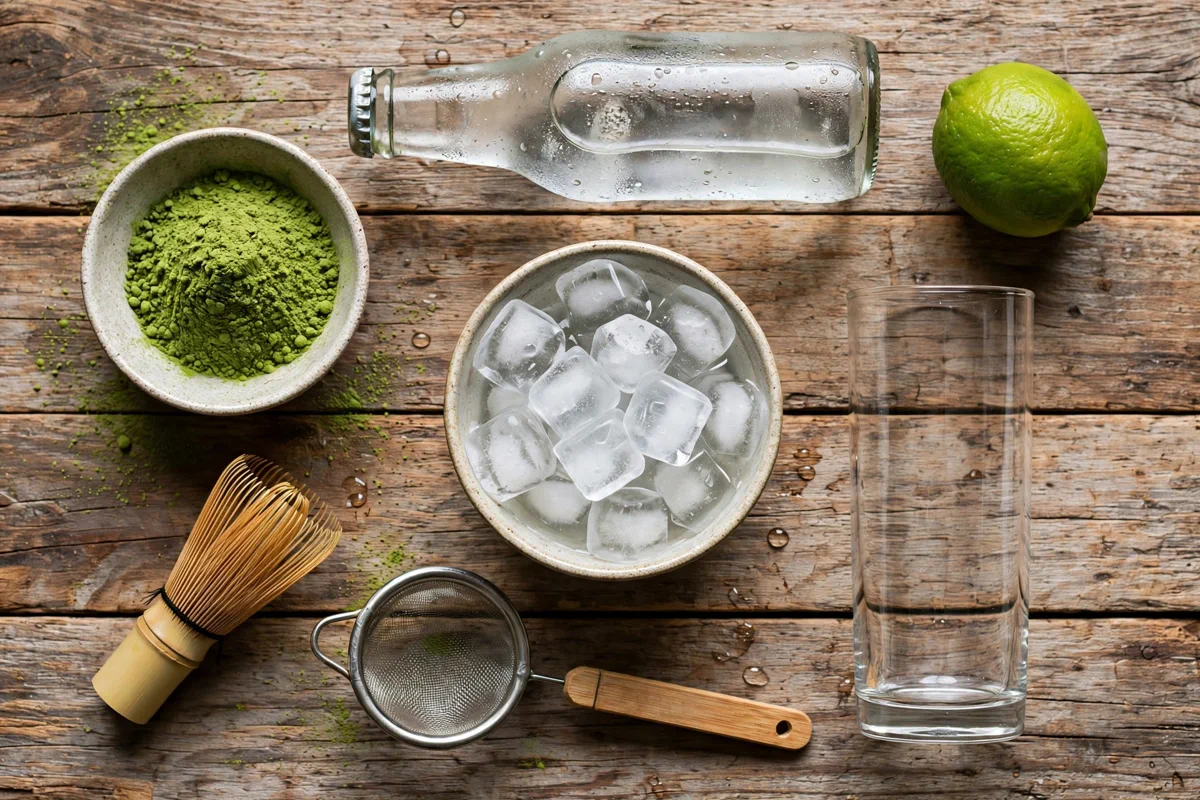
Here is an overview of what you will need for this recipe. Be sure to scroll down to the printable recipe card below for exact scaled measurements!
ceremonial-grade matcha powder
1 tspsifted; about 2 g
warm water
2 tbspabout 175°F / 80°C, not boiling
tonic water
1 cupwell chilled; 8 fl oz
ice cubes
1.5 cuplarge cubes melt slower
lime
0.5 piececut into a wheel, for garnish
How to Make (Step-by-Step Overview)
Here is a quick summary of the preparation process. Detailed cooking temperatures and step timers are included in the recipe card below.
1
Sift 1 teaspoon of matcha through a small fine-mesh sieve into a bowl or wide mug. Tap the sieve to break up any clumps. Dry clumps will not dissolve once they are wet, no matter how hard you whisk.
2
Add 2 tablespoons of warm water, about 175°F / 80°C. It should steam lightly, not bubble. Boiling water makes matcha bitter.
3
Whisk in a quick zigzag motion, like drawing a W or M, for about 25 seconds. The matcha should look frothy with fine bubbles on top and no streaks of dry powder on the sides of the bowl.
4
Fill a tall 12-ounce glass all the way to the rim with ice cubes. A full glass keeps the tonic cold and slows the layers from mixing too fast.
5
Pour 1 cup of cold tonic water slowly down the inside of the glass over the ice. You should hear a sharp hiss of fizz.
6
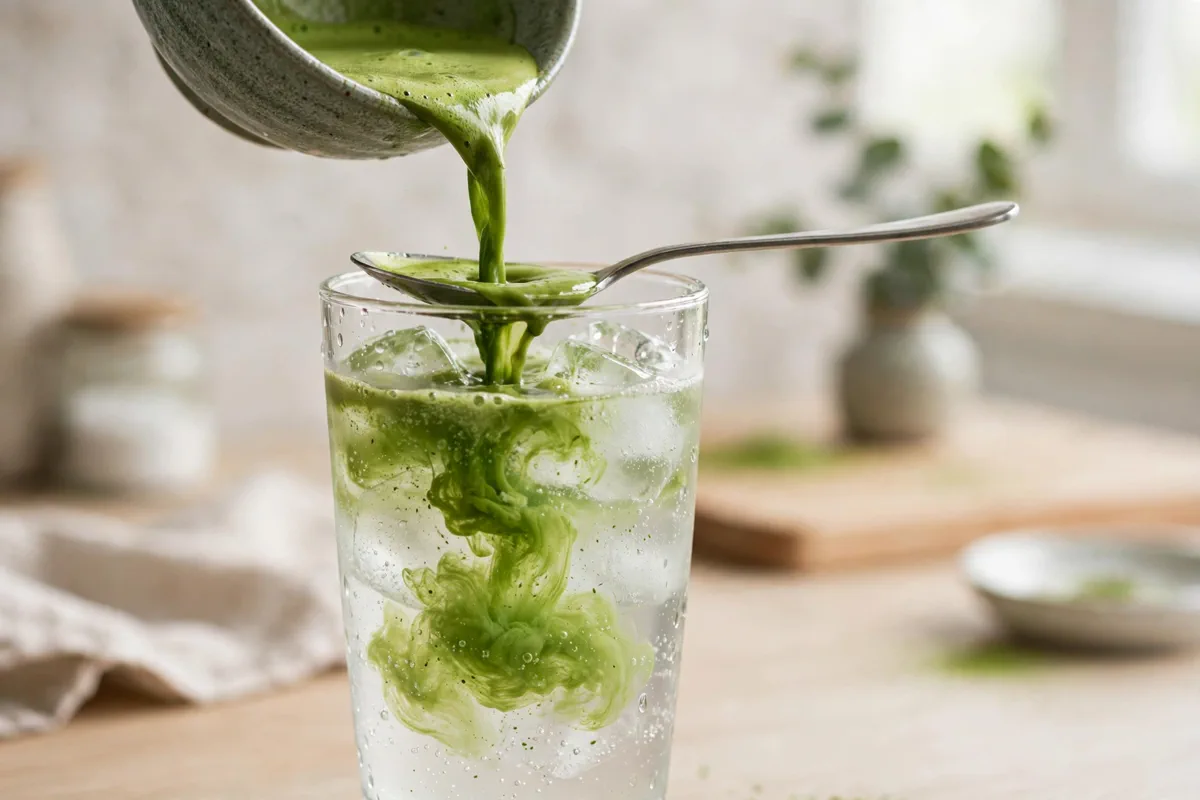
Hold a spoon just above the drink and pour the whisked matcha slowly over the back of the spoon. The green tea clouds down through the tonic in a slow layer.
7
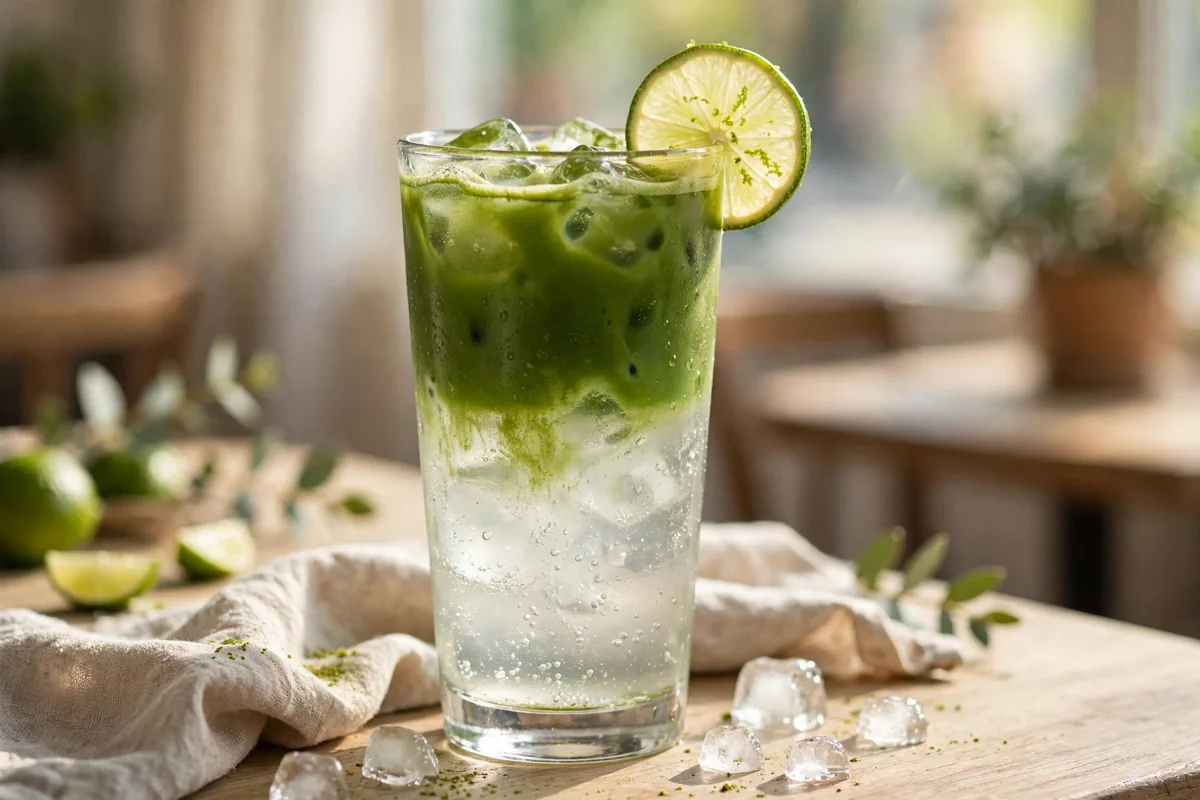
Add the lime wheel to the rim and serve right away with a straw, so you can stir before the first sip.
Our Pro Tips for Success
- •Matcha grade decides the drink. Ceremonial grade tastes smooth and sweet; culinary grade tastes sharper and a little bitter because there is no milk or sugar to hide behind.
- •Sift first, always. Matcha clumps from static alone, and once a clump gets wet it seals shut and will not whisk out.
- •Everything cold, one thing warm. Cold tonic, cold glass, and a full glass of ice keep the fizz alive and the layers sharp. Only the small splash of whisking water is warm.
- •Do not stir before serving. The layers mixing at the table is half the fun, and stirring early collapses the visual and the carbonation at the same time.
- •If the green layer sinks straight to the bottom, the tonic was too warm or the pour was too fast. Next time: colder tonic, slower pour over the back of the spoon.
Storage & Make-Ahead Instructions
Refrigerator:Store leftovers in an airtight container for up to 3 to 4 days.
Freezer:Freeze in freezer-safe containers or bags for up to 2 months. Thaw overnight in the fridge.
Reheating:Reheat gently in a 350°F oven or covered skillet with a splash of broth until heated through.
Interactive Kitchen Assistant Live Smart Scaler
Our Recipe Precision Calculators
Calculate exact roasting times, internal temperatures, brining ratios, and safe thaw windows.
2.5 lbs (1.13 kg)
Recommended Timing & Thermals
Est. Cook Time45 mins
Rest Period7 mins
Pull From Heat160°F (71°C)
Final Carryover165°F (74°C)
Insert meat thermometer into thickest center without touching bone for 100% juicy safety.
What an iced matcha tonic is
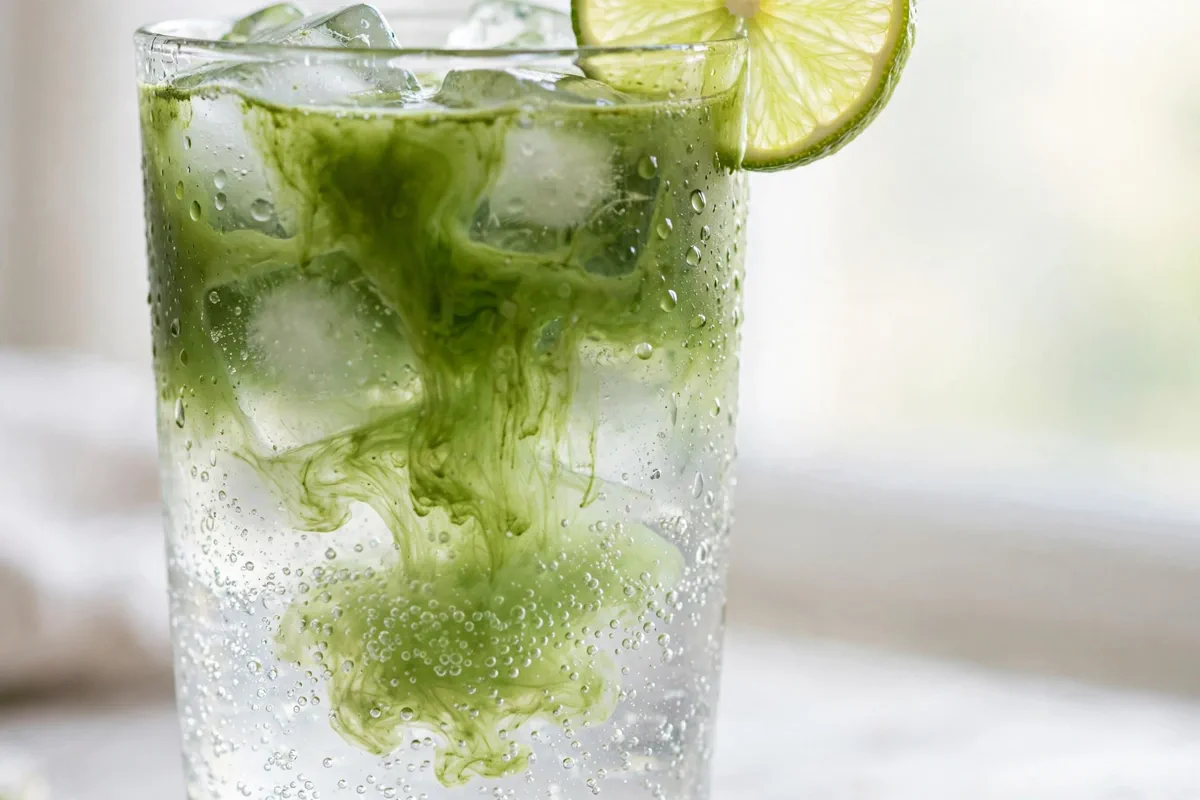
An iced matcha tonic is exactly what it sounds like: whisked matcha poured over ice-cold tonic water. The green tea clouds down through the clear, fizzy tonic and settles into a dramatic two-tone glass, with a lime wheel on the rim. It takes about five minutes to make and uses three real ingredients: matcha, tonic water, and ice.
The drink started appearing on cafe menus a few years ago and never left, because it solves two problems at once. It gives matcha drinkers something cold and sparkling for hot weather, and it gives tonic drinkers a reason to keep drinking tonic after noon. No alcohol, no milk, no blender. It looks like a science experiment and tastes like a proper grown-up refresher.
Why tonic and matcha get along
On paper this pairing should not work. Tonic water is bitter from quinine. Matcha is bitter from tannins and caffeine. Two bitter things should double the bitterness. In practice the opposite happens.
The carbonation is doing most of the work. Bubbles lift flavors off your tongue fast, so the matcha's heavier, earthy notes don't sit there and stew. The tonic's quinine bitterness is sharp and clean, and it makes the matcha's bitterness read as depth instead of harshness. The result is a drink that tastes lighter and smoother than either ingredient on its own. Anyone who has had a plain iced matcha latte and found it flat or grassy will notice the difference immediately.
The lime wheel is not decoration. A quick squeeze over the top before you drink adds an acid note that tightens everything up. Citrus and quinine are old friends, and citrus and green tea are older ones. Skip the lime and the drink is still good; add it and the drink is better.
The layer trick, and why it works
The whole visual of this drink, the green cloud sinking through clear tonic, comes down to density and temperature. Cold tonic water is dense. The small amount of warm whisked matcha you pour on top is lighter. So the matcha sinks slowly instead of vanishing on contact, and you get the layer effect.
This is why the recipe is picky about two things: the tonic must be cold, and the pour must be gentle. Warm tonic is less dense, so the matcha drops straight through and the whole glass turns murky green in seconds. A fast pour does the same thing by force. Pour the matcha over the back of a spoon and it spreads out and slides in softly. Neither step is hard. Both are the difference between a drink that photographs itself and a glass of green soda water.
The ice matters more than people expect. A full glass of ice does three jobs: it keeps the tonic cold enough to stay dense, it slows the matcha's descent so the layers linger, and it keeps the whole thing cold while you take your time drinking it. Half a glass of ice means the drink warms up fast, the layers collapse, and the fizz dies. Fill it to the rim.
Matcha grade is the whole decision
There are two grades of matcha sold everywhere and they are not interchangeable here. Ceremonial grade is made from younger leaves, tastes smooth and naturally sweet, and is meant to be drunk with water. Culinary grade is made from older leaves, tastes stronger and more bitter, and is meant for lattes and baking where milk and sugar cover for it.
In a latte, culinary grade is fine. In a matcha tonic there is no milk and no sugar to hide behind, so the grade shows. Ceremonial grade gives you a smooth, clean green-tea flavor that sits nicely against the tonic's bitterness. Culinary grade gives you a drink that tastes sharp and a little harsh. It is still drinkable, especially with a half teaspoon of sugar whisked in with the warm water, but the gap is real.
Price is the honest trade-off. Ceremonial matcha costs two to three times what culinary costs. If you drink this once in a while, the small tin of ceremonial is worth it, because one teaspoon per glass means a 30-gram tin makes about fifteen drinks. If this is going to be a daily drink, buy culinary and add the sugar. The layering looks identical either way.
No whisk? Shake it
The recipe calls for a bamboo whisk, called a chasen, because that is the traditional tool and it makes the finest foam. A chasen costs a few dollars and lasts years if you keep it dry. But nobody should skip this drink for lack of one.
The shake method works: sift the matcha into a small jar, add the warm water, screw the lid on tight, and shake hard for about fifteen seconds. The foam is thinner and the bubbles are bigger, but once it is poured over tonic nobody can tell. A handheld milk frother also works and takes ten seconds. A fork is the last resort; it will not get the matcha fully smooth, so expect a few flecks of undissolved powder at the bottom of the glass.
One thing none of these methods fixes is clumps. Matcha powder clumps from static electricity alone, and once a dry clump gets wet it seals shut and refuses to dissolve. Sifting through a small fine-mesh sieve before adding water is the single most important prep step in the whole recipe. It takes twenty seconds and it is the difference between a smooth drink and one with gritty little green lumps.
Water temperature is not a small detail
Matcha whisked with boiling water tastes noticeably bitter. The amino acids that give good matcha its sweet, savory depth break down at high heat, and the tannins come forward. Warm water, around 175 degrees Fahrenheit or 80 degrees Celsius, dissolves the powder fully without cooking it. That is hot enough to steam lightly but not bubbling.
If you do not have a thermometer, here is the practical version: boil the kettle, then let it sit for about two minutes before using it. That is close enough. Microwaving a mug of water for a minute and waiting thirty seconds works too. Precision is not the goal; the goal is not pouring boiling water on your good matcha.
Mistakes that ruin it
The most common failure is warm tonic. It flattens the layers, kills the fizz, and makes the drink taste muddy. Keep a bottle of tonic in the fridge always, not in the pantry. Cold tonic pours with a sharper hiss and stays fizzy in the glass twice as long.
The second failure is pouring the tonic too aggressively. Tonic loses carbonation when it is agitated, and pouring it hard onto ice is agitation. Pour slowly down the inside of the glass. It takes five extra seconds.
The third failure is skipping the sift, which we have covered, and the fourth is making it ahead. This drink has a lifespan of about fifteen to twenty minutes. The fizz fades, the matcha settles to the bottom, and the layers become a memory. Make it, serve it, drink it. If guests are coming, set out the matcha, sieve, jar, cold tonic, and ice, and make each glass fresh. It takes five minutes and it is a little bit of theater.
When to drink it
One glass has roughly the caffeine of a small cup of coffee, around 30 to 70 milligrams depending on how heaped your teaspoon is. That makes it a solid afternoon drink and a bad idea after dinner if you are sensitive to caffeine. It is also worth knowing that the sugar in regular tonic water adds up: a cup of tonic is about 20 grams of sugar, similar to a small soda. Diet tonic cuts that to nearly zero and the drink still works, though the flavor is a touch thinner.
Our kitchen keeps this as the summer house drink. It is the thing we make when someone comes over on a hot afternoon and we want to offer something that feels special without any real effort. Five minutes, three ingredients, one very good-looking glass.
Frequently Asked Questions
Bitter, sparkling, and earthy, like a gin and tonic's bitterness swapped for green tea. The tonic's clean quinine bitterness and the carbonation actually smooth out matcha's rough edges, so it tastes lighter than a plain iced matcha.
Yes. Sift the matcha, put it with the warm water in a small lidded jar, and shake hard for 15 seconds. A handheld milk frother works too. The foam will not be as fine as whisked matcha, but the layered look and the taste come through fine.
Easy Chicken Recipes • Official Card
Iced Matcha Tonic (3 Ingredients)
☆☆☆☆☆0.0 (0 reviews)•Recipe by Cooking With Guru Editorial Team•Updated: Jan 15, 2025
Sparkling tonic water meets frothy ceremonial matcha over ice for a layered, bracing green tea cooler. Ready in 5 minutes flat.
Prep Time5 mins
Cook Time0 mins
Total Time5 mins
Adjust Servings:
1
Ingredients
Click to check off1 tsp ceremonial-grade matcha powder(sifted; about 2 g)
2 tbsps warm water(about 175°F / 80°C, not boiling)
1 cup tonic water(well chilled; 8 fl oz)
1 1/2 cups ice cubes(large cubes melt slower)
0.5 piece lime(cut into a wheel, for garnish)
Instructions
Step-by-StepSift 1 teaspoon of matcha through a small fine-mesh sieve into a bowl or wide mug. Tap the sieve to break up any clumps. Dry clumps will not dissolve once they are wet, no matter how hard you whisk.
Add 2 tablespoons of warm water, about 175°F / 80°C. It should steam lightly, not bubble. Boiling water makes matcha bitter.
Whisk in a quick zigzag motion, like drawing a W or M, for about 25 seconds. The matcha should look frothy with fine bubbles on top and no streaks of dry powder on the sides of the bowl.
Fill a tall 12-ounce glass all the way to the rim with ice cubes. A full glass keeps the tonic cold and slows the layers from mixing too fast.
Pour 1 cup of cold tonic water slowly down the inside of the glass over the ice. You should hear a sharp hiss of fizz.
Hold a spoon just above the drink and pour the whisked matcha slowly over the back of the spoon. The green tea clouds down through the tonic in a slow layer.
Add the lime wheel to the rim and serve right away with a straw, so you can stir before the first sip.
CWG
Recipe Source
The Cooking With Guru Team
Our recipes are developed and checked by the Cooking With Guru team. Nutrition figures are estimates calculated from USDA data, and yields scale with the built-in portion tools so the recipe fits your kitchen.
More beverage recipes to try!
🍽️
Turkish Menemen: One-Pan Eggs in Spicy Tomato Sauce
🍽️
High-Protein Cottage Cheese Egg Bake with Spinach
🍽️
Easy Chicken Congee Recipe with Crispy Garlic and Chili Oil
Comments & Questions (0)
Join the conversationNo comments yet!
Be the first to leave a comment or ask a question about Iced Matcha Tonic (3 Ingredients).