🍽️
Prep time5 mins
Cook time15 mins
Ingredients11
beverage
Homemade Gingerbread Latte
Published: Jan 15, 2025
A gingerbread latte made at home with a molasses-spice syrup that makes 8 lattes and keeps a month in the fridge. Warm, spiced, coffee-shop good.
A gingerbread latte made at home with a molasses-spice syrup that makes 8 lattes and keeps a month in the fridge. Warm, spiced, coffee-shop good.
If you are looking for an ultra-satisfying, restaurant-quality meal that comes together with minimal effort, this Homemade Gingerbread Latte is about to become your new favorite. Everything is cooked to juicy, golden perfection with wholesome ingredients and incredible depth of flavor.
One simple tip!
Keep the syrup at a gentle simmer, not a rolling boil. A hard boil cooks off water fast and leaves a syrup too thick to pour from the jar.
Step-by-Step Photos
Why You’ll Love This Recipe
Quick & EffortlessReady in just 20 minutes total with straightforward, foolproof prep.
Packed with Deep FlavorCarefully balanced with water, light brown sugar, molasses for maximum satisfaction.
Family & Crowd FriendlyMakes 8 generous servings that can be effortlessly doubled or scaled using our smart scaler.
Made From ScratchReal ingredients and straightforward home cooking, with no shortcuts on flavor.
Ingredients Notes & Variations
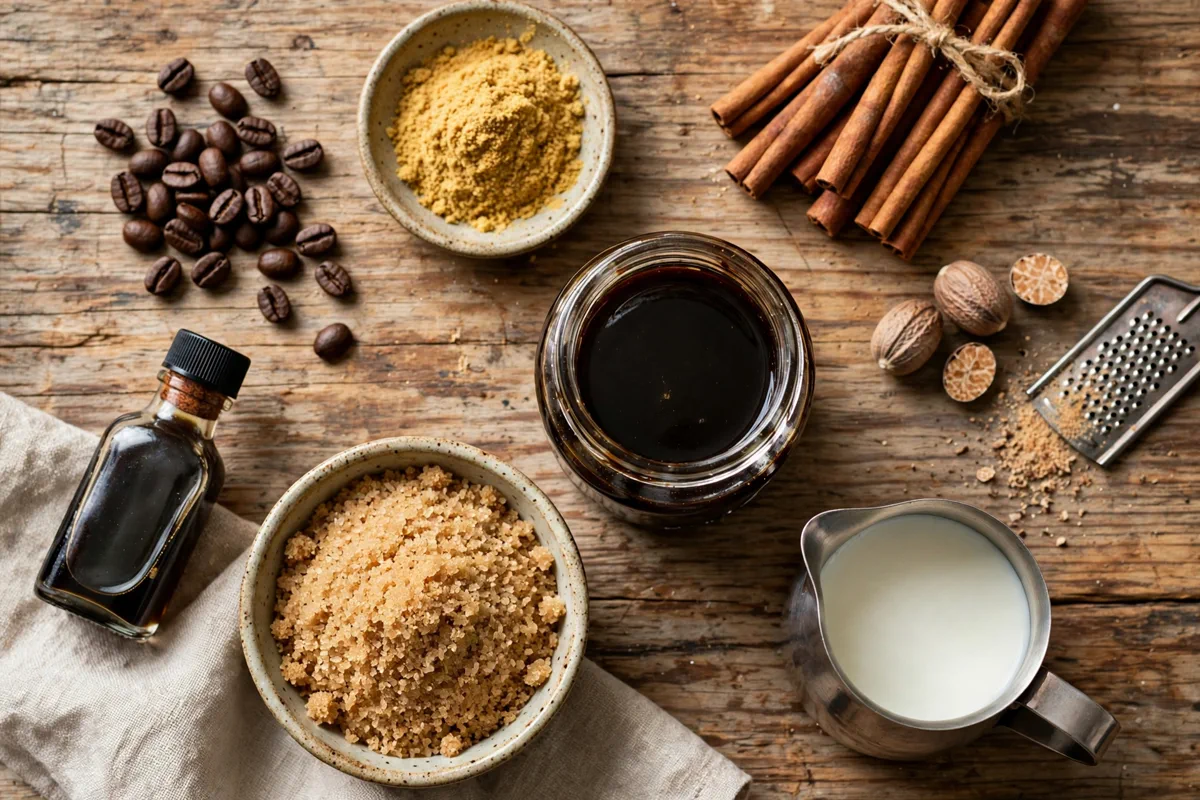
Here is an overview of what you will need for this recipe. Be sure to scroll down to the printable recipe card below for exact scaled measurements!
water
1 cupfor the syrup
light brown sugar
0.75 cuppacked; dark brown sugar works too
molasses
3 tbspunsulphured; not blackstrap, which is too bitter here
ground ginger
1 tbspthe main spice in the syrup
ground cinnamon
1.5 tspplus a pinch more for dusting
ground nutmeg
0.5 tspfreshly grated if you have it
ground cloves
0.25 tspmeasure carefully; a little too much takes over
vanilla extract
1 tspstirred in off the heat
espresso
16 fl oz2 fl oz per latte; strong brewed coffee works too
whole milk
8 cup1 cup per latte; oat milk is the best non-dairy swap
whipped cream
16 tbspabout 2 tablespoons per latte, for topping
How to Make (Step-by-Step Overview)
Here is a quick summary of the preparation process. Detailed cooking temperatures and step timers are included in the recipe card below.
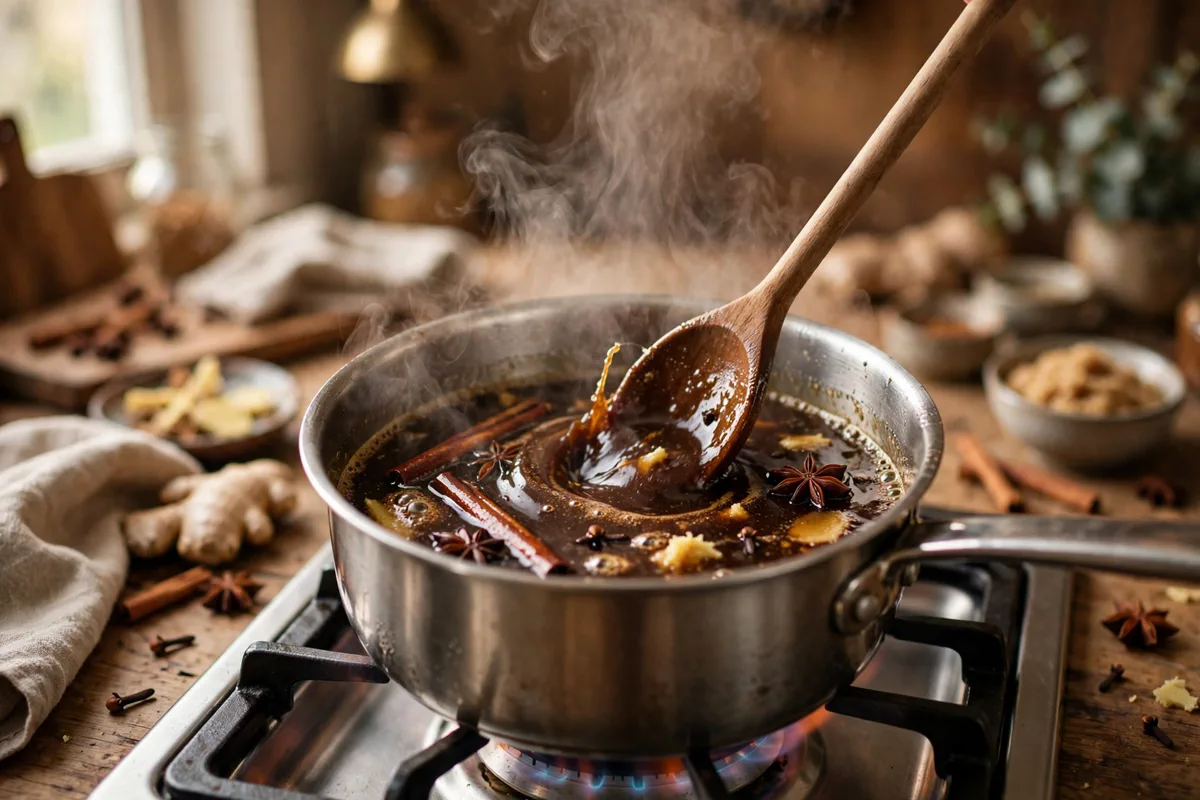
Put the water, brown sugar, molasses, ground ginger, cinnamon, nutmeg and cloves in a small saucepan. Stir once to combine and set it over medium heat.
Bring the mixture to a gentle simmer, with small bubbles around the edge. Do not boil it hard. Simmer for 10 minutes, stirring now and then, until it darkens slightly and coats the back of a spoon.
Take the pan off the heat and stir in the vanilla extract. Leave the syrup to cool for 15 minutes, then pour it into a clean jar or bottle. Strain through a fine sieve if you want it perfectly smooth.
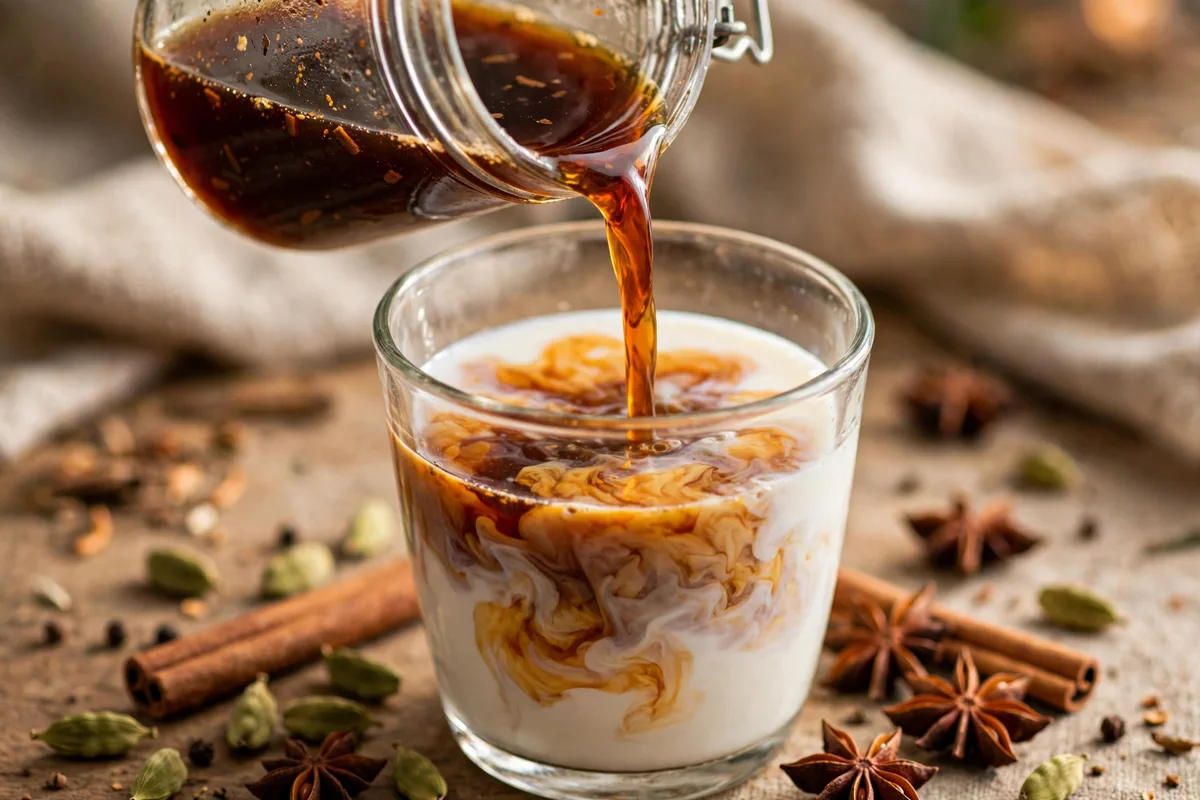
For each latte, pour 2 fl oz of hot espresso into a mug and add 2 tablespoons of the gingerbread syrup. Stir well while the coffee is hot so the syrup dissolves fully.
Heat 1 cup of whole milk in a small saucepan over medium heat until steaming, about 150 to 160 degrees Fahrenheit, with small bubbles at the edge. Do not let it boil.
Froth the hot milk with a frother, or whisk hard for 30 seconds, or shake it in a sealed jar. Pour the milk into the mug in a slow stream, holding back the foam with a spoon, then spoon the foam on top.
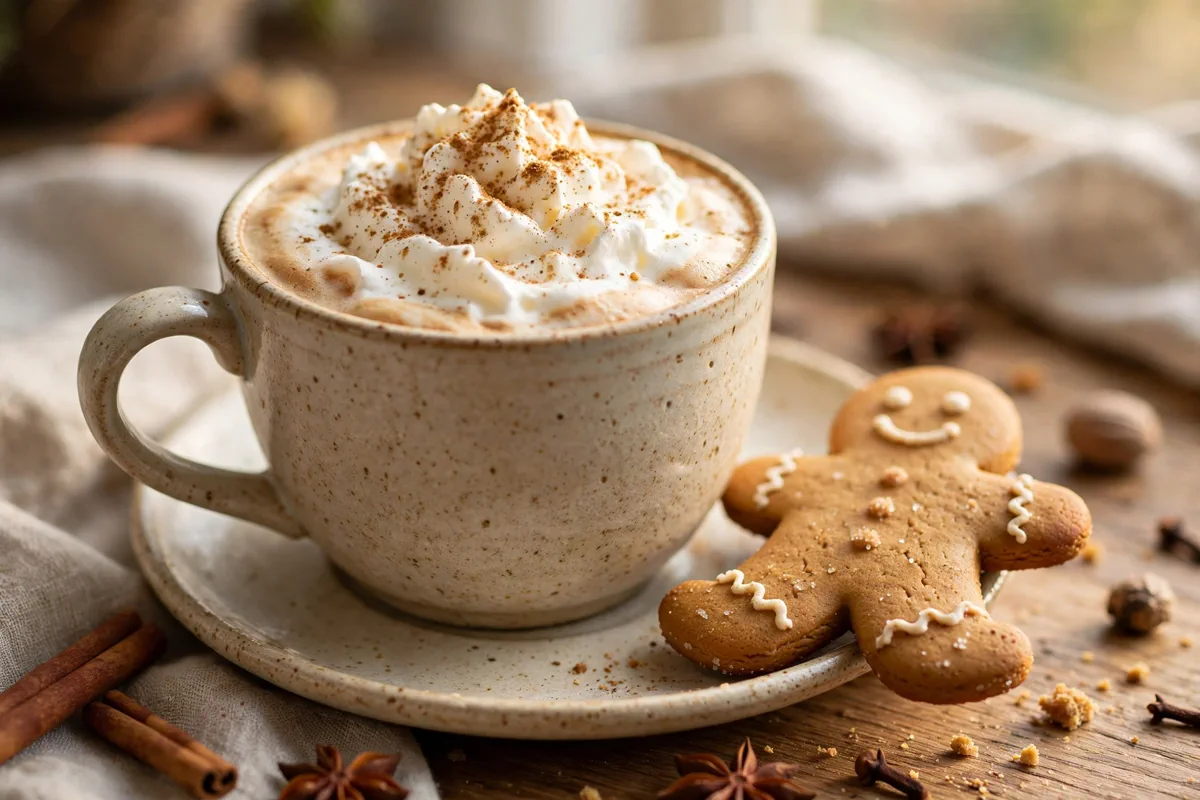
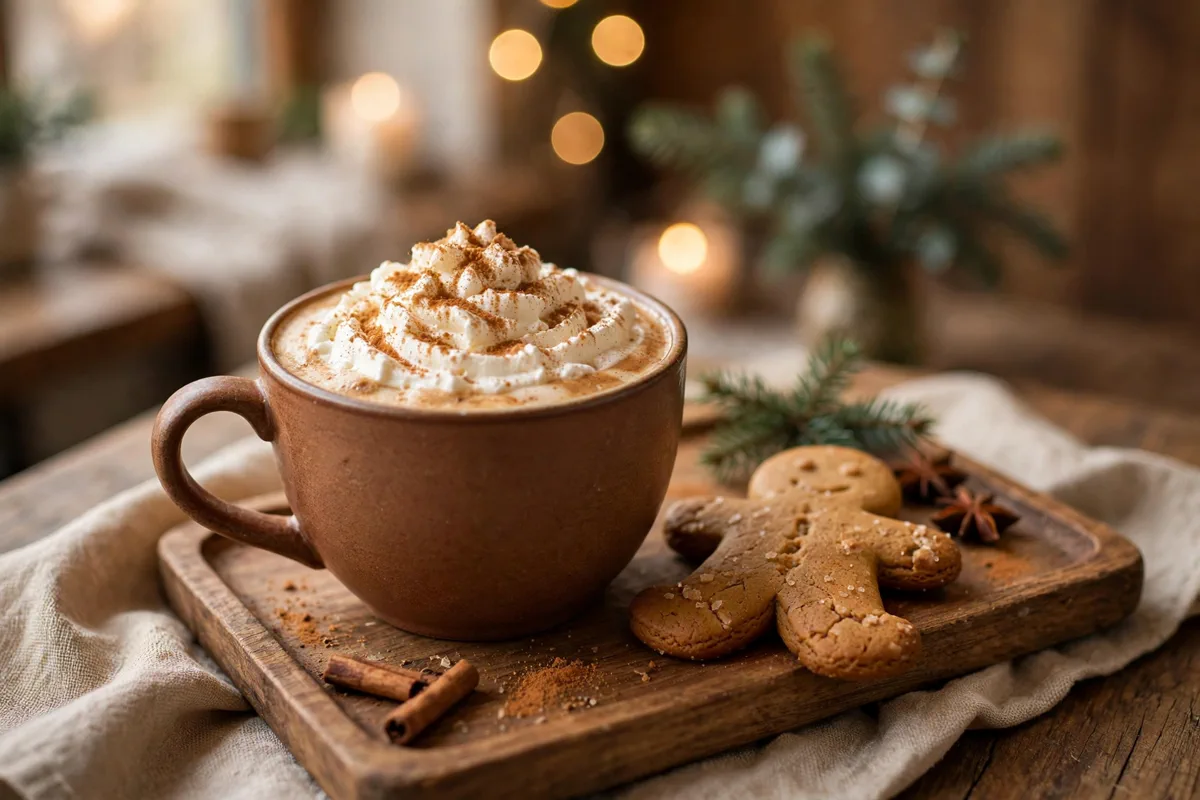
Top with a dollop of whipped cream and a pinch of cinnamon or nutmeg. Serve right away, with a gingerbread cookie on the saucer if you have one.
Our Pro Tips for Success
- •Keep the syrup at a gentle simmer, not a rolling boil. A hard boil cooks off water fast and leaves a syrup too thick to pour from the jar.
- •Stir the syrup into the hot espresso before the milk goes in. Milk cools the drink down, and cold syrup sinks and stays at the bottom of the mug.
- •Measure the cloves. A quarter teaspoon is right for the whole batch. Cloves are the strongest spice here and a heavy hand will take over the jar.
- •Heat the milk to steaming, about 150 to 160 degrees Fahrenheit, and stop before it boils. Boiled milk tastes flat and scorched milk will spoil the latte.
- •Make the syrup ahead and let it sit overnight in the fridge before the first latte. The spices settle into the syrup and the flavour comes out rounder.
Storage & Make-Ahead Instructions
Refrigerator:Store leftovers in an airtight container for up to 3 to 4 days.
Freezer:Freeze in freezer-safe containers or bags for up to 2 months. Thaw overnight in the fridge.
Reheating:Reheat gently in a 350°F oven or covered skillet with a splash of broth until heated through.
Interactive Kitchen Assistant Live Smart Scaler
Our Recipe Precision Calculators
Calculate exact roasting times, internal temperatures, brining ratios, and safe thaw windows.
2.5 lbs (1.13 kg)
Recommended Timing & Thermals
Est. Cook Time45 mins
Rest Period7 mins
Pull From Heat160°F (71°C)
Final Carryover165°F (74°C)
Insert meat thermometer into thickest center without touching bone for 100% juicy safety.
A gingerbread latte is espresso, steamed milk and a spiced molasses syrup, finished with whipped cream and a dusting of nutmeg. This version makes the syrup in one batch, enough for 8 to 9 lattes, so the hard part happens once and every latte after that takes about 5 minutes. The syrup keeps in the fridge for a month.
The syrup is where the flavour lives. Molasses gives the dark, almost toffee-like base that gingerbread is known for, and the ginger, cinnamon, nutmeg and cloves do the rest. Brown sugar rounds it out so the molasses does not taste bitter on its own. Once the syrup is made, the latte itself is just assembly: hot espresso, a spoonful of syrup, steamed milk, and cream on top if you like it.
The syrup makes this worth doing
One batch of syrup takes about 15 minutes, most of it hands-off simmering. It makes roughly 1 cup, and each latte uses about 2 tablespoons, so a single batch covers 8 to 9 lattes. That is the whole point. A coffee shop charges for the syrup work every single time. At home, you do it once and the next eight mornings are just heating milk.
The syrup also keeps well. Sealed in a jar in the fridge, it stays good for about a month. The spices settle a little over time, so give the jar a shake before you pour. If it thickens in the cold, a few seconds in the microwave or a spoonful of hot water brings it back.
What goes into the syrup
Water, light brown sugar and molasses form the base. The sugar dissolves into the water first, then the molasses goes in and darkens everything. Ground ginger is the main spice here, so it gets a full tablespoon. Cinnamon follows at a teaspoon and a half, nutmeg at half a teaspoon, and cloves at a quarter teaspoon. Cloves are strong, and a little too much will take over the whole jar, so measure them properly rather than tipping the jar.
Vanilla goes in last, off the heat. Heat dulls vanilla, so adding it after the simmer keeps the flavour in the syrup instead of in the steam.
How to make the syrup
Put the water, brown sugar, molasses, ginger, cinnamon, nutmeg and cloves in a small saucepan and stir once to combine. Set it over medium heat and bring it to a gentle simmer. You are not boiling it hard. Small bubbles around the edge are enough.
Let it simmer for 10 minutes, stirring now and then. The syrup will darken slightly and thicken just enough to coat the back of a spoon. It thickens more as it cools, so do not keep cooking it until it looks like honey in the pan. If it gets too thick, it will be hard to pour from the jar later.
Take the pan off the heat and stir in the vanilla. Leave the syrup to cool for about 15 minutes, then pour it into a clean jar or bottle. Straining is optional. The ground spices are fine enough that most people will not notice them, but if you want a perfectly smooth syrup, pour it through a fine sieve as it goes into the jar.
Building the latte
For each latte, start with the espresso. Two fluid ounces of espresso or very strong brewed coffee goes into a mug first, with 2 tablespoons of the gingerbread syrup. Stir them together while the coffee is hot so the syrup dissolves properly. Cold syrup into cold coffee just sits at the bottom.
Heat 1 cup of whole milk in a small saucepan until it is steaming and small bubbles form around the edge, about 150 to 160 degrees Fahrenheit. Do not let it boil. Boiled milk tastes flat and scorches easily, and scorched milk will ruin the latte. If you have a milk frother, use it. If not, whisk the hot milk hard for 30 seconds, or shake it in a sealed jar, to get some foam.
Pour the hot milk into the mug in a slow stream, holding back the foam with a spoon, then spoon the foam on top. A dollop of whipped cream and a pinch of cinnamon or nutmeg finish it. The gingerbread cookie on the saucer is optional, but it is a nice touch when you have them.
Getting the sweetness right
Two tablespoons of syrup per latte is the middle of the road. If you like your coffee shop lattes sweet, use 3 tablespoons. If you prefer it barely sweet, use 1 tablespoon and let the spices carry it. The syrup is the only sweetener in the drink, so it is easy to adjust one mug at a time without remaking anything.
Milk choice matters more than people expect. Whole milk froths best and tastes richest, which suits the molasses. Oat milk is the best non-dairy option here because it steams well and its own mild sweetness fits the gingerbread spices. Almond milk works but froths less and tastes thinner, so use a little extra syrup if you go that way.
Common mistakes and how to fix them
- Syrup too thick to pour: it was simmered too long or too hard. Stir in a tablespoon of hot water at a time until it pours easily. Next time, keep the heat at a gentle simmer and stop at 10 minutes.
- Cloves taking over: a quarter teaspoon is the right amount for the whole batch. If your syrup already tastes mostly of cloves, dilute it by making a second half-batch without cloves and mixing the two jars.
- Syrup sitting at the bottom of the mug: stir the syrup into the hot espresso before the milk goes in. Milk cools everything down, and cold syrup does not dissolve well.
- Milk with no foam: the milk was either too hot or not agitated enough. Keep it under a boil and whisk or shake it while it is still steaming.
- Latte tastes flat: the espresso was too weak. Use a double shot, or brew your coffee much stronger than usual. Weak coffee disappears under the milk and syrup.
Swaps that work
Dark brown sugar can replace light brown sugar. It makes the syrup a little deeper and more caramel-like, which suits the molasses. Honey can replace the molasses in a pinch, but the result tastes more like a honey latte than gingerbread, so keep the spices the same and expect a lighter colour.
Fresh grated ginger can replace the ground ginger. Use 1 tablespoon of finely grated fresh ginger and strain the syrup through a fine sieve before bottling, since the fibres will not dissolve. The flavour is brighter and a little sharper than the ground version.
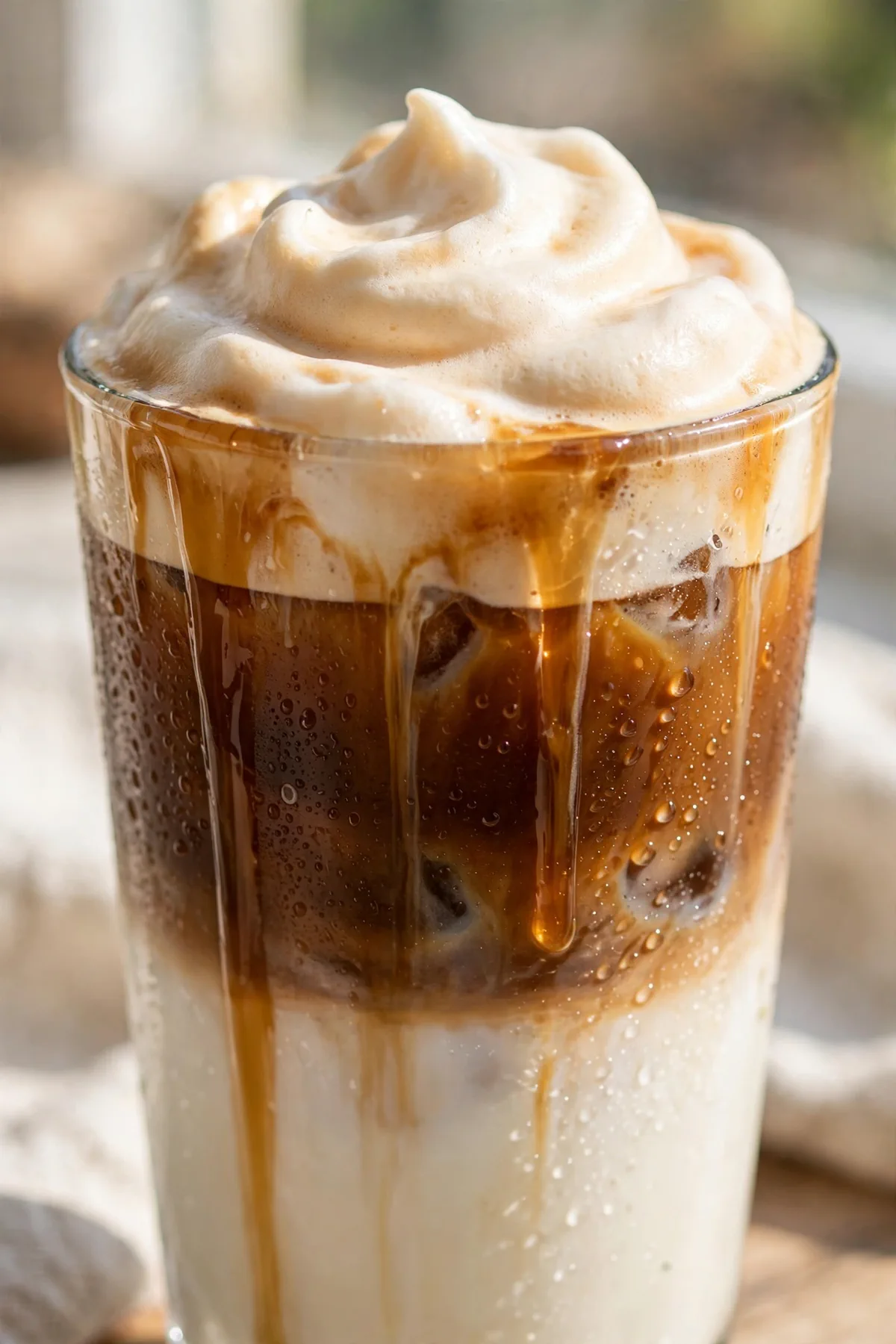
For a caffeine-free version, use decaf espresso or strong rooibos tea instead of coffee. Rooibos has a natural sweetness that works well with the spices. For an iced version, stir the syrup into cold espresso, pour it over ice, and add cold milk. The syrup dissolves best in the espresso before the milk and ice go in.
Storing the syrup and the latte
The syrup keeps in a sealed jar in the fridge for up to 4 weeks. A little crystallisation around the lid is normal. Rinse the rim under hot water and it comes off. If the syrup smells sour or looks cloudy after a month, throw it out and make a fresh batch.
The finished latte is best drunk straight away. It does not keep well, and reheating a latte with whipped cream on top is not worth it. If you have leftover steamed milk, use it in the next mug within the hour or let it go.
Frequently Asked Questions
About 4 weeks in a sealed jar in the fridge. Shake it before each use because the ground spices settle to the bottom, and warm it briefly if it thickens in the cold.
Yes. Use 2 fl oz of very strong brewed coffee, French press coffee, or a Moka pot brew instead of espresso. The key is strength — weak coffee disappears under the milk and syrup.
Easy Chicken Recipes • Official Card
Homemade Gingerbread Latte
☆☆☆☆☆0.0 (0 reviews)•Recipe by Cooking With Guru Editorial Team•Updated: Jan 15, 2025
A gingerbread latte made at home with a molasses-spice syrup that makes 8 lattes and keeps a month in the fridge. Warm, spiced, coffee-shop good.
Prep Time5 mins
Cook Time15 mins
Total Time20 mins
Adjust Servings:
8
Ingredients
Click to check off1 cup water(for the syrup)
3/4 cup light brown sugar(packed; dark brown sugar works too)
3 tbsps molasses(unsulphured; not blackstrap, which is too bitter here)
1 tbsp ground ginger(the main spice in the syrup)
1 1/2 tsps ground cinnamon(plus a pinch more for dusting)
1/2 tsp ground nutmeg(freshly grated if you have it)
1/4 tsp ground cloves(measure carefully; a little too much takes over)
1 tsp vanilla extract(stirred in off the heat)
16 fl oz espresso(2 fl oz per latte; strong brewed coffee works too)
8 cups whole milk(1 cup per latte; oat milk is the best non-dairy swap)
16 tbsps whipped cream(about 2 tablespoons per latte, for topping)
Instructions
Step-by-Step0
CWG
Recipe Source
The Cooking With Guru Team
Our recipes are developed and checked by the Cooking With Guru team. Nutrition figures are estimates calculated from USDA data, and yields scale with the built-in portion tools so the recipe fits your kitchen.
More beverage recipes to try!
🍽️
Turkish Menemen: One-Pan Eggs in Spicy Tomato Sauce
🍽️
High-Protein Cottage Cheese Egg Bake with Spinach
🍽️
Easy Chicken Congee Recipe with Crispy Garlic and Chili Oil
Comments & Questions (0)
Join the conversationNo comments yet!
Be the first to leave a comment or ask a question about Homemade Gingerbread Latte.