🍽️
Prep time15 mins
Cook time20 mins
Ingredients18
baking
Gingerbread Muffins with Vanilla Glaze
Published: Jan 15, 2025
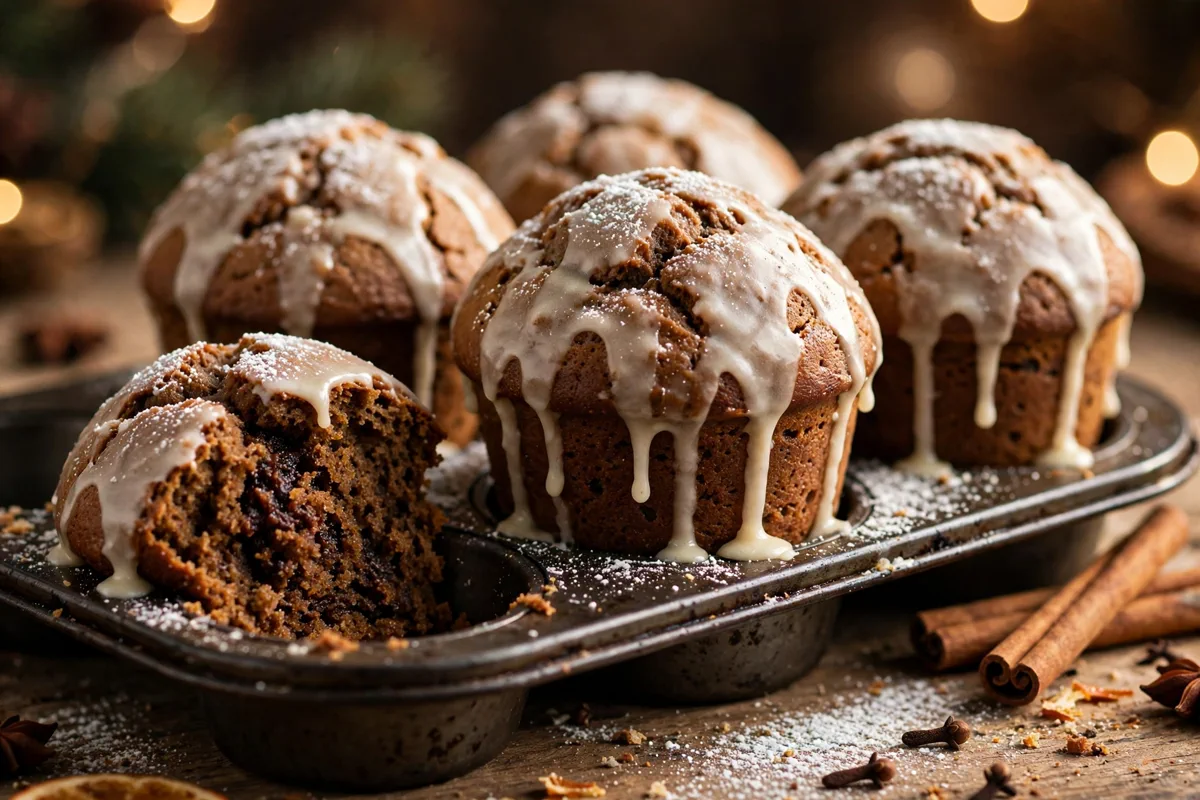
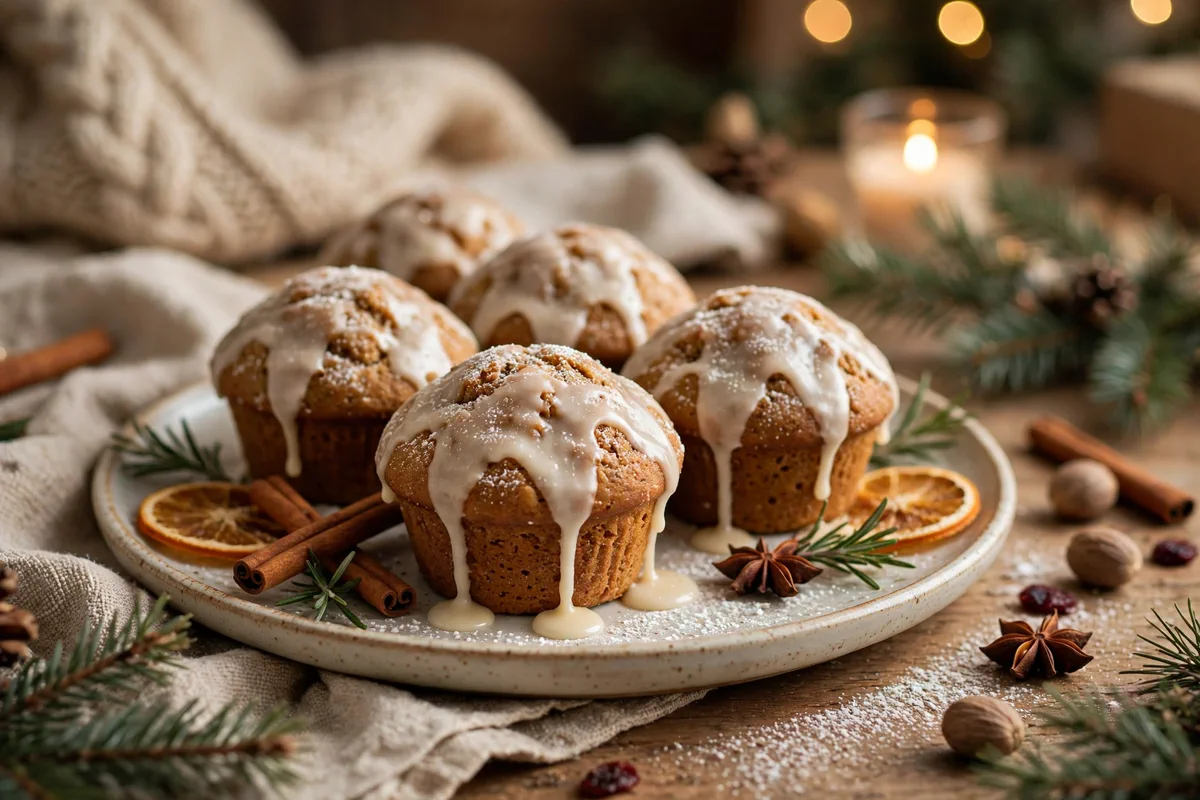
Tall-domed gingerbread muffins with dark molasses crumb and warm spice, finished with a snowy vanilla glaze. Christmas morning in a paper liner.
Tall-domed gingerbread muffins with dark molasses crumb and warm spice, finished with a snowy vanilla glaze. Christmas morning in a paper liner.
If you are looking for an ultra-satisfying, restaurant-quality meal that comes together with minimal effort, this Gingerbread Muffins with Vanilla Glaze is about to become your new favorite. Everything is cooked to juicy, golden perfection with wholesome ingredients and incredible depth of flavor.
One simple tip!
Start the oven hot at 220 C (425 F) and drop it to 190 C (375 F) after 5 minutes. The first blast of heat makes the batter spring up fast and gives you the tall bakery dome. A steady low oven makes flat muffins.
Step-by-Step Photos
Why You’ll Love This Recipe
Quick & EffortlessReady in just 35 minutes total with straightforward, foolproof prep.
Packed with Deep FlavorCarefully balanced with all-purpose flour, baking soda, ground ginger for maximum satisfaction.
Family & Crowd FriendlyMakes 12 generous servings that can be effortlessly doubled or scaled using our smart scaler.
Made From ScratchReal ingredients and straightforward home cooking, with no shortcuts on flavor.
Ingredients Notes & Variations
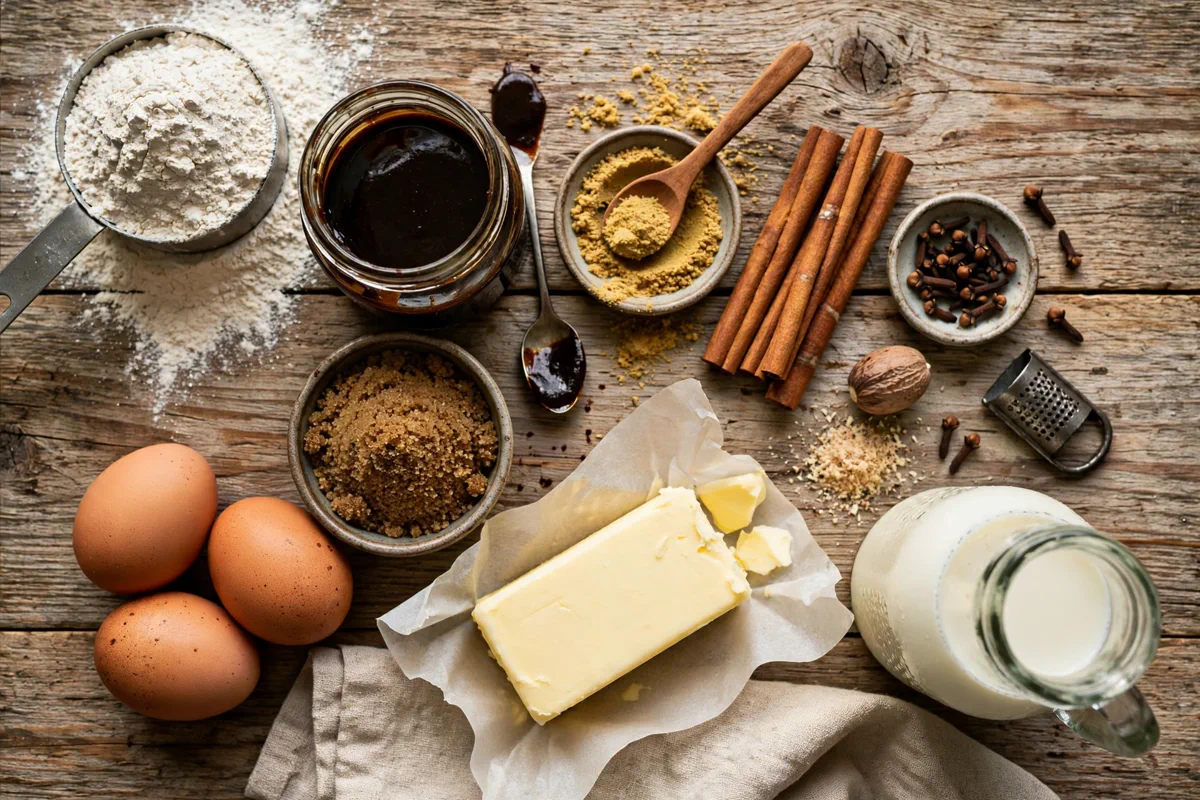
Here is an overview of what you will need for this recipe. Be sure to scroll down to the printable recipe card below for exact scaled measurements!
all-purpose flour
2.5 cupspooned and levelled, not scooped
baking soda
1.5 tspnot baking powder
ground ginger
2 tspthe main spice, do not reduce
ground cinnamon
1.5 tspground cloves
0.5 tspa little goes a long way
ground nutmeg
0.5 tspfreshly grated if you have it
salt
0.75 tspfine sea salt
unsalted butter
0.5 cupmelted and slightly cooled
brown sugar
0.75 cuplight or dark, packed
molasses
0.75 cupunsulphured, not blackstrap
large eggs
2 pieceat room temperature
buttermilk
1 cupshake the carton first
vanilla extract
2 tspfor the batter
hot water
0.25 cupjust boiled, for loosening the batter
powdered sugar
1 cupfor the glaze, sifted
milk
2 tbspfor the glaze, any kind
vanilla extract
0.5 tspfor the glaze
coarse sugar
1 tbspoptional, for sprinkling on top
How to Make (Step-by-Step Overview)
Here is a quick summary of the preparation process. Detailed cooking temperatures and step timers are included in the recipe card below.
1
Heat the oven to 220 C (425 F). Line a 12-cup muffin tin with paper liners.
2
Whisk the flour, baking soda, ginger, cinnamon, cloves, nutmeg, and salt together in a large bowl until the spices are evenly spread through the flour.
3
In a second bowl, whisk the melted butter, brown sugar, and molasses together until smooth. The mixture will look dark and glossy.
4
Add the eggs one at a time to the molasses mixture, whisking after each one, then stir in the buttermilk and vanilla extract.
5
Pour the wet mixture into the dry ingredients and stir with a spatula just until you cannot see dry flour anymore. The batter will be thick and sticky.
6
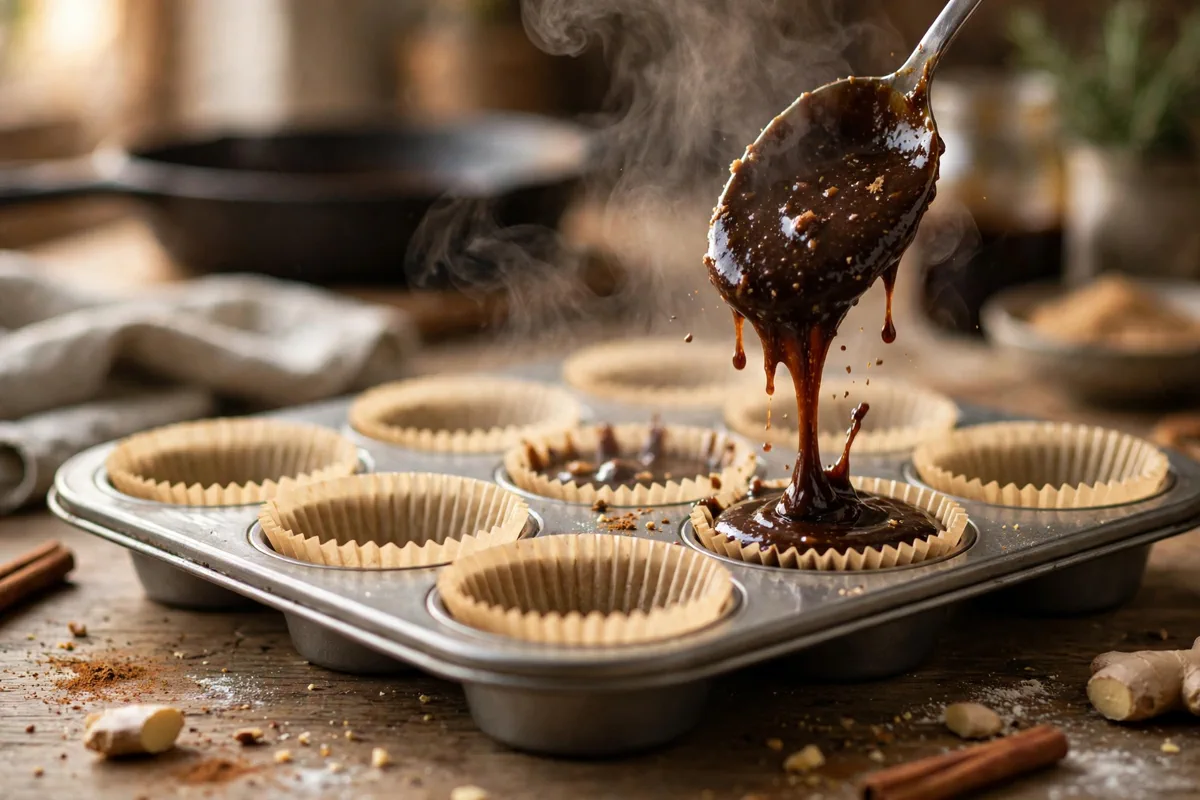
Stir in the hot water, one spoonful at a time, until the batter loosens to a thick but spoonable consistency. It should fall off the spatula in a slow ribbon.
7
Divide the batter evenly among the 12 liners, filling each one almost to the top. Sprinkle the coarse sugar over the tops if you are using it.
8
Bake at 220 C (425 F) for 5 minutes, then turn the oven down to 190 C (375 F) without opening the door. Bake for 14 to 16 minutes more, until the tops are domed and cracked and a toothpick pushed into the center comes out with a few moist crumbs.
9
Let the muffins cool in the tin for 5 minutes, then move them to a wire rack to cool completely, about 30 minutes.
10
Whisk the powdered sugar, milk, and vanilla extract in a small bowl until smooth. The glaze should pour off a spoon in a slow, steady stream.
11
Drizzle the glaze over the cooled muffins and let it set for 10 minutes before serving.
Our Pro Tips for Success
- •Start the oven hot at 220 C (425 F) and drop it to 190 C (375 F) after 5 minutes. The first blast of heat makes the batter spring up fast and gives you the tall bakery dome. A steady low oven makes flat muffins.
- •Do not swap in blackstrap molasses. It is much more bitter than regular unsulphured molasses and will make the muffins taste sharp instead of warm and sweet.
- •Fill the liners almost to the top. A half-filled liner cannot dome. If the batter looks too full, that is right, the high heat sets the edges before it can spill over.
- •Mix the batter only until the flour disappears. Overmixing builds gluten and turns gingerbread muffins tough and chewy instead of soft and tender.
- •Glaze only fully cooled muffins. Warm muffins melt the glaze into a thin, clear coating instead of the snowy white drizzle you want on top.
Storage & Make-Ahead Instructions
Refrigerator:Store leftovers in an airtight container for up to 3 to 4 days.
Freezer:Freeze in freezer-safe containers or bags for up to 2 months. Thaw overnight in the fridge.
Reheating:Reheat gently in a 350°F oven or covered skillet with a splash of broth until heated through.
Interactive Kitchen Assistant Live Smart Scaler
Our Recipe Precision Calculators
Calculate exact roasting times, internal temperatures, brining ratios, and safe thaw windows.
2.5 lbs (1.13 kg)
Recommended Timing & Thermals
Est. Cook Time45 mins
Rest Period7 mins
Pull From Heat160°F (71°C)
Final Carryover165°F (74°C)
Insert meat thermometer into thickest center without touching bone for 100% juicy safety.
Gingerbread muffins are soft, dark, molasses-sweet muffins spiced with ginger, cinnamon, cloves, and nutmeg, baked with tall domed tops and finished with a thin vanilla glaze. They taste like gingerbread cake, but they bake in 20 minutes and fit in your hand, which makes them the easiest way to get Christmas-morning flavor onto a weekday breakfast table.
The trick is in the batter. Molasses makes it thick, dark, and sticky, and the hot water loosens it just enough to spoon. That loose batter is what lets the muffins rise fast in a hot oven. If you have baked muffins before and ended up with flat tops, this recipe fixes that with one simple move: start the oven hotter than you think you need.
Why the oven starts at 220 C
Bakery muffins get their tall domes from a blast of heat. When the batter hits a 220 C (425 F) oven, the baking soda reacts fast and the outside of the muffin sets while the middle is still rising. That is what pushes the top up into a dome instead of letting it spread flat.
After 5 minutes, turn the oven down to 190 C (375 F) and leave the door shut. The lower heat finishes the middle without burning the tops. The whole bake takes about 19 to 21 minutes. Open the door to check too early and the domes can sink, so trust the timer and look through the oven window instead.
One more thing matters here: fill the liners almost to the top. A half-filled liner has nothing to rise into, so it stays flat no matter how hot the oven is. The batter will look too full. That is right. The heat sets the edges before the batter can spill over.
The spice mix, and why it is measured this way
Ground ginger is the lead spice at 2 teaspoons. Cinnamon backs it up at 1.5 teaspoons. Cloves and nutmeg sit at half a teaspoon each, because both turn bitter fast when you add too much. If you measure by feel and tip in a heaped spoon of cloves, the muffins will taste sharp and medicinal instead of warm.
Fresh ginger is not a straight swap. It gives a brighter, sharper heat, while ground ginger gives the mellow warmth people expect from gingerbread. Use the ground ginger the recipe calls for, and save fresh ginger for stir-fries and tea.
Whisk the spices into the flour before anything wet goes in. Spices clump in wet batter, and no amount of stirring will spread a pocket of dry cloves once the molasses is in the bowl. Thirty seconds of whisking the dry ingredients saves you from a muffin that is bland on one side and fiery on the other.
Molasses: which bottle to buy
Buy unsulphured molasses, the regular kind sold for baking. Blackstrap molasses is a different product. It is darker, much more bitter, and far less sweet, and it will make the muffins taste sharp instead of warm and sweet. If blackstrap is all you have, use half molasses and half honey, and even then expect a stronger flavor.
Measure the molasses after the butter, or oil the measuring cup first. Molasses sticks to everything, and a cup that was greased with a little butter lets it slide out cleanly. Scrape the cup with a spatula and get all of it into the bowl. That three-quarter cup is doing most of the sweetening work.
The brown sugar is there for moisture as much as sweetness. It keeps the crumb soft for days, which is why these muffins still taste good on day three. White sugar makes a drier muffin that goes stale faster.
Mixing the batter without toughening it
Stir the wet and dry ingredients together only until the flour disappears. The batter will look lumpy and rough. That is fine. Every extra stir builds gluten, and gluten is what turns a soft muffin tough and chewy. Put the spatula down the moment you cannot see dry flour.
The batter will be thick and sticky before the hot water goes in. That is normal. Molasses and brown sugar make a heavy batter, and the quarter cup of hot water loosens it to the right texture. Add it one spoonful at a time and stop when the batter falls off the spatula in a slow ribbon. If you pour it all in at once, the batter can go too thin and the muffins bake up dense in the middle.
Room-temperature eggs matter more here than in most muffin recipes. Cold eggs stiffen the melted butter on contact, and the batter turns grainy. Set the eggs out when you start the oven and they will be warm enough by the time you need them.
The vanilla glaze
The glaze is three things: powdered sugar, milk, and vanilla extract. Whisk them until smooth and check the texture. It should pour off a spoon in a slow, steady stream. Too thick and it sits in a lump on top. Too thin and it runs off and pools on the plate.
If the glaze is too thick, add milk half a teaspoon at a time. If it is too thin, add powdered sugar a tablespoon at a time. Small moves. A whole extra tablespoon of milk can take a good glaze to a puddle.
Glaze only fully cooled muffins. A warm muffin melts the glaze into a thin, clear coating, and you lose the snowy white drizzle that makes these look like they came from a bakery. Wait the full 30 minutes. The muffins are still soft inside when they are cool enough to glaze.
When to make them
These are a December breakfast, a bake-sale table, and a holiday brunch in one recipe. They take 15 minutes to mix and 20 minutes to bake, so you can start them after the coffee is on and have them glazed before everyone is awake.
They travel well, too. Unglazed muffins hold up in a container for three days, so you can bake a batch on a weeknight and glaze them in the morning. They also freeze well. Freeze them unglazed in a zip bag for up to three months, thaw at room temperature for about an hour, and glaze before serving. Nobody will know they were frozen.
Serve them warm with coffee or tea, or split one open and spread a little butter on it while it is still warm from the oven. The glaze is sweet enough on its own, so skip the jam. A mug of something hot next to it is all these need.
Frequently Asked Questions
Flat muffins usually mean the oven was not hot enough at the start, or the baking soda was old. Start at 220 C (425 F) for the first 5 minutes so the batter springs up fast, and check that your baking soda fizzes when you drop a pinch into vinegar. Dead baking soda gives no lift at all.
Yes. Bake them up to 2 days ahead and store them unglazed in a sealed container at room temperature, then glaze them the morning you serve them. The glaze is best made fresh, since it thickens and dries out in the fridge.
Easy Chicken Recipes • Official Card
Gingerbread Muffins with Vanilla Glaze
☆☆☆☆☆0.0 (0 reviews)•Recipe by Cooking With Guru Editorial Team•Updated: Jan 15, 2025
Tall-domed gingerbread muffins with dark molasses crumb and warm spice, finished with a snowy vanilla glaze. Christmas morning in a paper liner.
Prep Time15 mins
Cook Time20 mins
Total Time35 mins
Adjust Servings:
12
Ingredients
Click to check off2 1/2 cups all-purpose flour(spooned and levelled, not scooped)
1 1/2 tsps baking soda(not baking powder)
2 tsps ground ginger(the main spice, do not reduce)
1 1/2 tsps ground cinnamon
1/2 tsp ground cloves(a little goes a long way)
1/2 tsp ground nutmeg(freshly grated if you have it)
3/4 tsp salt(fine sea salt)
1/2 cup unsalted butter(melted and slightly cooled)
3/4 cup brown sugar(light or dark, packed)
3/4 cup molasses(unsulphured, not blackstrap)
2 piece large eggs(at room temperature)
1 cup buttermilk(shake the carton first)
2 tsps vanilla extract(for the batter)
1/4 cup hot water(just boiled, for loosening the batter)
1 cup powdered sugar(for the glaze, sifted)
2 tbsps milk(for the glaze, any kind)
1/2 tsp vanilla extract(for the glaze)
1 tbsp coarse sugar(optional, for sprinkling on top)
Instructions
Step-by-StepHeat the oven to 220 C (425 F). Line a 12-cup muffin tin with paper liners.
0Whisk the flour, baking soda, ginger, cinnamon, cloves, nutmeg, and salt together in a large bowl until the spices are evenly spread through the flour.
0In a second bowl, whisk the melted butter, brown sugar, and molasses together until smooth. The mixture will look dark and glossy.
0Add the eggs one at a time to the molasses mixture, whisking after each one, then stir in the buttermilk and vanilla extract.
0Pour the wet mixture into the dry ingredients and stir with a spatula just until you cannot see dry flour anymore. The batter will be thick and sticky.
0Stir in the hot water, one spoonful at a time, until the batter loosens to a thick but spoonable consistency. It should fall off the spatula in a slow ribbon.
0Divide the batter evenly among the 12 liners, filling each one almost to the top. Sprinkle the coarse sugar over the tops if you are using it.
0Bake at 220 C (425 F) for 5 minutes, then turn the oven down to 190 C (375 F) without opening the door. Bake for 14 to 16 minutes more, until the tops are domed and cracked and a toothpick pushed into the center comes out with a few moist crumbs.
Let the muffins cool in the tin for 5 minutes, then move them to a wire rack to cool completely, about 30 minutes.
Whisk the powdered sugar, milk, and vanilla extract in a small bowl until smooth. The glaze should pour off a spoon in a slow, steady stream.
0Drizzle the glaze over the cooled muffins and let it set for 10 minutes before serving.
CWG
Recipe Source
The Cooking With Guru Team
Our recipes are developed and checked by the Cooking With Guru team. Nutrition figures are estimates calculated from USDA data, and yields scale with the built-in portion tools so the recipe fits your kitchen.
More baking recipes to try!
🍽️
Turkish Menemen: One-Pan Eggs in Spicy Tomato Sauce
🍽️
High-Protein Cottage Cheese Egg Bake with Spinach
🍽️
Easy Chicken Congee Recipe with Crispy Garlic and Chili Oil
Comments & Questions (0)
Join the conversationNo comments yet!
Be the first to leave a comment or ask a question about Gingerbread Muffins with Vanilla Glaze.